Kirchenwirt Kirchberg-Thening
A traditional Gasthof at the heart of Kirchberg-Thening's village square, Kirchenwirt represents the kind of rooted Austrian inn culture that urban dining rarely replicates. Its position in Upper Austria places it within reach of Linz yet firmly grounded in the rhythms and produce of its rural surroundings. For travellers seeking an alternative to destination-restaurant formality, this is a considered stop in Austria's quieter dining geography.
Pearl is the En Primeur Club membership app — saves, bookings, and concierge access live there. Same editors, same standards.
- Address
- Ortspl. 1, 4062 Kirchberg-Thening, Austria
- Phone
- +43722164765
- Website
- kirchenwirt-kirchberg.at
- Directions
- Get directions
 Saves & bookings on Pearl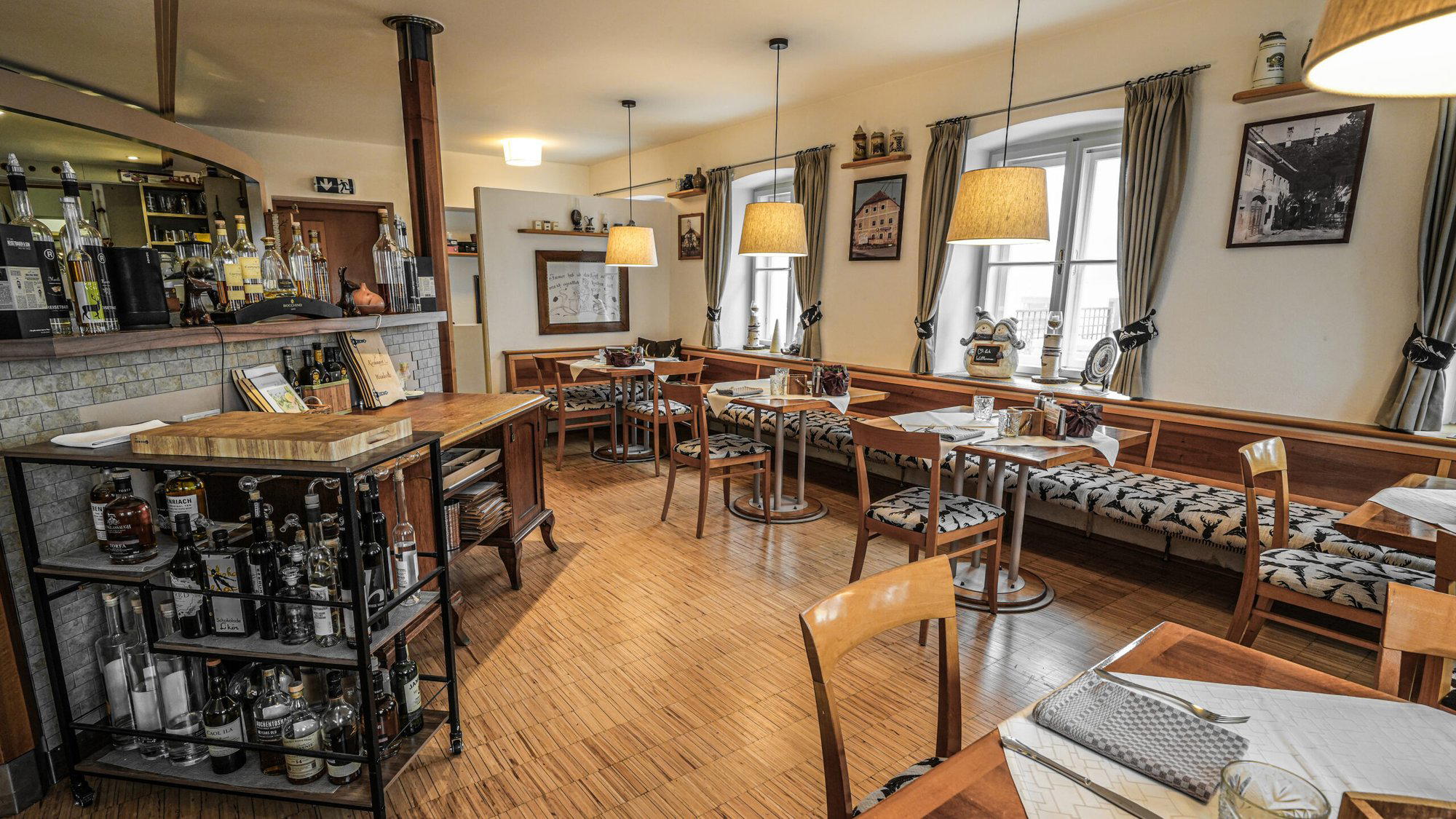
The Village Square as Dining Room
There is a particular quality to Austrian inns that occupy a village's central square, not the manufactured rusticity of alpine resort dining, but something slower and more functional. Kirchenwirt Kirchberg-Thening is a traditional Austrian Gasthaus in Kirchberg-Thening, Austria, at Ortspl. 1, with a casual dress code and recommended reservations. It sits at Ortsplatz 1 in Kirchberg-Thening, which is to say it occupies the literal address of civic life in a small Upper Austrian community. The building's position is not incidental. In villages of this scale, the Kirchenwirt (literally, 'church inn') has historically been the point where parish life and table life converge: the place you eat after the market, after the service, after the work week ends. That social geometry still shapes what these establishments are and how they operate, regardless of what any individual kitchen decides to cook.
Upper Austria's dining culture sits at some distance from the headline restaurants that define Austria's international reputation. Steirereck im Stadtpark in Vienna and the creative tasting-menu circuit represented by venues like Ikarus in Salzburg or Döllerer in Golling an der Salzach occupy a different register entirely, one oriented toward destination diners and international recognition. The rural Gasthof tradition that Kirchenwirt belongs to is a counterpoint to that world: locally anchored, practically priced by necessity, and shaped more by the rhythms of its community than by any competitive comparable set.
What the Upper Austrian Table Looks Like From the Ground
The editorial argument for paying attention to Upper Austria's inn culture has to do with ingredient geography. It has to do with ingredient geography. The region between the Danube valley and the foothills south of Linz is agricultural land, dairy country, market garden territory, a zone where the raw material for serious cooking exists in proximity that larger cities must compensate for through supply chains. Establishments in this zone, at their leading, operate with a sourcing intimacy that destination restaurants in Vienna or Salzburg actively work to replicate. The field, the farm, or the river can be within a short drive of the kitchen; what arrives on the plate reflects what that week's season actually produced.
This ingredient-proximity model is not distinctive to Austria, it defines the leading rural inn cooking across much of central Europe, from Baden-Württemberg to the Styrian hills. But it is worth naming explicitly, because it changes what you should order and how you should evaluate the cooking. A Kirchenwirt in a village like Kirchberg-Thening is not trying to compete with Landhaus Bacher in Mautern an der Donau or the herb-forward precision of Kräuterreich by Vitus Winkler in Sankt Veit im Pongau. It is operating in a different economy of intention, one where the measure of quality is whether the food reflects where it comes from, not whether it has been transformed into something conceptually ambitious.
Regional staples in Upper Austria tend toward roasted meats, freshwater fish from the Danube and its tributaries, dairy preparations, and seasonal vegetables that shift meaningfully from early spring through late autumn. A kitchen working with local butchers and nearby farms will rotate its menu accordingly. This is the sourcing logic that matters at this level of Austrian dining, and it is what separates a functioning Gasthof from one merely going through the motions.
Situating Kirchberg-Thening in Austria's Wider Dining Map
Kirchberg-Thening itself sits in the Linz-Land district, placing it in the orbit of Upper Austria's regional capital without being absorbed by its urban dining scene. This is a meaningful distinction for travellers planning a route through Austria's interior. The village functions as a pause point rather than a destination in its own right, accessible from Linz, and plausibly on the way between the Danube valley wine country to the east and the alpine foothills to the south and west.
For those tracing Austria's more serious restaurant geography, the reference points fan outward from here: the Wachau and its riverside cooking toward the east, with establishments like Taubenkobel in Schützen am Gebirge further south in Burgenland; alpine dining addresses like Gourmetrestaurant Tannenhof in Sankt Anton am Arlberg, Griggeler Stuba in Lech, and Stüva in Ischgl to the west; and Salzburg-adjacent kitchens like Obauer in Werfen and Atelier Fischer in Sankt Gilgen to the southwest. Village inns like Kirchenwirt occupy a different band of this geography, quieter, less documented, but part of the same broader Austrian table culture that those destination kitchens draw from.
Further afield in Austria's urban scene, Artis in Graz and Schwarzer Adler in Hall in Tirol represent the market-town middle ground between village inn and fine dining, useful reference points for calibrating expectations across different price and formality tiers. Even further removed from this register, restaurants like Le Bernardin in New York City and Atomix in New York City illustrate how differently the concept of sourcing and seasonal precision plays out at the highest international levels. The comparison is instructive precisely because of the distance: what a village Kirchenwirt does with local produce is structurally similar in intention, vastly different in execution scale.
Planning a Visit
Kirchberg-Thening is a small village; visitors arriving by car from Linz will find it a short drive west, making it a plausible lunch stop rather than a standalone evening destination for most travellers. As with most traditional Austrian inns at this scale, the practical advice is to arrive with realistic expectations about format: this is likely a midday or early evening operation calibrated to local custom, not a late-night dining destination. Opening hours run Wednesday to Saturday from 11 AM to 2:30 PM and 5 PM to 11 PM, Sunday from 10 AM to 3 PM, and the restaurant is closed Monday and Tuesday. Reservations are recommended. Those combining this stop with a broader Upper Austrian route will find it sits naturally between Linz and the Hausruck region.
Village inns of this type carry a different kind of durability: a guest base built over years from the surrounding community and a price point that reflects local economic reality. What they carry instead is a different kind of durability: a guest base built over years from the surrounding community, a sourcing geography that larger kitchens pay consultants to approximate, and a price point that reflects local economic reality rather than destination-market positioning. Whether that proposition interests you depends on what you are looking for from Austrian dining. If it is something closer to how this part of Austria actually eats, a working Kirchenwirt at the village square is where that answer tends to live. For a broader sense of what Austria's independent and specialist restaurants across formats look like, Ois in Neufelden and Restaurant 141 by Joachim Jaud in Mieming offer instructive comparisons in how rural Austrian kitchens can operate at different levels of ambition.
Comparable Spots, Quickly
Comparable venues nearby, for context on price, style, and recognition.
| Venue | Cuisine | Price | Notes |
|---|---|---|---|
| Kirchenwirt Kirchberg-TheningThis venue — the venue you are viewing | Traditional Austrian Gasthaus | $$ | Not listed |
| Orther Stub'n | Traditional Austrian | $$ | Seeschloss Ort |
| Stiftskeller | Traditional Austrian Comfort Food | $$ | Aigen-Schlägl |
| Bio-Gasthaus Leibspeis | Traditional Austrian Bio-Gasthaus | $$ | Gro Gottfritz |
| Weitmoosalm | Traditional Austrian Alpine | $$ | Planai |
| Bachtaverne | Traditional Austrian Salzkammergut | $$ | Weyregg am Attersee |
Continue exploring
More in Kirchberg-Thening
Restaurants in Kirchberg-Thening
Browse all →
Bars in Kirchberg-Thening
Browse all →


Hotels in Kirchberg-Thening
Browse all →

Wineries in Kirchberg-Thening
Browse all →
At a Glance
- Rustic
- Cozy
- Classic
- Group Dining
- Casual Hangout
- Celebration
- Family
- Standalone
- Beer Program
Current opening hours
- Monday
- Closed
- Tuesday
- Closed
- Wednesday
- 11 AM–2:30 PM, 5–11 PM
- Thursday
- 11 AM–2:30 PM, 5–11 PM
- Friday
- 11 AM–2:30 PM, 5–11 PM
- Saturday
- 11 AM–2:30 PM, 5–11 PM
- Sunday
- 10 AM–3 PM
Hours can change for holidays and private events. Last verified .
Warm and inviting rustic interior with a welcoming atmosphere, well-suited for casual gatherings and special occasions with friends and family.