Sazanka
On Ferdinand Bolstraat in Amsterdam's De Pijp district, Sazanka occupies a specific position in the city's Japanese dining scene: formal enough to signal occasion, focused enough to hold your attention through each deliberate course. The address places it within reach of the Heineken quarter but a world away from its tourist-facing neighbours, a reservation worth planning around.
Pearl is the En Primeur Club membership app — saves, bookings, and concierge access live there. Same editors, same standards.
- Address
- Ferdinand Bolstraat 333, 1072 LH Amsterdam, Netherlands
- Phone
- +31206788300
- Website
- okura.nl
- Directions
- Get directions
 Saves & bookings on Pearl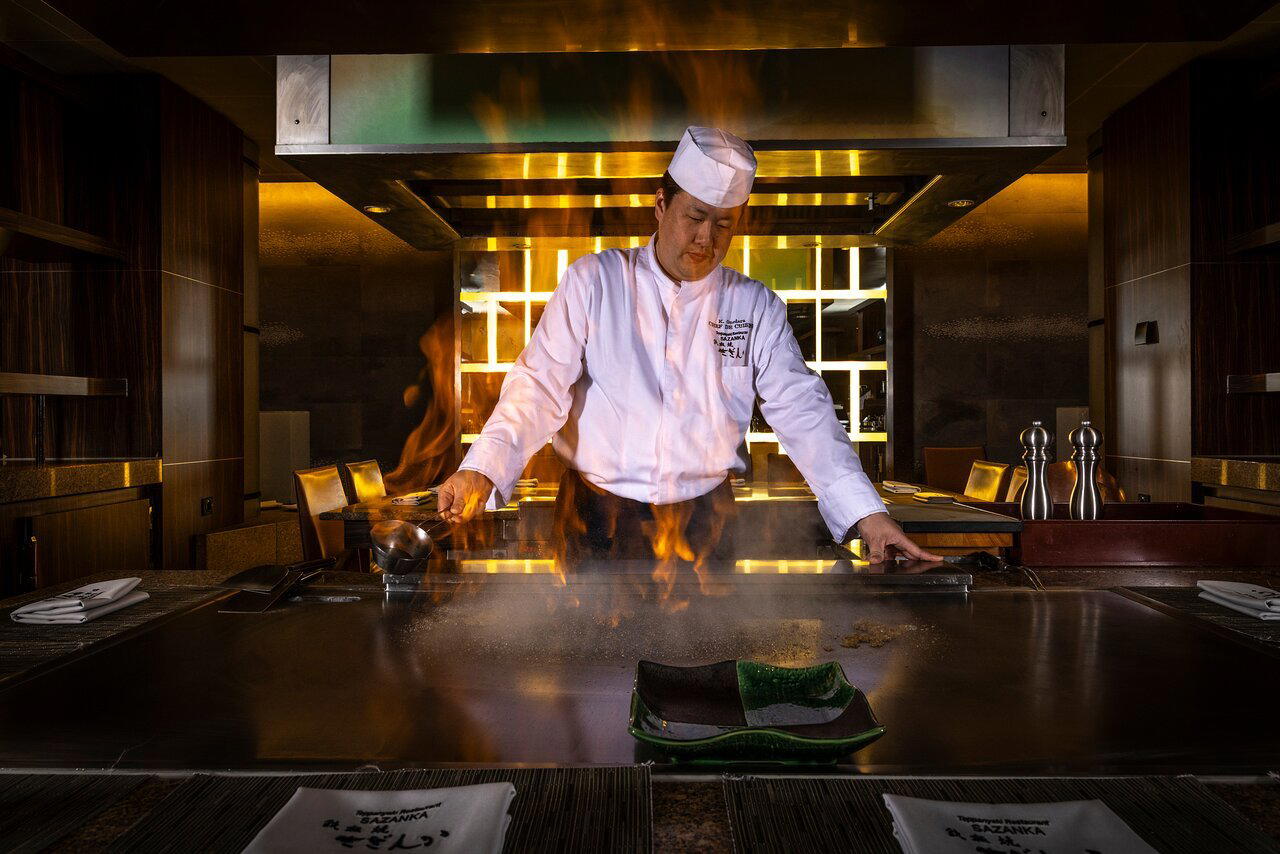
The Ritual Before the First Course
Sazanka is a Japanese teppanyaki restaurant in Amsterdam, set at Ferdinand Bolstraat 333 in De Pijp. There is a particular kind of stillness that Japanese restaurants achieve when they are working well, a calibrated quiet that slows the room down before anything has been eaten. Ferdinand Bolstraat 333 sits in Amsterdam's De Pijp neighbourhood, a street that carries the ordinary texture of daily city life: tram lines, corner grocers, cyclists moving at pace. Stepping into Sazanka is a shift in register. The surrounding district has developed one of Amsterdam's more interesting dining corridors.
Japanese dining in the Netherlands has split along familiar international lines. On one side: ramen shops and conveyor-belt sushi with fast turnover and accessible price points. On the other: a smaller, more deliberate tier of Japanese restaurants where the pacing of service, the silence around courses, and the composition of the menu reflect the formal traditions of kaiseki or teppanyaki. Sazanka belongs to that second tier. The distinction shapes everything from how long you should plan to stay to the kind of attention the table demands from the guest.
What De Pijp Contributes to the Equation
Amsterdam's dining identity has historically been organised around its canal belt and the Michelin-watched rooms clustered near the museum quarter. Ciel Bleu, Flore, Spectrum, and Vinkeles define the city's formal creative end, each operating in the €€€€ tier with the kind of accumulated recognition that makes them visible from outside the Netherlands. Bistro de la Mer anchors a different register at €€€, closer to classic technique and accessible occasion dining.
De Pijp has always operated slightly outside that gravity. Its restaurants have tended to earn loyalty through specificity, a cuisine executed with unusual seriousness, a format that doesn't try to be everything, rather than through the kind of institutional weight that drives bookings near the Rijksmuseum. For a Japanese restaurant, that neighbourhood logic is well-suited. The cuisine already rewards specificity.
The Architecture of a Japanese Meal, As It Works Here
Formal Japanese dining operates through structure in a way that European fine dining often gestures toward but rarely enforces. In kaiseki, the sequence is not merely a series of dishes but a composed argument: appetiser, soup, sashimi, a grilled course, a steamed course, a rice course, moving through temperature and texture and seasonal reference with an internal logic that the diner is expected to follow, not interrupt. Teppanyaki, the other major formal register in Japanese restaurant tradition, organises the meal around a live cooking surface where the performance of preparation is part of the content. Both formats ask something of the guest: patience, attention, a willingness to receive the meal on its own terms rather than directing it.
This becomes a practical matter. European diners accustomed to ordering from a menu, negotiating substitutions, and moving at their own pace encounter a different contract at a serious Japanese table. The kitchen has already made the sequence decisions. Your role is to arrive at the agreed time and pay the kind of attention the food rewards. Amsterdam's dining public has grown considerably more fluent in this contract over the past decade.
Sazanka sits within that tradition. The address on Ferdinand Bolstraat signals a neighbourhood rather than a hotel atrium or a canal-side showcase, which gives the experience a particular texture. The formality is in the food and the pacing, not in the surroundings as a status display.
Where Sazanka Sits in the Dutch Fine Dining Picture
Outside Amsterdam, the Dutch fine dining scene has built a distributed network of destination restaurants that draw serious diners across regional distances. De Librije in Zwolle and 't Nonnetje in Harderwijk represent the three-star tier. Aan de Poel in Amstelveen, De Bokkedoorns in Overveen, and Brut172 in Reijmerstok each hold Michelin recognition and serve as reference points for what the Dutch kitchen is capable of at its most disciplined. Further afield, De Groene Lantaarn in Staphorst, De Lindehof in Nuenen, De Lindenhof in Giethoorn, De Nieuwe Winkel in Nijmegen, and De Treeswijkhoeve in Waalre extend the map of serious Dutch dining well beyond the Randstad.
Within Amsterdam specifically, Japanese fine dining occupies a narrower position. The city's French-leaning creative rooms command most of the headline recognition. A restaurant running formal Japanese sequences in De Pijp is not competing in the same conversation as Ciel Bleu or Spectrum. It is addressing a different reader: someone who wants the specific discipline of Japanese structure, the particular pleasure of watching a meal unfold according to a logic the kitchen has set, rather than the progressive European tasting menu format that dominates the city's top tier.
Know Before You Go
| Address | Ferdinand Bolstraat 333, 1072 LH Amsterdam, Netherlands |
|---|---|
| Neighbourhood | De Pijp |
| Cuisine | Japanese (formal) |
| Price Range | About $150 per person |
| Booking | Reservation essential |
| Hours | Tue-Sat: 6:30-8:30 PM; Mon and Sun: Closed |
| Dress Code | Smart casual at minimum; formal Japanese dining norms apply |
Awards and Standing
Comparable venues nearby, for context on price, style, and recognition.
| Venue | Cuisine | Price | Notes |
|---|---|---|---|
| SazankaThis venue — the venue you are viewing | Michelin-Starred Japanese Teppanyaki | $$$$ | Not listed |
| Ikkoku | Japanese Omakase & Robatayaki | $$$ | Hercules Seghersbuurt |
| Mr Porter | Modern Steakhouse | $$$$ | Spuistraat Noord |
| The SIREN | Mediterranean-Japanese Fusion | $$$$ | Nes e.o. |
| Prins & Aap | French-Dutch Gastropub | $$$$ | Felix Meritisbuurt |
| De Utrechtsedwarstafel | Seasonal French Fine Dining | $$$$ | Amstelveldbuurt |
Continue exploring
More in Amsterdam
Restaurants in Amsterdam
Browse all →
Bars in Amsterdam
Browse all →
Hotels in Amsterdam
Browse all →
Wineries in Amsterdam
Browse all →
At a Glance
- Elegant
- Sophisticated
- Modern
- Special Occasion
- Date Night
- Celebration
- Hotel Restaurant
- Open Kitchen
- Sake Program
- Extensive Wine List
Current opening hours
- Monday
- Closed
- Tuesday
- 6:30–8:30 PM
- Wednesday
- 6:30–8:30 PM
- Thursday
- 6:30–8:30 PM
- Friday
- 6:30–8:30 PM
- Saturday
- 6:30–8:30 PM
- Sunday
- Closed
Hours can change for holidays and private events. Last verified .
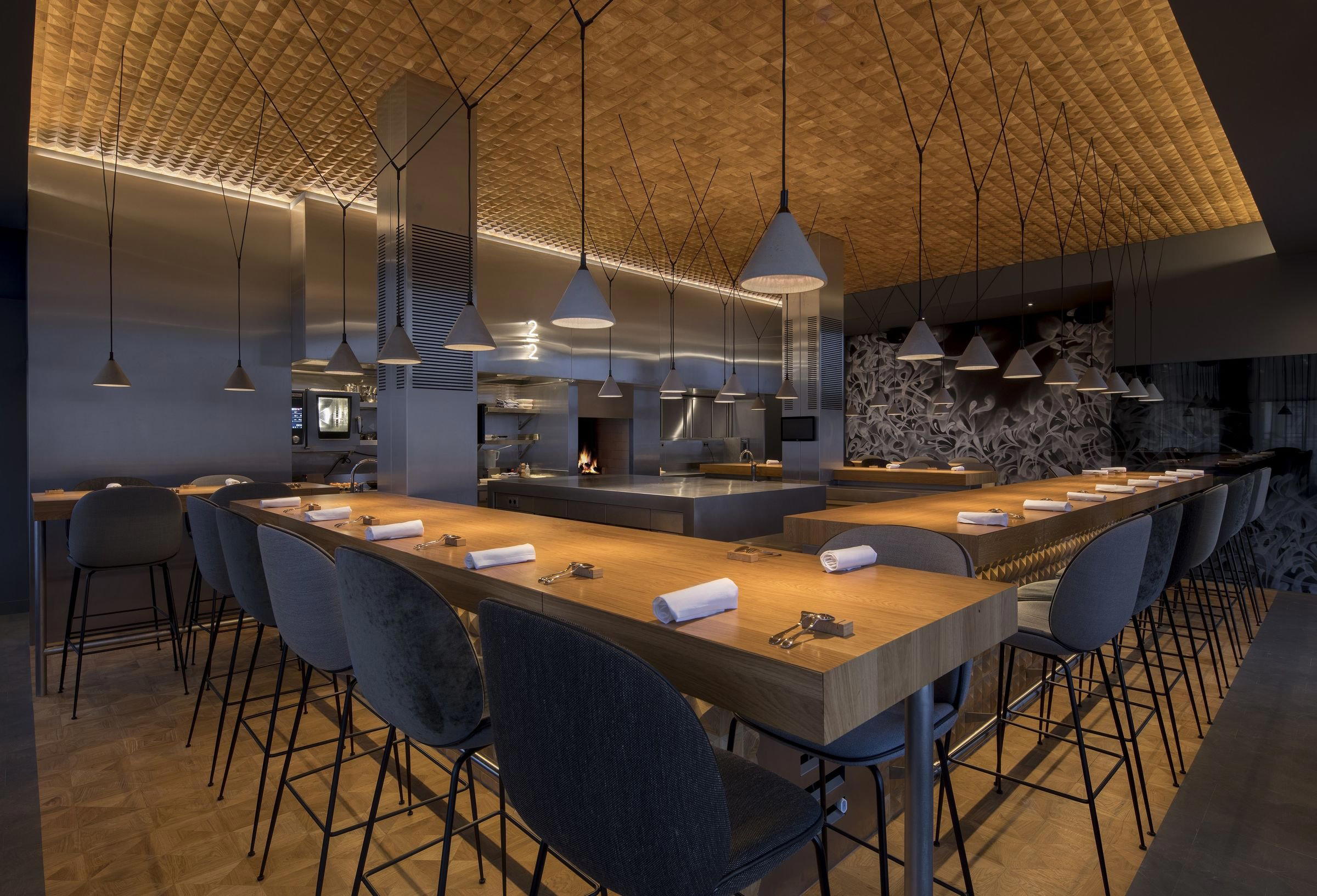
Contemporary Japanese interior inspired by stone, wood, water, and fire, creating a delightful and innovative ambiance.