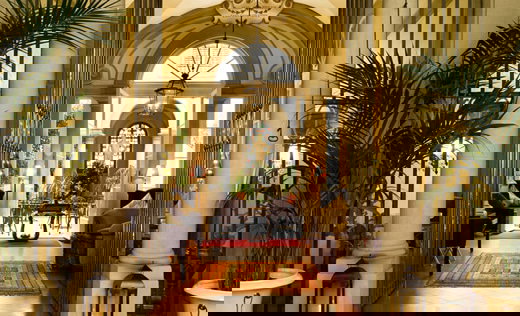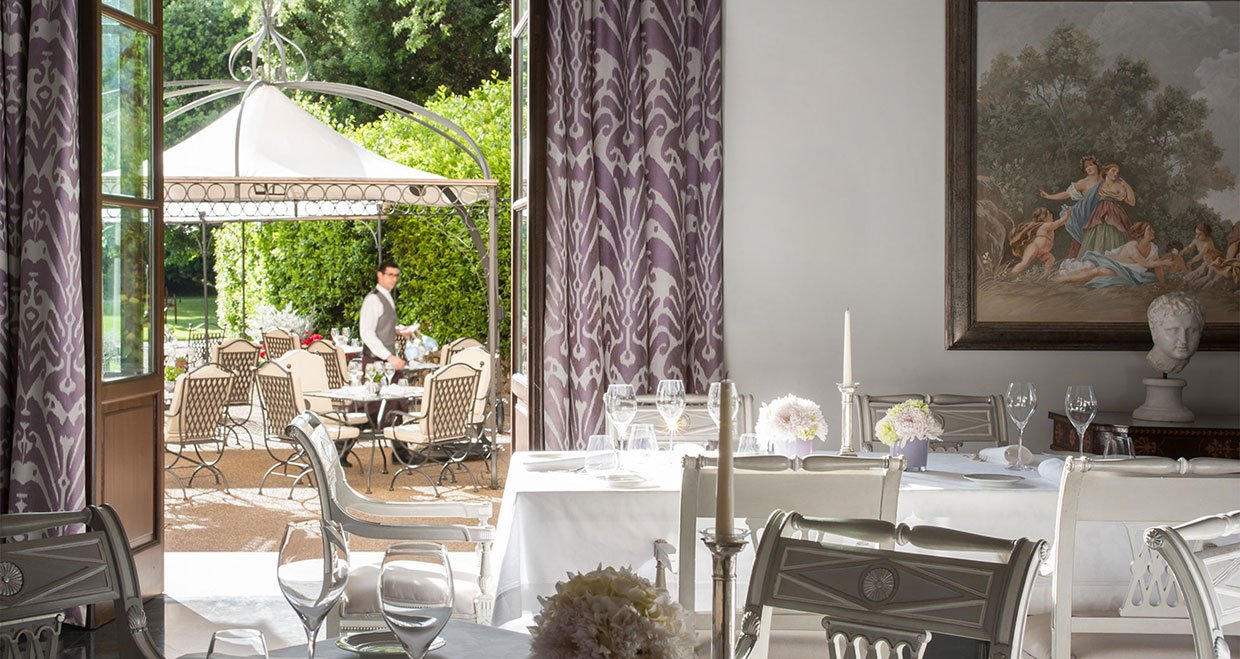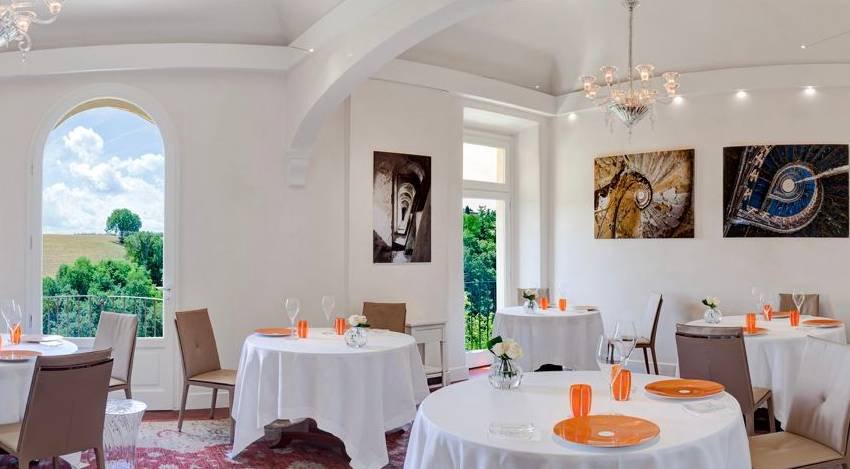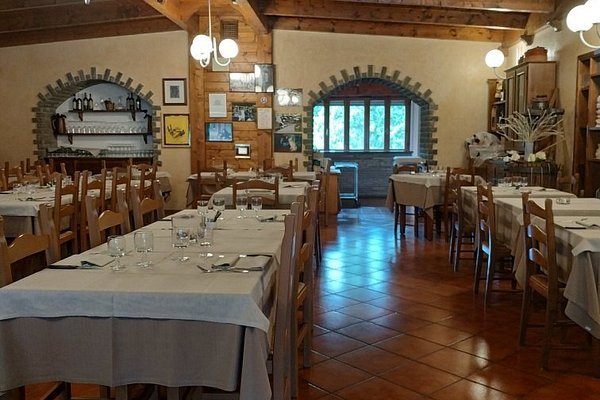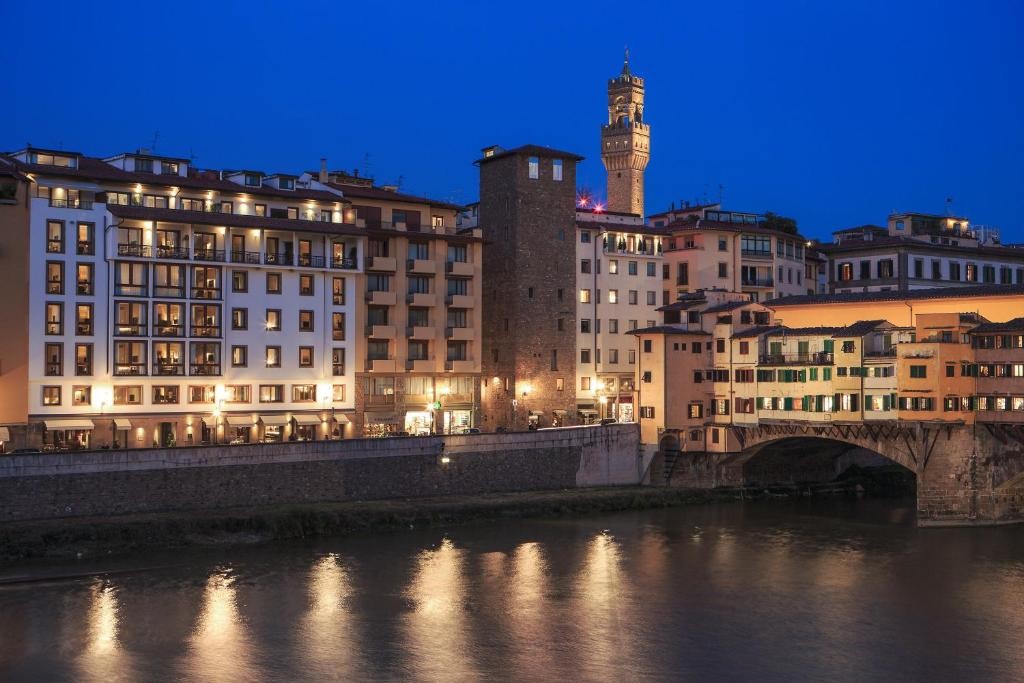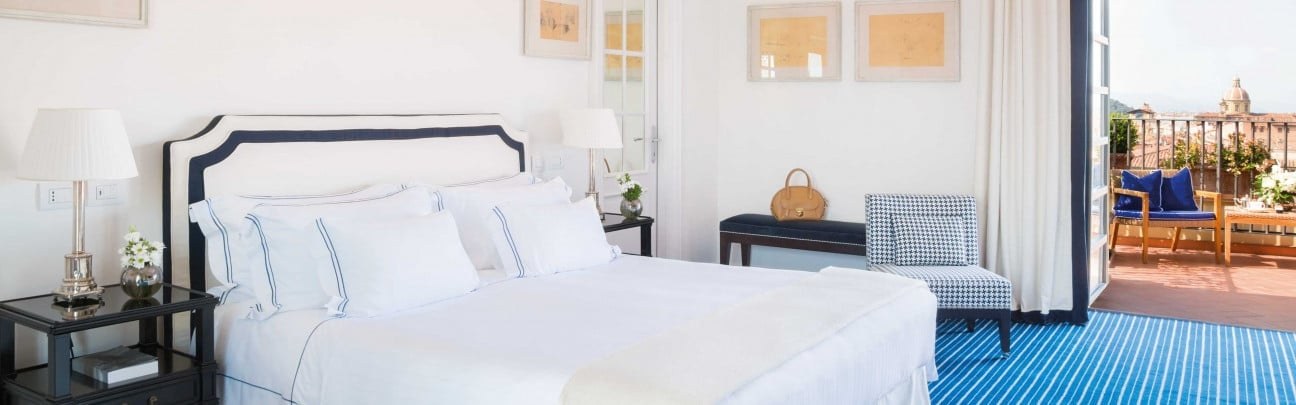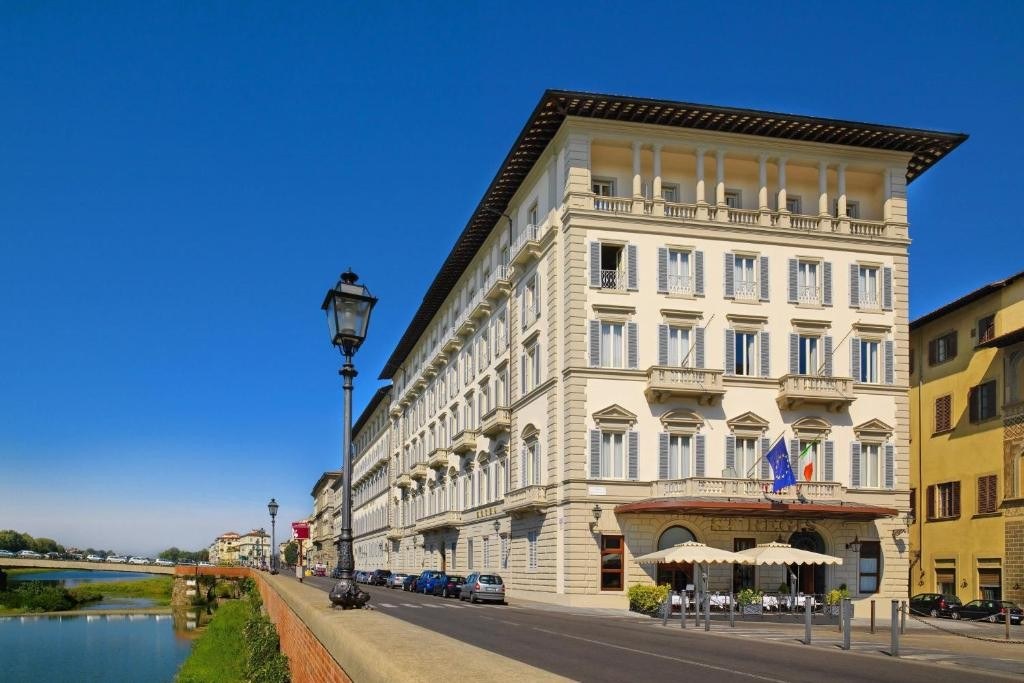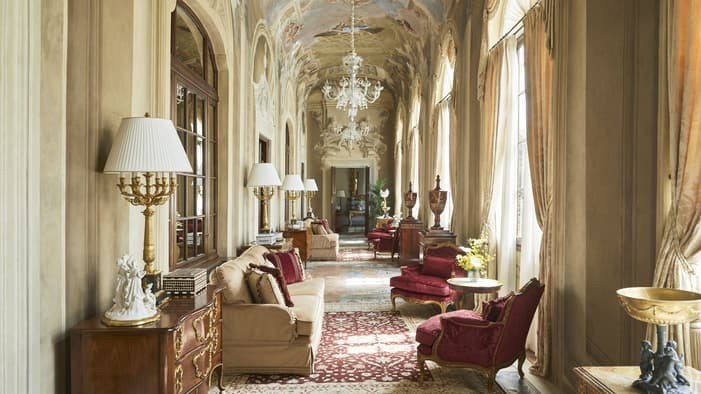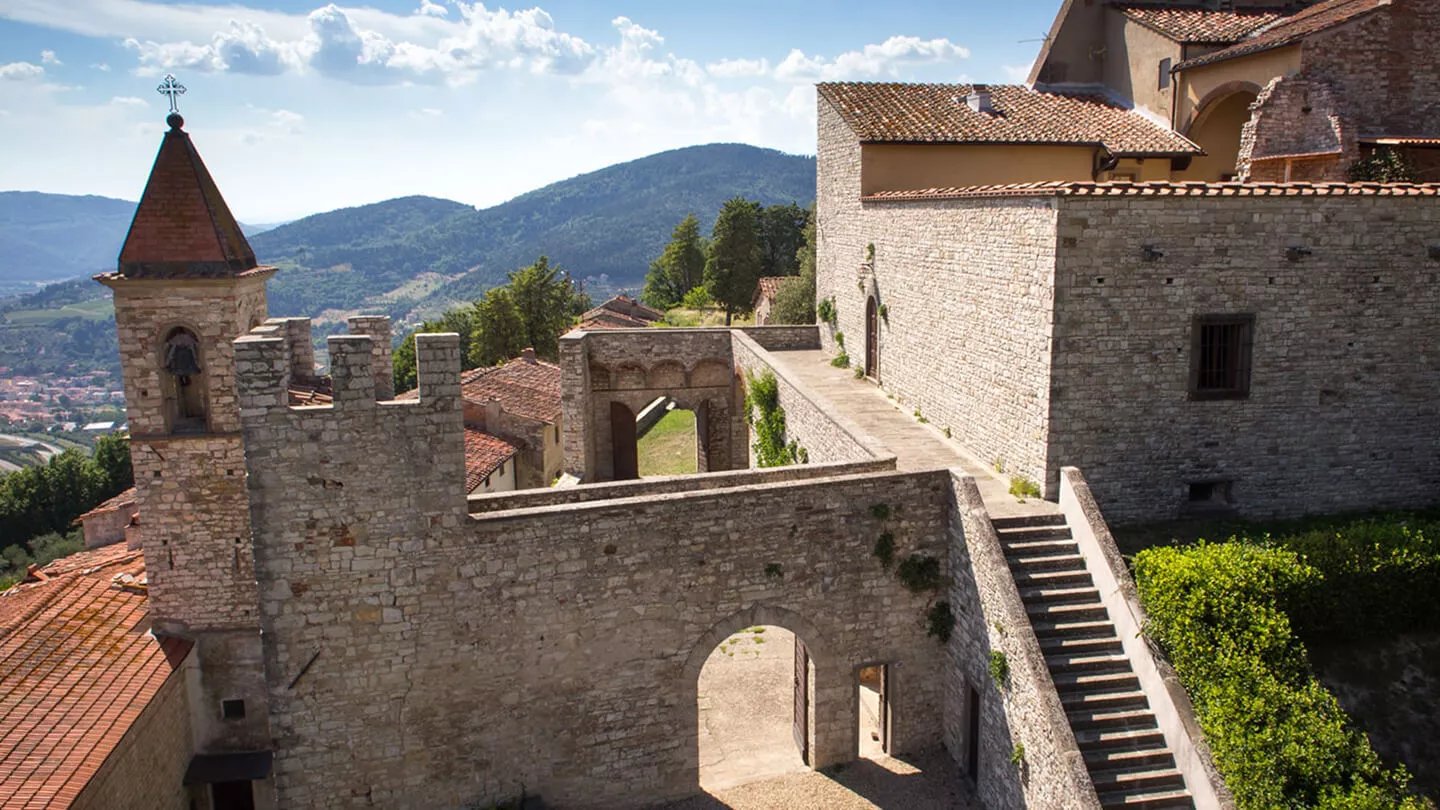


Santa Elisabetta occupies the upper tier of Florence's fine dining scene, housed inside the Byzantine Torre della Pagliazza — the city's oldest circular tower — with just six tables on the first floor of the Brunelleschi Hotel. Chef Rocco De Santis holds two Michelin stars and a La Liste score of 80 points (2026), building an elaborately constructed Mediterranean menu around fish and seafood with clear Campanian roots.
 Discover on Pearl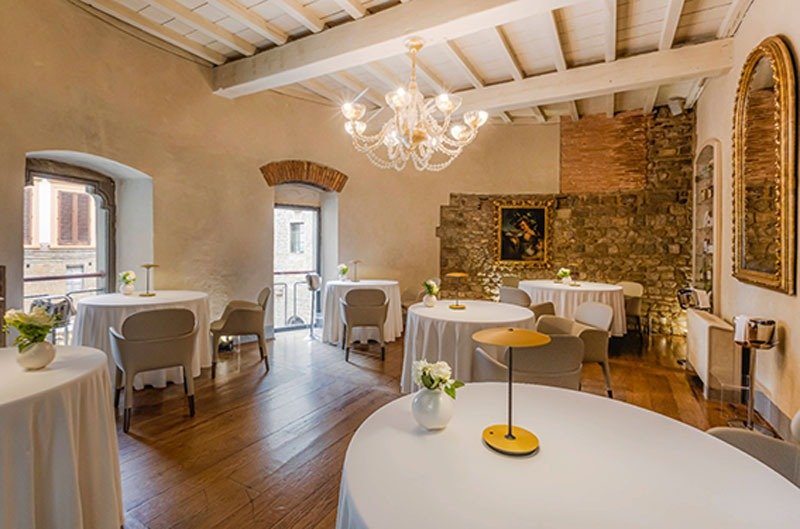
A Tower, Six Tables, and the Case for Returning
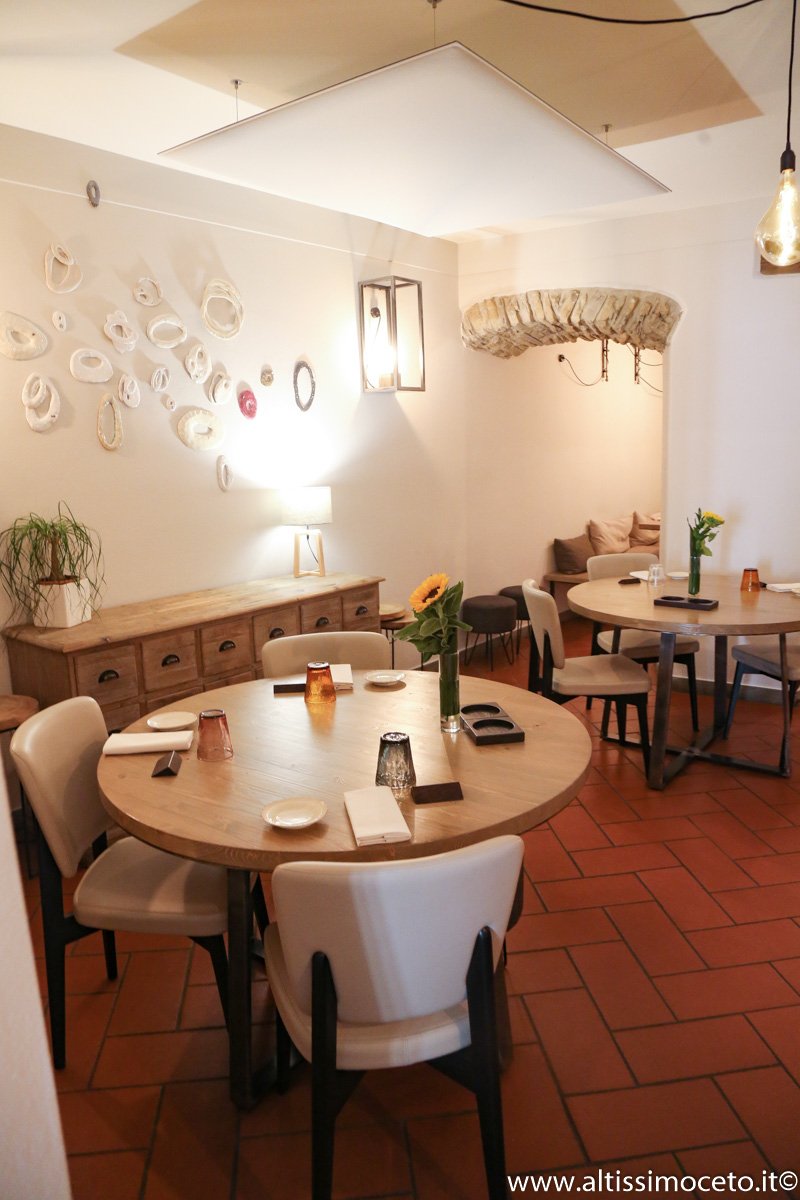
Florence's most celebrated restaurants tend to occupy one of two positions: the grand palazzo dining room drawing on centuries of Tuscan tradition, or the modernist project making a deliberate break from it. Santa Elisabetta, the two-Michelin-starred restaurant inside the Brunelleschi Hotel, sits slightly outside both camps. Its setting alone makes it structurally unlike anything else at this price tier in the city. The Torre della Pagliazza is the oldest circular tower in Florence, a Byzantine structure whose stone walls predate the Renaissance by several centuries. The dining room is reached through the hotel lobby, then up to a first-floor space with six tables and a Murano glass chandelier overhead. That count — six tables — is the first thing to understand about the room's character. This is not a restaurant where you arrive and disappear into the crowd.
That intimacy shapes the experience from the first visit, but it's the reason regulars come back. A room at this scale functions differently from a conventional dining room: the pacing is deliberate, the service ratios are high, and the kitchen is cooking for a small number of covers at any given time. Those who return to Enoteca Pinchiorri do so in part for its cellar depth and ceremonial scale. Those who return to ristorante Santa Elisabetta tend to come back for something closer to the opposite: contained, considered, and measurably uncrowded.
Mediterranean Cuisine with a Campanian Centre of Gravity
Chef Rocco De Santis runs a kitchen focused on fish and seafood, with the influence of his native Campania evident throughout. In the broader context of Italian fine dining, this positions Santa Elisabetta in a specific and relatively narrow category. Florence's prestige dining scene is historically weighted toward meat, game, and the Tuscan larder. A kitchen that orients around Mediterranean seafood and southern Italian technique is operating against the grain of local expectation, which is partly what gives it a distinct identity among the city's leading tables.
Campanian fine dining has a strong reference point in Italy's national conversation. Quattro Passi in Marina del Cantone represents one end of that tradition: seafood-led, coast-anchored, technically rigorous. De Santis brings similar southern sensibilities into a landlocked Renaissance city. The elaboration is evident in the construction of the dishes , this is not the cucina povera simplicity sometimes romanticised around Neapolitan cooking, but something more architecturally composed, where technique is deployed in service of flavour rather than as display. Uliassi in Senigallia offers a useful parallel: Italian coastal fine dining that treats seafood as intellectually serious subject matter rather than a premium garnish.
Within Florence specifically, the comparison set is telling. Borgo San Jacopo and Il Palagio both occupy the €€€€ tier and operate from hotel settings, but with broader menus and larger rooms. Gucci Osteria da Massimo Bottura brings a different proposition entirely: global-inflected Italian creativity with a cultural brand attached. Santa Elisabetta's bet is on focus and restraint of scale rather than breadth or brand association.
What the Awards Data Says About Its Position
The credential record for santa elisabetta florence is consistent rather than spectacular in its accumulation, which is itself informative. Two Michelin stars have been maintained across both 2024 and 2025 , a mark of stability rather than a recent arrival. The Opinionated About Dining Classical in Europe ranking moved from Recommended (2023) to #255 (2024) to #200 (2025), a trajectory that suggests a kitchen consolidating rather than plateauing. La Liste placed the restaurant at 82.5 points in 2025 and 80 points in 2026, a minor adjustment that keeps it within the same competitive band. None of these figures represent the ceiling of Italian fine dining , Osteria Francescana in Modena and Enrico Bartolini in Milan operate at a different altitude , but for a six-table room in a tower in central Florence, the combination of two Michelin stars and a Top 200 OAD classical ranking is a strong signal about the kitchen's consistency.
The Google review score of 4.5 across 484 reviews is worth noting in this context. At a restaurant this small, a high volume of reviews relative to capacity suggests a significant rate of guests choosing to record their experience publicly, which tends to correlate with meals that land clearly rather than ones that leave diners uncertain about what they paid for.
For further reference on how Santa Elisabetta fits within the Italian fine dining system, Atelier Moessmer Norbert Niederkofler in Brunico and Dal Pescatore in Runate represent different regional expressions of the same sustained-quality model: multi-star restaurants with clear identities that have earned their recognitions incrementally rather than arrived fully formed.
The Regulars' Logic
Understanding why guests return to a six-table restaurant more than once requires thinking about what a small room offers that a larger dining room cannot. The Torre della Pagliazza setting is not a backdrop that becomes invisible on second or third visits , the physical space, with its circular Byzantine stonework and first-floor position above a quiet piazza, has a consistency that a more architecturally neutral room lacks. The piazza itself, Piazza Sant'Elisabetta, sits just slightly away from the main tourist axis of central Florence, which means arrivals feel considered rather than accidental.
At this level of price and attention, the kitchen's seafood-led focus becomes a reason to return rather than a constraint. A menu built around Mediterranean fish and Campanian sensibility will shift with the seasons in ways that a meat-and-game Tuscan menu will not, at least not with the same register of change. The difference between a summer service and a winter service in a kitchen oriented around seafood and regional southern Italian produce is meaningful , it gives the returning guest a reason to expect something different without the restaurant abandoning its identity. This seasonal dimension is part of what builds the loyalty pattern that small, focused restaurants tend to generate at this price point.
Diners who have been following Atto di Vito Mollica as a Florence benchmark will find Santa Elisabetta operating in a genuinely different register: more intimate in format, more focused in its culinary identity, and less visually prominent in terms of setting. They are not direct substitutes, and part of what the regulars at each understand is precisely that distinction.
Planning a Visit
The restaurant operates Tuesday through Saturday, with a lunch service from 12:30 to 1:30 pm and dinner from 7:30 to 9:30 pm. Both Monday and Sunday are closed, which narrows the window for visitors on short itineraries. The lunch window in particular is tight at one hour, a constraint that reflects the kitchen's format rather than an invitation to rush , arrival at the opening time is advisable. The restaurant is located at Piazza Sant'Elisabetta, 3, accessed through the entrance to the Brunelleschi Hotel, from where staff accompany guests to the dining room. Given the six-table capacity, reservations should be secured well in advance, particularly for weekend dinner slots and during Florence's peak periods in spring and autumn.
The €€€€ price point places it at the same tier as the city's other Michelin-starred hotel restaurants, though the per-cover cost at a room of this size typically carries higher kitchen-to-guest ratios than a conventional large dining room at the same tier. For context on Florence's broader dining and hotel options, EP Club's full Florence restaurants guide, hotels guide, bars guide, wineries guide, and experiences guide cover the wider picture. For those interested in how Italian creativity travels beyond the peninsula, Rosetta in Mexico City and Il Piccolo Principe in Viareggio offer useful comparative reference points for Italian-inflected fine dining in different settings.
Comparable Options
A quick look at comparable venues, using the data we have on file.
| Venue | Cuisine | Price | Notes |
|---|---|---|---|
| Santa Elisabetta | Italian, Creative | €€€€ | This venue |
| Enoteca Pinchiorri | Italian - French, Italian Contemporary | €€€€ | Italian - French, Italian Contemporary, €€€€ |
| Borgo San Jacopo | Italian, Modern Cuisine | €€€€ | Italian, Modern Cuisine, €€€€ |
| Gucci Osteria da Massimo Bottura | Modern Italian, Italian Contemporary | €€€€ | Modern Italian, Italian Contemporary, €€€€ |
| Il Palagio | Italian Contemporary | €€€€ | Italian Contemporary, €€€€ |
| Cibrèo Trattoria | Tuscan Trattoria | €€ | Tuscan Trattoria, €€ |
Continue exploring