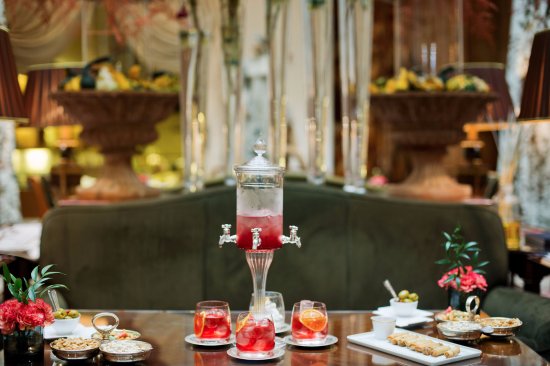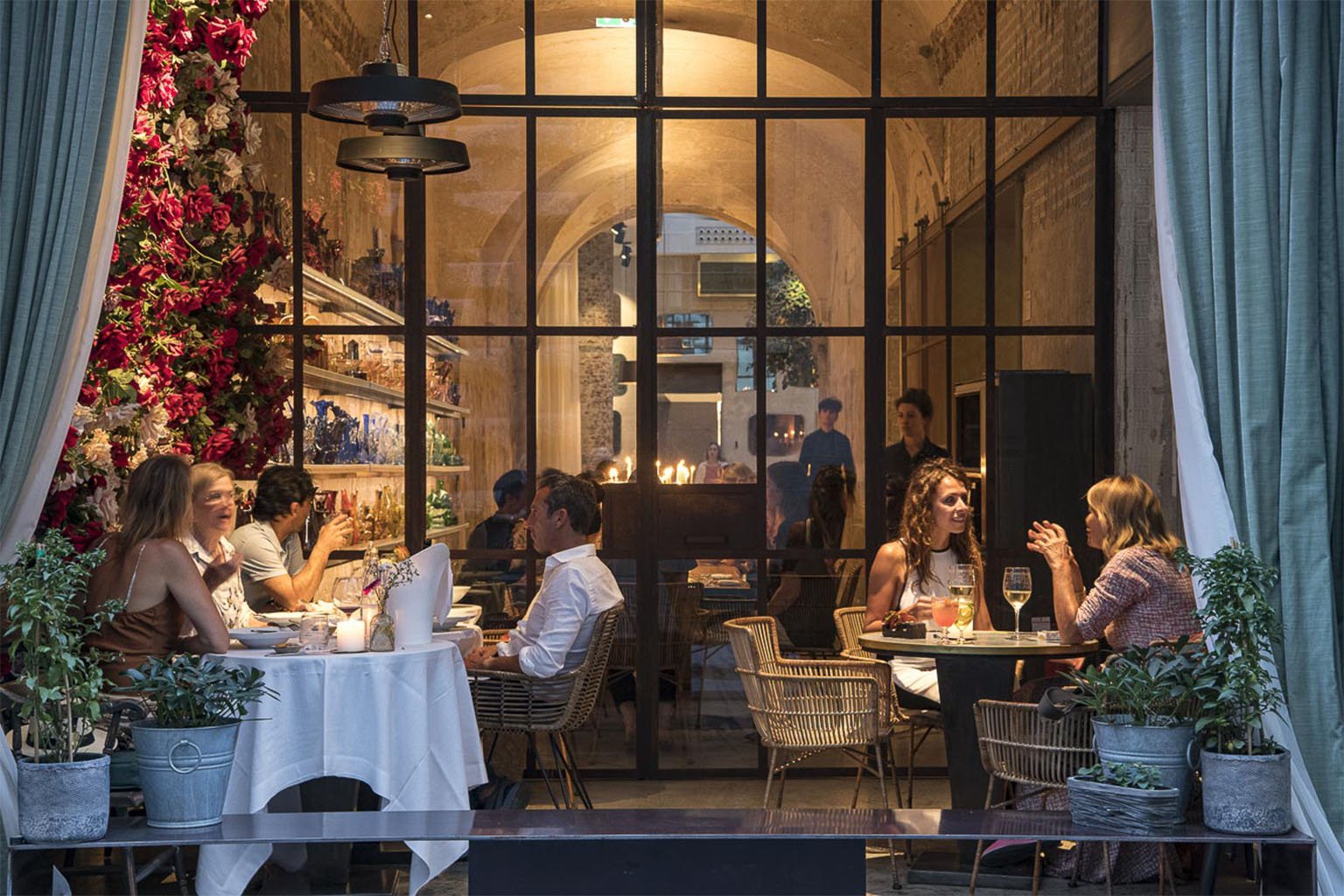



Il Palagio Florence brings Michelin-starred sophistication to Palazzo della Gherardesca, where Chef Paolo Lavezzini's Italian-Brazilian culinary journey creates unexpected magic within neo-Classical elegance. Surrounded by historic gardens, this evening sanctuary reinterprets Tuscan traditions through the chef's unique South American perspective.
 Discover on Pearl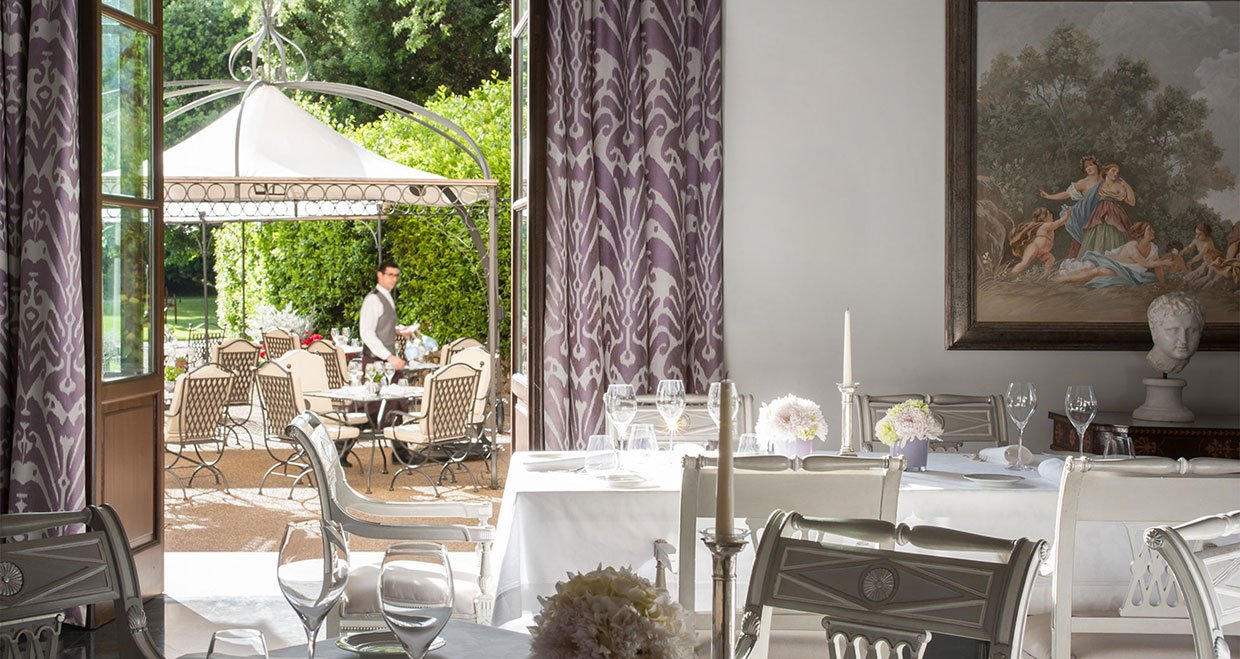
Inside the Palazzo della Gherardesca
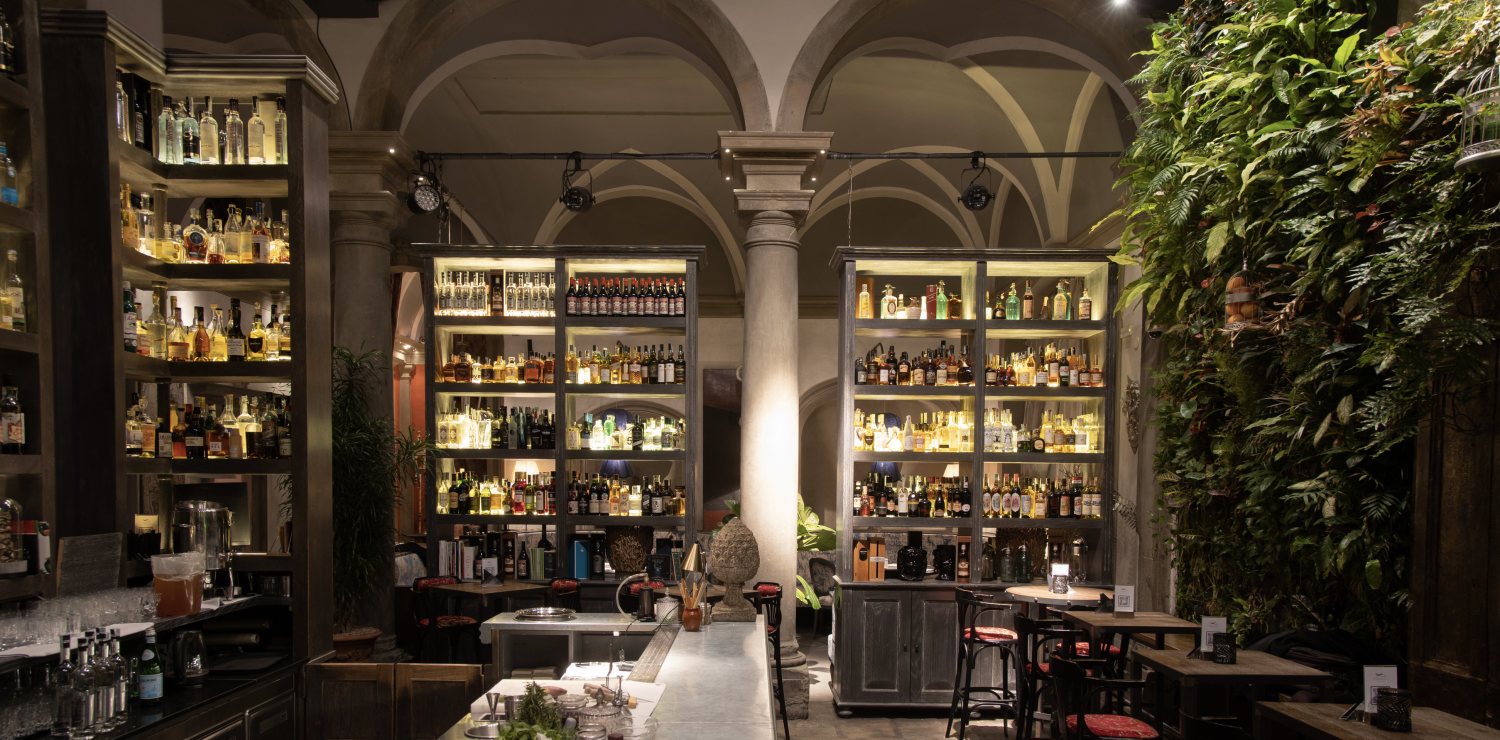
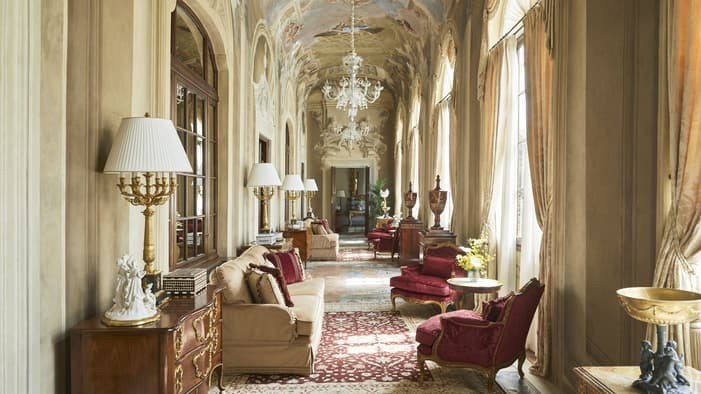
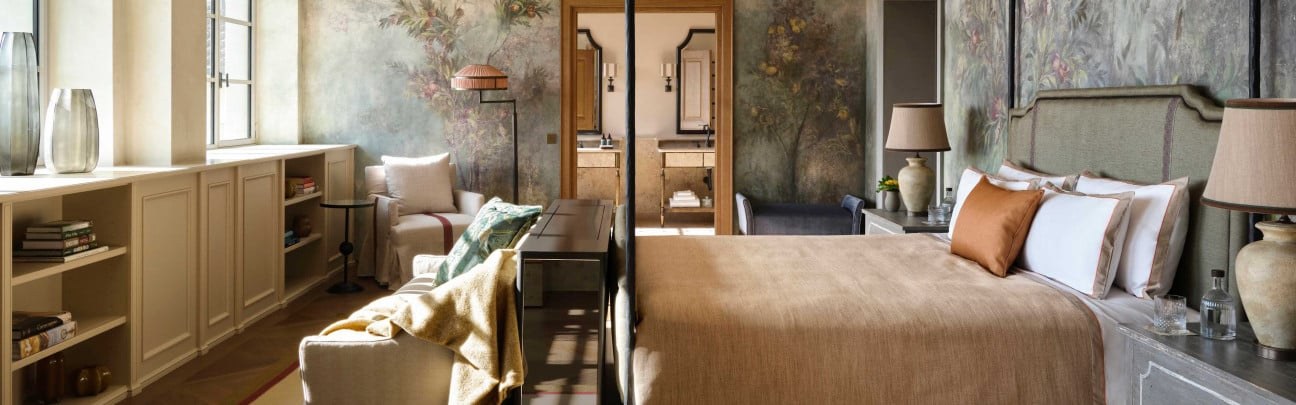
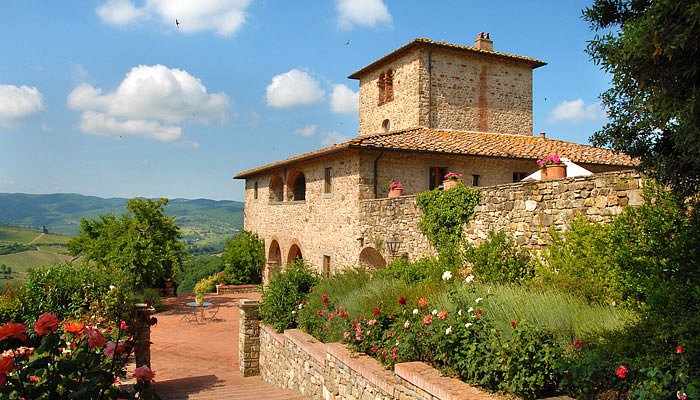
Approaching Borgo Pinti 99 on foot, you pass through one of the most intact Renaissance garden walls remaining in Florence. The Palazzo della Gherardesca, which now forms the core of the Four Seasons Hotel Florence, was completed in the fifteenth century and its architectural mass is felt the moment you step inside. The ground-floor dining room that houses Il Palagio occupies former ceremonial space: marble floors, frescoed ceilings, and Murano glass chandeliers that were not installed to impress diners but were already there when the building changed hands. The setting is, in other words, not a designed atmosphere — it is a preserved one, and that distinction matters when assessing what kind of restaurant this is.
Florence's top-tier dining tier sits between two poles. At one end, Enoteca Pinchiorri holds three Michelin stars and represents the formal French-Italian synthesis that defined Italian fine dining in the 1980s and 1990s. At the other, a cluster of one-star addresses — including Borgo San Jacopo and Gucci Osteria da Massimo Bottura , operate with different guest profiles, different tonal registers, and different relationships to Tuscan culinary tradition. Il Palagio, awarded one Michelin star in 2024 and ranked 483rd on Opinionated About Dining's European Classical list for 2025, occupies a position in this tier that is defined more by restraint and ingredient fidelity than by high-concept technique.
The Kitchen's Position in Contemporary Italian Cooking
Contemporary Italian fine dining has been working through a productive tension for two decades: how much intervention is too much, and when does creative distance from the raw ingredient stop adding value and start subtracting it. A number of Italy's most discussed addresses , Osteria Francescana in Modena, Le Calandre in Rubano, Piazza Duomo in Alba , have answered that question with high-craft transformation as the primary mode. Chef Paolo Lavezzini at Il Palagio has answered it differently: two tasting menus and an à la carte structured around dishes described in sourced assessments as creative but unfussy, with top-quality ingredients as the organising principle rather than the finishing touch.
That positioning connects naturally to a broader shift in how Italian kitchens are thinking about sourcing ethics and supply chain transparency. When the ingredient is the protagonist, the provenance of that ingredient becomes an editorial statement in its own right. Lavezzini's approach , whatever its specific seasonal expression , implies a kitchen that has thought carefully about where its produce originates, since a philosophy built on ingredient quality cannot be sustained without direct relationships with producers. This places Il Palagio in alignment with a current Italian fine dining consensus that treats sourcing as a culinary decision, not an administrative one, and that registers proximity to producers as a form of quality control rather than a marketing position. It is worth comparing this approach to Atelier Moessmer Norbert Niederkofler in Brunico, where the ethical sourcing framework is made fully explicit, or Dal Pescatore in Runate, where multi-generational relationships with local producers have become definitional to the restaurant's identity. Il Palagio operates on a different scale, inside a major hotel group, but the culinary logic it applies points in the same direction.
Tuscany's Ingredient Advantage
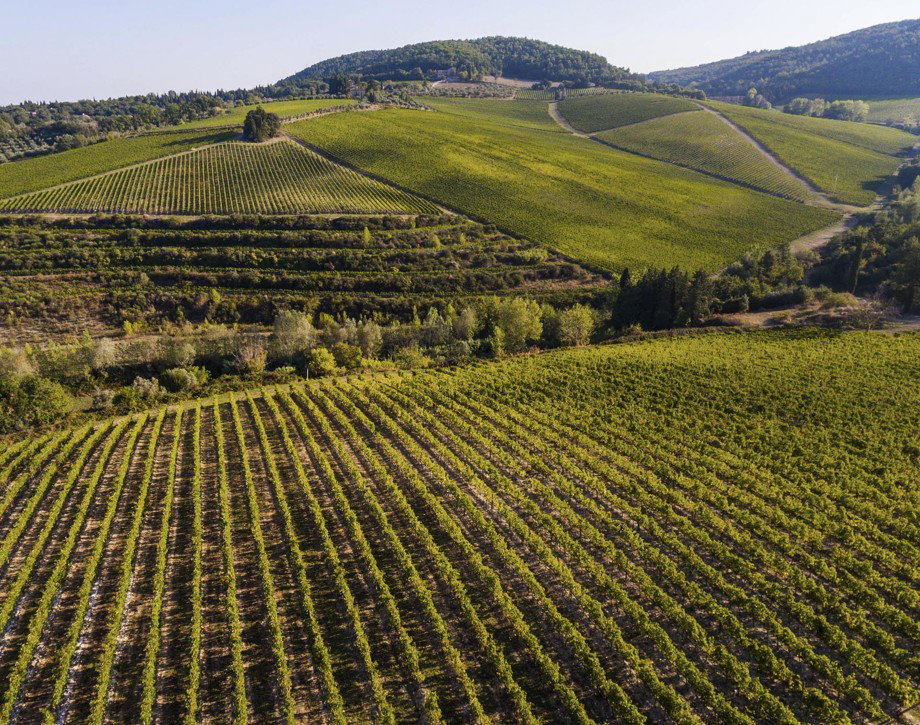
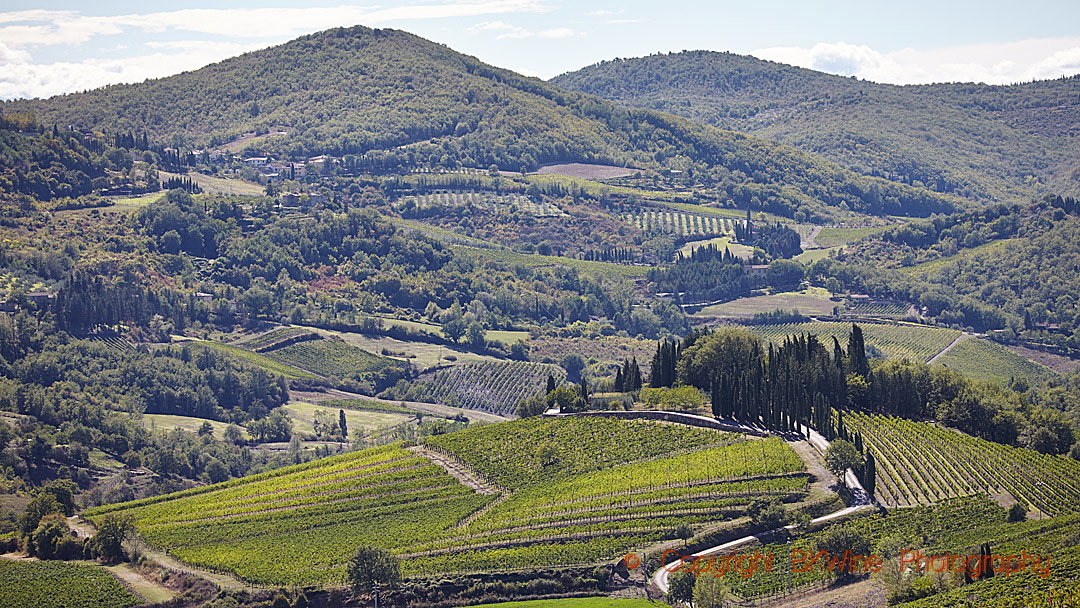
Part of what makes ingredient-led cooking sustainable in Florence is the depth of Tuscany's agricultural infrastructure. Chianina beef, Cinta Senese pork, the olive oils of the Chianti hills, the legumes of the Garfagnana, the truffles of San Miniato , these are not niche specialty products but the baseline of a regional food culture that has been developing its PDO and PGI designations for decades precisely because the quality argument was already won before the certification arrived. A kitchen at the price tier of Il Palagio (two-course dinner at €66 and above, prix fixe and à la carte options available) that commits to this supply chain has significant raw material to work with. The question it then faces is how much creative distance to apply , and Lavezzini's answer, based on available evidence, is: less rather than more.
For a broader view of where this style sits within Florence's current restaurant scene, see our full Florence restaurants guide. Restaurants taking a different approach to the same ingredient base include Atto di Vito Mollica, Konnubio, Degusteria Italiana, and Gunè San Frediano, all operating at different price points and with distinct relationships to Tuscan culinary convention. For further reference points in the Italian Contemporary category elsewhere in Italy, Enrico Bartolini in Milan, Agli Amici Rovinj, and L'Olivo in Anacapri each represent instructive comparisons.
The Wine Program
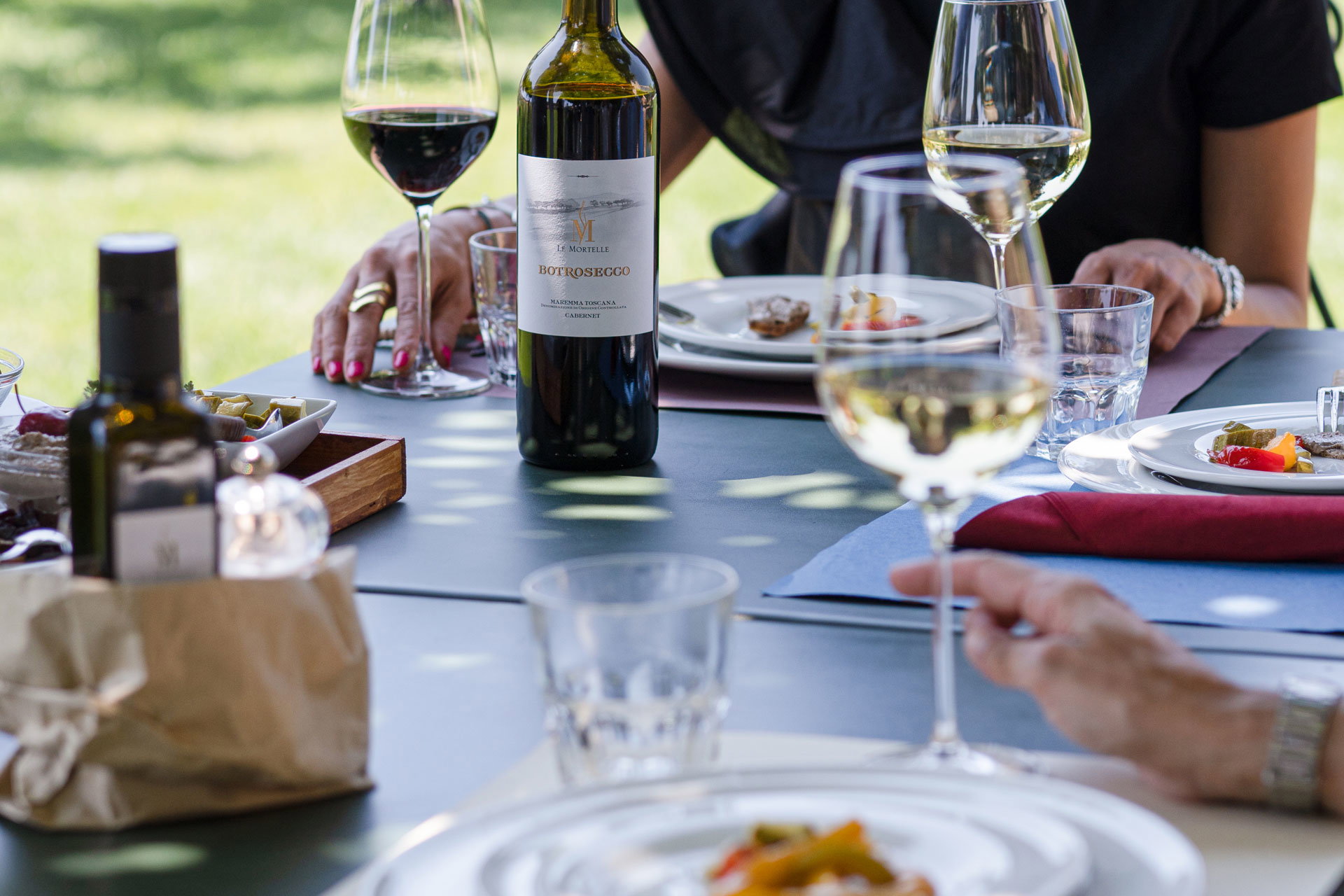
The wine list at Il Palagio is managed by Wine Director Walter Meccia, with sommelier Francesco Moradei working the floor. The list carries approximately 1,200 selections from a cellar inventory of 15,000 bottles, with identified strengths in Tuscany, Piedmont, Bordeaux, Burgundy, and broader France and Italy. The list is priced in the $$$ tier , many bottles at €100 and above , which places it in a peer group with other top-hotel dining rooms where the cellar is a genuine asset rather than a commercial formality. A corkage fee of €51 is available for guests bringing their own bottles, which at a restaurant with this cellar depth signals confidence rather than restriction. For a Tuscan-focused program of this size, the depth in local appellations , Brunello, Bolgheri, Chianti Classico Riserva, Vino Nobile , would be the logical anchor, with the French sections serving as reference points for guests who want to benchmark Italian producers against their European counterparts. The full Florence wineries context is available in our full Florence wineries guide.
Hotel Setting and What It Implies
Hotel dining in major European cities has been going through a significant reassessment. A decade ago, hotel restaurants were reliably the safest bet for an expensive, forgettable meal. The shift toward genuine culinary investment in hotel dining rooms has been driven partly by guest expectations and partly by the recognition that a restaurant with a Michelin star changes what a hotel's brand communicates. The Four Seasons model , deploying serious kitchens inside historic properties , has produced credible restaurants in multiple cities, and Il Palagio fits that pattern with its 2024 star representing a verifiable external validation rather than a house claim. For guests staying at the property, dinner at Il Palagio is available Monday through Saturday from 7pm to 10pm; Sunday service is not offered. Bookings for the tasting menu format, at this price tier and star level, typically require advance reservation of several weeks, particularly during Florence's peak spring and autumn seasons. For wider context on where the Four Seasons Florence sits in the city's accommodation tier, see our full Florence hotels guide.
Dress code expectations at this level of hotel dining in Florence trend toward smart to formal, though the Four Seasons approach across its properties tends to prioritise guest comfort over rigidity. The address , Borgo Pinti, in the eastern section of the historic centre, a ten-minute walk from the Duomo , places the restaurant within the city's pedestrian zone. The nearest taxi drop and car access point is just outside the garden entrance. Evening access via foot from the Santa Croce neighbourhood is direct. For bars before or after dinner, our full Florence bars guide covers the current scene, and our full Florence experiences guide has the wider cultural programming context for the city.
Where It Fits
A compact peer snapshot based on similar venues we track.
| Venue | Cuisine | Awards | Notes |
|---|---|---|---|
| Il Palagio | Italian Contemporary | Michelin 1 Star | This venue |
| Enoteca Pinchiorri | Italian - French, Italian Contemporary | Michelin 3 Star | Italian - French, Italian Contemporary, €€€€ |
| Santa Elisabetta | Italian, Creative | Michelin 2 Star | Italian, Creative, €€€€ |
| Borgo San Jacopo | Italian, Modern Cuisine | Michelin 1 Star | Italian, Modern Cuisine, €€€€ |
| Gucci Osteria da Massimo Bottura | Modern Italian, Italian Contemporary | Michelin 1 Star | Modern Italian, Italian Contemporary, €€€€ |
| Cibrèo Trattoria | Tuscan Trattoria | Tuscan Trattoria, €€ |