Malaterra occupies a residential address on Viale XXI Aprile in Rome's Montesacro district, operating at a remove from the tourist corridors that define most visitors' experience of the city. The restaurant sits within a tier of Rome dining that rewards planning over spontaneity, drawing a local clientele that treats the neighbourhood as a destination in its own right rather than a fallback.
Pearl is the En Primeur Club membership app — saves, bookings, and concierge access live there. Same editors, same standards.
- Address
- Viale XXI Aprile, 75, 00162 Roma RM, Italy
- Phone
- +39645471930
- Website
- malaterra.com
- Directions
- Get directions
 Saves & bookings on Pearl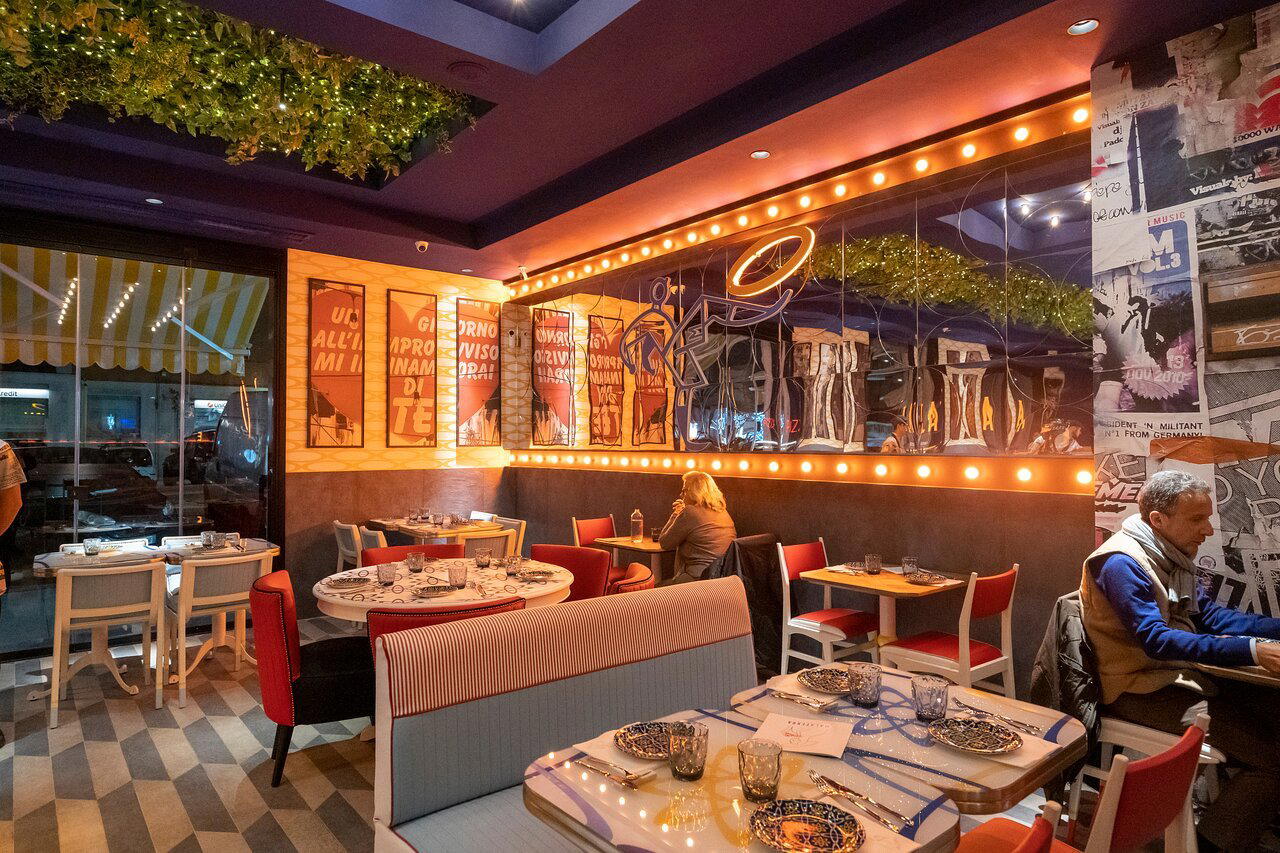
A Residential Quarter With Its Own Logic
Rome's serious dining scene has long operated on two tracks: the constellation of high-profile addresses in the centro storico and Parioli, and a quieter set of neighbourhood restaurants that accumulate reputation through word of mouth rather than guidebook coverage. The address, postal zone 00162, north of the Nomentana corridor, places it well outside the circuits that most visiting diners travel. That distance is the first thing to understand before you book.
Montesacro is a largely residential quarter built out during the early twentieth century, with wide tree-lined avenues and a neighbourhood rhythm that feels distinct from the compressed energy of Trastevere or the formal weight of the Prati district. Restaurants here are not built around foot traffic. They depend on return visits. The physical approach to Malaterra, a broad, relatively quiet avenue in a grid of apartment blocks, signals that dynamic immediately. You are going to the restaurant; it is not presenting itself to you.
This is a pattern seen at several of Italy's more considered dining addresses. Venues like Reale in Castel di Sangro and Uliassi in Senigallia built their reputations in locations that required deliberate travel rather than casual discovery. Rome has its own version of this geography, and Malaterra belongs to it.
Planning the Visit: What to Know Before You Go
The practical advice here is therefore structural rather than specific: this is a neighbourhood restaurant in a non-tourist district, which means the booking dynamics differ from the well-trafficked addresses closer to the city centre.
Rome's mid-tier and upper-mid-tier restaurant market has tightened considerably over the past several years. Properties in less-central zones often run at high occupancy precisely because their regulars book ahead as a matter of habit, not because demand from visitors drives pressure on the diary. The result is that a restaurant in Montesacro can be harder to enter on short notice than an equivalent address in the centro, simply because the walk-in option is effectively absent, no passing tourist trade absorbs the overflow.
The practical recommendation: contact the restaurant directly and with lead time. If a website or reservations platform is not immediately findable, that itself is a signal about how the restaurant operates. Many Roman neighbourhood restaurants at this level still run bookings by phone or through personal introduction. Compare this to the approach required for well-known Rome addresses like Il Pagliaccio or Acquolina, where online booking infrastructure is visible and the process is standardised. Malaterra's relative opacity online places it in a different tier of accessibility, one where persistence matters.
Building that into the evening's logistics is worth doing explicitly, rather than treating it as an afterthought.
Where Malaterra Sits in the Rome Dining Conversation
Rome's high-end dining tier is anchored by a small number of addresses with formal critical recognition. La Pergola holds three Michelin stars and operates at the summit of the city's price register. Enoteca La Torre and Achilli al Parlamento represent the creative-contemporary end of the capital's recognised scene. Below that tier, Rome has a dense middle layer of serious neighbourhood restaurants that operate without the apparatus of formal awards but with consistent local loyalty.
Malaterra's address and neighbourhood positioning suggest it occupies a place in that middle layer: committed enough to draw diners from across the city, but operating outside the visibility structures that produce guidebook citations. This is not an unusual position for Italian restaurant culture, where the distinction between a decorated address and a locally respected trattoria is often more about marketing infrastructure than about what arrives on the plate. Venues like Dal Pescatore in Runate and Le Calandre in Rubano have shown that geography and institutional modesty are no barrier to serious culinary standing in Italy. The pattern is well established.
Within Rome specifically, the northeast residential districts have produced a number of restaurants that function as genuine neighbourhood anchors without seeking the critical attention that comes from a centro storico address. Malaterra fits that profile. Its cuisine is Neapolitan Pizza.
Malaterra's profile is different in almost every structural way, which is precisely the point of interest for a certain kind of diner.
Comparable Spots
Comparable venues nearby, for context on price, style, and recognition.
| Venue | Cuisine | Price | Notes |
|---|---|---|---|
| MalaterraThis venue — the venue you are viewing | Neapolitan Pizza | $$ | Not listed |
| Marigold Roma | Italian Farm-to-Table Bakery Cafe | $$ | Ostiense |
| Le Bistrot | Vegan Italian Bistro | $$ | Ostiense |
| Trattoria Nonna Fortunata | Authentic Roman Trattoria | $$ | Sallustiano |
| Ristorante da Mario | Modern Roman Trattoria | $$ | Sallustiano |
| Trattoria Monti | Le Marche Trattoria | $$ | Esquilino |
Continue exploring
More in Rome
Restaurants in Rome
Browse all →
Bars in Rome
Browse all →
Hotels in Rome
Browse all →

At a Glance
- Trendy
- Modern
- Casual Hangout
- Late Night
- Open Kitchen
Current opening hours
- Monday
- 10 AM–3:30 PM, 6:30 PM–12 AM
- Tuesday
- 10 AM–3:30 PM, 6:30 PM–12 AM
- Wednesday
- 10 AM–3:30 PM, 6:30 PM–12 AM
- Thursday
- 10 AM–3:30 PM, 6:30 PM–12 AM
- Friday
- 10 AM–3:30 PM, 6:30 PM–12 AM
- Saturday
- 10 AM–3:30 PM, 6:30 PM–12 AM
- Sunday
- 10 AM–3:30 PM, 6:30 PM–12 AM
Hours can change for holidays and private events. Last verified .
Energetic and stylish atmosphere with moderate to lively noise levels.