Our verdict
RIBS PLENILUNIO sits in the San Blas-Canillejas district of Madrid, placing a dedicated rib and grilled-meat format well east of the city's central dining corridor. The address on Calle de Aracne positions it inside a neighbourhood where local demand rather than tourist traffic drives covers. For Madrid visitors plotting a broader Spanish dining itinerary, it represents a distinctly residential angle on the city's serious meat culture.

Pearl is the En Primeur Club membership app — saves, bookings, and concierge access live there. Same editors, same standards.
The menu
What to order
- Baby Back Ribs
- Smash Burger
- Pulled Pork Burger
- Ribeye Steak
East of Centre: Madrid's Meat Culture Beyond the Tourist Circuit
Madrid's reputation for serious grilled and roasted meat stretches from the wood-fired asadores of the historic centre to the neighbourhood parrillas that serve the city's outer districts with considerably less fanfare. San Blas-Canillejas, a working residential quarter in the east of the city near the Adolfo Suárez Madrid-Barajas airport corridor, sits firmly in the latter category. Restaurants here answer to local regulars rather than passing visitors, and that dynamic tends to produce a particular kind of honesty in the cooking: portion discipline loosens, wine lists skew toward value over prestige, and the cooking assumes the guest already knows what they want.
RIBS PLENILUNIO operates within that residential meat-restaurant tradition at Calle de Aracne, 3. The address places it inside the Plenilunio commercial and leisure complex, a format common to Madrid's outer ring, where large-footprint venues serve catchment areas that extend well beyond walking distance. The restaurant's name signals its specialisation plainly: ribs, in the context of Spanish grilled meat culture, point toward slow preparation, smoke or oven heat applied over time, and the kind of informal sharing-table format that dominates this price tier across the city.
Where the Wine Fits Into a Meat-Focused Format
Spanish rib and grilled-meat restaurants occupy an interesting position in wine terms. The cuisine almost always calls for structured red wine with enough tannin to cut through collagen-rich cuts, and the country produces exactly the right raw material: aged Rioja from Tempranillo, the granitic Garnacha of Madrid's own Sierra de Gredos appellation, and the dense, oak-forward reds of Ribera del Duero all sit naturally alongside slow-cooked pork or beef ribs. At the neighbourhood end of the market, wine lists in this format typically prioritise recognisable Spanish regions at accessible price points rather than depth across obscure appellations. That is not a criticism of the model — it reflects the audience the format serves.
What distinguishes wine programs in the more considered iterations of this restaurant type is not cellar depth but curation intelligence: the ability to select two or three bottles per category that actually match the kitchen's output rather than filling a list with names that look credible on paper. Spain's D.O. system gives restaurants at every level access to genuinely good wine at price points unavailable in most other wine-producing countries, which means even a short list, assembled thoughtfully, can deliver real satisfaction alongside a plate of ribs. For context on how Madrid's high-end restaurants approach wine at the opposite end of the investment spectrum, the programs at Coque and Paco Roncero both carry serious cellar depth and dedicated sommelier teams — the comparison clarifies how much of the Madrid wine experience depends on the tier you are eating in.
San Blas-Canillejas and the Outer-Ring Dining Pattern
Understanding where RIBS PLENILUNIO sits in Madrid requires understanding how the city's dining geography actually works. The concentric logic is direct: Michelin-starred creative cooking clusters in Salamanca, Chamberí, and the city centre, where DiverXO, Deessa, and DSTAgE operate in what is effectively a separate market. Further out, the eating becomes more specifically local in character, tied to neighbourhood demographics and the kind of repeat-visit loyalty that high-end tasting-menu restaurants rarely generate at the same frequency.
The Plenilunio centre context is worth considering separately. Leisure-complex restaurants in any city face a specific challenge: the built environment prioritises retail and multiplex traffic over dining atmosphere, which means the restaurant itself carries the burden of generating its own sense of occasion. Formats that lean into informality and generous portions tend to manage this better than those that attempt a more refined register in a setting that works against it. A rib restaurant, almost by definition, belongs to the former category.
For Madrid visitors who want to range further into the city's Spanish dining tradition before or after a meal in the outer districts, the full picture is worth consulting. Our full Madrid restaurants guide maps the city's dining by neighbourhood and tier. And Spain's serious restaurant culture extends well beyond the capital: El Celler de Can Roca in Girona, Arzak in San Sebastián, Azurmendi in Larrabetzu, Martin Berasategui in Lasarte-Oria, Mugaritz in Errenteria, Quique Dacosta in Dénia, Aponiente in El Puerto de Santa María, Ricard Camarena in València, Cocina Hermanos Torres in Barcelona, and Atrio in Cáceres each represent distinct regional expressions of Spanish cooking at the highest level. For international comparison points, Le Bernardin in New York City and Atomix in New York City offer useful markers of what tasting-menu ambition looks like in a different city context.
Planning a Visit
Address: C. de Aracne, 3, San Blas-Canillejas, 28022 Madrid, Spain. Getting there: The venue is accessible from central Madrid via Metro Line 5 (Canillejas station) or by taxi or ride-share from the city centre, typically a 15-20 minute journey depending on traffic. Reservations: Specific booking method not confirmed; walk-in capacity at leisure-complex restaurants in Madrid's outer districts is generally higher than in the city centre, though weekend evenings at popular neighbourhood restaurants tend to fill. Dress: No confirmed dress code; the format and location suggest informal. Budget:
Frequently asked questions
Is RIBS PLENILUNIO a family-friendly restaurant?
How would you describe the vibe at RIBS PLENILUNIO?
at RIBS PLENILUNIO?
Does RIBS PLENILUNIO suit travellers arriving or departing via Barajas airport?
A Pricing-First Comparison
Comparable venues nearby, for context on price, style, and recognition.
| Venue | Cuisine | Price | Notes |
|---|---|---|---|
| RIBS PLENILUNIOThis venue — the venue you are viewing | True American Barbecue | $30–50 | Not listed |
| SteakBurger Preciados | American Grilled Meats & Gourmet Burgers | $30–50 | Palacio, American Grilled Meats & Gourmet Burgers |
| Cereal Hunters Café | Cereal Café | Not listed | Chueca, Cereal Café |
| La Puerta Amarilla | American BBQ Burgers and Steaks | $20–30 | Barrio de las Letras, American BBQ Burgers and Steaks |
| Juancho's BBQ | Award-Winning BBQ Burgers | $20–30 | Malasana, Award-Winning BBQ Burgers |
| Roost Chicken Plenilunio | Fried Chicken & Burgers | $20–30 | Rejas, Fried Chicken & Burgers |
Continue exploring
More in Madrid
Restaurants in Madrid
All restaurants in Madrid →
Bars in Madrid
All bars in Madrid →

Details
- Casual
- Rustic
- Lively
- Casual Hangout
- Group Dining
- Family
- Business Dinner
- Terrace
- Standalone
- Beer Program
- A La Carte
- Set Menu
- Beer
- Soft Drinks
Current opening hours
- Monday
- 1–11 PM
- Tuesday
- 1–11 PM
- Wednesday
- 1–11 PM
- Thursday
- 1–11 PM
- Friday
- 1–11 PM
- Saturday
- 1–11 PM
- Sunday
- 1–11 PM
Hours can change for holidays and private events. Last verified .
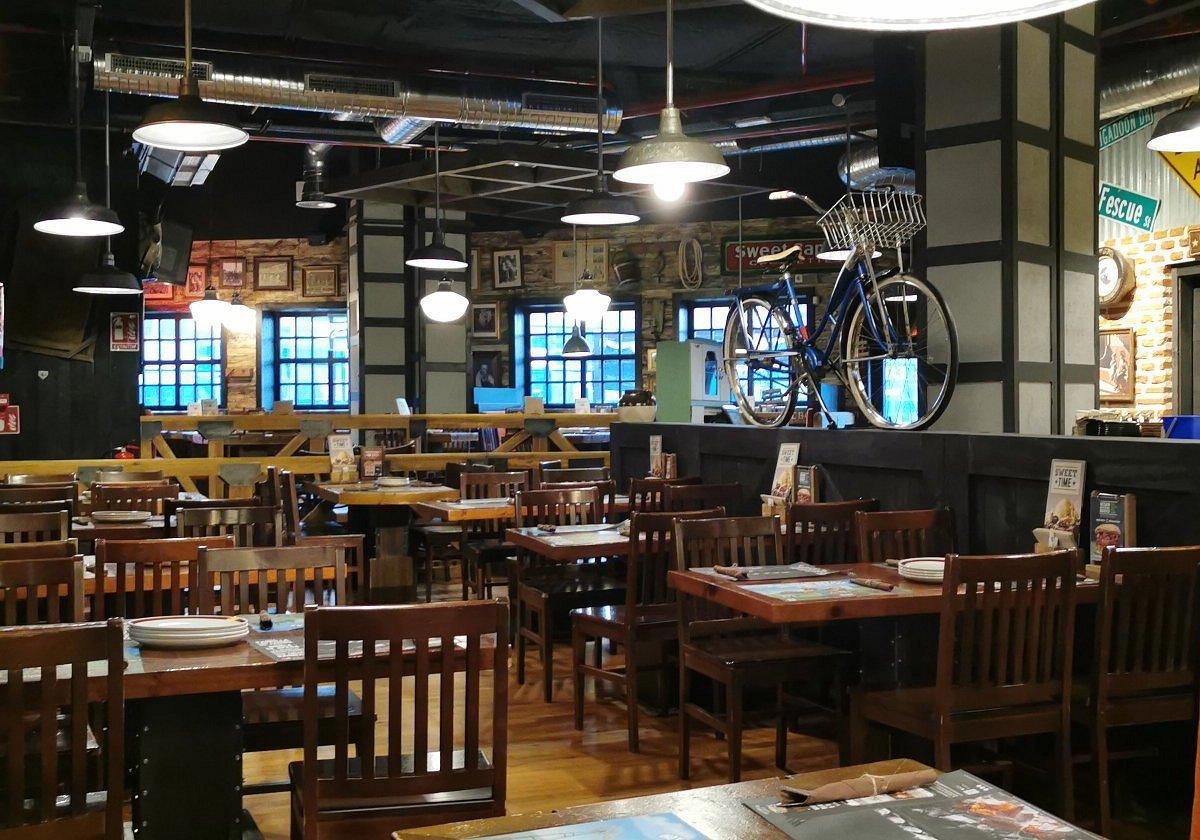
Casual American-style dining with old-fashioned design elements, rustic decor, and a welcoming atmosphere that transports guests to the American heartland.