
Star Wine List
A wine bar on Calle de Gutenberg in Madrid's Retiro district, Micasita Bar à Vin has earned consecutive Star Wine List recognition in 2025 and 2026, placing it among a select tier of Spanish venues where the wine program carries serious editorial weight. The format is bar à vin rather than restaurant, which means the list does more structural work than the kitchen — and rewards guests who arrive with curiosity rather than a fixed order in mind.

Pearl is the En Primeur Club membership app — saves, bookings, and concierge access live there. Same editors, same standards.
- Address
- C. de Gutenberg, 6, Retiro, 28014 Madrid, Spain
- Phone
- +34 678 32 74 48
- Hours
- Mon–Thu 1–4:30 PM, 7:30 PM–12 AMFri 1–4:30 PM, 7:30 PM–12:30 AMSat 1–5 PM, 7:30 PM–12:30 AMSun 1–5 PM, 7 PM–12 AM
- Website
- instagram.com
- Directions
- Get directions
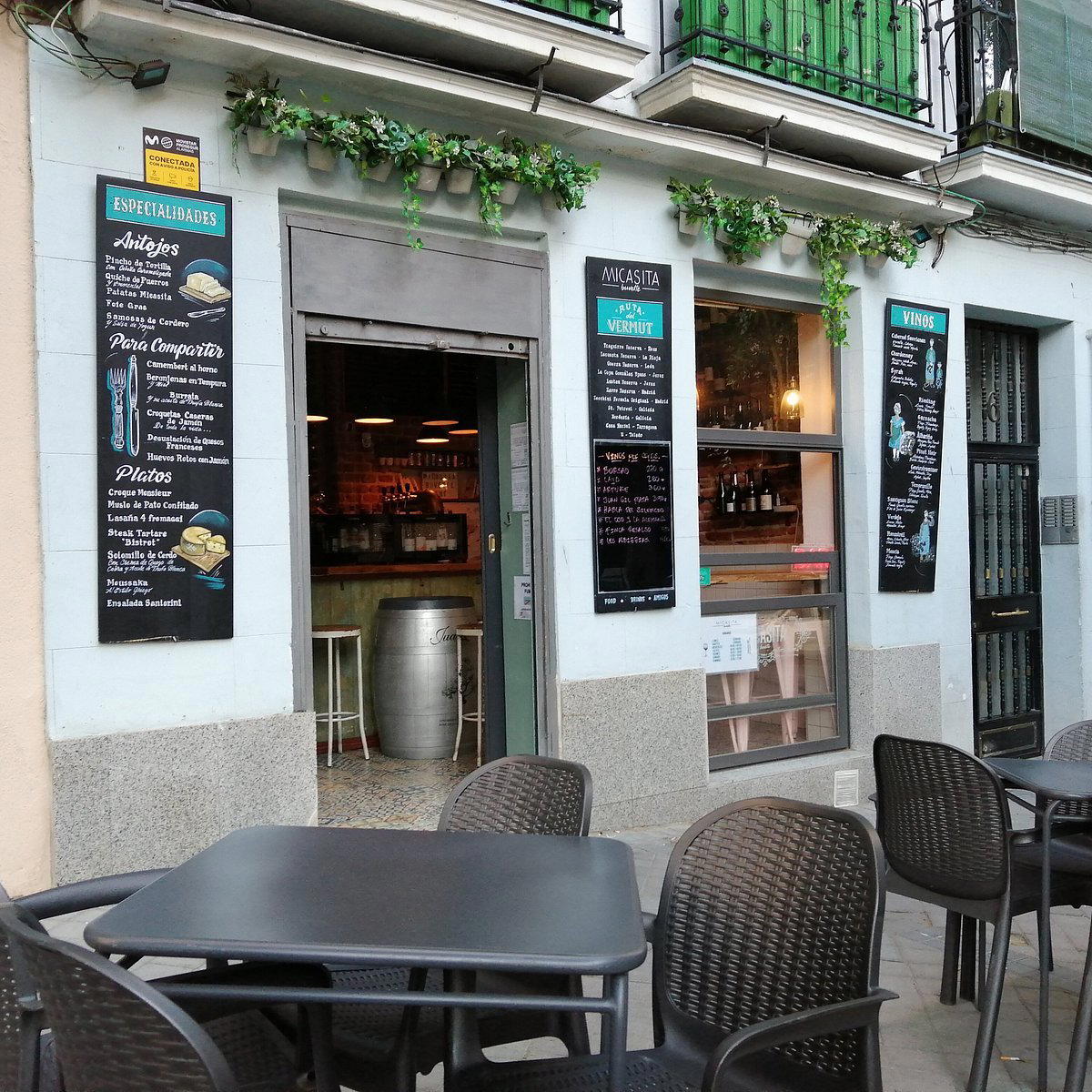
Retiro's Quiet Wine Bar Tier
Madrid's drinking scene has long organised itself around two poles: the cocktail bars of Malasaña and Chueca, where venues like Angelita, Salmon Guru, and 1862 Dry Bar have built internationally recognised programs, and the older tapas-and-vermouth circuit closer to La Latina and Lavapiés. The wine bar format — bar à vin in the French mode, where the list is the menu and food plays a supporting role — occupies a smaller, more specialist position in the city. Retiro, historically a residential and park-facing neighbourhood rather than a nightlife corridor, has proved a natural home for that quieter format. Micasita Bar à Vin, on Calle de Gutenberg, sits within that geography and that sensibility.
What the Format Tells You
The bar à vin structure is worth pausing on, because it shapes everything about what Micasita is and is not. In a conventional restaurant, the wine list exists to accompany a food menu. In a bar à vin, the relationship inverts: food arrives to accompany wine, and the list carries the editorial ambition. This means the selection across regions, producers, and styles does most of the communicative work that a tasting menu might do elsewhere. Guests choosing between a natural producer from Galicia, a restrained Rioja, or something from an unexpected Spanish appellation are effectively reading an argument about what wine can be, one built into the list's architecture rather than stated on a menu.
That format distinction also explains why Star Wine List recognition, awarded in both 2025 and 2026, functions as a meaningful trust signal here in a way it might not at a restaurant where wine is secondary. Star Wine List evaluates programs specifically: depth, breadth, pricing integrity, and the coherence of the selection. Consecutive recognition across two years suggests the program has maintained both quality and relevance rather than achieving a single-year spike.
The List as Architecture
Spanish wine has undergone a significant editorial reappraisal over the past decade. Regions that spent years in commercial obscurity, Bierzo, Ribeira Sacra, Canary Islands, Jerez, now appear on serious international lists alongside Rioja and Ribera del Duero. A wine bar list built in Madrid today, if it is doing its job, functions as a map of that reappraisal: where the interesting producers are working, which appellations are being reconsidered, and how Spanish winemakers are engaging with low-intervention techniques without abandoning regional identity.
The bar à vin format, when it works, makes that map legible through the act of ordering. Rather than navigating a hundred-page document, guests typically encounter a curated selection sized to prompt genuine discovery, a list narrow enough to read in full, deep enough to reward return visits. The wine-first architecture means each bottle or glass speaks to a considered position: this producer over that one, this region at this moment.
Calle de Gutenberg in Context
The address on Calle de Gutenberg places Micasita in a part of Retiro that functions differently from the neighbourhood's more tourist-facing edges near the park entrance. This is a residential block with the lower foot-traffic patterns of a local street rather than a destination thoroughfare. For a wine bar built around considered drinking, that positioning is functionally appropriate: it filters toward guests who arrived with intention rather than those passing through. The bar sits within walking distance of the broader Retiro district's quieter streets, away from the higher-density dining corridors further north toward Salamanca.
Madrid's bar culture, at its better end, has always made space for neighbourhood-anchored venues that serve a local circuit without catering exclusively to it. 11 Nudos represents a different expression of that same Madrid instinct, a specific format, a specific address, a program that rewards the guest who finds it. Micasita reads similarly: a venue whose address is part of its argument.
Placing Micasita in the Spanish Wine Bar Conversation
Across Spain, the wine bar format has taken hold in different ways city by city. Barcelona has developed a strong natural wine bar circuit. Seville's drinking culture, represented by venues like Bar Sal Gorda, tends toward sherry and tapas integration. Granada's Bar Gallardo sits within an older Andalusian bar tradition. Madrid's version of the wine bar, at its more specialist end, tends to engage directly with the country's contemporary winemaking moment, producers working with indigenous varieties, older vineyards, lower intervention, while remaining rooted in a social format that is unmistakably Spanish: wine as a reason to stay at the table longer.
Internationally, the bar à vin format has its own comparison set. Boadas in Barcelona operates within a different tradition, cocktail-led, historically anchored, but both represent the idea of a drinking venue where the program itself is the point. In the Balearics and Canaries, venues like La Margarete in Ciutadella, Garden Bar in Calvià, and Garito Cafe in Palma show how Spain's island drinking culture diverges from the peninsula's more wine-centric formats. Even further afield, Bar Leather Apron in Honolulu illustrates how the specialist bar format translates across very different contexts. Micasita's position within the Madrid wine bar tier is the more immediate frame, but the Star Wine List credential places it in a European conversation about what serious bar wine programs look like in 2025 and 2026.
Planning a Visit
Calle de Gutenberg 6 is in the Retiro district of central Madrid, accessible from Retiro or Atocha metro stations. The venue's positioning as a neighbourhood wine bar suggests walk-ins are part of its culture, but given its recognition and relatively specialist format, arriving early in an evening session is a reasonable hedge. For context on the wider Madrid drinking and dining scene, see our full Madrid guide, which maps the city's bars and restaurants across formats and neighbourhoods.
Where the Accolades Land
Comparable venues nearby, for context on price, style, and recognition.
| Venue | Cuisine | Price | Awards | Notes |
|---|---|---|---|---|
| Micasita Bar à VinThis venue — the venue you are viewing | wine_bar | $20–30 | Star Wine List | Not listed |
| Muñeca Brava | wine_bar | $20–30 | Star Wine List | Pacifico |
| Bad Company 1920 | speakeasy | $10–20 | Falstaff Bar - 96 Falstaff Points · Top 500 Bars Best Bars #349 | Malasana |
| Gran Vía | cocktail_bar | $20–30 | Not listed | Chueca |
| Santos y Desamparados | Bar | $10–20 | Top 500 Bars Best Bars #335 | Barrio de las Letras |
| De Vinos | wine_bar | $20–30 | Star Wine List | Universidad |
Recognition history
Dated appearances from independent guides and award organizations, with the underlying list record or original source where available.
Star Wine List
Star Wine List
Full recognition history (2 entries)
Star Wine List
Star Wine List
Continue exploring
More in Madrid
Bars in Madrid
Browse all →
Restaurants in Madrid
Browse all →
Hotels in Madrid
Browse all →



Details
- Cozy
- Intimate
- Romantic
- Elegant
- Date Night
- Casual Hangout
- Standalone
- Seated Bar
- Lounge Seating
- Outdoor Terrace
- Natural Wine
- Conventional Wine
Current opening hours
- Monday
- 1–4:30 PM, 7:30 PM–12 AM
- Tuesday
- 1–4:30 PM, 7:30 PM–12 AM
- Wednesday
- 1–4:30 PM, 7:30 PM–12 AM
- Thursday
- 1–4:30 PM, 7:30 PM–12 AM
- Friday
- 1–4:30 PM, 7:30 PM–12:30 AM
- Saturday
- 1–5 PM, 7:30 PM–12:30 AM
- Sunday
- 1–5 PM, 7 PM–12 AM
Hours can change for holidays and private events. Last verified .
Cozy and welcoming interior with a lounge area, pleasant street terrace, and background jazz music.