



Michelin Plate · Guía Repsol 2 Soles · Macarfi 8.6 Food Rating
Our verdict
Bascoat, on Paseo de La Habana in Madrid's Chamartín district, translates the flavours of the Basque Country into a contemporary, micro-seasonal à la carte and tasting menu format. Holding a Michelin Plate since 2024 and ranked 215th in the Opinionated About Dining Europe list for 2024, it occupies a focused mid-premium tier where regional identity and daily market sourcing drive the menu.

Pearl is the En Primeur Club membership app, where members save venues, book tables and use the concierge.
The menu
What to order
- Hake cake
- Chargrilled chipirones
- Aged T-bone steak
- Gilda 2.0
- Cimental-aged beef ribeye
Basque Identity, Transported to Chamartín
Madrid's restaurant geography divides roughly into two zones of ambition: the trophy-table circuit running through Salamanca and the old centre, and a quieter northern band in Chamartín where cooking with regional conviction tends to operate without the fanfare. Paseo de La Habana sits inside that northern band, and it is here that Bascoat has built a case for Basque cuisine as a living, market-responsive practice rather than a heritage display. The name itself reaches back to the 11th century, when Bascoa was the term applied to the Basque Country, a signal that the kitchen takes its geography seriously even as it pushes the format forward.
The room has the feel of a considered neighbourhood restaurant that has outgrown that label without abandoning it. A terrace with air conditioning extends the footprint through warmer months, and it functions as more than overflow seating: the appetiser programme there consciously mirrors the pintxos and bar culture of San Sebastián, with items like a Gilda 2.0 and shrimp tartlet referencing the txikiteo tradition of grazing through the city's old quarter. That connection to place is not decorative; it structures how the meal opens and what expectations the kitchen sets for itself.
The Format: À La Carte Discipline and Tasting Menu Depth
Spanish fine dining has, over the past decade, polarised around the fixed tasting menu as the dominant serious format. The reasoning is logical: a single sequence allows the kitchen to control narrative, timing, and ingredient procurement. Bascoat operates both tracks. The à la carte is the more unusual commitment, because maintaining it with genuine micro-seasonal discipline, sourcing to whatever the market offers on a given week rather than locking dishes in for a season, demands constant menu revision and kitchen flexibility. That Opinionated About Dining placed the restaurant at 318th in Europe in 2025 (up from 215th in 2024) suggests that critical attention has tracked the kitchen's consistency across both formats.
Lunch runs from 1:30 to 3:30 pm and dinner from 8:00 to 11:00 pm, Monday through Saturday, with Sunday closed. The double-service structure is standard for Madrid at this price tier, €€€, which positions Bascoat comfortably below the four-symbol bracket occupied by Michelin two- and three-star addresses like Coque, Deessa, Paco Roncero, and DSTAgE. That gap in price does not imply a gap in seriousness; it reflects a different set of production choices, namely a smaller operation with less brigade complexity, tighter sourcing, and a format that keeps the experience accessible without becoming casual.
The Wine Angle: Basque and Northern Spanish in the Glass
The editorial angle for any serious Basque-leaning kitchen in Madrid is the cellar, and specifically how it positions northern Spanish wine against a broader European reference set. The Basque Country produces Txakoli, the bracingly acidic, low-alcohol white that functions as the default pairing for pintxos culture, but it also borders Rioja Alavesa, where the same Tempranillo-based tradition takes on a fresher, higher-altitude character than its neighbours in Rioja Alta or Rioja Baja. A kitchen rooted in Basque identity has natural reasons to anchor its list around these northern expressions before reaching further south or abroad.
What distinguishes a cellar at a restaurant of this type is less depth in terms of sheer bottle count and more precision in the way it frames the cuisine's geography. Txakoli from Getaria or Bizkaiko sits logically beside the terrace appetiser programme; Basque-influenced whites from further along the Cantabrian coast, alongside selections from Ribera del Duero or Galicia, round out a list that should read as a map of the peninsula's northern arc rather than a generic Spanish selection.
Northern Spanish wine culture is also receiving growing attention from the critical class that drives Opinionated About Dining rankings, where judges' preferences have steadily shifted toward producers prioritising freshness and restraint over extraction. In that context, a kitchen ranked within the top 320 restaurants in Europe that keeps its cellar anchored to northern Spanish expressions is making a coherent argument about identity, not just offering geographic novelty. For international visitors who arrive with knowledge of Basque wine limited to Txakoli, the list represents a genuine learning opportunity.
Bascoat Among Spain's Basque Dining Tradition
To understand where Bascoat sits within the larger Basque dining conversation, it helps to map the tradition at both ends. At the apex, Arzak in San Sebastián has held three Michelin stars across decades and remains a reference point for what creative Basque cuisine can achieve at full scale; Azurmendi in Larrabetzu and Martin Berasategui in Lasarte-Oria operate in the same upper register. What Bascoat does is different: it brings Basque culinary thinking to a Madrid neighbourhood context, translating it for a city audience without the geography of the Basque coast to anchor the experience. The Michelin Plate recognition in both 2024 and 2025 marks it as a kitchen producing food worth attention, even if it sits several grades below the heavy-starred addresses in the tradition it draws from.
For Madrid visitors whose itinerary includes the Spanish fine dining tier, the comparison set is worth mapping. El Celler de Can Roca in Girona and Cocina Hermanos Torres in Barcelona represent the Catalan parallel: regional identity operating at maximum creative ambition. Bascoat argues that you can carry regional conviction into a more accessible format and still produce food that sustains critical attention across consecutive years.
Planning a Visit
Bascoat is located at Paseo de La Habana 33, in the Chamartín district of northern Madrid. The address is well served by metro, and the neighbourhood character is residential rather than tourist-facing, which tends to mean a local clientele and a less performative dining room atmosphere than the centre. The kitchen operates Tuesday through Saturday at both lunch and dinner, with Monday evenings added to the schedule; Sunday remains closed. At the €€€ price point, Bascoat sits in accessible territory relative to Madrid's higher-end addresses, though the tasting menu option will stretch that bracket. Given the Opinionated About Dining recognition and a consistently full reputation among the local dining crowd, advance reservation is the practical approach rather than a walk-in attempt.
For broader context on eating, drinking, and staying in Madrid, see our full Madrid restaurants guide, our full Madrid hotels guide, our full Madrid bars guide, our full Madrid wineries guide, and our full Madrid experiences guide. If you are building a Spain trip around serious eating, consider also Aponiente in El Puerto de Santa María for Andalucian seafood at the highest level. For international reference points in contemporary tasting menu culture, Le Bernardin in New York City and Atomix in New York City illustrate how ingredient-driven focus translates across very different culinary traditions.
Frequently asked questions
Where is Bascoat in Madrid?
Bascoat is located at P.º de La Habana, 33, Chamartín, 28036 Madrid, Spain, Madrid.
Is Bascoat Michelin-listed?
Bascoat has received recognition including: If you are keen to try authentic Northern Spanish cuisine, make sure you head to Bascoat, the name of which refers to the term given to the Basque Country in the 11C. The charming couple in charge, with Rodrigo manning the stoves and Nagore….
What's the must-try dish at Bascoat?
The terrace appetiser sequence is the clearest entry point into Bascoat's cooking philosophy. Gilda 2.0 and the daily fish tartare both reference the pintxo bar culture of San Sebastián directly, and the Michelin Plate recognition across 2024 and 2025 suggests the kitchen delivers on that promise consistently. Because the à la carte changes with micro-seasonality, what arrives on the plate will depend on the market that week, which is part of the point.
What's the pricing like at Bascoat?
Pricing at Bascoat is listed as €€€.
Is Bascoat open every day?
Hours at Bascoat: Hours: Monday 1:30–3:30 pm, 8–11 pm Tuesday 1:30–3:30 pm, 8–11 pm Wednesday 1:30–3:30 pm, 8–11 pm Thursday 1:30–3:30 pm, 8–11 pm Friday 1:30–3:30 pm, 8–11 pm Saturday 1:30–3:30 pm Sunday Closed.
Cost Snapshot
| Venue | Cuisine | Price | Awards | Notes |
|---|---|---|---|---|
| BascoatThis venue (the venue you are viewing) | Modern Basque | $150–200 | Michelin Plate · Guía Repsol 2 Soles | Not listed |
| DiverXO | Avant-Garde Spanish Tasting Menu | $300–500 | 3 Michelin Stars · World's 50 Best #4 | Progressive - Asian, Creative |
| Deessa | Modern Valencian Fine Dining | $150–200 | 2 Michelin Stars · La Liste Top Restaurants | Modern Spanish, Creative |
| Smoked Room | Modern Japanese Fire Omakase | $200–300 | 2 Michelin Stars · La Liste Top Restaurants | Progressive Asador, Contemporary |
| Coque | Modern Spanish Fine Dining | $300–500 | 2 Michelin Stars · La Liste Top Restaurants | Spanish, Creative |
| Paco Roncero | Avant-Garde Spanish Fine Dining | $150–200 | 2 Michelin Stars · La Liste Top Restaurants | Creative |
Recognition history
Dated appearances from independent guides and award organizations, with the underlying list record or original source where available.
Michelin Plate
Michelin
Guía Repsol 2 Soles
Guía Repsol
Macarfi 8.6 Food Rating
Macarfi
Opinionated About Dining Top Restaurants in Europe Recommended
Opinionated About Dining
Full recognition history (8 entries)
Michelin Plate
Michelin
Opinionated About Dining Top Restaurants in Europe Ranked #318
Opinionated About Dining
Michelin Plate
Michelin
Opinionated About Dining Top Restaurants in Europe Ranked #215
Opinionated About Dining
Continue exploring
More in Madrid
Restaurants in Madrid
All restaurants in Madrid →
Bars in Madrid
All bars in Madrid →


Details
- Elegant
- Intimate
- Sophisticated
- Cozy
- Modern
- Special Occasion
- Date Night
- Business Dinner
- Open Kitchen
- Terrace
- Extensive Wine List
- A La Carte
- Small Plates
- Wine
Current opening hours
- Monday
- 1:30–3:30 PM, 8:30–10:30 PM
- Tuesday
- 1:30–3:30 PM, 8:30–10:30 PM
- Wednesday
- 1:30–3:30 PM, 8:30–10:30 PM
- Thursday
- 1:30–3:30 PM, 8:30–10:30 PM
- Friday
- 1:30–3:30 PM, 8:30–10:30 PM
- Saturday
- 1:30–3:30 PM
- Sunday
- Closed
Hours can change for holidays and private events. Hours as of .
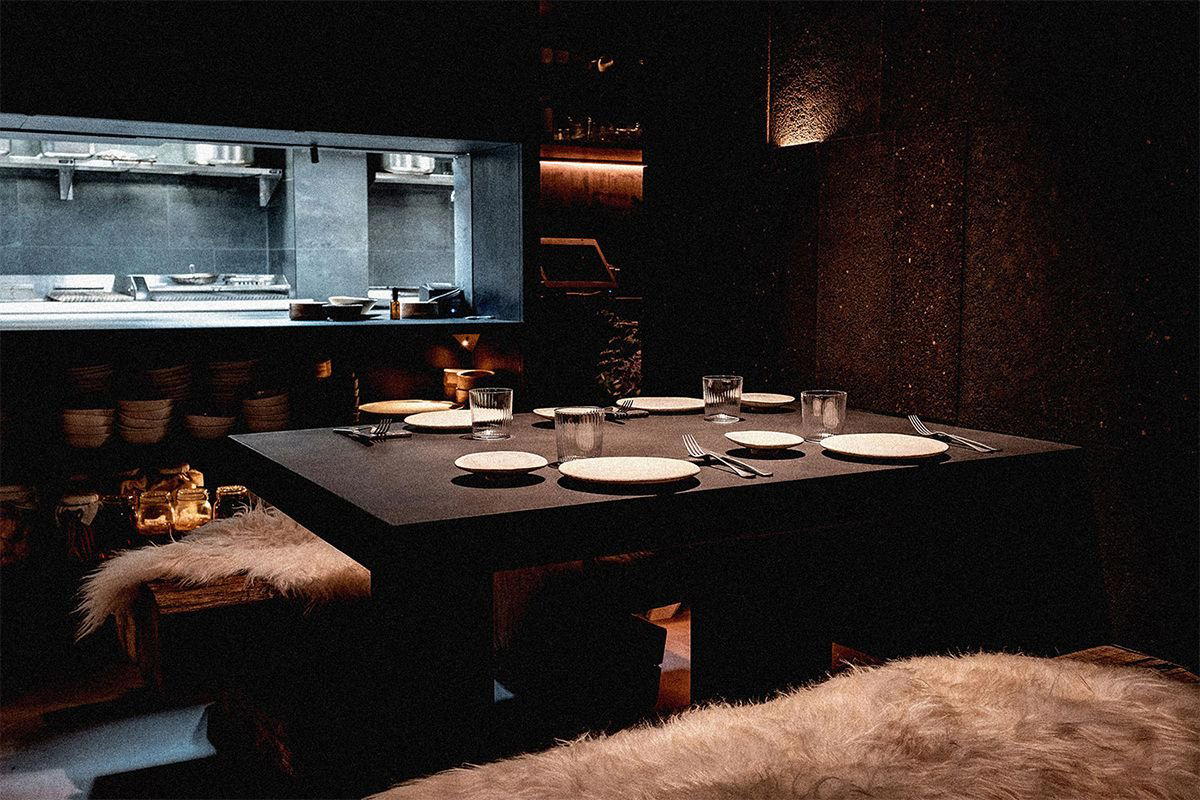
Light-filled contemporary Basque country house with natural wood, animal skins, slate elements, minimalist and elegantly understated.