
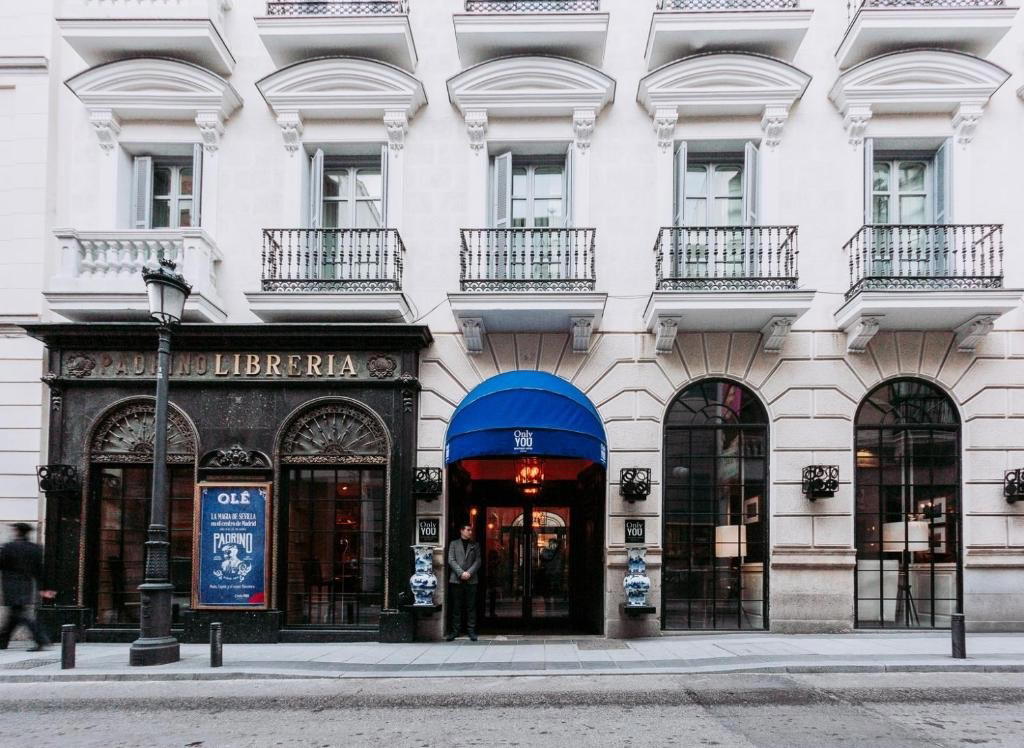
On Gran Vía 22, H10 Villa de la Reina positions itself at the centre of Madrid's most-watched street, offering 73 rooms within a building that mirrors the boulevard's early-twentieth-century architectural ambition. For travellers who want proximity to the city's museums, theatres, and dining corridors without retreating to a peripheral address, the location carries genuine strategic value.
Pearl is the En Primeur Club membership app — saves, bookings, and concierge access live there. Same editors, same standards.
- Address
- Gran Vía, 22, E, Centro, 28013 Madrid
- Phone
- +34 915 23 91 01
- Website
- h10hotels.com
- Directions
- Get directions
 Saves & bookings on Pearl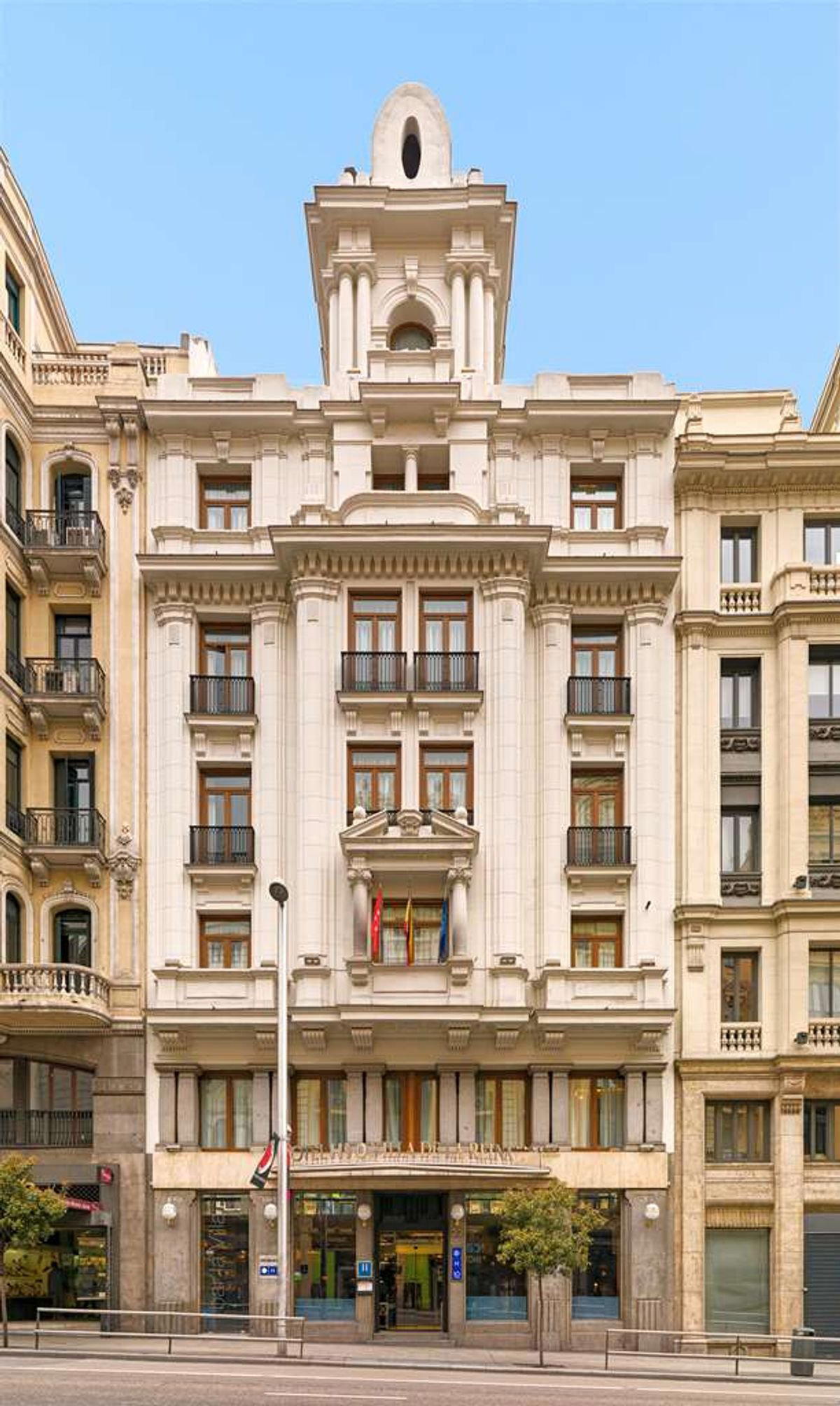
Gran Vía and the Hotel That Occupies Its Middle
Gran Vía is not a street that lets hotels be modest. The boulevard was cut through central Madrid between 1910 and 1933 as an act of civic self-assertion, and the buildings that line it were designed to make that ambition visible. Hotels on this stretch inherit that context whether they intend to or not. H10 Villa de la Reina, at number 22, sits in the denser western section of the avenue, where the pedestrian flow from Plaza de España meets the commercial density around Callao. Walking toward it from either direction, you are moving through one of the city's most-photographed streetscapes: limestone facades, curved corner towers, and the kind of signage that has layered itself over a century of commercial tenancy. The hotel's entrance arrives not as a dramatic threshold but as a composed interruption in that façade, which suits a property of 74 rooms that positions itself in the midfield of Madrid's accommodation hierarchy rather than competing with the grand-palace operators at the leading.
73 Rooms and the Midfield Position They Define
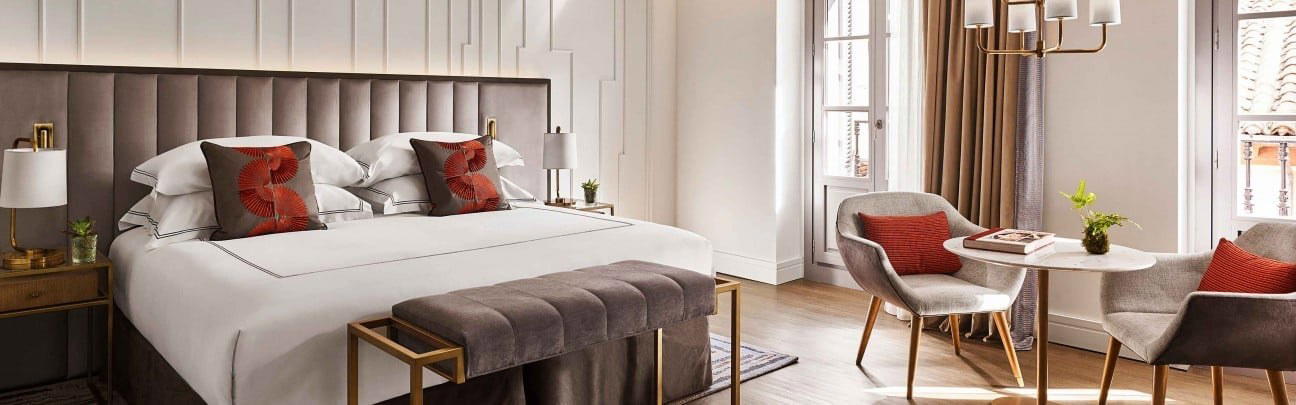
Madrid's premium hotel market has stratified sharply in the past decade. The Mandarin Oriental Ritz, Madrid and the Four Seasons Hotel Madrid occupy the leading bracket, where room counts run higher and F&B operations function as destination restaurants in their own right. The Rosewood Villa Magna and Gran Meliá Palacio de los Duques sit in an adjacent tier, trading on historic palaces and design ambition. H10 Villa de la Reina, with 73 rooms, occupies a different position entirely. It is not a boutique property in the twelve-to-twenty room sense that defines places like Hotel Unico Madrid or the Gran Hotel Inglés, but it is small enough that the corridor-to-room ratio and the lobby experience remain considered rather than industrial. At 74 rooms, a property can still deliver a degree of attentiveness that larger convention-scale hotels rarely manage, while offering the operational depth, room variety, and support staff that a fifteen-room property cannot sustain.
The H10 Hotels group built its reputation on reliable four-star product at urban and coastal locations. The Villa de la Reina represents the group's presence in central Madrid, a market where the competition between international chains and Spanish operators has intensified with each passing year. Properties such as the CoolRooms Palacio de Atocha have shown that design-forward independent operators can win loyalty from travellers who want a specifically Madrileño sensibility rather than a global brand aesthetic.
Position on Gran Vía as a Practical Argument
The address at Gran Vía 22 is one of the property's clearest editorial assets. Madrid's major cultural and gastronomic poles are all within walking distance or a short metro ride. The Prado, the Reina Sofía, and the Thyssen-Bornemisza form a triangle that a guest could cover in a single energetic afternoon from this base. The literary neighbourhood of Malasaña, which has developed a credible dining and bar scene over the past fifteen years, begins just north of Gran Vía. Chueca, where the city's more experimental restaurant openings have clustered, is accessible on foot. For guests whose Madrid programme is structured around restaurants, this positioning matters: returning to the hotel between a long lunch and an evening reservation is a realistic option rather than a logistical calculation, a convenience that centrally-located properties can offer and that peripheral luxury addresses, however polished, cannot.
Travellers arriving by metro will find the Callao or Gran Vía stations both within a few minutes' walk of the hotel. Barajas airport connects to central Madrid via the metro's line 8, with a change at Nuevos Ministerios; the journey runs roughly 30 to 45 minutes depending on the terminal. For visitors extending their Spain stay beyond the capital, the hotel's proximity to Atocha station (reachable by metro from Gran Vía) makes rail connections to other destinations direct. Spain's high-speed network reaches properties in destinations as varied as those surrounding Atrio Restaurante Hotel in Cáceres and the Basque Country, where Akelarre in San Sebastián anchors one of the country's most serious gastronomic hotel propositions.
The Gran Vía Hotel in Its Wider Spanish Context
Placing H10 Villa de la Reina within the broader Spanish hotel picture clarifies what it is and what it is not. Spain's premium accommodation offer has expanded dramatically in the past decade, with wine-country properties like Abadía Retuerta LeDomaine in Teruel and Terra Dominicata in Escaladei defining a rurally-anchored luxury category, and coastal properties like Cap Rocat in Cala Blava and Marbella Club Hotel in Marbella sustaining a Mediterranean luxury tier. The hotel does not compete with either category. It competes specifically for the urban Madrid traveller who values a central address, a property with considered interiors, and the operational reliability of an established hotel group, at a price point that sits below the Ritz and Four Seasons bracket.
For visitors arriving from international markets, particularly those who compare Madrid to other European capitals, the property's positioning mirrors what you find in cities like Paris or London: a mid-size, centrally-located property from a recognised regional operator, delivering consistent quality without the ceremony or the pricing of the grand hotels. That is a viable and frequently sensible choice, particularly for travellers whose priorities are city access and programme flexibility rather than a hotel experience that competes with the city for attention. Hotel Can Cera in Palma to La Residencia, A Belmond Hotel, Mallorca and Mas de Torrent Hotel & Spa in Torrent, all of which serve a different phase of the trip.
For readers exploring Madrid's restaurant and hotel offer more broadly, our full Madrid guide maps the city's neighbourhoods, dining registers, and accommodation tiers in detail.
Quick Comparison
Comparable venues nearby, for context on price, style, and recognition.
| Venue | Cuisine | Price | Awards | Notes |
|---|---|---|---|---|
| H10 Villa de la ReinaThis venue — the venue you are viewing | charming boutique in majestic early 20th-century building | $$$ | 4-Star | Not listed |
| Casa Almagro | Contemporary boutique hotel blending heritage architecture with modern design, positioned as a sophisticated urban retreat for informed travelers seeking refined Madrid experiences. | $$$ | 4-Star | Almagro |
| Dear Hotel Madrid | Contemporary Nordic design boutique hotel in a restored historic building, blending Scandinavian minimalism with Spanish architectural heritage. | $$$ | 4-Star | Universidad |
| NH Collection Madrid Eurobuilding | Towering high-rise convention hotel in Madrid's financial district with ultramodern design. | $$$ | 4-Star | Hispanoamerica |
| Ocean Drive Madrid | contemporary design with Mediterranean influences | $$$ | 4-Star | Palacio |
| ARTIEM Madrid | Modern wellness-oriented urban hotel | $$$ | 4-Star | Concepcion |
Recognition history
Dated appearances from independent guides and award organizations, with the underlying list record or original source where available.
Preferred Hotels Member
Preferred Hotels
Continue exploring
More in Madrid
Hotels in Madrid
Browse all →
Bars in Madrid
Browse all →
Restaurants in Madrid
Browse all →

At a Glance
- Elegant
- Sophisticated
- Modern
- Classic
- Business Trip
- Romantic Getaway
- Weekend Escape
- Terrace
- Historic Building
- Wi Fi
- Room Service
- Concierge
- Business Center
- Restaurant
- Elevator
- Skyline
- Street Scene
- Wi Fi
- Room Service
- Concierge
- Business Center
- Restaurant
- Elevator
Elegant and peaceful atmosphere with charming lobby, soundproofed rooms, and intimate breakfast setting.