Restaurante Taiga occupies a considered address in Madrid's Salamanca district, where the Calle de María de Molina corridor has become a reliable marker for serious dining away from the city's more theatrical showcase venues. The restaurant positions itself within a segment of Madrid's creative dining scene that prioritises tasting-menu progression and culinary precision over spectacle. For visitors arriving from outside the capital, it sits in navigable distance from the broader Salamanca dining cluster.
Pearl is the En Primeur Club membership app — saves, bookings, and concierge access live there. Same editors, same standards.
- Address
- Calle de María de Molina, 56, Salamanca, 28006 Madrid, Spain
- Phone
- +34722816971
- Website
- taigamadrid.com
- Directions
- Get directions
 Saves & bookings on Pearl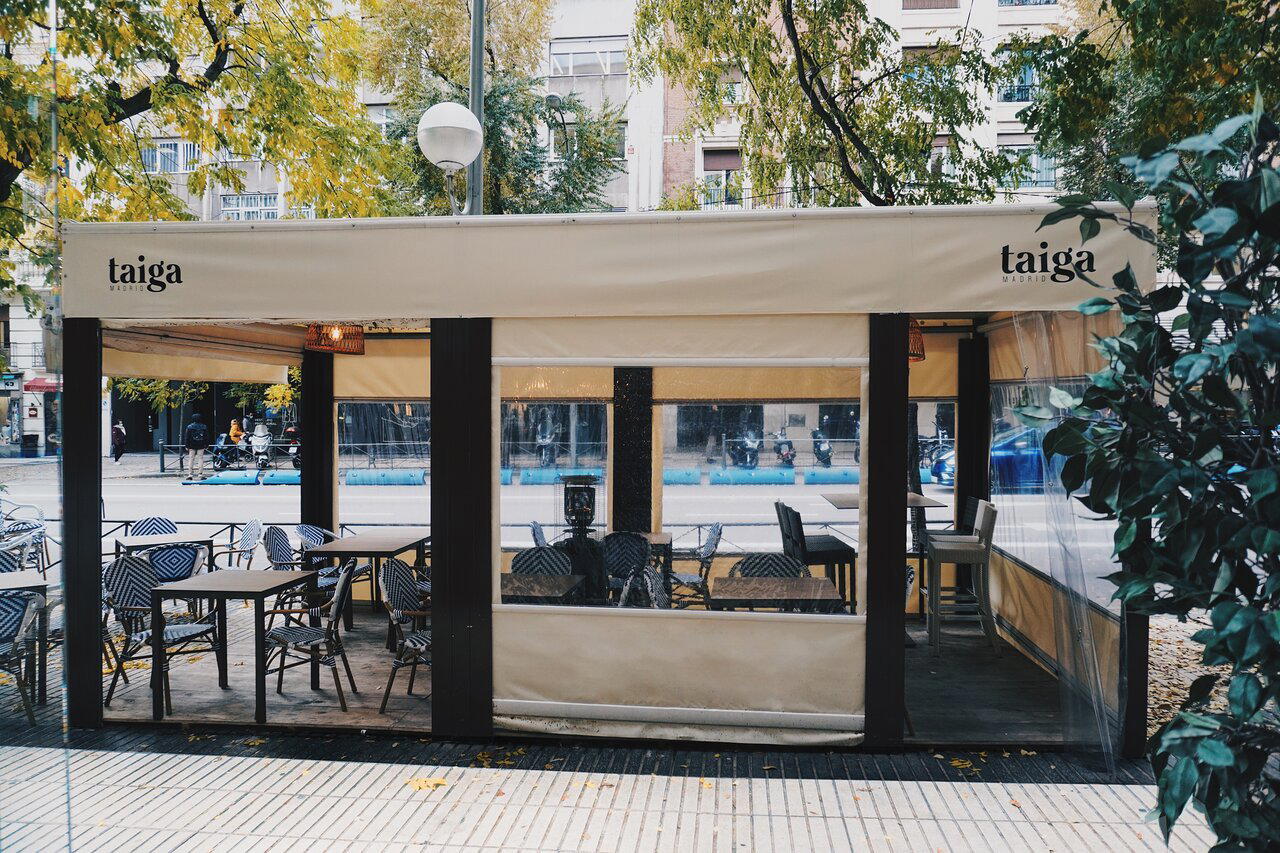
Salamanca's Quieter Register of Serious Dining
The Salamanca district in Madrid has long functioned as the city's most consistent address for formal dining, drawing both local professionals and international visitors who prefer the neighbourhood's measured pace over the louder rooms clustered further west. Calle de María de Molina, where Restaurante Taiga Madrid occupies its address at number 56, sits at the northern edge of Salamanca where the restaurant density thins slightly and the dining that does persist tends toward deliberate, course-driven formats rather than casual drop-in eating. That positioning matters: in a city where the conversation about creative cooking has tilted heavily toward a handful of high-profile flagship rooms, the mid-Salamanca corridor represents a different register, one where the experience of the meal itself carries more weight than the surrounding noise.
Madrid's fine dining tier has expanded considerably over the past decade, with multiple Michelin-starred rooms and a cohort of ambitious operators who have moved the city's reputation from reliable Spanish tradition toward a broader creative identity. The comparable set now includes addresses operating at extreme price points and with significant international press attention: DiverXO, with its three Michelin stars and Asia-inflected progressive format, and Coque, which approaches Spanish creative cooking through an elaborate theatrical sequence, both represent the upper-intensity end of that spectrum. Taiga occupies a different position in that field, one shaped by the Salamanca address and the neighbourhood's own dining character rather than by competition for the same international-press real estate.
How the Meal is Meant to Move
Tasting-menu formats in Madrid have fragmented into several distinct models. Some rooms build their sequence around spectacle and provocation, using course count and presentation theatrics as the primary editorial statement. Others treat the progression as a vehicle for ingredient focus, letting seasonal sourcing dictate the arc from light and acid-forward openings through richer, more structured mid-courses and into dessert sequences that either contrast or echo what came before. The latter model tends to produce meals that improve in memory rather than in the moment, the kind of sequencing that rewards a slower pace of eating and conversation rather than demanding close attention to each individual plate as a performance.
Spain's broader tasting-menu tradition has strong precedents for both approaches. At the national level, rooms like El Celler de Can Roca in Girona and Mugaritz in Errenteria have built reputations around meal arcs that demand active engagement, while other respected Spanish addresses such as Ricard Camarena in València and Azurmendi in Larrabetzu emphasise a more integrative, ingredient-driven sequencing. Where Taiga places itself within that range is part of what a first visit resolves. The Salamanca setting and the address's residential-leaning context suggest a format that privileges coherence over provocation.
Placing Taiga in the Madrid Creative Tier
Madrid's creative dining map extends across a range of price points and formats. At the leading end, Deessa and DSTAgE operate as reference points for modern Spanish cooking with significant critical recognition, while Paco Roncero continues to anchor a longer-standing creative tradition in the city. Taiga operates in proximity to that comparable set without the same volume of international press coverage, which in Salamanca's dining context is not necessarily a disadvantage. The neighbourhood's clientele tends to include a higher proportion of returning local diners and well-travelled professionals who are less reliant on external validation signals when making booking decisions.
Internationally, the tasting progression model that defines this type of room finds its closest technical comparators at addresses like Atomix in New York City, where Korean technique is deployed through a highly structured course sequence, and Le Bernardin in New York City, where product clarity and progression discipline have been the operating philosophy for decades. Spain's own export of that discipline is visible at addresses like Arzak in San Sebastián, Martin Berasategui in Lasarte-Oria, Quique Dacosta in Dénia, Aponiente in El Puerto de Santa María, Atrio in Cáceres, and Cocina Hermanos Torres in Barcelona. Each of those rooms has built its reputation on sequential coherence as much as on individual dishes, a principle that applies with equal force to what ambitious Salamanca-district dining aspires to deliver.
Timing and Approach
Madrid's fine dining rooms experience their most consistent demand between October and June, when the city's professional and cultural calendar runs at full intensity and visitor numbers from northern Europe peak during winter escapes and spring travel. July and August bring a notable dip in local demand, with many serious dining rooms reducing service frequency or closing for part of the summer.
Planning Your Visit
Comparable Venues
Comparable venues nearby, for context on price, style, and recognition.
| Venue | Cuisine | Price | Notes |
|---|---|---|---|
| Restaurante Taiga MadridThis venue — the venue you are viewing | Traditional Spanish | $$ | Not listed |
| Taberna del Olivo | Traditional Spanish Paella and Tapas | $$ | Lista |
| La Vaquería Montañesa | Traditional Spanish Mediterranean Market Cuisine | $$ | Almagro |
| Can Bonet | Traditional Catalan Mediterranean | $$ | Ibiza |
| La Casa de Cristal | Modern Spanish | $$ | Nueva Espana |
| Ana la Santa | Modern Spanish Tapas | $$ | Barrio de las Letras |
Continue exploring
More in Madrid
Restaurants in Madrid
Browse all →
Bars in Madrid
Browse all →
Hotels in Madrid
Browse all →


At a Glance
- Cozy
- Casual Hangout
- Terrace
Current opening hours
- Monday
- 8 AM–5 PM
- Tuesday
- 8 AM–12 AM
- Wednesday
- 8 AM–12 AM
- Thursday
- 8 AM–2:30 AM
- Friday
- 8 AM–2:30 AM
- Saturday
- 5 PM–3 AM
- Sunday
- 5–11 PM
Hours can change for holidays and private events. Last verified .
Welcoming atmosphere in a small neighborhood restaurant with internal and outdoor seating options.