Our verdict
Restaurant MAEKAWA sits in Kyoto's Higashiyama Ward, one of the city's most historically layered dining districts. The address places it within reach of the traditional machiya streets and the concentrated kaiseki corridor that defines this part of eastern Kyoto. For visitors plotting a serious meal in the city, Higashiyama's dinner table is one of the most considered in Japan.

Pearl is the En Primeur Club membership app, where members save venues, book tables and use the concierge.

The menu
What to order
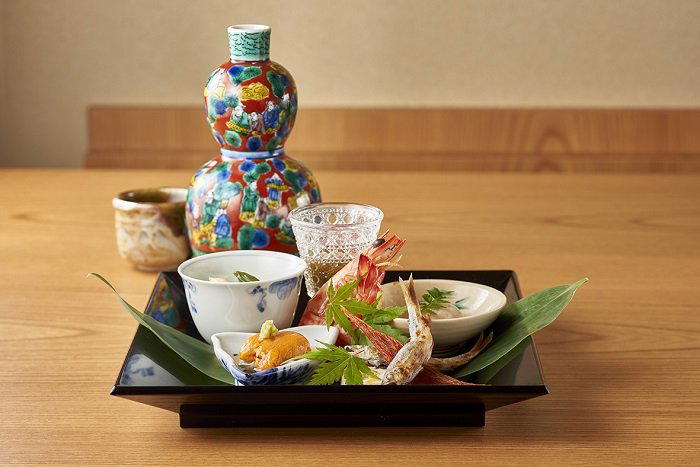
- Fried shrimp-shaped yam in tomato sauce
- Kaiseki course
Higashiyama After Dark, and in Daylight
Kyoto's Higashiyama Ward operates on two entirely different registers depending on the hour. By midday, the streets between Yasaka Shrine and Kiyomizudera carry the full weight of tourist traffic: narrow stone lanes, souvenir shops, the persistent click of cameras. By evening, once the day-trippers have retreated, a quieter city reasserts itself. The restaurants that survive in this environment tend to be serious ones. The foot traffic does not sustain them; the cooking does.
Restaurant MAEKAWA occupies this eastern corridor, an address that in Kyoto carries considerable contextual weight. Higashiyama is not a neighbourhood where restaurants coast on location alone. The proximity to Gion, to the traditional inn district, and to some of the city's oldest culinary lineages means diners arriving here have usually done their research. The question worth asking before any meal in this ward is whether you are eating lunch or dinner, because the answer shapes almost everything about the experience.
The Lunch and Dinner Divide in Kyoto's East
Across Kyoto's premium dining tier, the gap between lunch and dinner service has widened considerably over the past decade. At the top end of the kaiseki spectrum, venues such as Gion Sasaki and Hyotei run abbreviated daytime menus at price points that undercut their evening equivalents by a meaningful margin, often offering the kitchen's seasonal logic in a compressed format. This has made Kyoto lunch one of the more strategically interesting meals in Japan: comparable craft, lower commitment, shorter booking windows.
The dinner proposition in this city is a different calculus. Evening kaiseki at the level practiced by Kikunoi Honten or Mizai involves longer menus, more courses, and price points that require advance planning both financially and logistically. The mood shifts too: the light drops over the Higashiyama hills, the evening quiet replaces the daytime noise, and the meal becomes the main event rather than a pause between sightseeing. Dinner in Kyoto at this level is an appointment, not an option.
Restaurant MAEKAWA sits within this framework. Visitors comparing the daytime and evening value proposition here are asking the same question that applies across the ward: is the evening surcharge justified by what the kitchen can do with the full menu, or does a well-priced lunch deliver a comparable experience at lower cost and lower friction?
The Higashiyama Kitchen Context
Japanese cuisine's daytime-evening divide has structural roots. Kaiseki, as codified through the tea ceremony tradition that Kyoto shaped more than anywhere else in Japan, was never a quick meal. Its sequence of courses, its insistence on seasonal precision, and its choreographed pacing were built for an unhurried evening. Lunch adaptations came later, driven partly by tourism and partly by chefs who wanted to make their cooking accessible to a wider pool of diners without compromising the evening service.
The result in Kyoto is a tiered market. Houses like Isshisoden Nakamura, one of the city's oldest active dining names, operate within a lineage that predates the modern restaurant format entirely. Their context is centuries deep. Newer entrants in Higashiyama, by contrast, position themselves within a contemporary Japanese fine dining conversation that extends well beyond the city: the same conversation that includes HAJIME in Osaka, Harutaka in Tokyo, and even internationally observed formats like Atomix in New York City, where Korean-inflected tasting menus have reframed the multi-course Japanese-influenced dinner for a global audience.
Restaurant MAEKAWA enters this conversation from the Higashiyama end, in a neighbourhood where the surrounding culinary density is high enough that being merely adequate does not produce repeat diners. The ward's better restaurants tend to self-select for seriousness.
Planning a Meal Here
Kyoto's fine dining calendar runs on seasonal logic, and Higashiyama's proximity to the Maruyama and Gion festival circuits means the autumn and spring peak periods compress booking availability across the neighbourhood. Visitors planning around cherry blossom or autumn foliage season should factor in that demand for the ward's better tables tightens two to three months in advance during those windows. Outside those peaks, the booking window is typically shorter, though restaurants operating at this level in Kyoto rarely have empty tables on short notice.
The Higashiyama address also factors into practical logistics. The ward is most naturally reached on foot from Gion-Shijo or by taxi from central Kyoto; the narrow streets make it less suited to private vehicle access. For visitors combining a meal here with evening exploration of the Maruyama garden or the lantern-lit stone paths toward Kiyomizudera, the geography works well, though the foot traffic on those paths can be dense on weekends even after dark.
Visitors planning a broader Kansai circuit around this meal should note that the regional conversation extends to akordu in Nara for a European-Japanese hybrid format less than an hour away, and to Goh in Fukuoka for a southern Kyushu perspective on contemporary Japanese cooking. Further afield in Japan, interesting regional counterpoints exist at 一本杉川島製 in Nanao, 故ル仕山乃 in Sapporo, 湖隣庵冫 in Takashima, and 庭羽屋 in Nishikawa Machi. For a comparative point outside Japanese cuisine entirely, Le Bernardin in New York City offers the clearest parallel in terms of a kitchen that has sustained its position at the top of its category for decades through consistency rather than reinvention. Domestic Japanese alternatives at different price points include Birdland in Sakai and Bistro Ange in Toyohashi for those building a wider regional itinerary. See our full Kyoto restaurants guide for a complete view of the city's dining map by neighbourhood and cuisine type.
Frequently asked questions
What should I order at Restaurant MAEKAWA?
As a general principle, Higashiyama restaurants at this address level tend to run seasonally structured menus where the kitchen's selection is fixed or near-fixed. The approach common across Kyoto's finer dining rooms, from the tightly curated courses at Gion Sasaki to the seasonal kaiseki format at Kikunoi Honten, is to trust the menu as presented rather than approach it with specific dish requests. If dietary requirements are a factor, communicating them at the time of booking is standard practice at this level of Kyoto dining.
How far ahead should I plan for Restaurant MAEKAWA?
Booking windows across Kyoto's Higashiyama dining corridor tighten considerably during cherry blossom season (late March to mid-April) and autumn foliage peak (mid-November), when demand across the city's finer restaurants compresses available dates by two to three months. Outside those periods, the window is shorter, though restaurants at this address level in a neighbourhood as competitive as Higashiyama do not typically hold tables on short notice. Cross-referencing with flight and accommodation plans for Kyoto is advisable; the city's premium dining market and its accommodation market move in the same seasonal cycles.
Is Restaurant MAEKAWA in Kyoto suitable for a solo diner?
Kyoto's Higashiyama fine dining corridor has, in recent years, seen a shift toward counter formats that accommodate solo diners without the social friction that a table-for-one can carry in larger rooms. Counter seating at this level of Japanese dining, as practiced at comparable Kyoto houses, places the solo diner in direct relation to the kitchen's rhythm, which many serious eaters consider the more revealing position anyway. Confirming seat configuration and solo availability directly with the restaurant at the time of inquiry is recommended, as counter capacity tends to be limited.
Comparable Spots, Quickly
Comparable venues nearby, for context on price, style, and recognition.
| Venue | Cuisine | Price | Awards | Notes |
|---|---|---|---|---|
| Restaurant MAEKAWAThis venue (the venue you are viewing) | Modern Japanese Ryoriya | $200–300 | Not listed | Not listed |
| 安久 | Kyoto Kaiseki Kappo | $300–500 | Not listed | Gion |
| 焼肉やまちゃん | Premium Wagyu Yakiniku with Japanese Fusion | $100–150 | Tabelog 100 #17 | Kawaramachi, Chuo Ward |
| Iwasaki | Michelin-Starred Kyoto Kaiseki | $150–200 | 1 Michelin Star | Kamigyō |
| SUI Fine Dining Restaurant | Modern Japanese Omakase | Not listed | Not listed | Higashiyama |
| Gion Fuji | Michelin-starred Tempura Omakase | $150–200 | Tabelog 100 #1 | Higashiyama |
Continue exploring
More in Kyoto
Restaurants in Kyoto
All restaurants in Kyoto →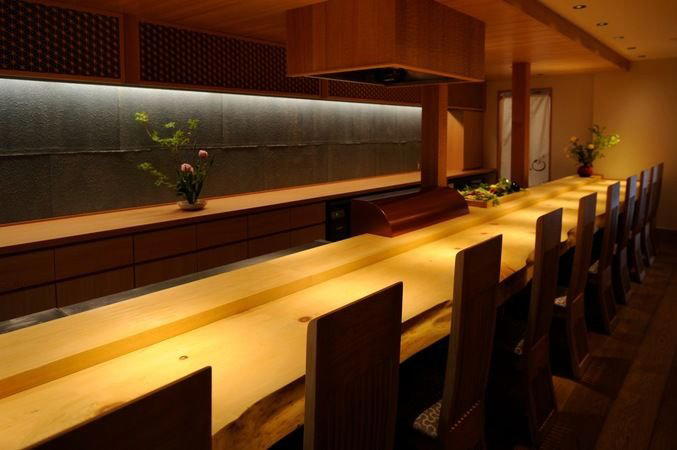
Bars in Kyoto
All bars in Kyoto →
Hotels in Kyoto
All hotels in Kyoto →
Wineries in Kyoto
Browse all →
Details
- Intimate
- Elegant
- Sophisticated
- Minimalist
- Date Night
- Special Occasion
- Chefs Counter
- Sake Program
- Tasting Menu
- Sake Program
Current opening hours
- Monday
- 12–10 PM
- Tuesday
- 12–10 PM
- Wednesday
- 12–10 PM
- Thursday
- 12–10 PM
- Friday
- 12–10 PM
- Saturday
- 12–10 PM
- Sunday
- Closed
Hours can change for holidays and private events. Hours as of .
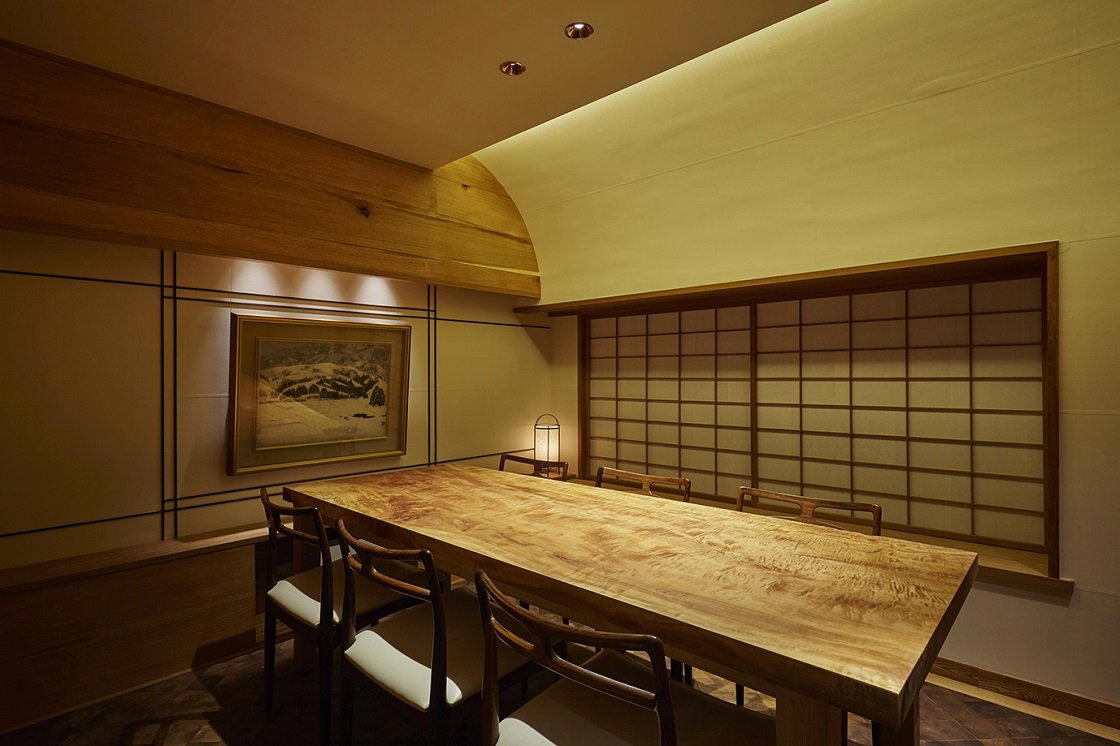
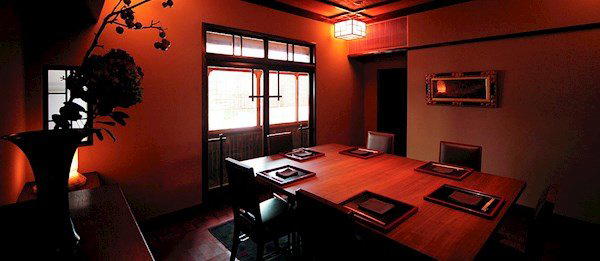
Intimate space with triangular houseboat-like ceiling, softly lit for quiet conversation, natural textures, and precise tableware creating a sense of refined ceremony.