
Aki Foods brings Sri Lankan curry into Saitama’s small-format dining conversation, with a 16-seat house-restaurant setting and recognition in Tabelog’s Asian cuisine / Ethnic cuisine EAST 100 selection for 2023 and 2024. The appeal is less about ceremony than rhythm: lunch-and-dinner service, modest pricing, family-friendly details, and a curry format that rewards repeat local use rather than destination theatrics.
Pearl is the En Primeur Club membership app — saves, bookings, and concierge access live there. Same editors, same standards.
- Address
- 1629-9 Mimuro, Midori Ward, Saitama, 336-0911, Japan
- Phone
- +81 80-6618-2268
- Website
- facebook.com
- Directions
- Get directions
 Saves & bookings on Pearl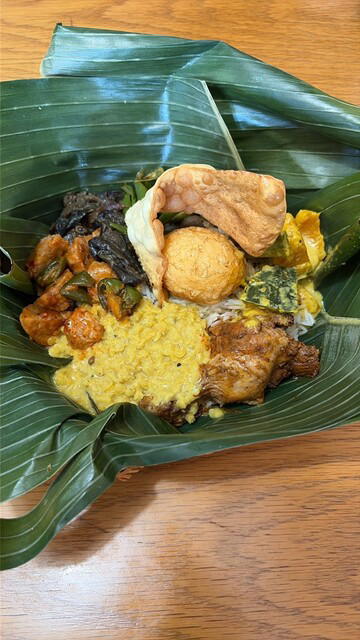
In Mimuro, dinner begins residentially before it becomes culinary: a house-restaurant address, compact room, and scale that keeps the meal close to neighbourhood dining. Aki Foods belongs to a part of Saitama eating culture unlike central Tokyo’s reservation economy. The ritual is simpler and local: arrive for curry, accept the small-room pace, and let the meal sit nearer everyday appetite than occasion dining.
That matters because Sri Lankan cooking in Japan occupies a distinct lane from the country’s broader curry culture. Japanese curry prizes softness, sweetness, and predictability; South Asian and Sri Lankan curry houses emphasize spice architecture, rice as a base, and side-by-side components that change a plate’s tempo. In Saitama, where awards often cluster around ramen, patisserie, unagi, and Chinese dining, repeat recognition for a Sri Lankan curry address signals wider appetite for regional Asian cooking beyond the usual urban centres.
Sri Lankan curry in a 16-seat house-restaurant format
The room sets the terms. With 16 seats across two floors, the format feels more like a small community restaurant than a high-turnover curry counter. Tables replace counter theatre, pacing follows a compact kitchen, and the experience works for families as well as solo curry regulars. Children are explicitly welcomed, and a kids menu is part of the setup, placing the restaurant in a practical local category rather than a specialist-only one.
The category listing is plain but telling: Sri Lankan and curry. That pairing places the cooking inside Japan’s broad curry map while separating it from the roux-based comfort style of convenience chains and home cooking. The useful comparison is not luxury tasting-menu dining, but the way regional Asian restaurants in commuter cities enter weekly life. Satyam, also in Saitama, sits in a lower everyday price band, while chinese restaurant HAKUBI operates at a higher spend level. Aki Foods lands between them: accessible for routine dining, yet recognized in a category where consistency matters more than spectacle.
Its Tabelog 100 selection for Asian cuisine / Ethnic cuisine EAST in both 2023 and 2024 is the trust signal. Tabelog’s Hyakumeiten lists tend to reward restaurants with sustained user attention within a cuisine category, not only high design polish or destination-room service. For a small Sri Lankan curry restaurant in Saitama, that distinction shows a reputation built within a competitive regional category rather than through one dramatic credential.
The meal is casual, but the expectations are specific
The price bracket defines the contract. Lunch sits around JPY 1,000 to JPY 1,999, dinner around JPY 2,000 to JPY 2,999. In Japanese dining terms, that is practical, especially for cooking built from multiple preparations rather than a single bowl. It asks less financial commitment than Saitama’s higher-priced unagi rooms such as Unagi Musashino, and far less than formal Chinese dining at the local market’s upper end. The trade-off is not luxury service; it is a focused meal structured enough to justify repeat visits.
The meal’s custom also differs from ramen timing. At a place such as Ramen Kanekatsu, rhythm is queue, bowl, and exit. Sri Lankan curry works at a slower table pace: rice, curry, accompaniments, and gradual adjustment of heat and texture across the plate. That is why the small seating plan matters. The restaurant is not built for anonymous volume, but for diners comfortable with a modest room and a meal unfolding through combination rather than course progression.
Pragmatic signals reinforce its local role. Take-out and delivery are offered, including through Uber Eats and Demae-kan, so the cooking is not confined to seated dining. Wine and cocktails are listed, not universal in modest curry restaurants, giving dinner a broader use case than a quick plate. Payment remains old-school: cash planning is sensible because credit cards, electronic money, and QR payments are not accepted.
Where it fits in Saitama's wider dining map
Saitama’s dining scene rewards specialists. The city can send serious eaters to patisserie at Acacier Kitaurawa honten and Acacier Urawa ten, bagels at Bagel Shop vivant, Okinawan-leaning cooking at Beach Story, or broader restaurant planning through Our full Saitama restaurants guide. Aki Foods adds another strand: immigrant and regional Asian cooking neither framed as fine dining nor reduced to quick lunch utility.
For travellers building a Saitama itinerary, that distinction helps. The restaurant suits those who want to understand serious everyday dining outside Tokyo’s central wards more than diners chasing grand-room service. Pairing it with Saitama’s other specialist addresses gives a sharper reading of the city than one expensive meal. For wider trip planning, the surrounding cover Saitama hotels, Saitama bars, Saitama wineries, and Saitama experiences.
Against Japan’s broader restaurant map, the appeal is clearer. Regional cooking has become a serious reason to travel within and beyond major cities, from beef sukiyaki formats such as -Grilled beef Sukiyaki- KAMAKURA TANUKIAN 鎌倉 たぬき庵 in Kamakura to seafood-and-charcoal addresses like. 鮪と炭火焼き うお炭 秋葉原店 in Tokyo, café culture at.cafe in Osaka, and modern local rooms such as.know in Kumamoto. The same curiosity extends outside Japan through places like Jōdo Saké Bar in Los Angeles and Onigiri Time in Pasadena. Within that larger pattern, the restaurant is not mimicking metropolitan polish. Its value lies in a disciplined local version of Sri Lankan curry culture, recognized enough to draw attention yet grounded enough to remain part of Saitama’s daily rhythm.
Readers interested in curry and regional Asian dining can compare it with (Shoku) Vietnam in Kawasaki and [Curry Senmon Ten] Maruyama Kyoju. in Sapporo. Those comparisons underline the point: the better meals in this category are often built not around luxury markers, but around specificity, repetition, and a kitchen that knows exactly what role it plays for regulars.
Cuisine Context
Side-by-side context: comparable cuisine and price.
| Venue | Cuisine | Price | Notes |
|---|---|---|---|
| Aki Foods | Sri Lankan | $$ | Omiya-ku |
| Acacier Urawa ten | French-style patisserie & cake shop | $ | Urawa |
| Bagel Shop vivant | Bagel shop & bakery | $ | Minami-ku |
| Kuneru Bakery | Neighborhood Japanese bakery | $ | Urawa |
| chinese restaurant HAKUBI | Authentic Chinese with signature Peking Duck near Urawa Station | $$$ | Urawa |
| Acacier Kitaurawa honten | French-style patisserie & cafe | $$ | Urawa-ku |
Recognition history
Dated appearances from independent guides and award organizations, with the underlying list record or original source where available.
Tabelog 100 #75 · No. 75
Tabelog · Tabelog 100 - Asian cuisine / Ethnic cuisine - EAST - 2024











At a Glance
- Casual Hangout
- Solo
- Family
- Group Dining
- Standalone
Current opening hours
- Monday
- Closed
- Tuesday
- 11 AM–4 PM, 6–10 PM
- Wednesday
- 11 AM–4 PM, 6–10 PM
- Thursday
- 11 AM–4 PM, 6–10 PM
- Friday
- 11 AM–4 PM, 6–10 PM
- Saturday
- 11 AM–4 PM, 6–10 PM
- Sunday
- 11 AM–4 PM, 6–10 PM
Hours can change for holidays and private events. Last verified .