Qui 31 occupies a residential address on Suarezstraße in Charlottenburg, a neighbourhood whose dining scene has quietly reasserted itself alongside Berlin's more publicised creative districts.
Pearl is the En Primeur Club membership app — saves, bookings, and concierge access live there. Same editors, same standards.
- Address
- Suarezstraße 31, 14057 Berlin, Germany
- Phone
- +4915757769604
- Website
- qui31.de
- Directions
- Get directions
 Saves & bookings on Pearl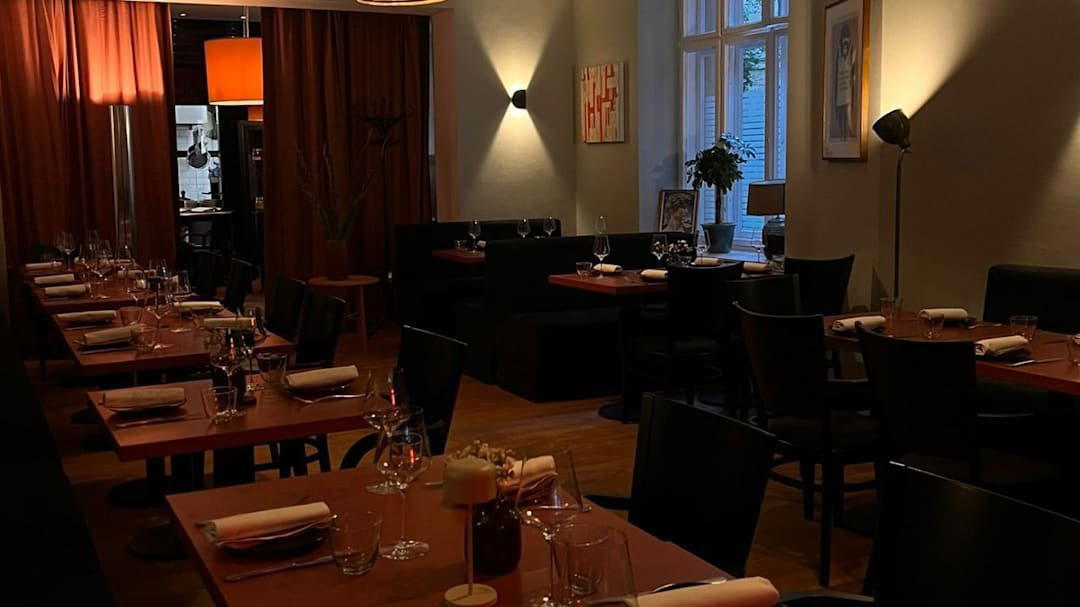
Charlottenburg's Quiet Reassertion
Berlin's restaurant geography has long been read as a tale of two cities: the creative, press-magnetising stretch of Mitte, Kreuzberg, and Prenzlauer Berg on one side, and the older, more settled bourgeois dining culture of the western districts on the other. Charlottenburg belongs to the second category, and for years that association worked against it. The neighbourhood's reputation for propriety and pre-reunification formality felt out of step with the city's appetite for raw-space innovation. What has changed in the past decade is that several of the western districts' smaller, address-specific restaurants have started attracting attention precisely because they operate outside the noise. Suarezstraße 31 is that kind of address: a residential street in a residential part of the city, the kind of location that, in any other European capital, would anchor a neighbourhood bistro with a loyal local following and little interest in press cycles.
Qui 31 sits at that address. What we can say with confidence is that Charlottenburg's finer dining rooms share certain structural characteristics with their peers in cities like Hamburg and Munich: they tend toward smaller seat counts, they draw on regional supply chains rather than theatrical provenance theatre, and they build their reputations through repeat custom rather than opening-week coverage. Whether Qui 31 fits that profile precisely, the address alone places it within a coherent tradition.
The Ingredient Question in Berlin's Fine Dining
The sourcing conversation in German fine dining has matured significantly over the past fifteen years. Nobelhart & Schmutzig, the Friedrichstraße restaurant that built its entire format around hyper-regional Brandenburg produce, put the sourcing question at the centre of Berlin's fine dining debate in a way that no other venue in the city had previously managed. Its influence spread across categories: even restaurants with no ideological commitment to regionalism found themselves being measured against the standard it set. Rutz, operating with two Michelin stars in Mitte, has taken a complementary approach, pairing modern European technique with wine programming that prioritises German producers in a way that reinforces rather than competes with its food sourcing story.
The broader German fine dining circuit reflects similar pressures. Kitchens at Aqua in Wolfsburg, Schwarzwaldstube in Baiersbronn, and Victor's Fine Dining by Christian Bau in Perl have each developed supply relationships that reflect their specific geography, whether that means Black Forest foragers, Moselle Valley producers, or cross-border Saarland sourcing. The lesson from those examples is that ingredient sourcing in German fine dining functions less as a marketing claim and more as a structural decision that shapes the entire menu architecture, from how many covers the kitchen can reliably serve to how far in advance a menu can be written. Restaurants in Berlin's western districts, closer to Brandenburg farmland and with longer-standing relationships with older supplier networks, are often better positioned to operate that model than venues in neighbourhoods where the food supply chain runs through commercial wholesale markets.
Reading the Berlin comparable set
For a visitor trying to position Qui 31 within Berlin's current fine dining field, the relevant comparators are the city's smaller, ingredient-led rooms rather than its high-profile destination restaurants. FACIL, the two-Michelin-star room inside the Mandala Hotel near Potsdamer Platz, operates at the contemporary European end of the spectrum with a format that balances technical precision and seasonal produce. CODA Dessert Dining has pushed into an entirely different category, building a tasting menu format around sugar and fermentation that has earned Michelin recognition and sits outside normal competitive comparisons. Restaurant Tim Raue, with two stars and a China-inflected menu, represents the high-visibility, chef-personality end of the Berlin market.
Qui 31, by its address and apparent operating model, appears to occupy a different position: quieter, neighbourhood-anchored, and likely more reliant on the kind of repeat guest relationship that sustains restaurants in residential areas across European cities. That positioning has its own coherence. The dining rooms at Schanz in Piesport and Bagatelle in Trier demonstrate that some of Germany's most confident cooking happens in rooms that prioritise the meal over the scene. Internationally, restaurants like Atomix in New York City have shown how a deliberately low-profile physical address can coexist with serious culinary ambition, while Le Bernardin in New York City has for decades maintained its position through product discipline rather than physical theatre.
Seasonal Timing and the Charlottenburg Window
Charlottenburg's dining rooms tend to operate with fewer seasonal fluctuations than those in more tourist-dependent neighbourhoods. The local guest base provides a floor of demand throughout the year, which means kitchens are less likely to calibrate their menus around the summer tourist peak and more likely to follow agricultural seasonality. Spring in Brandenburg brings asparagus, which remains among the more culturally significant seasonal ingredients in German cooking, marked by dedicated menus across the city from late April through June. Autumn shifts the conversation toward game and mushrooms from the surrounding forests, ingredients that appear across Berlin's serious kitchens in a way that reflects real regional availability rather than imported produce dressed in local language. Visiting Charlottenburg's smaller restaurants during either of those seasonal windows tends to produce particularly coherent menus, when what the kitchen is cooking reflects what the surrounding region is actually producing.
For reference, comparable experiences include JAN in Munich, Vendôme in Bergisch Gladbach, Waldhotel Sonnora in Dreis, ES:SENZ in Grassau, and Restaurant Haerlin in Hamburg, all of which sit in the upper tier of Germany's fine dining circuit and offer documented benchmarks for the kind of cooking that stronger examples from the country's smaller rooms aspire to.
Nearby-ish Comparables
Comparable venues nearby, for context on price, style, and recognition.
| Venue | Cuisine | Price | Notes |
|---|---|---|---|
| Qui 31This venue — the venue you are viewing | Modern European Fusion | $$$ | Not listed |
| Baret | Modern International with Indonesian Influences | $$$ | Museuminsel |
| Moon Exquisite | Southeast Asian-European Fusion | $$$ | Mitte |
| Kastanien Curry Junction | Indian-Mexican Fusion Curry House | $$ | Scheunenviertel |
| BaliBowls | Superfood Bowls | $$ | Tegel |
| Bobbe Speisesalon | Kosher Israeli-Mediterranean | $$$ | Wilmersdorf |
Continue exploring
More in Berlin
Restaurants in Berlin
Browse all →
Bars in Berlin
Browse all →
Hotels in Berlin
Browse all →

At a Glance
- Modern
- Elegant
- Date Night
- Special Occasion
- Open Kitchen
Current opening hours
- Monday
- 6–11:30 PM
- Tuesday
- Closed
- Wednesday
- Closed
- Thursday
- 6–11:30 PM
- Friday
- 6–11:30 PM
- Saturday
- 6–11:30 PM
- Sunday
- 6–11:30 PM
Hours can change for holidays and private events. Last verified .
Modern and elegant dining atmosphere in Charlottenburg.