Pllek
Our verdict
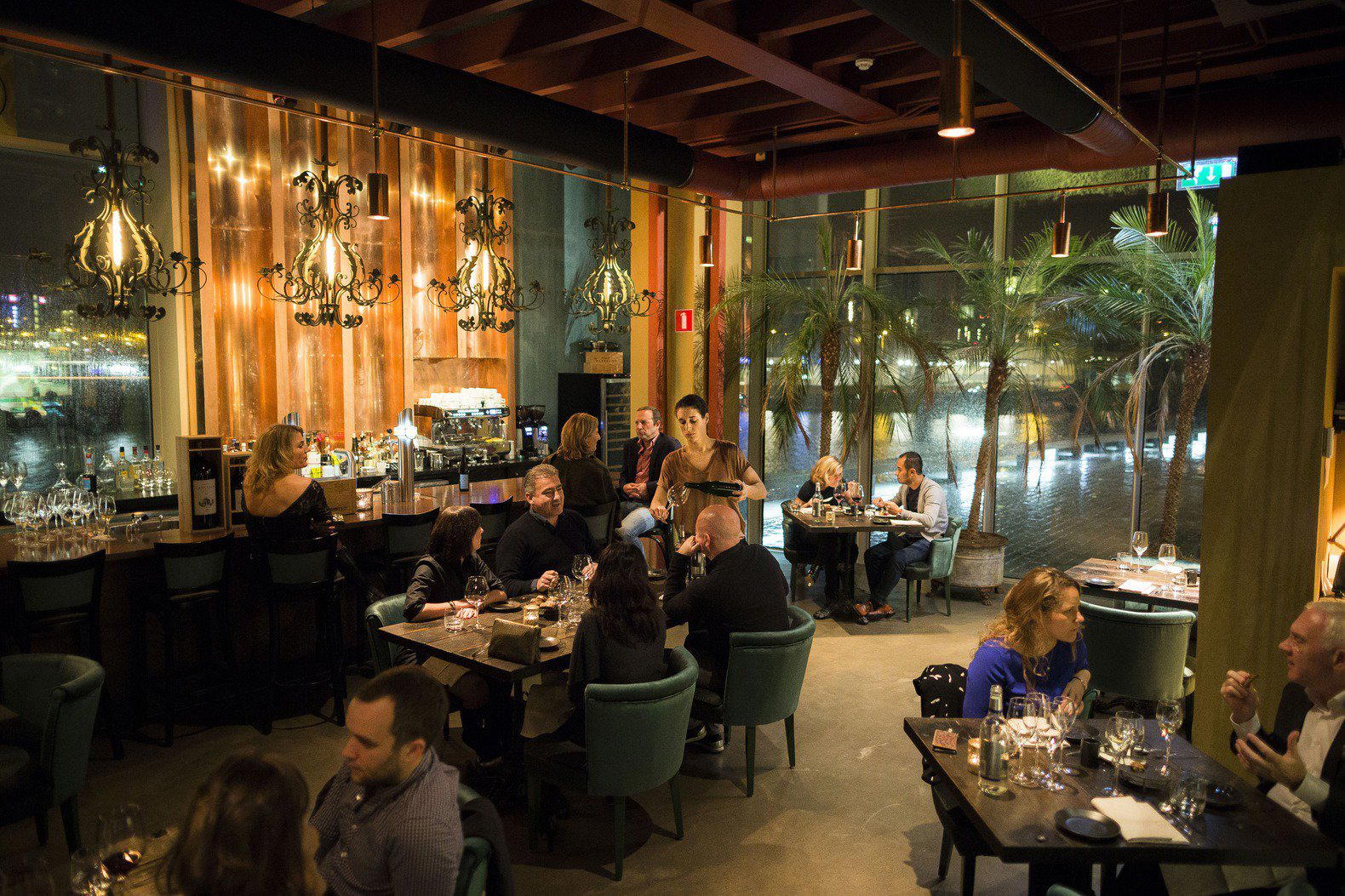
Pllek occupies a former industrial site on Amsterdam Noord's IJ waterfront, positioning itself in the city's casual-creative tier rather than its fine-dining circuit. The venue draws on the neighbourhood's post-industrial character to frame a menu and atmosphere that sits closer to BAK and De Kas than to the Michelin-heavy south bank. For visitors crossing the free IJ ferry from Centraal Station, it represents the clearest single address for understanding what Amsterdam Noord has become.

Pearl is the En Primeur Club membership app — saves, bookings, and concierge access live there. Same editors, same standards.
- Address
- T.T. Neveritaweg 59, 1033 WB Amsterdam, Netherlands
- Phone
- +31 20 290 0020
- Hours
- Mon–Thu 9:30 AM–1 AMFri–Sat 9:30 AM–2 AMSun 9:30 AM–1 AM
- Website
- pllek.nl
- Directions
- Get directions
Amsterdam Noord and the Waterfront That Changed the City's Dining Logic
The IJ waterfront north of Amsterdam Centraal has undergone one of the more consequential shifts in the city's hospitality geography over the past decade. What was a stretch of decommissioned shipyard infrastructure and underused industrial lots is now the district that arguably defines how a younger, less formal strand of Amsterdam dining operates. Pllek, at T.T. Neveritaweg 59, sits squarely inside that transformation. The address alone signals something: this is not the canal-belt Amsterdam of white tablecloths and wine lists cross-referenced against the Michelin Guide. It is the Amsterdam that reaches the city's fine-dining circuit indirectly, through atmosphere and sourcing rather than through tasting menus and service choreography.
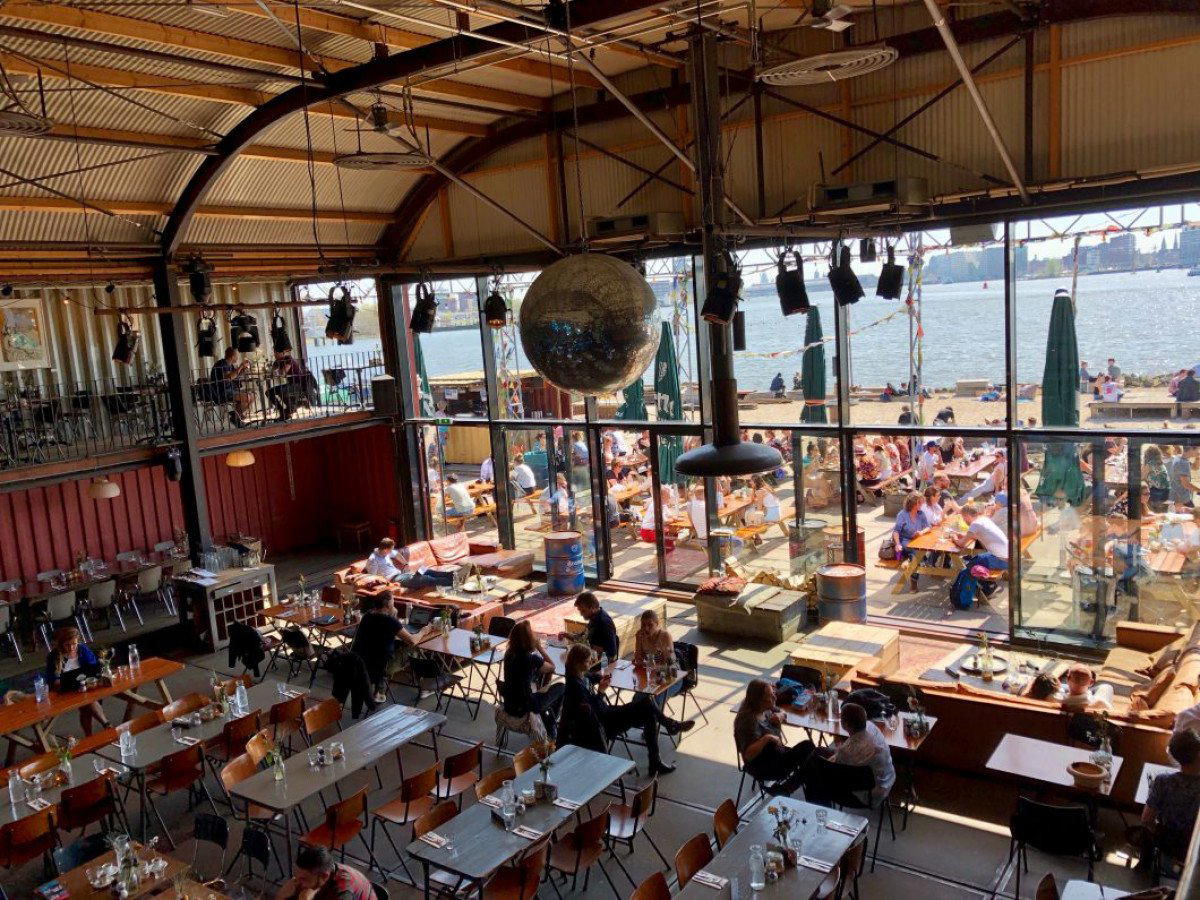
Getting there requires the free IJ ferry from behind Centraal Station, a crossing that takes under five minutes and reframes the city instantly. The transition from the crowded south bank to the wide, relatively open Noord is felt before you arrive. The building itself, a repurposed container structure with raw materials and a large outdoor terrace facing the water, belongs to the post-industrial design language that has made Noord a reference point for cities across northern Europe trying to reinvent former port land. Comparable conversions appear in Copenhagen's Refshaleøen and Hamburg's HafenCity, though Amsterdam Noord has moved faster toward a mixed food-and-culture model than most.
Where Pllek Sits in Amsterdam's Dining Tiers
Amsterdam's restaurant scene splits fairly cleanly into three operational tiers. At the leading, the Michelin-tracked creative tables: Ciel Bleu, Flore, Spectrum, and Vinkeles operate at the €€€€ tier with the booking lead times and format discipline that implies. A middle tier, including addresses like De Kas and Wils, runs on seasonal sourcing and a more relaxed format at the €€€ price point. Pllek occupies a more casual position still, closer in register to BAK's farm-to-table informality than to the structured tasting experience. That positioning is not a compromise; it is the point. The venue's commercial logic and its audience are built around accessibility rather than occasion dining.
For travellers already familiar with the Dutch fine-dining circuit, whether through De Librije in Zwolle, Inter Scaldes in Kruiningen, or the plant-forward precision of De Nieuwe Winkel in Nijmegen, Pllek reads as a deliberate counterpoint: high on energy and setting, lower on formality and price. The comparison is worth making because it clarifies what kind of visit Pllek is suited to. It is not a destination for the meal of a trip; it is the place that makes a neighbourhood feel inhabited rather than toured.
The Menu's Structure and What It Signals
What the format and location do signal, however, is a menu architecture that prioritises flexibility over ceremony. Venues of this type in Amsterdam's Noord district tend to operate across multiple dayparts, with a menu that shifts from lighter, shareable plates through the afternoon into more substantial evening options. The logic is borrowed partly from the all-day bar-restaurant model that has become a defining format in post-industrial cultural spaces across northern Europe, and partly from the Dutch tradition of treating hospitality as a social rather than purely gastronomic activity.
That structural approach puts Pllek in conversation with venues far outside Amsterdam. Lazy Bear in San Francisco operates at the opposite end of the formality spectrum, with ticketed seatings and a chef's-table format, but both share an instinct toward communal eating over à la carte isolation. The difference is that Lazy Bear uses format to create scarcity and occasion; Pllek uses it to reduce barriers. Similarly, the waterfront positioning recalls Le Bernardin in New York City only in the sense that both venues are inseparable from their physical context, though the comparison otherwise flatters neither and clarifies little. What it does underline is that great dining environments share an awareness of place that no interior design budget can manufacture independently of location.
The terrace facing the IJ functions as an extension of the menu's logic. Outdoor seating of this kind, with an industrial waterway as backdrop, is part of what Amsterdam Noord sells as an experience, and Pllek has more of it than almost any comparable address in the city. The seasonal relevance of that terrace is significant: summer evenings on the IJ waterfront are among the more genuinely atmospheric dining situations Amsterdam offers, and they do not require a Michelin booking to access.
Noord in Context: How the District Compares Nationally
Dutch dining outside the Randstad has produced some of the country's most technically ambitious cooking. De Lindenhof in Giethoorn, Tribeca in Heeze, De Groene Lantaarn in Staphorst, Brut172 in Reijmerstok, De Lindehof in Nuenen, De Bokkedoorns in Overveen, and De Treeswijkhoeve in Waalre all represent the kind of serious, destination-driven dining that requires planning and usually a car. Pllek is the structural inverse: it works precisely because it demands neither planning nor formality, and because Noord has built the pedestrian and cycling infrastructure to make spontaneous visits viable.
Within Amsterdam itself, the address on T.T. Neveritaweg places Pllek in a cluster of cultural and hospitality venues that includes music spaces, studios, and co-working facilities. That mixed-use neighbourhood context matters for how the venue functions. It draws an audience that is partly local creative-industry workers, partly tourists who have done enough research to cross the river, and partly visitors staying in Noord's newer hotel stock. The mix produces an atmosphere that south-bank canal restaurants rarely achieve: genuinely cross-demographic without being managed into it.
Planning a Visit
The free NDSM ferry from behind Amsterdam Centraal Station is the standard approach, running regularly throughout the day and evening. The journey takes approximately five minutes, and the walk from the NDSM wharf to T.T. Neveritaweg 59 adds a few minutes on foot through the post-industrial compound. The outdoor terrace is a seasonal asset, most relevant from April through September; winter visits trade the waterfront spectacle for the interior's industrial warmth. For the broader Amsterdam picture, the EP Club Amsterdam restaurants guide and addresses like Bistro de la Mer provide useful comparison points for deciding how to distribute meals across a trip.
Frequently asked questions
Is Pllek child-friendly?
The NDSM Wharf setting, with its open outdoor terrace and informal atmosphere, suits families more readily than a formal restaurant would. The venue sits at T.T. Neveritaweg 59 in Amsterdam Noord, accessible by free ferry, which itself tends to appeal to children.
What kind of setting is Pllek?
Pllek occupies a converted industrial space on the NDSM Wharf in Amsterdam Noord, with the IJ waterfront directly adjacent. The NDSM site was formerly a shipyard, and the area retains that raw, large-scale character. It functions as a bar, restaurant, and event space, drawing a crowd from across the city via the free NDSM ferry from behind Amsterdam Centraal Station.
How do you get to Pllek from central Amsterdam, and how long does it take?
The standard route is the free NDSM ferry, which departs from behind Amsterdam Centraal Station and runs regularly throughout the day and into the evening. The crossing takes approximately 15 minutes, placing Pllek at T.T. Neveritaweg 59 in Amsterdam Noord a short walk from the NDSM ferry landing. No car or paid transport is required, which makes it one of the more accessible waterfront destinations in the city.
What dish is Pllek famous for?
What the NDSM Wharf location and format do suggest is a menu oriented toward accessible, crowd-friendly cooking rather than tasting-menu precision.
What part of town is Pllek in?
Pllek is located at T.T. Neveritaweg 59, 1033 WB Amsterdam, Netherlands, Amsterdam.
Is Pllek reservation-only?
Given Pllek's dual role as a bar and restaurant on the NDSM Wharf, walk-in capacity at the bar is likely, though tables during busier periods may require booking in advance. Reaching out to the venue at T.T. Neveritaweg 59 ahead of a visit will clarify current availability.
A Minimal comparable set
Comparable venues nearby, for context on price, style, and recognition.
| Venue | Cuisine | Price | Awards | Notes |
|---|---|---|---|---|
| PllekThis venue — the venue you are viewing | Sustainable Vegetarian with Waterfront Views | $20–30 | Not listed | Not listed |
| Little Plant Pantry | Plant-Based Zero-Waste Deli | Not listed | Not listed | Da Costabuurt Zuid, Plant-Based Zero-Waste Deli |
| Hearth | Plant-Based Fusion with Global Influences | $30–50 | Not listed | Oosterparkbuurt Noordwest, Plant-Based Fusion with Global Influences |
| Vegabond | 100% Vegan Deli & Lunchroom | Not listed | Not listed | Leliegracht e.o., 100% Vegan Deli & Lunchroom |
| Morris & Bella | Modern Vegan Fine Dining | $50–100 | We're Smart World 3 Radishes | Spaarndammerbuurt, Modern Vegan Fine Dining |
| 湖南常德牛肉粉 | Hunan Changde Beef Noodle Soup | $20–30 | Not listed | 市中心/达姆广场, Hunan Changde Beef Noodle Soup |