Little Plant Pantry
Little Plant Pantry occupies a quiet stretch of Bosboom Toussaintstraat in Amsterdam's Oud-West, where plant-forward cooking has carved a distinct niche in a city increasingly serious about ingredient-led dining. The format sits closer to neighbourhood café than destination restaurant, which is precisely what makes it worth tracking for anyone moving through the western canal belt with time and appetite to spare.
Pearl is the En Primeur Club membership app — saves, bookings, and concierge access live there. Same editors, same standards.
- Address
- Bosboom Toussaintstraat 45-H, 1054 AN Amsterdam, Netherlands
- Phone
- +31207860802
- Website
- littleplantpantry.com
- Directions
- Get directions
 Saves & bookings on Pearl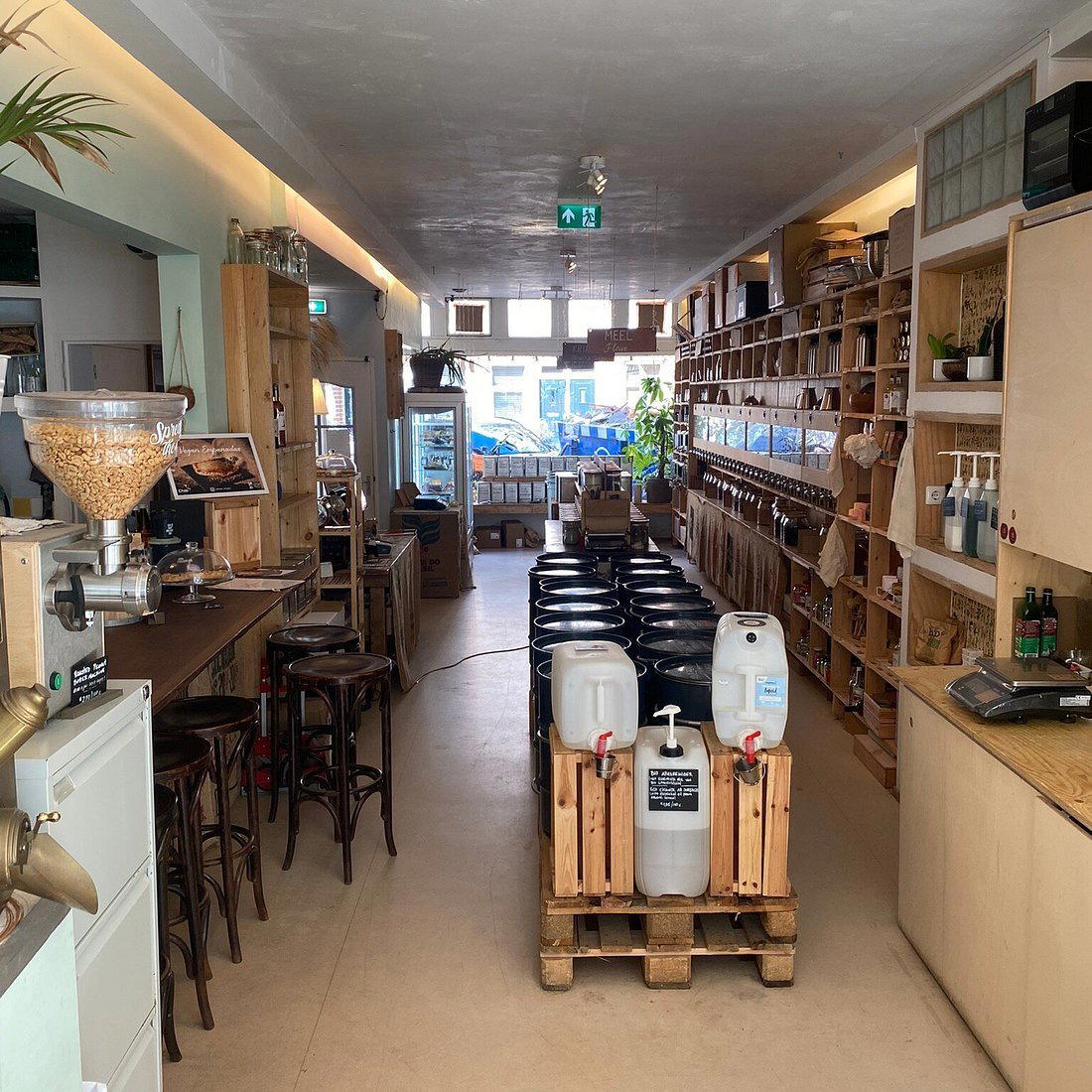
A Quiet Street, A Particular Idea
Oud-West is a residential district in Amsterdam where independent food businesses, coffee counters, and natural wine bars line the quieter streets. The streets radiating off Vondelpark attract a crowd that reads menus carefully and expects something considered in return. Bosboom Toussaintstraat sits within that zone, a residential strip where the ground-floor addresses tend toward independent coffee, natural wine, and food with a point of view. Little Plant Pantry operates from number 45-H, and the name alone signals the editorial position: plants first, pantry logic, small scale.
Plant-forward dining in Amsterdam has grown from a marginal position into a coherent category over the last several years. Where the city once defaulted to meat-heavy Dutch classics or high-end French-influenced tasting menus, a newer tier of smaller venues has built an audience around produce-led cooking that doesn't require a special occasion or a three-month booking window. Little Plant Pantry belongs to that tier, which places it in a different competitive set than the Michelin-decorated rooms across the city.
Where Plant-Forward Fits in Amsterdam's Dining Order
To understand Little Plant Pantry's position, it helps to map the broader plant-forward tier in Amsterdam. De Kas, operating from a repurposed greenhouse in Frankendael Park, established the template for ingredient-driven, produce-sourced cooking at the €€€ price point. Wils took a similar ethos and pressed it into a more technically ambitious format. BAK, in the Noord district, built its reputation on farm-to-table discipline and a low-intervention approach that attracted a wine-conscious crowd. Each of these addresses made a case for vegetables and grains as the structural centre of a meal rather than the decorative margin.
The restaurant's Oud-West address places it within the same broader conversation. The neighbourhood's foot traffic skews local and residential rather than tourist-heavy, which shapes what a venue here can sustain. A pantry-inflected format, with its suggestion of preserved goods, seasonal larder logic, and flexible eating across the day, fits the street's rhythm more naturally than a fixed tasting menu would. The ambition is calibrated differently, and that calibration is deliberate.
The Wine Question in a Plant-Forward Setting
Plant-forward dining has historically struggled with wine. The conventional pairing logic built around protein weight and sauce richness becomes less useful when the menu is organised around brassicas, legumes, ferments, and grains. The response across Amsterdam's more thoughtful plant-forward addresses has generally been to lean into natural and low-intervention producers, where the textural and acidic range is wide enough to move alongside vegetable-led dishes without overwhelming them. Skin-contact whites, pét-nat, orange wines from Georgia or Slovenia, and low-sulphur reds from the Loire or Jura have become the default language for this category.
A pantry-concept venue in Oud-West would logically operate within this framework. The curation philosophy at addresses of this type tends toward small producers, minimal cellar depth by volume but high intentionality by selection, and a list that changes frequently enough to reflect seasonal shifts in the kitchen. That approach contrasts sharply with the deep, classical cellars at venues like Bistro de la Mer, where the wine program anchors the experience as much as the food. At a neighbourhood-scale plant pantry, the wine list functions more as a conversation than a statement, and that suits a particular kind of dining visit well.
For readers whose primary interest is cellar depth and sommelier-led programming, the more appropriate Amsterdam addresses are in the formal tier. The natural wine conversation in the Netherlands has also extended well beyond Amsterdam: De Nieuwe Winkel in Nijmegen has built a program that takes vegetable-pairing seriously at a technically ambitious level, and Brut172 in Reijmerstok has approached wine curation as a discipline in its own right. Further afield, De Librije in Zwolle and 't Nonnetje in Harderwijk represent the upper tier of Dutch wine programming, as does Aan de Poel in Amstelveen for those who want serious pairing within easy reach of the city.
Reading the Format
The pantry framing is doing specific work. Across European cities, a wave of small venues has adopted the pantry or larder as an organising concept, signalling preserved and fermented elements, flexible eating across breakfast through early evening, and a relationship with producers that extends beyond daily market runs into longer-term sourcing agreements. This format trades destination-dining theatre for something more habitual. The regulars come back because the menu reflects what is genuinely available rather than a fixed programme designed around a marketing narrative.
In Amsterdam's Oud-West context, that approach aligns with how the neighbourhood eats. The postcode has density of high-quality casual addresses: natural wine bars, specialty roasters, small-format kitchens with serious sourcing. The restaurant sits within that cluster rather than above it, which makes it a different kind of recommendation than a Michelin-tracked room in the canal belt centre. Venues in comparable formats across the Netherlands, including De Bokkedoorns in Overveen, De Groene Lantaarn in Staphorst, De Lindehof in Nuenen, De Lindenhof in Giethoorn, and De Treeswijkhoeve in Waalre, each occupy distinct positions in their local market rather than competing directly with Amsterdam's top tier.
Planning a Visit
The restaurant is located at Bosboom Toussaintstraat 45-H in Amsterdam's Oud-West district. Given the neighbourhood's density of independent food businesses, it fits naturally into a longer half-day spent in this part of the city rather than a standalone destination visit.
Readers interested in how the plant-forward format translates at higher price points internationally can look at Le Bernardin in New York City for a sense of how produce-led thinking operates within a grand dining context, or Atomix in New York City for a model where tasting-menu precision is applied to non-traditional ingredient hierarchies.
At-a-Glance Comparison
Comparable venues nearby, for context on price, style, and recognition.
| Venue | Cuisine | Price | Notes |
|---|---|---|---|
| Little Plant PantryThis venue — the venue you are viewing | Plant-Based Zero-Waste Deli | $$ | Not listed |
| Chez Nina | Modern Vegetarian Neo-Bistro | $$$ | Fannius Scholtenbuurt |
| Café Brakke | Dutch Brown Café | $$ | Bloemgrachtbuurt |
| Waag | Classic Dutch with French influences | $$ | Burgwallen Oost |
| Restaurant Zest | Craft Beer & Grill with Balkan Influences | $$ | Da Costabuurt Noord |
| Balthazar's Keuken | Seasonal French Bistro | $$ | Elandsgrachtbuurt |
Continue exploring
More in Amsterdam
Restaurants in Amsterdam
Browse all →
Bars in Amsterdam
Browse all →
Hotels in Amsterdam
Browse all →
Wineries in Amsterdam
Browse all →
At a Glance
- Cozy
- Trendy
- Casual Hangout
- Open Kitchen
- Zero Waste
- Organic
- Local Sourcing
Current opening hours
- Monday
- Closed
- Tuesday
- Closed
- Wednesday
- 11 AM–7 PM
- Thursday
- 11 AM–7 PM
- Friday
- 11 AM–7 PM
- Saturday
- 11 AM–7 PM
- Sunday
- 11 AM–6 PM
Hours can change for holidays and private events. Last verified .
Warm, inviting, and peaceful atmosphere with friendly staff and an adorable resident cat, where guests can watch the chef prepare fresh food.