Our verdict
Pléhcsárda occupies a quiet address on Kolozsvár utca in Budapest's 15th district, well outside the tourist circuits of the inner city. The csárda format it operates within is one of Hungary's oldest hospitality traditions, positioning this address inside a category where kitchen craft, front-of-house warmth, and the quality of the wine list tend to do the persuading rather than location or prestige signage.

Pearl is the En Primeur Club membership app — saves, bookings, and concierge access live there. Same editors, same standards.
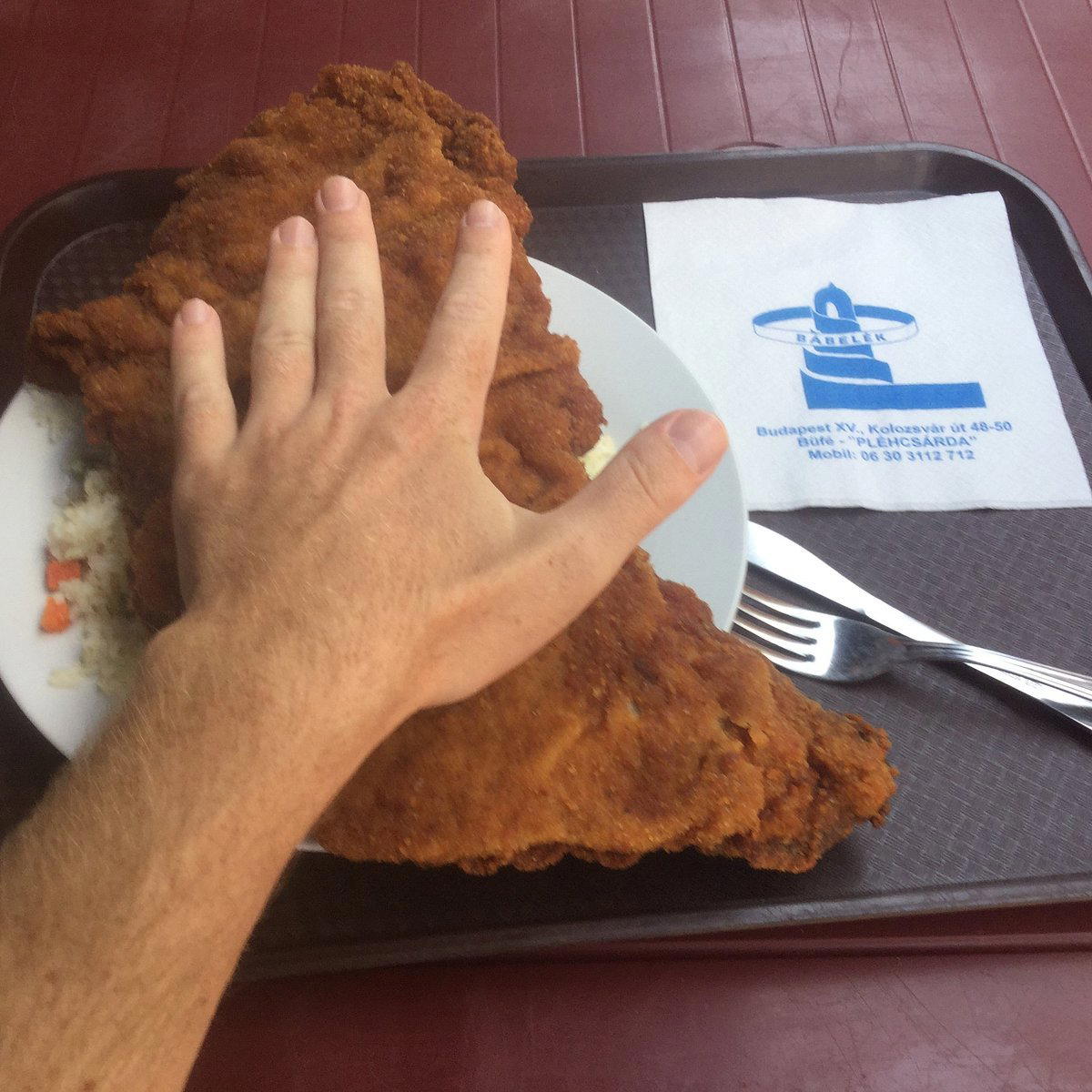
The menu
What to order
- Giant Pork Schnitzel
- Giant Chicken Schnitzel
- Cordon Bleu
- Tripe Stew
- Szekler-style Cabbage
Budapest's Outer Districts and the Csárda Tradition
The csárda is not a restaurant category that translates neatly into international hospitality language. Somewhere between a village inn and a neighbourhood tavern, it carries associations of paprika-heavy stews, unhurried service, and a dining pace that does not consult the clock. Budapest has dozens of them, but the ones that endure do so because the kitchen and the room work as a unit rather than as separate departments. Pléhcsárda, located at Kolozsvár utca 48 in the 15th district, sits within this tradition at a remove from the Michelin-tracked addresses of the 5th and 6th districts.
That distance is the point. The 15th district is residential Budapest, where the dining audience is largely local rather than transient. A csárda in this context earns its following through repetition and reliability, not through press coverage or award cycles. The comparison set here is not Costes or Stand at the €€€€ tier of contemporary Hungarian fine dining, but rather the neighbourhood-facing mid-range that sustains regular custom week after week.
The Scene on Kolozsvár Utca
Approaching an address like this in a residential Budapest district, the physical signals tend to be modest: painted signage, perhaps a handwritten specials board, a room visible through glass that reads more like a dining room than a stage set. The csárda aesthetic, when it is genuine rather than curated for tourists, leans on practicality. Tables are close. The lighting is functional rather than atmospheric by design. The warmth comes from the pace of service and the familiarity of the kitchen's output rather than from interior decoration conceived by a studio.
This kind of environment places specific pressure on the team dynamic. In a fine-dining room, the front-of-house choreography can compensate for a difficult evening in the kitchen. In a neighbourhood csárda, the margins are narrower. The person taking orders, the kitchen communicating what is fresh that day, and whoever is responsible for the wine or spirits selection all need to operate with a coherence that the room itself does not manufacture. It is a format where the human elements are load-bearing.
Kitchen, Floor, and the Logic of Collaboration
Hungarian csárda cooking at its most considered is not simple food. Dishes built around paprika, lard, freshwater fish, and slow-braised meats require timing discipline and ingredient knowledge that goes well beyond casual preparation. The category that Budapest's better neighbourhood restaurants occupy, sitting between the casual €€ tier typified by spots like Stand25 Bisztró and the technically ambitious €€€ range of places like Borkonyha Winekitchen, depends on exactly this kind of quiet competence.
Where csárdas distinguish themselves from their contemporaries is in the front-of-house relationship with the menu. In a restaurant where the kitchen changes emphasis based on season and market availability, the floor staff carry information that a printed card cannot. The difference between a table that orders well and one that does not often comes down to whether a server communicated that the catfish soup is made from a morning delivery or that a particular dish is better suited to sharing. This conversational transfer of kitchen intelligence is a form of hospitality craft that the csárda format has always depended on, even if it rarely gets framed in those terms.
For broader context on how Budapest's restaurant culture is evolving across tiers and neighbourhoods, the full Budapest restaurants guide covers the city's dining spectrum from fine dining to neighbourhood staples. Elsewhere in Hungary, Platán Gourmet in Tata and Pajta in Őriszentpéter represent how regional Hungarian kitchens are working with local ingredients at a considered level. BoriMami in Gyöngyös and Aranysárkány Vendéglő in Szentendre offer comparable neighbourhood-facing formats with a similar emphasis on regional tradition over spectacle.
Seasonal Logic and When to Visit
The csárda kitchen is inherently seasonal in ways that fine-dining establishments make explicit through changing tasting menus but that neighbourhood restaurants express more quietly. In autumn and winter, the Hungarian table shifts toward heavier preparations: game, root vegetables, bean-based dishes, and the kinds of slow-cooked proteins that the format was built around. Spring brings freshwater fish back into prominence in kitchens near the Danube catchment, and summer sees lighter preparations and cold starters that reflect produce availability rather than menu engineering.
Visiting a place like Pléhcsárda in the colder months, when Budapest's outdoor terrace culture has closed down and the city's restaurants rely on the warmth of the room, tends to align leading with the format's strengths. The dishes that define the csárda tradition are winter dishes by nature, and the atmosphere of a full room on a cold Tuesday evening is the environment these places were designed for.
For regional comparison across Hungary's dining spectrum, Forst-Ház Étterem és Kávézó in Eger sits within a similar neighbourhood register in wine country, while Halasi Pince Panzió in Villány connects the table directly to Hungary's most recognized red wine region. Classic Grill Serbian Restaurant Underground in Szeged shows how the southern border's culinary overlap with Balkan traditions produces a different but adjacent register to the csárda format.
Planning a Visit
Kolozsvár utca 48 is in Budapest's 15th district, a residential area that sits north of the city centre and is accessible by public transport, though it sees little foot traffic from the inner-city hotel belt. Visitors planning a trip from the 5th or 6th district should account for travel time. As with most neighbourhood csárdas, the most practical approach is to arrive early in service rather than expecting a late-night kitchen.
Budapest's fine-dining tier, represented by addresses like Babel and essência, operates on a different booking logic entirely, with reservation windows of weeks or months. Neighbourhood csárdas in the outer districts tend to operate with more flexibility, though weekend evenings in a well-regarded local spot can fill without notice. Checking availability a few days ahead is a reasonable precaution.
Frequently asked questions
What should I order at Pléhcsárda?
The csárda format in Budapest is built around Hungarian classics: paprika-based stews, freshwater fish preparations, and meat dishes that reflect seasonal availability. Neighbourhood restaurants in this category communicate their leading options conversationally rather than through a fixed menu hierarchy. For broader context on how Budapest kitchens are working with Hungarian cuisine, the editorial coverage at Borkonyha Winekitchen and Stand shows the range from traditional to contemporary.
How hard is it to get a table at Pléhcsárda?
Pléhcsárda operates in the 15th district, where the audience is primarily local and the booking culture is less formalized than at Budapest's awarded fine-dining addresses. Venues like Costes at the €€€€ tier often require advance planning of weeks. A neighbourhood csárda at this address is unlikely to operate the same way, though a weekend evening at a well-regarded local spot can fill without prior contact. Reaching out a few days before is a practical precaution, particularly if you are travelling specifically for the meal.
What's the defining dish or idea at Pléhcsárda?
The csárda format itself is the defining idea: a hospitality tradition centred on unhurried meals, kitchen-driven menus, and the kind of front-of-house communication that transfers what the kitchen knows to the table. The broader category the venue sits within, traditional Hungarian neighbourhood dining, is characterized by slow-cooked preparations, paprika-forward seasoning, and a seasonal cadence that reflects what is available rather than what is consistent year-round.
Do they accommodate allergies at Pléhcsárda?
Hungarian traditional cooking makes frequent use of lard, dairy, gluten, and freshwater fish, so guests with dietary restrictions should confirm directly before visiting. Budapest's more formally structured restaurants, including those with dedicated allergy protocols, tend to communicate this information through their booking systems. For this type of neighbourhood csárda, a direct conversation with the room when you arrive is the most reliable approach.
Is Pléhcsárda representative of the traditional csárda experience that is disappearing from Budapest's inner districts?
Budapest's central districts have seen traditional csárda formats give way to higher-turnover tourist dining and internationally oriented concepts, which has pushed genuinely neighbourhood-facing csárdas into the outer districts. Pléhcsárda's address in the 15th district places it within a residential context where the format still serves a local rather than visitor audience, which is the environment the csárda tradition was built around. For comparison, Aranysárkány Vendéglő in Szentendre shows how the format operates in a smaller town setting outside Budapest, and regional venues like Almalomb in Hosszúhetény demonstrate the rural Hungarian table at a considered level.
Same-City Peers
Comparable venues nearby, for context on price, style, and recognition.
| Venue | Cuisine | Price | Awards | Notes |
|---|---|---|---|---|
| PléhcsárdaThis venue — the venue you are viewing | Traditional Hungarian Fried Meats & Schnitzels | $1–10 | Not listed | Not listed |
| In Town Hot Pot | Authentic Chinese Hot Pot | $20–30 | Not listed | Ferencvaros |
| Parasztkonyha Restaurant | Traditional Hungarian Peasant Cuisine | $20–30 | Not listed | Varhegy |
| Rudas Bistro | Modern Hungarian Bistro | $20–30 | Not listed | Gellerthegy |
| Pomodoro | Traditional Italian Trattoria | $20–30 | Not listed | Varhegy |
| IDA Bistro | Austro-Hungarian Bistro | $30–50 | Wine Spectator Award of Excellence | Tabán |
Continue exploring
More in Budapest
Restaurants in Budapest
All restaurants in Budapest →
Bars in Budapest
All bars in Budapest →


Details
- Rustic
- Well Known
- Classic
- Casual Hangout
- Group Dining
- Solo
- Standalone
- A La Carte
- Traditional Raspberry Syrup
Current opening hours
- Monday
- Closed
- Tuesday
- 7 AM–7 PM
- Wednesday
- 7 AM–7 PM
- Thursday
- 7 AM–7 PM
- Friday
- 7 AM–7 PM
- Saturday
- 7 AM–3 PM
- Sunday
- Closed
Hours can change for holidays and private events. Last verified .
Sparse, utilitarian vintage diner atmosphere with minimal decor; described as a 'tin shack' or 'kiosk' in a small market setting with heavy oil smells and no weather protection outside. Authentic socialist-era aesthetic with simple wooden furnishings and basic service counter.