Our verdict
A neighbourhood bar-restaurant on Plaça de la Revolució in Gràcia, Pepa Tomate occupies one of Barcelona's most animated squares without performing for tourists. The kitchen leans into Catalan and Spanish market cooking, and the wine selection reads as a serious curation of Iberian producers rather than an afterthought. It functions as a reliable local anchor in a district that rewards those who know where to look.

Pearl is the En Primeur Club membership app, where members save venues, book tables and use the concierge.

The menu
What to order
- Patatas bravas
- Chicken croquettes
- Galician octopus
Gràcia's Square and What It Demands of a Restaurant
Plaça de la Revolució de Setembre de 1868 is one of Gràcia's more lived-in squares: wide enough for evening gatherings, surrounded by the low buildings that give the district its village-within-a-city character, and busy with locals who use it the way residents of a smaller town use a central piazza. Restaurants on squares like this face a particular pressure. The foot traffic is real, but the regulars are unforgiving, and venues that coast on location tend to empty out quickly once residents find better alternatives a block away. Pepa Tomate has made itself a fixture at this address, which in Gràcia carries more weight than a printed recommendation.
Gràcia itself sits north of the Eixample grid, and its street-level dining scene divides between places serving the neighbourhood and places performing for visitors who have read that Gràcia is worth the detour. Pepa Tomate belongs to the first category. The approach to the square along the narrow streets that connect it to Carrer de Verdi or Carrer del Torrent de l'Olla frames the arrival: you are not heading to a destination restaurant in any formal sense, but to a place that has absorbed itself into the rhythm of the neighbourhood.
The Wine List as the Primary Editorial Statement
In Barcelona's mid-tier dining scene, the wine list is often the most reliable indicator of where a venue's priorities actually sit. The top end of the city's restaurant spectrum, where Disfrutar, Cocina Hermanos Torres, ABaC, Lasarte, and Enigma operate, tends to have cellar programs that match their tasting menu ambitions. Below that tier, the drop-off can be steep. Neighbourhood spots in Gràcia frequently default to a short list of Penedès whites and regional Riojas chosen for margin rather than character.
Pepa Tomate's wine curation runs against that pattern. The selection draws from Iberian producers with enough specificity to suggest someone at the venue is paying attention to what is happening across Spanish wine regions beyond the obvious appellations. Catalonia's own output, which spans from the Atlantic-influenced whites of Empordà to the structured reds of Priorat and Montsant, gives any Barcelona restaurant with genuine interest a deep local pool to draw from. Further afield, the peninsula's smaller and more technically ambitious producers, from the granitic soils of Galicia's Rías Baixas to the high-altitude vineyards of the Sierra de Gredos and the increasingly experimental work coming out of Cádiz, represent a curation challenge. Venues that get this right are choosing wines that require knowledge and commitment to source, not just a distributor catalogue.
Spain's broader wine story is relevant context here. Across the country, restaurants operating at or near the level that Michelin-starred peers like El Celler de Can Roca in Girona, Atrio in Cáceres, and Aponiente in El Puerto de Santa María have established internationally tend to treat the cellar as a co-equal partner to the kitchen. The trickle-down effect of that seriousness into neighbourhood dining has been gradual but visible. Pepa Tomate's list sits in that current.
What the Kitchen Is Doing
Gràcia's casual dining register tends toward Catalan market cooking: seasonal vegetables, conservas, charcuterie from the peninsula's producing regions, and dishes that anchor on technique rather than theatrics. This is the tradition from which most neighbourhood restaurants in the district draw, and it is a strong one. The Catalan approach to product, which has historically prized sourcing and restraint over elaborate preparation, aligns well with the bar-restaurant format that Pepa Tomate occupies.
The address on Plaça de la Revolució positions the venue for both sit-down dining and the kind of extended, bottle-and-plate evening that Gràcia's social culture encourages. Early evening on the square tends to belong to residents on their way somewhere; later, the restaurants fill with groups who have settled in for the night. The kitchen needs to handle both registers, and a menu built around shared plates and a serious wine list is well-suited to that rhythm.
For comparison with the Spanish scene nationally, the kitchen's register is considerably more casual than the tasting-menu format that defines destinations such as Arzak in San Sebastián, Martin Berasategui in Lasarte-Oria, Azurmendi in Larrabetzu, Mugaritz in Errenteria, Quique Dacosta in Dénia, and Ricard Camarena in València. That gap is precisely the point: Pepa Tomate is not competing in that space. It is competing for the loyalty of people who live in Gràcia and want a place on the square that handles wine seriously.
Where Pepa Tomate Sits in Barcelona's Broader Picture
Barcelona's dining scene has two distinct modes that rarely overlap. The first is the international-facing end, the Michelin tables and the venues that draw visitors from outside Spain specifically to eat. The second is the city's own neighbourhood fabric, which functions largely on local loyalty and word-of-mouth. For readers accustomed to the first mode, and who may be more familiar with bar-forward formats at the level of Le Bernardin in New York City or Atomix in New York City, Pepa Tomate represents the second mode at a level where the wine list indicates genuine intent.
Gràcia rewards that kind of engagement. The district's squares, its independent shops, and its restaurant culture all operate on a register that does not scale well to large volumes or tourist throughput. Venues that have stayed here across changing Barcelona dining trends have generally done so by being genuinely useful to people who live nearby. The square address at Plaça de la Revolució gives Pepa Tomate a social position in the neighbourhood that supports that kind of staying power.
For a fuller map of where Pepa Tomate sits against Barcelona's restaurant range, see our full Barcelona restaurants guide. And for context on the top end of the city's creative dining, DiverXO in Madrid represents the kind of boundary-pushing ambition that defines what the progressive Spanish kitchen looks like at its furthest reach.
Know Before You Go
- Address: Plaça Revolució de Setembre 1868, 17, Gràcia, 08012 Barcelona, Spain
- Neighbourhood: Gràcia, accessible via Metro L3 (Fontana) or L4 (Joanic), both within a 10-minute walk of the square
- Format: Bar-restaurant with outdoor square seating; suited to both shorter wine-and-plates visits and longer table sittings
- Booking: Specific booking details are not currently available through EP Club; visiting the venue directly or arriving early in the evening is advisable, particularly on weekends when the square fills
- Price range: Pricing details are not listed in; the neighbourhood format and Gràcia address suggest a mid-range spend per head relative to Barcelona's formal dining tier
- Hours:; verify directly before visiting
Frequently asked questions
What do people recommend at Pepa Tomate?
Pepa Tomate's position in Gràcia places it within a neighbourhood dining tradition that emphasises Catalan and Spanish market cooking, shared plates, and a wine selection with genuine curatorial intent across Iberian producers. For the most accurate picture of what is currently being served, checking recent local reviews or contacting the venue directly is the practical step.
What is the ideal way to book Pepa Tomate?
In Barcelona's Gràcia neighbourhood, bar-restaurants at this price tier commonly accept walk-ins, but weekend evenings around popular squares can fill quickly. Arriving before the main evening sitting, typically before 9pm by Spanish dining standards, tends to secure a table without the need for a reservation. For any specific booking requirements, contacting the venue at the Plaça de la Revolució address directly is the most reliable approach.
Is Pepa Tomate a good choice for a wine-focused evening in Gràcia?
Among the neighbourhood's bar-restaurants, Pepa Tomate's wine list is one of the stronger reasons to choose it over comparable addresses on or near the square. The curation draws from Iberian producers across multiple regions rather than defaulting to a standard house selection, which makes it a reasonable anchor for an evening built around wine and plates rather than a formal tasting menu. Barcelona's leading creative tables, from Disfrutar to Enigma, sit in a different category entirely; Pepa Tomate occupies the neighbourhood tier where cellar seriousness is less common and therefore more notable when it appears.
Cost Snapshot
Comparable venues nearby, for context on price, style, and recognition.
| Venue | Cuisine | Price | Awards | Notes |
|---|---|---|---|---|
| Pepa TomateThis venue (the venue you are viewing) | Modern Catalan Tapas | $20–30 | Not listed | Not listed |
| Demo Gastrobar | Modern Spanish Gastrobar Tapas | Not listed | Not listed | la Vila de Gracia, Modern Spanish Gastrobar Tapas |
| Maysi Restaurant Barcelona | Mediterranean & Spanish Cuisine | $30–50 | Not listed | l'Antiga Esquerra de l'Eixample, Mediterranean & Spanish Cuisine |
| La Barra del 7 Portes | Traditional Catalan Tapas | $30–50 | Macarfi 7.2 Food Rating | Sant Gervasi - Galvany, Traditional Catalan Tapas |
| Golfo De Bizkaia BCN | Traditional Basque Pintxos | $30–50 | Not listed | Sant Pere, Santa Caterina i la Ribera, Traditional Basque Pintxos |
| Tapas Y Mar | Spanish Seafood Tapas | $20–30 | Not listed | la Barceloneta, Spanish Seafood Tapas |
Continue exploring
More in Barcelona
Restaurants in Barcelona
All restaurants in Barcelona →
Bars in Barcelona
All bars in Barcelona →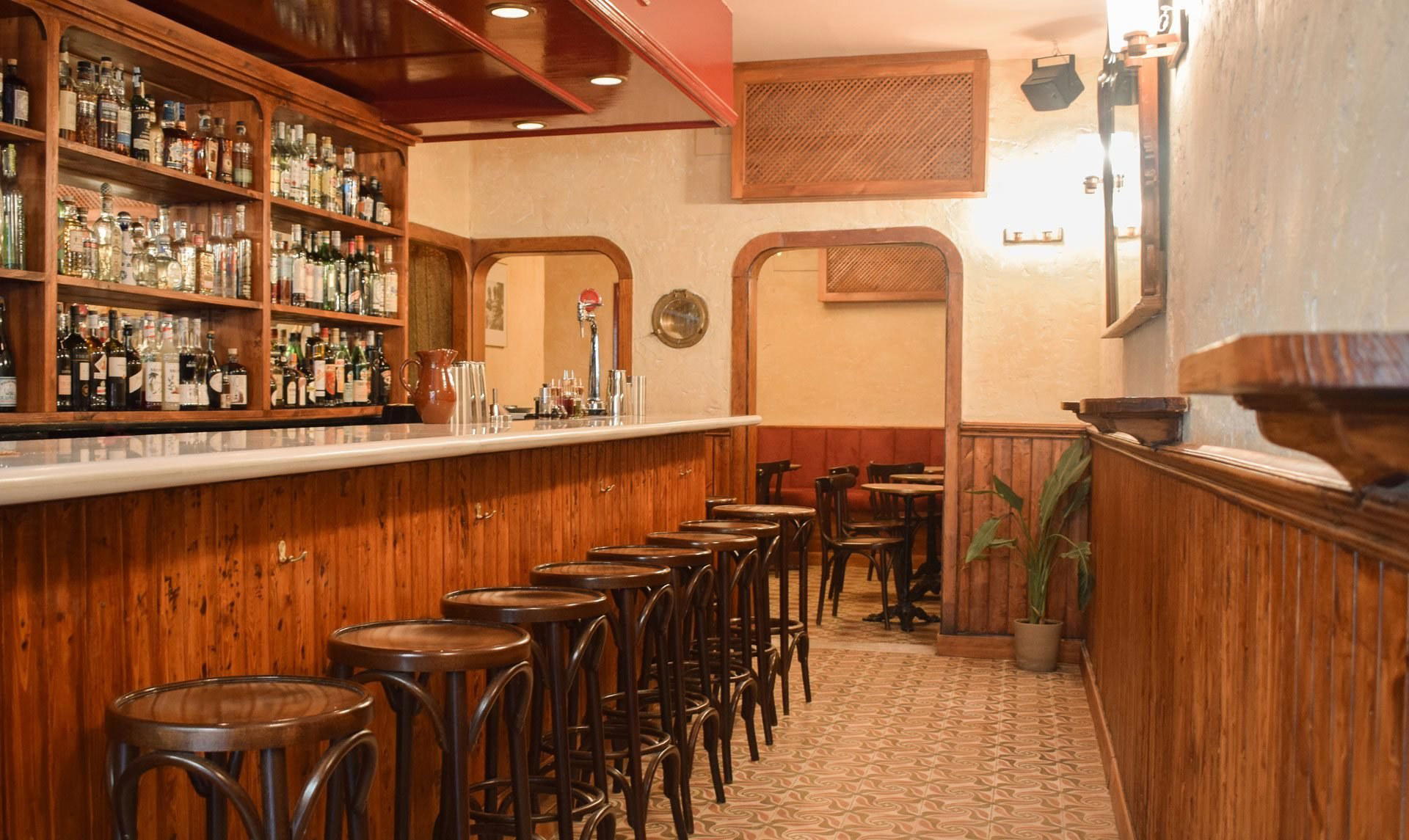




Details
- Lively
- Trendy
- Cozy
- Casual Hangout
- Group Dining
- Terrace
- Local Sourcing
- Small Plates
- A La Carte
- Vegetarian Friendly
- Gluten Free Options
Current opening hours
- Monday
- 12 PM–12 AM
- Tuesday
- 12 PM–12 AM
- Wednesday
- 12 PM–12 AM
- Thursday
- 12 PM–12 AM
- Friday
- 12 PM–12 AM
- Saturday
- 12 PM–12:30 AM
- Sunday
- 12 PM–12:30 AM
Hours can change for holidays and private events. Hours as of .
Young, friendly, informal atmosphere with cute interior design and terrace seating.