


Designer Jaime Beriestain's 89-room property trades on address as much as aesthetics: the Sagrada Família is in eyeline from upper-floor terraces, and the neighbourhood below operates on local rhythms rather than tourist ones. Rates start around $494 per night.
Pearl is the En Primeur Club membership app — saves, bookings, and concierge access live there. Same editors, same standards.
- Address
- Carrer de Provença, 277, Eixample, 08037 Barcelona
- Phone
- +34 932 14 20 70
- Website
- hotelstheone.com
- Directions
- Get directions
 Saves & bookings on Pearl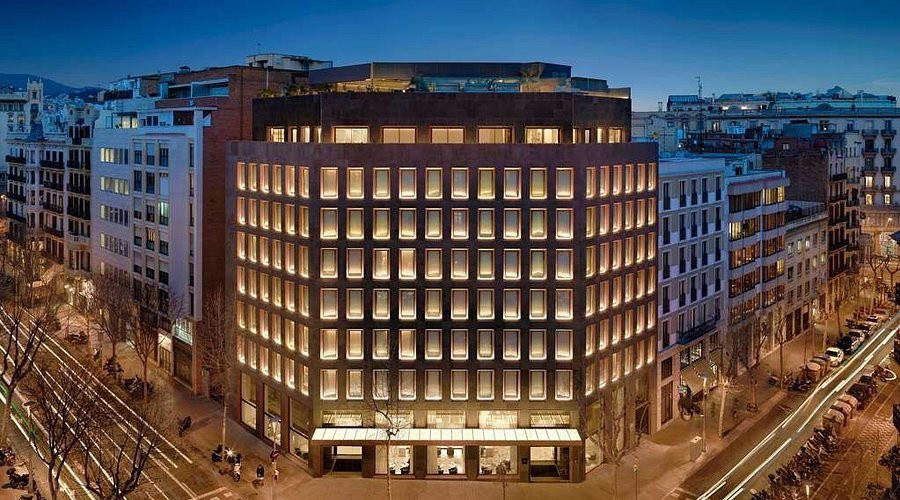
Where Eixample Meets Gràcia: Barcelona's Most Considered Address
Approaching The One Barcelona along Carrer de Provença, the hotel announces itself through floor-to-ceiling picture windows that face outward as much as inward, framing the neighbourhood rather than shutting it out. It sits at the seam where Eixample's wide, tree-lined grids give way to Gràcia's tighter, more animated streets, a boundary that carries real meaning in a city as neighbourhood-conscious as Barcelona. Hotels further south toward the waterfront trade proximity to the Gothic Quarter for distance from the city's daily rhythms. Here, at Provença 277, the calculation runs differently: you are on local turf first, tourist corridor second.
That positioning matters more than it might seem. Barcelona absorbs an enormous volume of tourism, and the gravitational pull toward La Rambla, the Born, and the waterfront is strong. The Eixample-Gràcia boundary keeps guests within walking distance of Gaudí's Parc Güell, the Sagrada Família, and the Gothic Quarter, while placing them in a residential fabric where the restaurants, bars, and morning routines belong to people who actually live here. The Rambla de Catalunya, Eixample's own pedestrian thoroughfare, quieter and more local in character than its famous namesake, runs nearby and sets the tone: a place for slow coffee and unhurried conversation rather than navigating crowds.
A Design Language Built on Restraint and Materiality
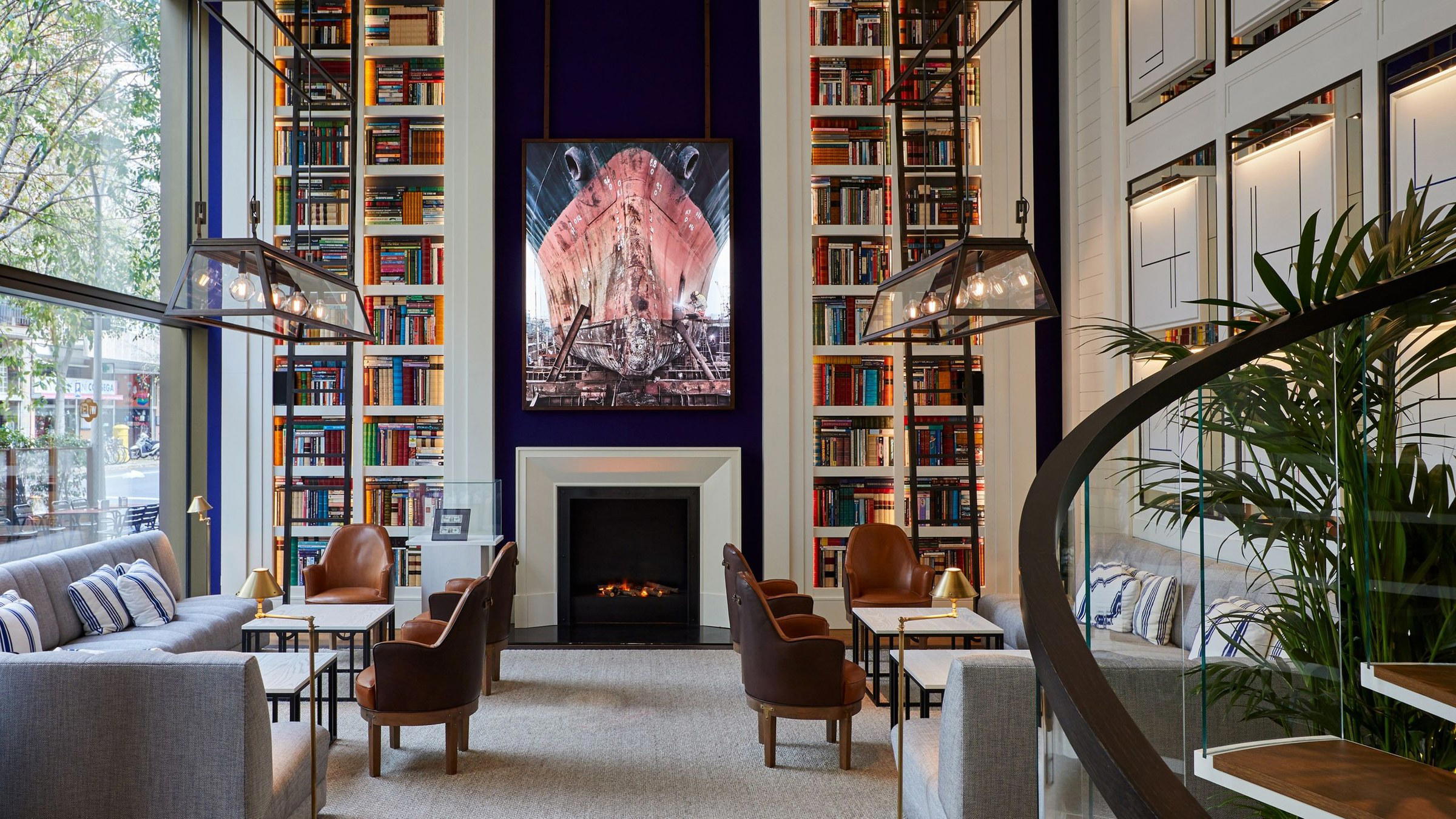
Inside, the hotel's interiors are the work of Chilean-born, Barcelona-based designer Jaime Beriestain, whose studio also produced much of the bespoke furniture. The visual language leans on marble, mirrors, and gold accents, a combination that, in less careful hands, tends toward pastiche. Here, the execution holds: the materials read as considered rather than excessive, and the effect across 89 rooms is consistently coherent. Artwork appears throughout in bold, chromatic registers, but particularly persuasive visual element remains the picture windows that connect each room to the street below and the skyline beyond.
Across the room hierarchy, the difference in scale is significant. Entry-level rooms are compact by five-star standards, the hotel's own description calls them "cozy," a term that should be taken at face value when planning. They are well-designed within their footprint, but the trade-off is clear. Higher-category rooms step up into genuinely generous territory, with private terraces and, in the right configuration, direct sightlines to the Sagrada Família. For visitors who plan to spend meaningful time in the room rather than treating it purely as a base, the premium categories earn their price differential. The hotel's Michelin Key recognition in 2024, part of the guide's relatively new hospitality assessment programme, signals that this quality differential is consistent enough to register with external evaluators.
Responsible Luxury in a High-Tourism City
The editorial angle that emerges from The One's positioning is less about what the hotel does in isolation and more about what it represents within Barcelona's premium hospitality tier. Luxury urban hotels in heavily visited cities face a recurring tension: the infrastructure required to deliver five-star comfort typically involves significant resource consumption, while the cities themselves are under increasing pressure from tourism's environmental and community impact. The One's Luxury Art Boutique Hotel category designation suggests a scale and orientation that sits closer to the specialist end of the spectrum than to the large-footprint resort model.
At 89 rooms, the hotel operates at a size that permits closer attention to individual guest experience without the logistical anonymity that comes with properties twice or three times that count. That scale also tends to correlate with more considered sourcing and operational decisions, The Eixample location places guests in a walkable district with dense public transport connections, reducing the default dependence on private transfers that characterises hotel zones farther from the city centre. For a city managing the tensions between mass tourism and residential livability with increasing urgency, a well-located boutique property that encourages guests to move through the city on foot and by metro has a different footprint than one that operates as a self-contained resort bubble. Comparable properties in the Barcelona premium tier, including the Mandarin Oriental Barcelona and Alma Barcelona, occupy Passeig de Gràcia, a more conventionally prestigious address that comes with heavier tourist traffic. The One's placement two blocks east represents a deliberate step away from that corridor.
The Rooftop as the Hotel's Clearest Argument
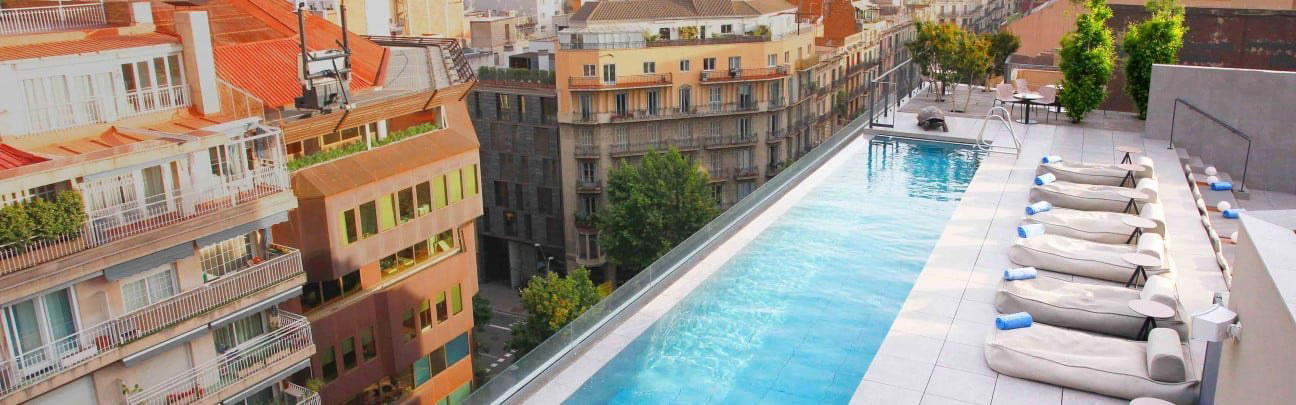
If any single element of The One makes the case for the property's overall positioning, it is the rooftop. A plunge pool with unobstructed Barcelona skyline views, the Sagrada Família prominent in the middle distance, Tibidabo ridge defining the horizon to the northwest, delivers the kind of perspective that puts the city's scale into immediate relief. For a hotel at this price point, a rooftop that earns its place matters. The view is the payoff for the location decision: you are high enough to see across the city's dense, regular grid, and close enough to the Sagrada Família that its silhouette remains legible rather than abstract.
Barcelona's rooftop scene has expanded considerably over the past decade, with properties across the city investing in refined pool-and-bar formats. The One's version benefits from the Eixample grid's own logic: because the neighbourhood's blocks are uniformly proportioned and the surrounding buildings relatively consistent in height, the sightlines from Provença 277 are uninterrupted in a way that more densely vertical districts do not permit. That is a structural advantage, not simply a design choice.
Placing The One in Barcelona's Premium Hotel Set
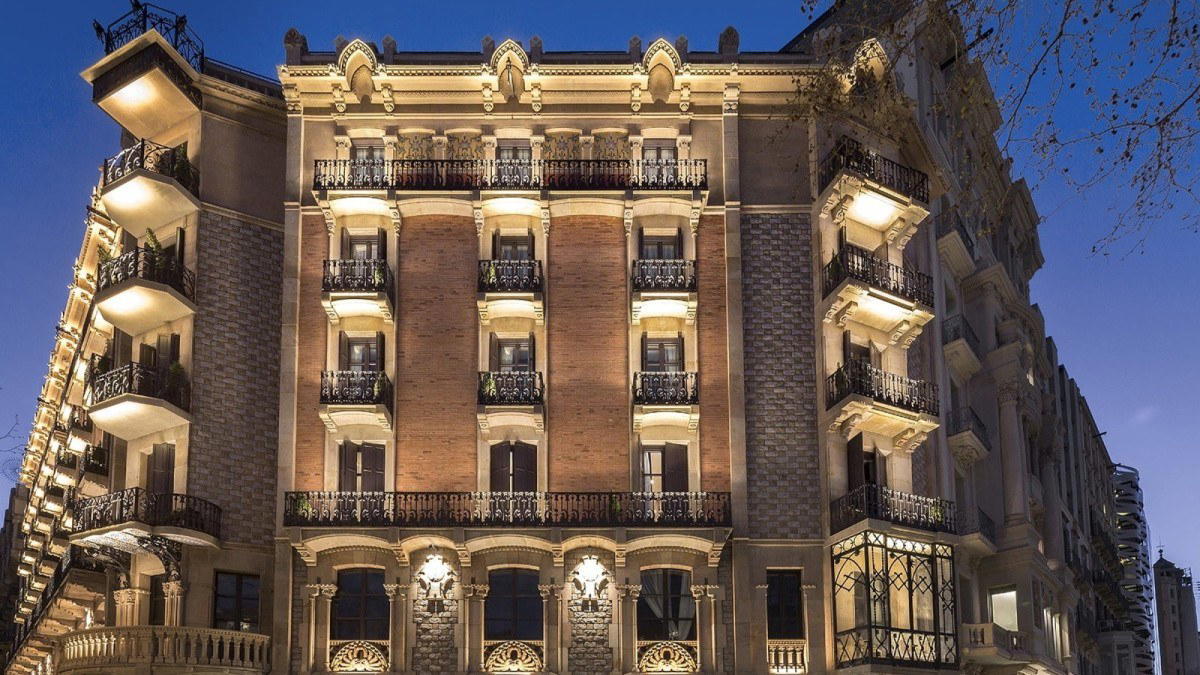
Properties like ABaC Restaurant & Hotel, Almanac Barcelona, Mercer Hotel Barcelona, and Hotel Boutique Mirlo each occupy distinct positions across the city's neighbourhoods and design registers. Hotel Arts Barcelona and Antiga Casa Buenavista represent opposite ends of the scale spectrum. Within that field, The One competes on location specificity and interior coherence rather than on F&B programming or historic building credentials, which is a legitimate competitive position when the location is as well-judged as this one.
For visitors approaching Barcelona from elsewhere in Spain, the broader country portfolio offers useful calibration. Mandarin Oriental Ritz, Madrid sets the benchmark for grand-hotel restoration in Iberia. Akelarre in San Sebastián and Atrio Restaurante Hotel in Cáceres anchor the restaurant-led hotel category. Wine-country escapes like Abadía Retuerta LeDomaine and Terra Dominicata in Escaladei occupy a separate rural niche. Island alternatives, Cap Rocat in Cala Blava, Hotel Can Cera in Palma, La Residencia, A Belmond Hotel, Mallorca, serve a different travel logic entirely. The One is emphatically the urban option: it works well for visitors who want Barcelona as a base for extended exploration rather than as a backdrop for a self-contained resort stay. Internationally, the hotel's comparable set includes boutique properties like The Fifth Avenue Hotel in New York City, where location precision and design coherence carry more weight than scale or F&B programming.
Planning Your Stay
Rates begin at $494 per night for entry-level rooms. The 89-room count means availability tightens well before peak season, spring and early autumn are Barcelona's most heavily booked periods. Booking well ahead for spring and autumn travel is a reasonable baseline. For the private-terrace room categories with Sagrada Família views, lead time should extend further, as those configurations are a subset of the overall inventory. The Eixample address is within walking distance of central metro connections, making airport-to-hotel transfers by metro practical.
Similar Picks
Comparable venues nearby, for context on price, style, and recognition.
| Venue | Cuisine | Price | Notes |
|---|---|---|---|
| The One BarcelonaThis venue — the venue you are viewing | Contemporary luxury design hotel with Mediterranean influences, executed by prestigious designer Jaime Beriestain, positioned as an urban sanctuary near architectural landmarks. | $$$$ | Not listed |
| Wittmore Hotel Barcelona | Contemporary English country house style in a historic Gothic Quarter building | $$$$ | Barri Gotic |
| Hotel Arts Barcelona | Contemporary beachfront resort with artistic urban design | $$$$ | la Barceloneta |
| Yurbban Passage Hotel & Spa | Historic building blending heritage with contemporary design | $$$ | Sant Pere, Santa Caterina i la Ribera |
| ABaC Restaurant & Hotel | Contemporary boutique hotel in a former private estate | $$$$ | Sant Gervasi - la Bonanova |
| Monument Hotel | Modern luxury in a pre-modernist mansion | $$$$ | la Dreta de l'Eixample |
Recognition history
Dated appearances from independent guides and award organizations, with the underlying list record or original source where available.
Michelin 1 Key
Michelin
Preferred Hotels L.V.X. Collection
Preferred Hotels
World Luxury Hotel Awards WLHA Continent Winner
World Luxury Hotel Awards
World Luxury Hotel Awards WLHA Global Winner
World Luxury Hotel Awards
Michelin 1 Key
Michelin
Continue exploring
More in Barcelona
Hotels in Barcelona
Browse all →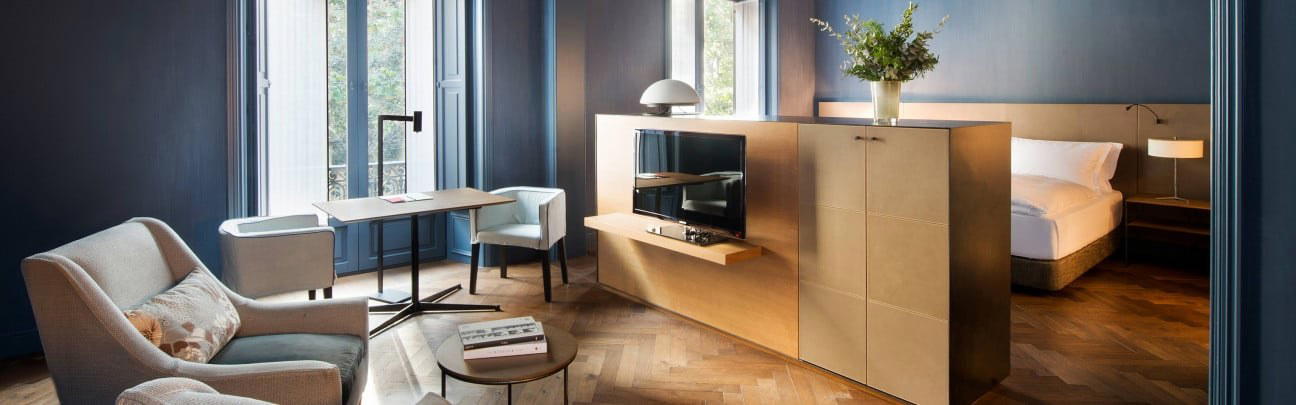
Bars in Barcelona
Browse all →
Restaurants in Barcelona
Browse all →
At a Glance
- Elegant
- Sophisticated
- Modern
- Scenic
- Romantic Getaway
- Honeymoon
- Anniversary
- Celebration
- Rooftop Pool
- Destination Spa
- Panoramic View
- Terrace
- Design Destination
- Wi Fi
- Pool
- Spa
- Fitness Center
- Room Service
- Concierge
- Valet Parking
- Restaurant
- Bar
- Sauna
- Skyline
- Wi Fi
- Pool
- Spa
- Fitness Center
- Room Service
- Concierge
- Valet Parking
- Restaurant
- Bar
- Sauna
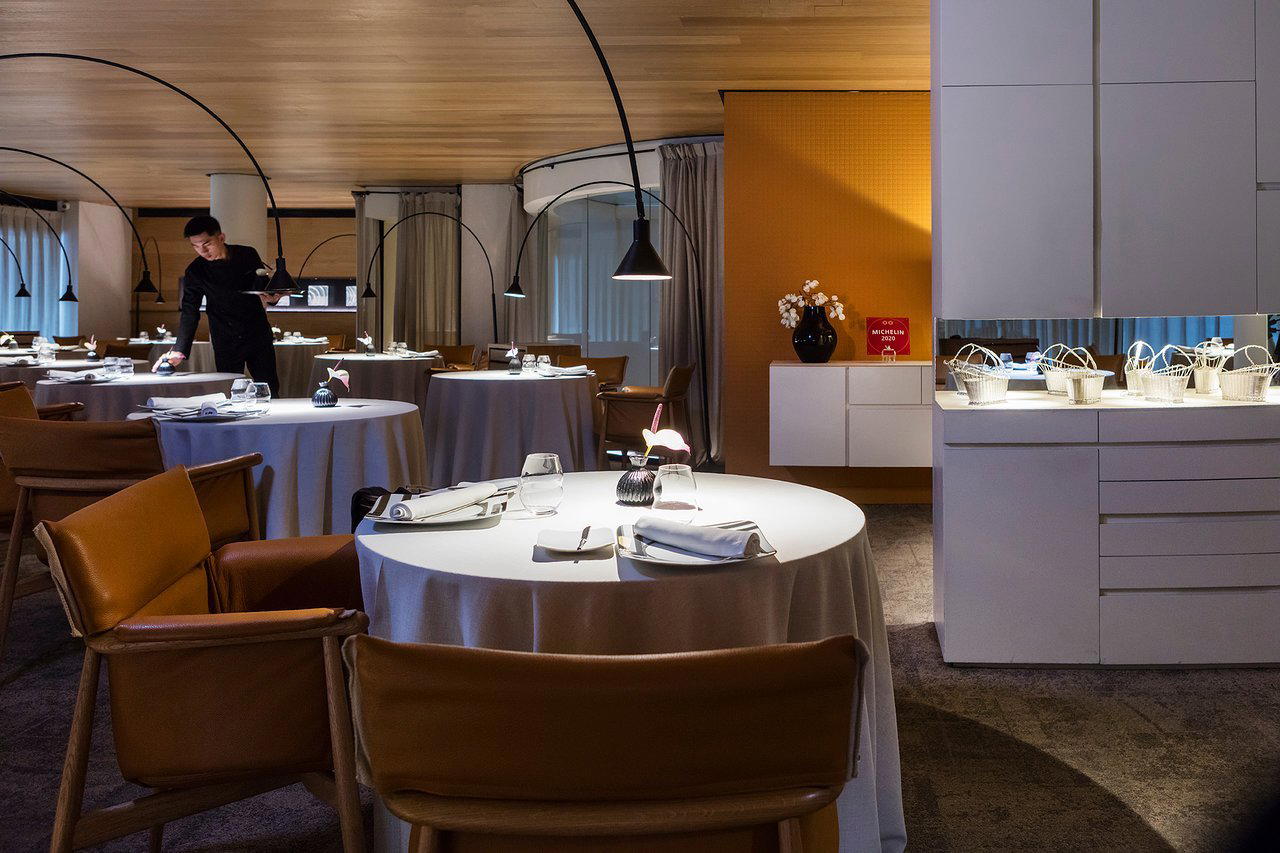
Bright, contemporary spaces with soft-toned palettes and marble finishes; the rooftop bar offers romantic sunset views while the spa provides serene relaxation areas with ambient lighting.