Demo Gastrobar occupies a corner of Plaça de Narcís Oller in Gràcia, one of Barcelona's most neighbourhood-scaled squares. The gastrobar format places it in a mid-tier bracket that sits between the city's Michelin-starred creative houses and its casual tapas bars, with a menu architecture designed for grazing rather than ceremony. A useful entry point for understanding Barcelona's neighbourhood dining scene beyond the headline restaurants.
- Address
- Plaça de Narcís Oller, 7, Gràcia, 08006 Barcelona, Spain
- Phone
- +34930072580
- Website
- opentable.com
- Directions
- Get directions
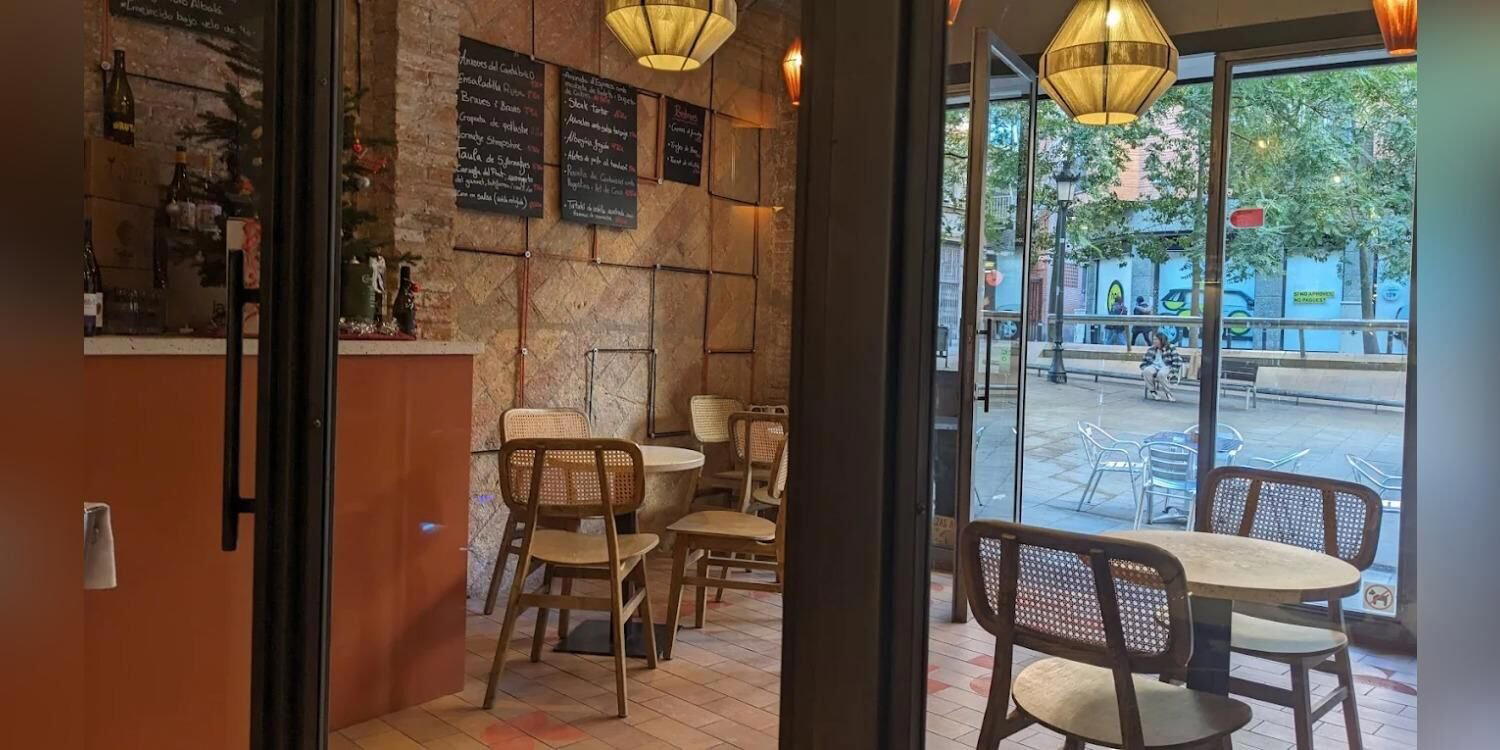
A Square, a Neighbourhood, and What the Gastrobar Format Reveals
Plaça de Narcís Oller is the kind of square that Barcelona does quietly well: small, residential, flanked by trees, and busy with people who actually live nearby rather than people consulting maps. It sits in Gràcia, the district that long predates its absorption into the broader city and still operates with a village logic that makes it distinct from the tourist-facing waterfront or the grand geometry of the Eixample. Demo Gastrobar occupies number seven on that square, and its address alone positions it within a particular dining register: neighbourhood-first, format-casual, and suited to sharing plates rather than a fixed menu.
The gastrobar category matters here because it carries specific expectations in Barcelona. At its worst, it is a marketing word attached to reheated croquetas. At its considered end, the format signals a kitchen that has thought about portion architecture, drink pairing, and the rhythm of a meal built from smaller plates rather than a fixed sequence. Demo Gastrobar occupies that space in Gràcia, which is a neighbourhood with enough food-literate locals to keep a kitchen honest.
Menu Architecture as the Central Argument
The gastrobar format makes a structural argument before a single plate arrives: the menu is designed for lateral movement rather than vertical progression. Where a tasting menu at, say, Disfrutar or Enigma dictates sequence, pacing, and even seating duration, the gastrobar menu hands those decisions back to the diner. What you order first, how many dishes you share, whether you treat the meal as a quick drink-and-snack or a long table session: all of that is negotiable.
This structural openness is both the format's strength and its quality signal. A kitchen that designs for grazing has to ensure that individual components hold up without the scaffolding of a set progression. Dishes cannot rely on a preceding course to set palate expectations. Each plate has to work independently and also alongside whatever else the table has ordered. That is a different discipline from tasting-menu cooking, and it connects Demo Gastrobar to a broader Barcelona tradition of serious eating in informal registers, a tradition that runs from the old bar counters of El Born through to the more deliberate neighbourhood spots that have emerged in Gràcia and Poble Sec over the past decade.
Barcelona's creative dining scene at its upper tier, places like Cocina Hermanos Torres, ABaC, and Lasarte, operates at price points and with booking windows that place them in a different planning category. The gastrobar format addresses a gap in that spectrum: technically engaged cooking at a pace and price that suits a weeknight in the neighbourhood.
Gràcia as Context
The neighbourhood shapes the offer in ways that are not incidental. Gràcia's dining scene has historically skewed toward independent operators rather than group-backed concepts. The squares, Plaça de la Vila de Gràcia, Plaça del Sol, and Plaça de Narcís Oller itself, function as outdoor extensions of their surrounding bars and restaurants, which means that the dining experience extends into the ambient life of the neighbourhood rather than being sealed inside a formal room. This is a different relationship between restaurant and city than you find at the Michelin level, and it is part of what makes the gastrobar format coherent here.
For visitors, Gràcia rewards the kind of unscheduled afternoon that the major creative restaurants do not accommodate. You can walk from the upper end of Passeig de Gràcia into the neighbourhood in under ten minutes, passing the shift between Eixample geometry and Gràcia's narrower, older street grid. The square at Narcís Oller sits roughly in the middle of the neighbourhood, close enough to the main squares to feel connected but quieter than the high-traffic spots around Mercat de l'Abaceria.
Where Demo Gastrobar Sits in Barcelona's Broader Dining Picture
Barcelona's restaurant spectrum currently runs from the globally referenced creative houses to the neighbourhood spots that serve the city's own residents. The upper tier, which includes not only the city's own Michelin-starred addresses but connects to a wider Spanish fine-dining circuit that takes in El Celler de Can Roca in Girona, Mugaritz in Errenteria, and Quique Dacosta in Dénia, demands advance planning, significant spend, and a specific kind of commitment from the diner. Further afield, the Spanish creative dining tradition extends to Arzak in San Sebastián, Azurmendi in Larrabetzu, Martin Berasategui, Aponiente in El Puerto de Santa María, Ricard Camarena in València, and Atrio in Cáceres. International reference points like DiverXO in Madrid, Le Bernardin in New York City, and Lazy Bear in San Francisco mark how Barcelona's own scene positions itself within a global conversation about format and ambition.
The restaurant does not compete in that register and is not trying to. It competes in the neighbourhood gastrobar tier, where the comparable set is defined by square footage, local loyalty, and the ability to deliver consistent quality without the infrastructure of a destination restaurant. That is a meaningful and useful category for anyone building a Barcelona itinerary that balances serious eating with the kind of spontaneous, unhurried dining that the city actually practices at street level.
Planning Details
| Detail | The restaurant | Cocina Hermanos Torres | Disfrutar |
|---|---|---|---|
| Format | Gastrobar, sharing plates | Tasting menu, creative | Tasting menu, progressive |
| Price tier | €€ | €€€€ | €€€€ |
| Booking lead time | Recommended | Weeks to months | Months ahead |
| Neighbourhood | Gràcia | Les Corts | Eixample |
| Awards | None | Michelin-starred | Michelin-starred |
Reputation Context
Comparable venues nearby, for context on price, style, and recognition.
| Venue | Cuisine | Price | Notes |
|---|---|---|---|
| Demo GastrobarThis venue — the venue you are viewing | Modern Spanish Gastrobar Tapas | $$ | Not listed |
| Cafè del Centre | Traditional Catalan Tapas | $$ | la Dreta de l'Eixample |
| Vic Braseria | Catalan Grill Steakhouse | $$ | el Fort Pienc |
| Restaurant La Panxa del Bisbe | Creative Catalan Tapas | $$ | la Vila de Gracia |
| La Bendita | Spanish Tapas and Paella | $$ | la Sagrada Familia |
| Can Culleretes | Traditional Catalan | $$ | Barri Gotic |
Continue exploring
More in Barcelona
Restaurants in Barcelona
Browse all →
Bars in Barcelona
Browse all →
Hotels in Barcelona
Browse all →
At a Glance
- Trendy
- Modern
- Casual Hangout
- Terrace
- Street Scene
Peaceful and playful atmosphere ideal for local people watching.