On Carrer de la Vidrieria in Barcelona's Ciutat Vella, Golfo De Bizkaia BCN brings the culinary tradition of the Basque coast to the heart of the Gothic Quarter's edge. The address places it squarely in one of the city's most historically layered dining corridors, where the name alone signals a clear regional allegiance, the Gulf of Biscay, that stretch of Atlantic coastline that defines Basque cooking's relationship with the sea.
Pearl is the En Primeur Club membership app — saves, bookings, and concierge access live there. Same editors, same standards.
- Address
- Carrer de la Vidrieria, 12, Ciutat Vella, 08003 Barcelona, Spain
- Phone
- +34932684888
- Website
- golfodebizkaia.com
- Directions
- Get directions
 Saves & bookings on Pearl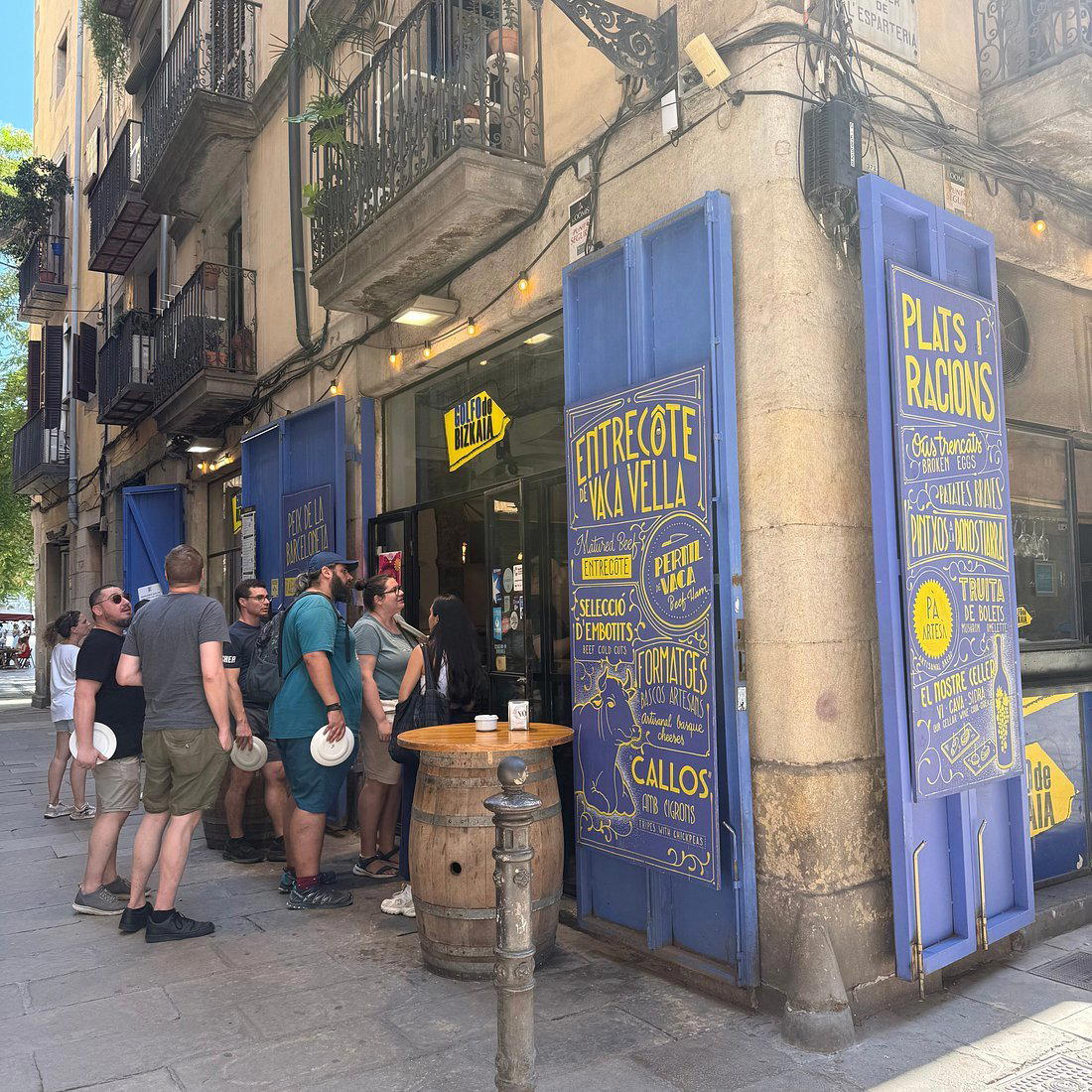
Where the Basque Coast Meets Catalan Streets
Carrer de la Vidrieria runs through the lower fringe of Ciutat Vella, a short walk from the Basílica de Santa Maria del Mar and the narrow lanes that feed into El Born. The street sits at a particular intersection of Barcelona's urban character: old enough to carry the weight of the medieval quarter, but close enough to the waterfront to feel the pull of the sea. It is precisely the kind of address where a restaurant named after the Gulf of Biscay, the Golfo de Bizkaia, makes an immediate kind of sense. The name is a declaration of culinary origin before the door even opens.
Golfo De Bizkaia BCN is a traditional Basque pintxos restaurant in Barcelona's Ciutat Vella, at Carrer de la Vidrieria, 12. The Basque Country and Catalonia represent two of Spain's most assertive regional food cultures, and they do not overlap easily. Where Catalan cooking leans on sofregit, romesco, and the produce rhythms of the Mediterranean, Basque cuisine is built around the Atlantic: salt cod, spider crab, hake cheeks, anchovies cured in the bay's cold waters, and the long tradition of the txoko, the private gastronomic society where cooking is treated as a serious collective discipline. A Basque restaurant in Barcelona is not merely a regional outpost; it is a counterpoint, a different set of instincts operating in a city that has its own strong culinary identity.
The Cultural Weight of Basque Cooking
To understand what a restaurant like Golfo De Bizkaia BCN represents in Barcelona's dining picture, it helps to understand what the golfo de Bizkaia actually means to Basque food culture. The Bay of Biscay has shaped the cuisine of the Basque Country over centuries in ways that go beyond simple geography. Cod fishing routes to Newfoundland, the txakoli vineyards along the Cantabrian coast, the pintxos bars of San Sebastián's Parte Vieja, and the three-Michelin-star concentration of the Basque culinary corridor, all of these trace back, in some form, to that body of cold Atlantic water and the communities that built their identity around it.
The Basque Country holds an extraordinary concentration of celebrated restaurants relative to its population. Arzak in San Sebastián has held three stars since 1989. Mugaritz in Errenteria has maintained its position among the world's most closely watched restaurants for over a decade. Azurmendi in Larrabetzu and Martin Berasategui in Lasarte-Oria anchor the broader region's reputation at the highest level. This is the culinary tradition that a restaurant bearing the name of the Bay of Biscay is invoking, consciously or not, when it plants itself in another city.
That tradition matters in Barcelona specifically because the city's own fine-dining infrastructure has moved firmly toward creative and progressive formats. Disfrutar and Cocina Hermanos Torres sit at the summit of Barcelona's Michelin hierarchy. ABaC, Lasarte, and Enigma represent different inflections of the same creative impulse. Against this backdrop, a restaurant anchored in Basque coastal tradition occupies a different register entirely: it is less about technique as spectacle and more about the integrity of the ingredient, the fish brought to the table with minimal interference, the sauce built from reduction and time rather than hydrocolloids and centrifuges.
Basque Cooking as a Counterpoint in Barcelona
Across Spain, compelling regional cooking arguments are being made not at the creative frontier but at the level of tradition executed with precision. Aponiente in El Puerto de Santa María has built its reputation around the sea in a different key, Andalusian, tidal-flat-focused, deeply experimental. Quique Dacosta in Dénia treats the Mediterranean coast with similar intellectual seriousness. El Celler de Can Roca in Girona and Ricard Camarena in València each stake out a regional position that is simultaneously local and international in ambition. DiverXO in Madrid and Atrio in Cáceres show how different the Spanish creative spectrum can be when the Atlantic coast's influence gives way to interior and capital-city dynamics.
What Basque cooking brings to Barcelona is something these high-concept addresses do not always offer: a direct, unmediated relationship between the sea and the plate. The classic preparations of Basque cuisine, hake in salsa verde, kokotxas al pil-pil, grilled turbot with nothing more than olive oil and coarse salt, are exercises in restraint that require notable sourcing and confident technique in equal measure. These are dishes where the fish has nowhere to hide.
For international diners, comparisons to other coastal-focused fine dining, Le Bernardin in New York City or Lazy Bear in San Francisco in an entirely different register, illuminate how different the Basque approach is. The Basque tradition does not treat the sea as a canvas for modernist expression; it treats it as an authority to be respected.
Golfo De Bizkaia BCN in Context
The Carrer de la Vidrieria address puts the restaurant in a part of Barcelona that draws both residents of the Ribera neighbourhood and visitors who have worked past particularly obvious tourist coordinates. El Born and the surrounding streets have a dining density that rewards walking: the blocks between Santa Maria del Mar and the Passeig del Born contain some of the city's most interesting mid-range and specialist addresses, where the competition is real and the clientele is not easily impressed.
Planning Your Visit
Address: Carrer de la Vidrieria, 12, Ciutat Vella, 08003 Barcelona. Neighbourhood: El Born/Ribera, within walking distance of Santa Maria del Mar and the Parc de la Ciutadella. Reservations: recommended. Budget: about $30 per person. Timing: Mon to Fri 1 pm to 12 am, Sat and Sun 12 pm to 12 am. Address: Carrer de la Vidrieria, 12, Ciutat Vella, 08003 Barcelona. Neighbourhood: El Born/Ribera, within walking distance of Santa Maria del Mar and the Parc de la Ciutadella. Reservations: Contact the restaurant directly; given the address's dining competition, booking ahead is advisable for weekend evenings. Budget: Not confirmed at time of writing; verify current pricing on arrival or via direct inquiry. Timing: Barcelona's dining rhythm skews late; expect peak service from 9 pm onward.
Accolades, Compared
Comparable venues nearby, for context on price, style, and recognition.
| Venue | Cuisine | Price | Notes |
|---|---|---|---|
| Golfo De Bizkaia BCNThis venue — the venue you are viewing | Traditional Basque Pintxos | $$ | Not listed |
| Candela en Rama | Modern Spanish Tapas with Ember-Grilled Flavors | $$ | Sant Antoni |
| Mesa Lobo | French-Nordic Market Bistro with Catalan Influences | $$ | l'Antiga Esquerra de l'Eixample |
| Txokoa Barcelona | Traditional Spanish Gastrobar | $$ | les Corts |
| Bodega Pasaje 1986 | Traditional Spanish Tapas Bodega | $$ | la Marina de Port |
| Tapes La Bona Sort | Modern Catalan Tapas | $$ | Sant Pere, Santa Caterina i la Ribera |
Continue exploring
More in Barcelona
Restaurants in Barcelona
Browse all →
Bars in Barcelona
Browse all →
Hotels in Barcelona
Browse all →
At a Glance
- Cozy
- Lively
- Casual Hangout
- Group Dining
- Open Kitchen
- Extensive Wine List
Current opening hours
- Monday
- 1 PM–12 AM
- Tuesday
- 1 PM–12 AM
- Wednesday
- 1 PM–12 AM
- Thursday
- 1 PM–12 AM
- Friday
- 1 PM–12 AM
- Saturday
- 12 PM–12 AM
- Sunday
- 12 PM–12 AM
Hours can change for holidays and private events. Last verified .
Cozy and traditional atmosphere with an informal, lively vibe ideal for enjoying pintxos at the bar or in small rooms.