





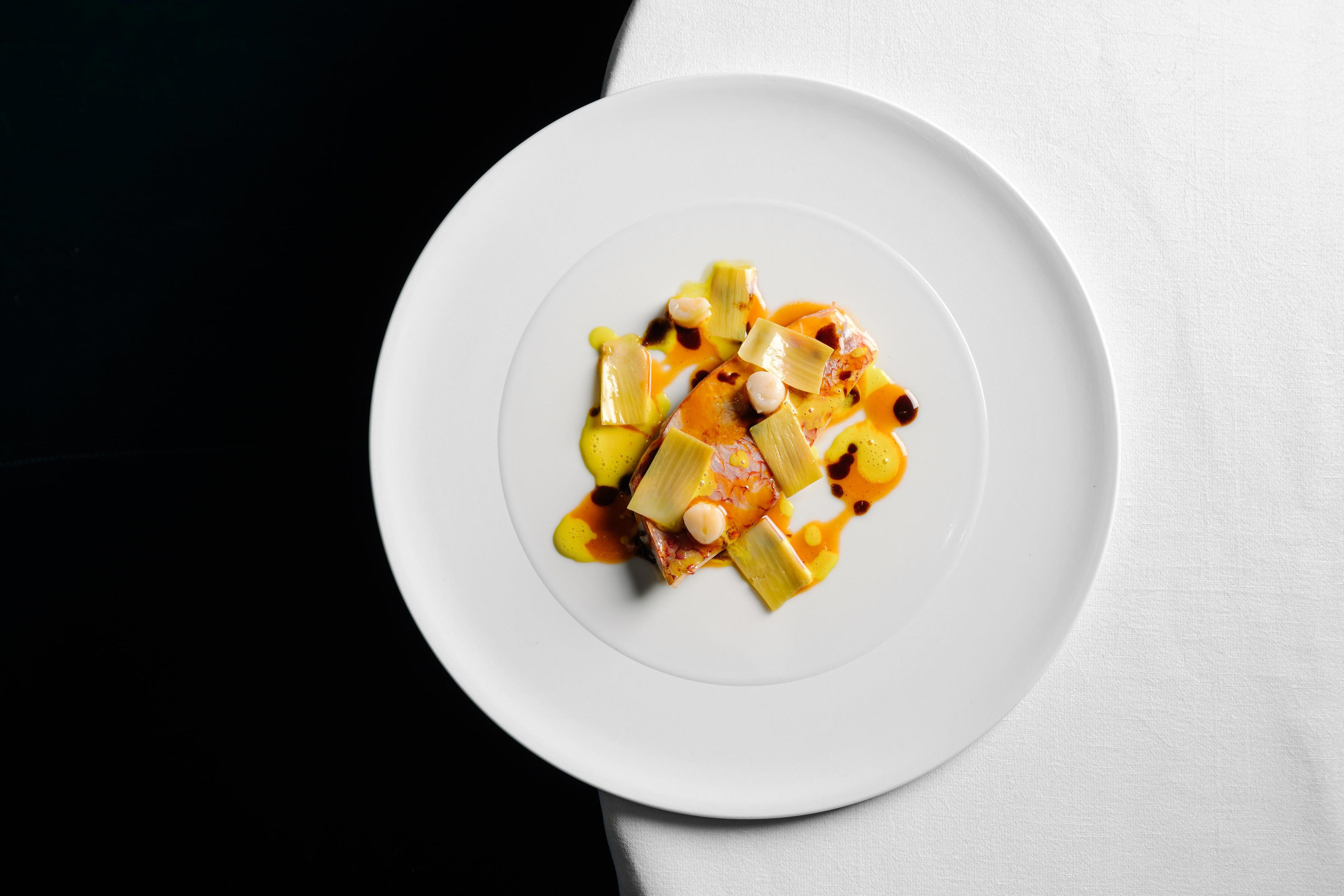
Angle occupies the first floor of Hotel Cram on Carrer d'Aragó, operating as a standalone dining room under the creative direction associated with Jordi Cruz and three-starred ABaC. The tasting menu draws on market ingredients and shares DNA with ABaC while developing its own identity, making it one of the Eixample's most considered entries in the €€€€ tier. A Michelin star (2024) and La Liste recognition confirm its place in Barcelona's serious modern cuisine conversation.
Pearl is the En Primeur Club membership app — saves, bookings, and concierge access live there. Same editors, same standards.
- Address
- Carrer d'Aragó, 214, Eixample, 08011 Barcelona, Spain
- Phone
- +34 932 16 77 77
- Website
- anglebarcelona.com
- Directions
- Get directions
 Saves & bookings on Pearl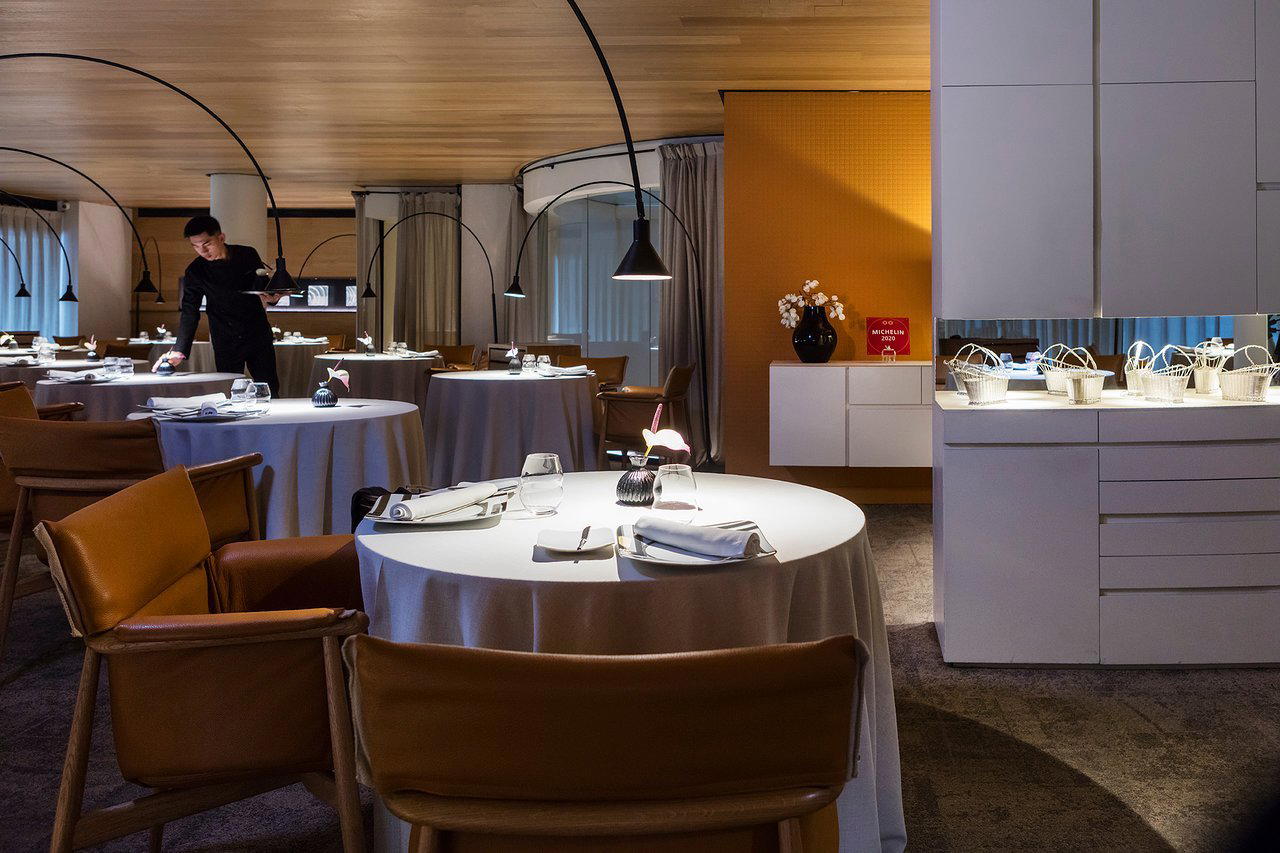
The Room Before the Menu
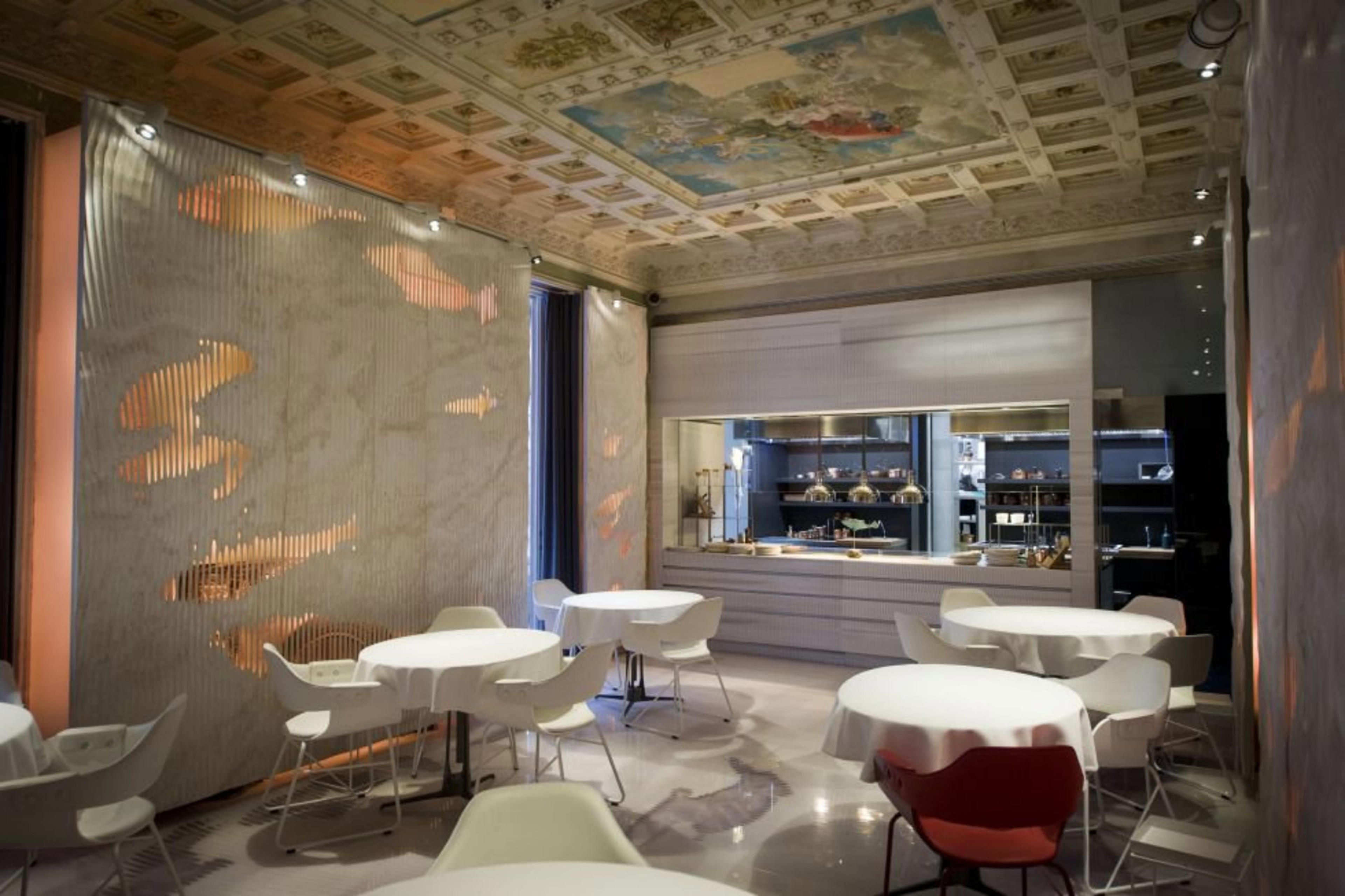
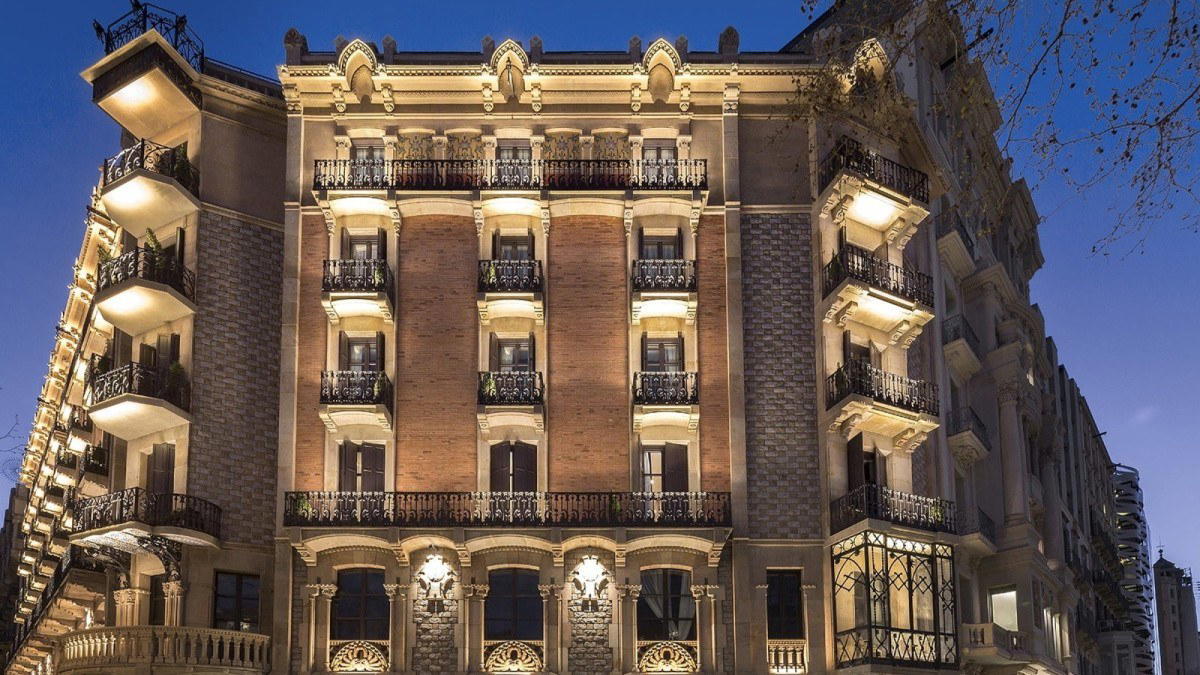
Carrer d'Aragó runs the full width of the Eixample grid, and at number 214 a discreet entrance separates Angle from the Hotel Cram that contains it. The separation matters more than it might appear. Guests arrive not through a hotel lobby but directly into the restaurant's own foyer, where an aperitif and first courses set the register of the meal before anyone has climbed to the first-floor dining room. That ground-floor sequence, a deliberate decompression zone between the street and the table, reflects a broader movement in Barcelona's upper-tier restaurants toward staging the meal as an arc rather than a sequence of courses.
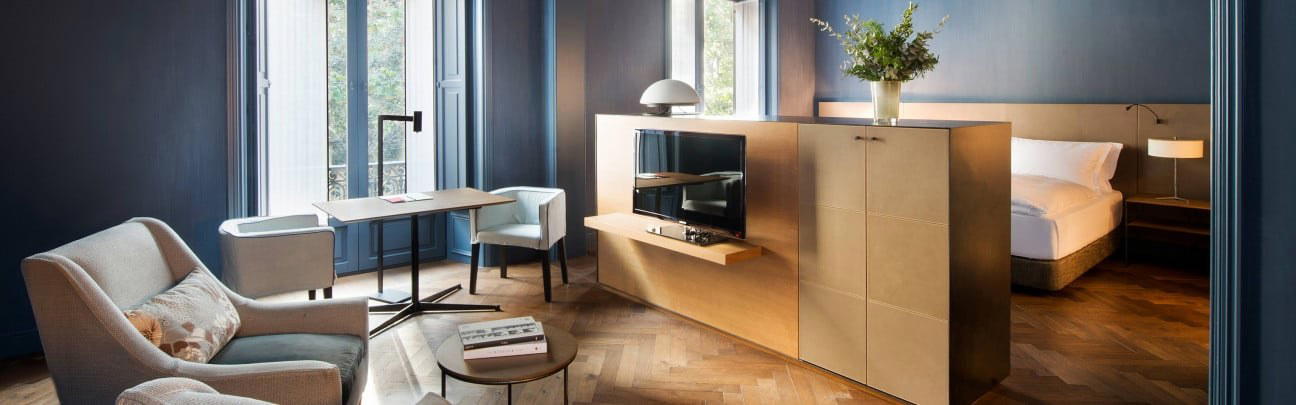
Upstairs, the dining room is spare in the way that communicates confidence rather than economy. Floor lamps anchor the corners, wooden fixtures provide warmth without distraction, and heavy curtains absorb the ambient noise that makes so many Barcelona dining rooms difficult. The result is a room calibrated for conversation, which in the context of a long tasting menu is a practical as much as aesthetic decision.
Where Angle Sits in Barcelona's Modern Cuisine Tier
Barcelona's €€€€ modern cuisine bracket is unusually dense. At its apex sit three-starred houses: Disfrutar, which earned its third star and operates a progressive, technique-intensive format; El Celler de Can Roca in Girona, just beyond the city's orbit; and Lasarte, which carries three stars and a Martin Berasategui in Lasarte-Oria lineage. Below that, a tier of two-starred restaurants, Cinc Sentits and Enoteca Paco Pérez, competes on similar price points with distinct creative identities. Angle operates at one Michelin star, but its connection to ABaC, which holds three, gives it a credential profile that places it closer to the two-star bracket in terms of the culinary infrastructure behind the plate.
That positioning is deliberate. The tasting menu at Angle draws on dishes developed at ABaC alongside work conceived in-house, and the stated ambition is to deliver technically assured cooking at a price point and with a frequency that a wider audience can sustain. It is a formula that mirrors what venues like Aürt and Prodigi are also negotiating in Barcelona: how to maintain culinary seriousness while operating outside the top tier's pricing expectations.
Among Spanish restaurants at the national level, the question of satellite or secondary-format restaurants has become increasingly relevant. Aponiente in El Puerto de Santa María, Arzak in San Sebastián, and Azurmendi in Larrabetzu each manage the challenge of a flagship with extended influence. Angle represents a specific answer to that challenge: a separate address, a separate identity, but a shared creative genome.
The Team Dynamic: How the Kitchen Logic Travels
The editorial focus at Angle is not the chef-as-protagonist story, it is the question of how creative direction moves between a three-starred kitchen and a one-starred one without diluting either. Chef Juanqui Borrell oversees the kitchen at Carrer d'Aragó day to day, translating the modern, market-driven blueprint associated with Jordi Cruz into a format that has its own rhythm and its own repertoire. That kind of relay demands more than technical competence from the resident kitchen team: it requires that front-of-house and the kitchen stay aligned on the narrative the meal is meant to tell, especially when the menu includes dishes that originated elsewhere.
Service at this level in Barcelona, and the comparison with Quirat or Barra Alta Barcelona is instructive, tends to run between formal attentiveness and genuine warmth. The foyer aperitif sequence is a structural cue for how the floor team manages pace: slowing the arrival, extending the welcome, and ensuring that by the time guests reach the dining room, the register of the evening has been established. That kind of pacing is a front-of-house skill as much as a culinary one, and it is the element that most distinguishes a tasting menu format from à la carte service in terms of what the team is actually coordinating.
Internationally, the model has parallels: Frantzén in Stockholm and its extended-format spin-offs, or FZN by Björn Frantzén in Dubai, both demonstrate how a singular culinary identity can be distributed across formats without becoming a franchise. Angle's version of that logic is more concentrated, one satellite, one city, but the underlying challenge of maintaining creative integrity through a team rather than through a single presence at the pass is the same.
The Market Ingredient as Anchor
Modern cuisine in Barcelona has always had a particular relationship with the city's market infrastructure. La Boqueria and the neighbourhood mercats that serve the Eixample supply a seasonal rhythm that informs menus in ways that make Barcelona's creative cooking more produce-anchored than, say, the technique-forward schools of northern Spain. Angle's stated orientation around market-inspired ingredients places it inside that tradition, and it distinguishes the kitchen from peers like DiverXO in Madrid, which operates on a more maximalist, concept-driven register.
The dessert section of the tasting menu has received particular attention in Angle's award citations. La Liste's commentary specifically notes the range of textures and flavours across the dessert courses, which suggests a pastry program with real depth. In the context of a market-driven menu, a strong dessert sequence usually signals that the kitchen is working across the full range of seasonal ingredients rather than reserving creativity for the savoury courses alone.
Recognition and What It Signals
Angle holds one Michelin star, awarded in the 2024 guide, and appears in the Opinionated About Dining (OAD) European rankings, where it placed 277th in 2024 and 523rd in 2025, a ranking shift worth noting given OAD's reliance on votes from frequent high-level diners rather than inspector consensus. La Liste, which aggregates global restaurant guides and media, scored Angle at 77.5 points in 2025 and 75 points in the 2026 edition.7, which for a tasting-menu restaurant in the €€€€ tier represents a consistency signal.
The OAD trajectory and the La Liste scoring, read together, suggest a restaurant whose recognition among specialist diners has been recalibrating. Whether that reflects the natural settling of a newer format or a shift in how the menu is being received is a question that the 2026 season's full data will clarify.
For a comparable modern cuisine experience in the city's €€€€ bracket, Fonda España occupies a different but adjacent register, historically grounded where Angle is technically forward.
Planning Your Visit
Angle operates a restricted service schedule: lunch and dinner sittings run on a narrow daily window (lunch 1 to 2 PM, dinner 8 to 9 PM). The address is Carrer d'Aragó, 214, in the Eixample. The separate entrance from Hotel Cram means arrival feels self-contained rather than transient, which matters for the pacing of an evening structured around an extended tasting format.
Recognition, Side-by-Side
Comparable venues nearby, for context on price, style, and recognition.
| Venue | Cuisine | Price | Awards | Notes |
|---|---|---|---|---|
| AngleThis venue — the venue you are viewing | Modern Creative Spanish | $$$$ | Michelin 1 Star | Not listed |
| Via Veneto | Classic Mediterranean Fine Dining | $$$$ | Michelin 1 Star | Sant Gervasi - Galvany |
| Quirat | Modern Catalan Fine Dining | $$$$ | Michelin 1 Star | el Poble Sec |
| Alkimia | Modern Catalan Fine Dining | $$$$ | Michelin 1 Star | Sant Antoni |
| Dos Palilos | Asian-Catalan Fusion Tapas | $$$ | Michelin 1 Star | el Raval |
| Atempo | Contemporary French-Mediterranean Fine Dining | $$$$ | Michelin 1 Star | l'Antiga Esquerra de l'Eixample |
Recognition history
Dated appearances from independent guides and award organizations, with the underlying list record or original source where available.
Falstaff Restaurant - 94 Falstaff Points
Falstaff
Guía Repsol 2 Soles
Guía Repsol
La Liste Top Restaurants
La Liste
Macarfi 8.1 Food Rating
Macarfi
Michelin 1 Star
Michelin
Opinionated About Dining Top Restaurants in Europe Recommended
Opinionated About Dining
La Liste Top Restaurants
La Liste
Michelin 1 Star
Michelin
Opinionated About Dining Top Restaurants in Europe Ranked #523
Opinionated About Dining
Michelin 1 Star
Michelin
Opinionated About Dining Top Restaurants in Europe Ranked #277
Opinionated About Dining
Opinionated About Dining Top New Restaurants in Europe Recommended
Opinionated About Dining
Continue exploring
More in Barcelona
Restaurants in Barcelona
Browse all →
Bars in Barcelona
Browse all →
Hotels in Barcelona
Browse all →
At a Glance
- Elegant
- Sophisticated
- Intimate
- Modern
- Date Night
- Business Dinner
- Special Occasion
- Open Kitchen
- Hotel Restaurant
- Extensive Wine List
- Sommelier Led
- Local Sourcing
Current opening hours
- Monday
- 1–2 PM, 8–9 PM
- Tuesday
- 1–2 PM, 8–9 PM
- Wednesday
- 1–2 PM, 8–9 PM
- Thursday
- 1–2 PM, 8–9 PM
- Friday
- 1–2 PM, 8–9 PM
- Saturday
- 1–2 PM, 8–9 PM
- Sunday
- 1–2 PM, 8–9 PM
Hours can change for holidays and private events. Last verified .
Contemporary space exuding elegance and serenity with striking floor lamps, wooden fixtures, heavy curtains, and a relaxing, intimate atmosphere.