
La Barra del 7 Portes occupies a particular space in Barcelona's Sarrià-Sant Gervasi district, connecting to the long history of the 7 Portes institution while carving its own identity as a bar format within that legacy. Positioned in one of the city's more residential upper neighbourhoods, it represents a different register from the avant-garde tasting-menu circuit that defines Barcelona's international dining reputation.
Pearl is the En Primeur Club membership app — saves, bookings, and concierge access live there. Same editors, same standards.
- Address
- Carrer d'Amigó, 53, Sarrià-Sant Gervasi, 08021 Barcelona, Spain
- Website
- labarradel7portes.com
- Directions
- Get directions
 Saves & bookings on Pearl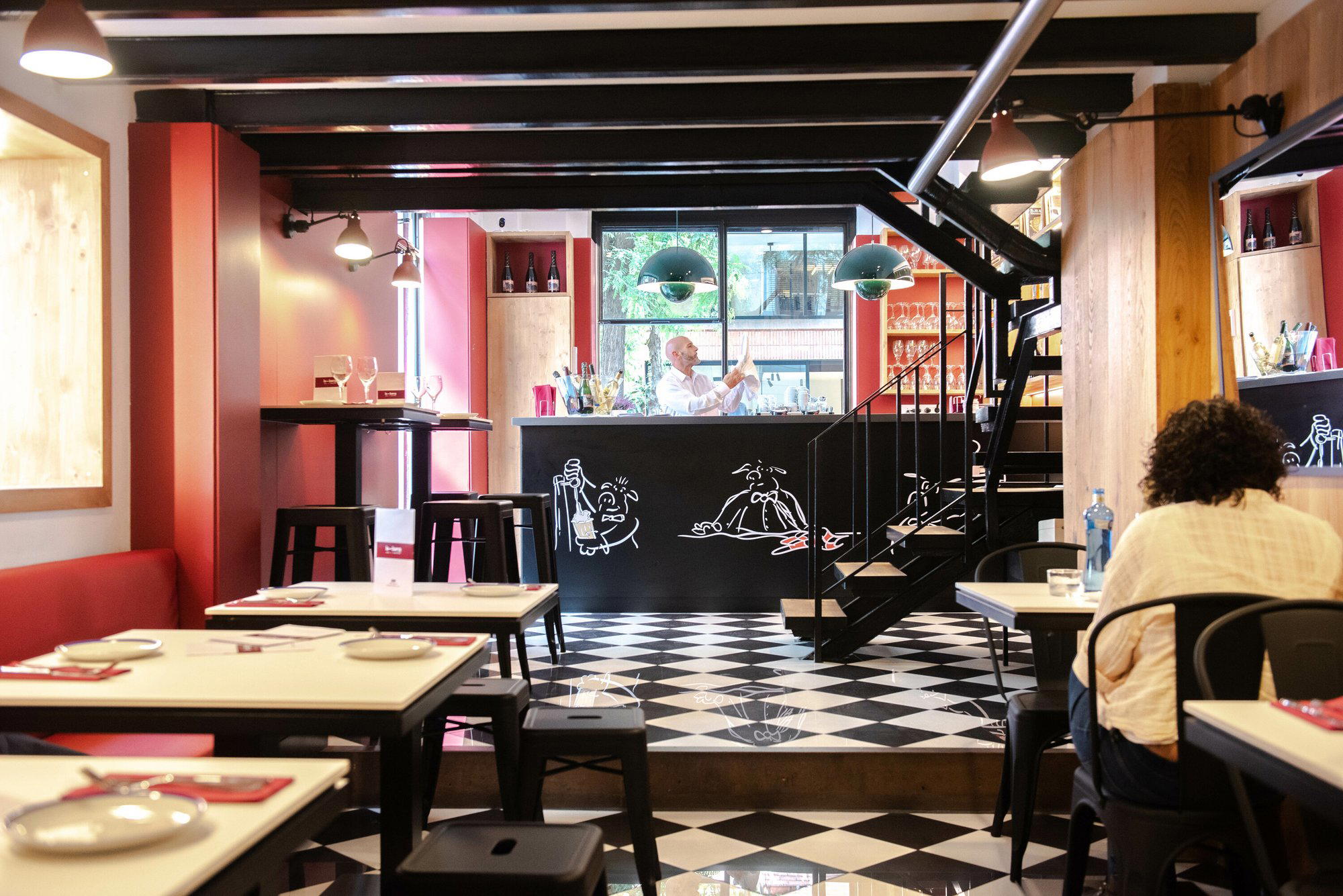
A Legacy Address in a Residential Quarter
Sarrià-Sant Gervasi sits at a remove from the tourist circuits that define much of Barcelona's dining conversation. The neighbourhood is residential in character, populated by long-established local restaurants and the kind of bars that serve a repeat clientele rather than a transient one. Carrer d'Amigó, the address where La Barra del 7 Portes operates, fits that pattern. This is not the Barcelona of Disfrutar or Enigma. It is a different city register entirely, and understanding that distinction is the first step in reading what La Barra del 7 Portes actually offers.
The 7 Portes name itself carries substantial weight in the Catalan context. The original 7 Portes, operating near the waterfront on Passeig d'Isabel II since 1836, is one of the oldest continuously operating restaurants in Barcelona, associated across its history with writers, politicians, and the city's commercial class. A bar format bearing that name in an upper-bourgeois neighbourhood is not a random branding decision. It positions itself within a tradition of Catalan hospitality that predates the city's current reputation as a laboratory for avant-garde cuisine by more than a century.
The Bar Format as a Different Kind of Ambition
Barcelona's fine dining conversation is dominated by a tier of creative tasting-menu restaurants, including Cocina Hermanos Torres, ABaC, and Lasarte, where the format demands full commitment of time and budget. The bar format represents a structural alternative to that mode. It is, by design, more permeable: guests arrive at different moments, order selectively, and engage with the kitchen on their own terms rather than the house's. In Spanish dining culture, the barra (bar counter) has its own prestige logic, distinct from the mesa (table). Some of Spain's most technically accomplished food is served at bar counters, from pintxos bars in San Sebastián to the counter formats that have influenced restaurants as far-reaching as Arzak in San Sebastián and El Celler de Can Roca in Girona.
The evolution of the bar format in Spanish gastronomy has tracked a broader shift. What was once understood as an informal precursor to the main meal has, in the hands of serious operators, become a destination format in its own right. La Barra del 7 Portes enters that lineage with the institutional weight of its parent name and the neighbourhood context of a district that expects quality without spectacle.
The Evolution Question: What the Name Has Become
The restaurant is interesting in 2024 for what it represents about how legacy restaurant brands adapt. The 7 Portes mothership on the waterfront is a preserved institution, operating largely as it did through the twentieth century, serving paella and fideuà to generations of Barcelona families. A bar offshoot in Sarrià-Sant Gervasi is a different bet: it extends the name into a newer neighbourhood format while presumably updating the offer for a clientele whose expectations have shifted considerably.
This kind of institutional evolution is not distinctive to Barcelona. Across Spain's dining scene, historic names have had to decide whether to remain fixed as monuments or to adapt into new formats and addresses. Martin Berasategui in Lasarte-Oria has extended into multiple properties. Quique Dacosta in Dénia operates a range of formats across price points. The question for any satellite or spin-off is whether it adds to the parent brand's authority or dilutes it. In the case of the restaurant, the address in a well-regarded residential neighbourhood at least signals that the target is the local professional clientele rather than the tourist trade that sustains the original location.
Positioning Within the Barcelona Scene
Barcelona's restaurant geography is not uniform. The Eixample holds the highest concentration of Michelin-starred and creative-format restaurants. The Gótic and Barceloneta districts absorb the bulk of tourist dining. Gràcia operates as a mid-market neighbourhood dining hub. Sarrià-Sant Gervasi, by contrast, is where Barcelona's upper-middle and affluent professional classes eat on a regular basis, without ceremony and without pilgrimage intent. A well-executed bar in this district does not compete with DiverXO in Madrid or with Aponiente in El Puerto de Santa María for the same guest. It competes with other neighbourhood bars and casual restaurants for a returning local clientele whose bar is set by familiarity and consistency rather than novelty.
That competitive context matters because it sets the evaluation criteria. This is not the tier where Mugaritz in Errenteria, Azurmendi in Larrabetzu, or Ricard Camarena in València operate. It is also not the tier of Atrio in Cáceres or destination formats that draw guests from abroad. The restaurant is, by location and format, a local establishment with an institutional name, which is both its advantage and its constraint.
Planning a Visit
The Sarrià-Sant Gervasi address on Carrer d'Amigó, 53 is accessible via the FGC commuter rail line (Sarrià station) or by taxi from the Eixample in roughly ten minutes depending on traffic. The neighbourhood is walkable and quiet by Barcelona standards, with parking easier than in the central districts. The restaurant serves Traditional Catalan Tapas at roughly $30 per person, with reservations recommended and a smart casual dress code. It is closed Monday and opens Tuesday to Thursday from 12:30 to 4:30 PM and 7:30 to 11:30 PM, Friday and Saturday from 12:30 to 5 PM and 7:30 PM to midnight, and Sunday from 12:30 to 5 PM.
What It’s Closest To
Comparable venues nearby, for context on price, style, and recognition.
| Venue | Cuisine | Price | Notes |
|---|---|---|---|
| La Barra del 7 PortesThis venue — the venue you are viewing | Traditional Catalan Tapas | $$ | Not listed |
| Buena Vida Bar | Modern Spanish Tapas | $$ | la Vila de Gracia |
| La Terrasseta del Lesseps | Spanish Tapas & Mediterranean Café | $$ | Vallcarca i els Penitents |
| Pepa Tomate | Modern Catalan Tapas | $$ | la Vila de Gracia |
| Mesa Lobo | French-Nordic Market Bistro with Catalan Influences | $$ | l'Antiga Esquerra de l'Eixample |
| La Esquinica | Traditional Spanish Tapas | $$ | el Turo de la Peira |
Recognition history
Dated appearances from independent guides and award organizations, with the underlying list record or original source where available.
Macarfi 7.2 Food Rating
Macarfi
Continue exploring
More in Barcelona
Restaurants in Barcelona
Browse all →
Bars in Barcelona
Browse all →
Hotels in Barcelona
Browse all →
At a Glance
- Classic
- Well Known
- Cozy
- Casual Hangout
- Group Dining
- Historic Building
- Local Sourcing
- Street Scene
Current opening hours
- Monday
- Closed
- Tuesday
- 12:30–4:30 PM, 7:30–11:30 PM
- Wednesday
- 12:30–4:30 PM, 7:30–11:30 PM
- Thursday
- 12:30–4:30 PM, 7:30–11:30 PM
- Friday
- 12:30–5 PM, 7:30 PM–12 AM
- Saturday
- 12:30–5 PM, 7:30 PM–12 AM
- Sunday
- 12:30–5 PM
Hours can change for holidays and private events. Last verified .
Relaxed and modern atmosphere with cozy high and low tables, ideal for informal sharing and chatting.