Paradise Lost
Paradise Lost occupies a storied address on 2nd Avenue in the East Village, a neighbourhood that has shaped New York's downtown dining identity across several decades. The venue sits within a dining corridor defined by cultural layering and neighbourhood longevity, where the scene rewards those who understand what the area has historically offered and continues to offer to serious diners.
 Discover on Pearl
Pearl is the En Primeur Club membership app — saves, bookings, and concierge access live there. Same editors, same standards.
- Address
- 100 2nd Ave, New York, NY 10003
- Website
- paradiselost.nyc
The East Village Table: A Neighbourhood Built on Contradiction
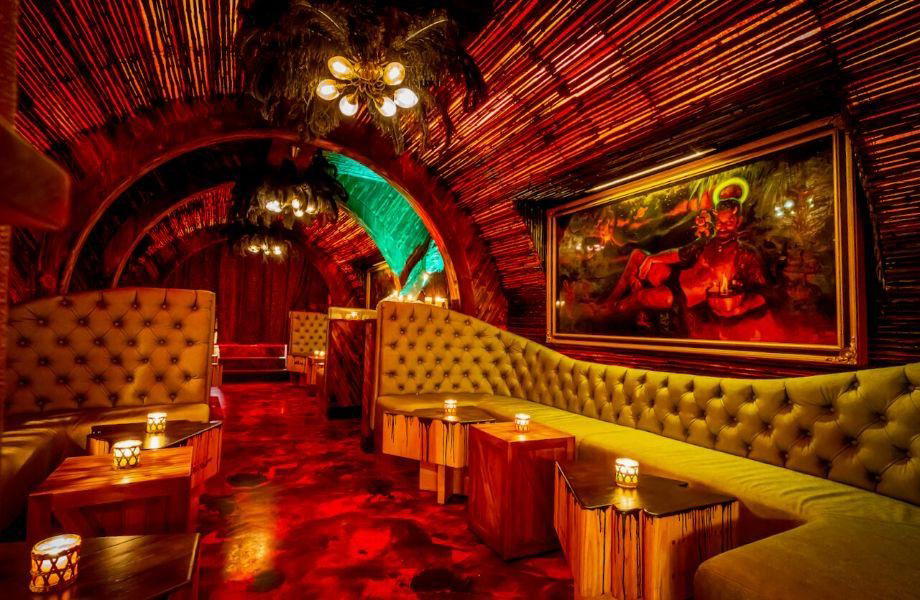
The East Village has never resolved its contradictions, and that tension is precisely what has made it one of New York's most consequential dining neighbourhoods. Through the 1970s and 1980s, the area absorbed successive waves of Ukrainian immigrants, punk subculture, and artist communities whose overlapping claims on the same blocks produced an unusually layered food culture. By the time the neighbourhood gentrified in earnest during the late 1990s and early 2000s, a dining identity had already calcified: informal by preference, international by necessity, and suspicious of the kind of formality that defines Midtown institutions like Le Bernardin or Per Se. Paradise Lost, at 100 2nd Avenue, is a New York restaurant serving Tiki Bar Small Plates in the East Village.
What 2nd Avenue Tells You Before You Walk In
The stretch of 2nd Avenue running through the East Village is one of the more instructive corridors in New York dining. It is neither the self-consciously curated streetscape of the West Village nor the tourist-facing density of the Meatpacking District. It is a working neighbourhood strip where long-standing diners sit beside newer arrivals, where the audience mixes NYU students with residents who have held rent-stabilised apartments for thirty years, and where the ambient expectation is authenticity over spectacle. That context shapes what any serious venue on this block must navigate: the neighbourhood has a collective memory, and diners here tend to read a room quickly. A venue that overclaims gets noticed. One that underdelivers on what it implicitly promises gets remembered for the wrong reasons.
This is a meaningfully different operating environment from the one facing Korean fine-dining addresses like Atomix or Jungsik New York, whose Midtown and near-Midtown locations place them in direct conversation with the international tasting-menu circuit. 2nd Avenue operates on different terms, and the diners who seek it out are generally making a deliberate choice to step away from that circuit.
Cultural Roots and the East Village Dining Tradition
Any serious reading of the East Village food scene has to reckon with its immigrant foundations. The neighbourhood's Ukrainian heritage produced some of the city's most enduring comfort-food institutions, and that legacy runs alongside a parallel tradition of international cuisines that arrived with successive waves of residents: Japanese, South Asian, Latin American, and Middle Eastern influences have all left durable marks on the local restaurant stock. The result is a dining tradition that values directness, cultural specificity, and value in its broadest sense, not merely price. Diners on this strip are experienced readers of menus and rooms. They know the difference between cuisine that has been filtered through a marketing lens and cuisine that carries the actual weight of a culinary tradition.
That cultural density is part of what makes 2nd Avenue a genuinely interesting address for a venue with ambitions. It also raises the bar. Comparisons across the American fine-dining circuit, from Alinea in Chicago to The French Laundry in Napa to Blue Hill at Stone Barns in Tarrytown, reveal that the most durable restaurants tend to be those that locate themselves honestly within a culinary tradition rather than reaching for borrowed prestige. The East Village has always been good at detecting the difference.
Placing Paradise Lost in the Downtown Tier
Downtown Manhattan's dining tier has split in recent years between venues oriented toward the tasting-menu and reservation-forward model and those that maintain the neighbourhood-restaurant posture the area has historically produced. Paradise Lost's 2nd Avenue address places it geographically within the latter tradition, even if specific format details remain outside what can be confirmed from the record. What can be observed is that the address is not a white-tablecloth corridor. Diners arriving at 100 2nd Avenue are arriving in a neighbourhood, not a dining destination in the Midtown sense, and that distinction matters when calibrating expectations.
For context on how other serious American addresses handle the neighbourhood-versus-destination tension, it is worth consulting the approaches of Lazy Bear in San Francisco, Single Thread Farm in Healdsburg, and Providence in Los Angeles, each of which has found a way to hold serious culinary ambition within a neighbourhood identity rather than defaulting to the anonymous formality of a hotel dining room. The question for any East Village venue is how deliberately it has located itself in that tradition.
For international comparison points, the contrast between neighbourhood-embedded dining and destination-hotel formality is instructive at venues like 8 1/2 Otto e Mezzo Bombana in Hong Kong and Alain Ducasse at Louis XV in Monte Carlo.
Planning Your Visit
The following comparison positions Paradise Lost against its downtown and city-wide comparable set on the logistics that matter most to serious diners.
| Venue | Location | Price Tier | Format | Booking |
|---|---|---|---|---|
| Paradise Lost | East Village, 2nd Ave | $$$ | Tiki Bar Small Plates | Walk-in friendly |
| Atomix | Midtown South | $$$$ | Tasting menu | Advance reservation |
| Masa | Columbus Circle | $$$$ | Omakase counter | Advance reservation |
| Le Bernardin | Midtown | $$$$ | Prix-fixe / à la carte | Advance reservation |
The surrounding blocks reward exploration before or after a meal: the East Village food corridor is dense enough that a pre-dinner walk through the area will quickly establish the neighbourhood's register. For American fine-dining comparisons outside New York, the editorial range extends to Emeril's in New Orleans, Addison in San Diego, Bacchanalia in Atlanta, and The Inn at Little Washington.
Credentials Lens
Comparable venues nearby, for context on price, style, and recognition.
| Venue | Cuisine | Price | Awards | Notes |
|---|---|---|---|---|
| Paradise LostThis venue — the venue you are viewing | Tiki Bar Small Plates | $$$ | , | |
| Cas West Indian & American Restaurant | Jamaican / West Indian | $$ | , | Crown Heights |
| Palo Santo | Pan-Latin Caribbean | $$$ | , | Park Slope |
| Consuelo | Home-style Mexican from Puebla-inspired Cocina Consuelo team | $$$ | , | Upper West Side |
| Ayat Hind’s Hall | Palestinian Soul Food | $$$ | , | Upper West Side |
| Vato | Modern Mexican Tortilleria | $$$ | , | Park Slope |
Continue exploring
More in New York City
Restaurants in New York City
Browse all →
Bars in New York City
Browse all →
Hotels in New York City
Browse all →


At a Glance
- Hidden Gem
- Trendy
- Whimsical
- Intimate
- Energetic
- Date Night
- Casual Hangout
- Late Night
- Design Destination
- Craft Cocktails
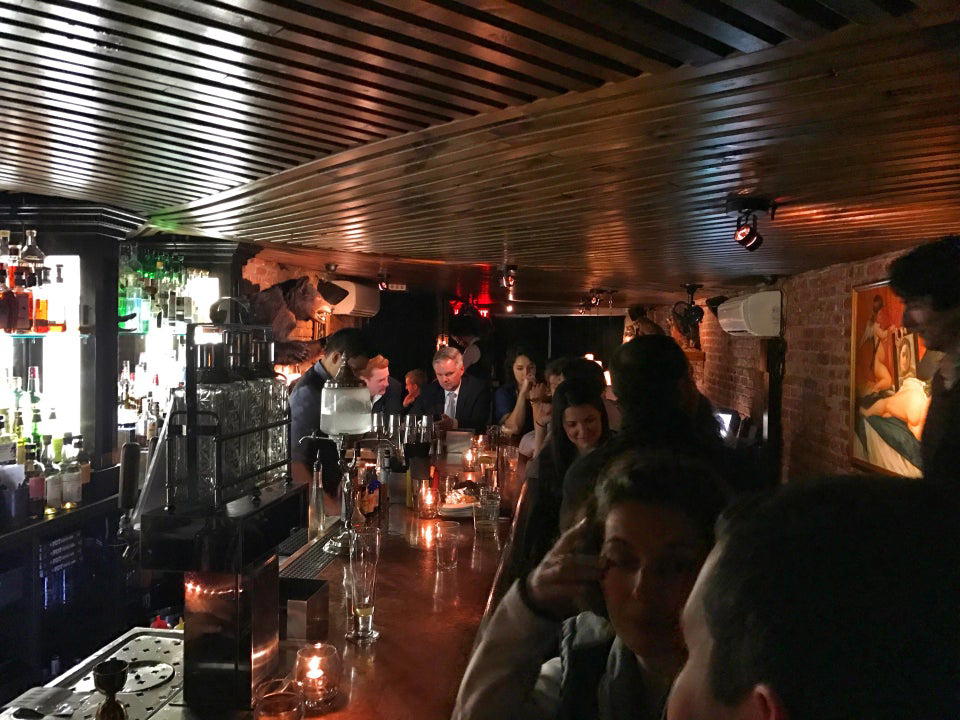
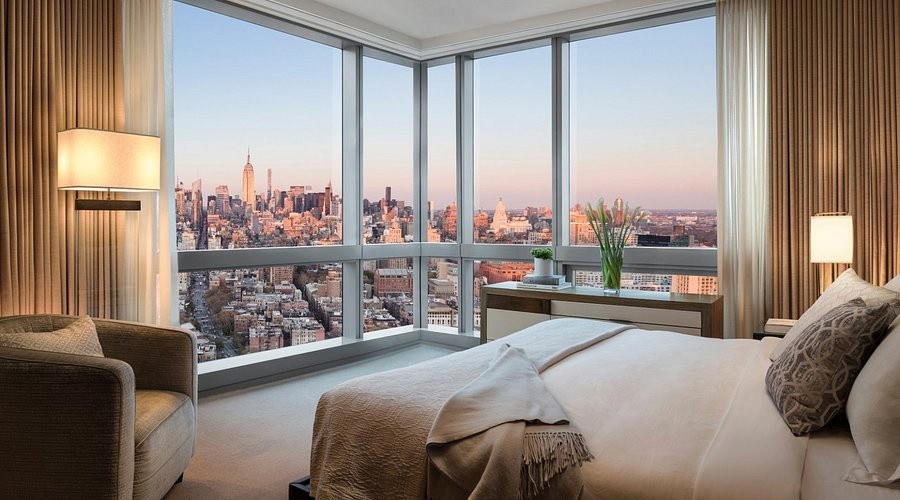
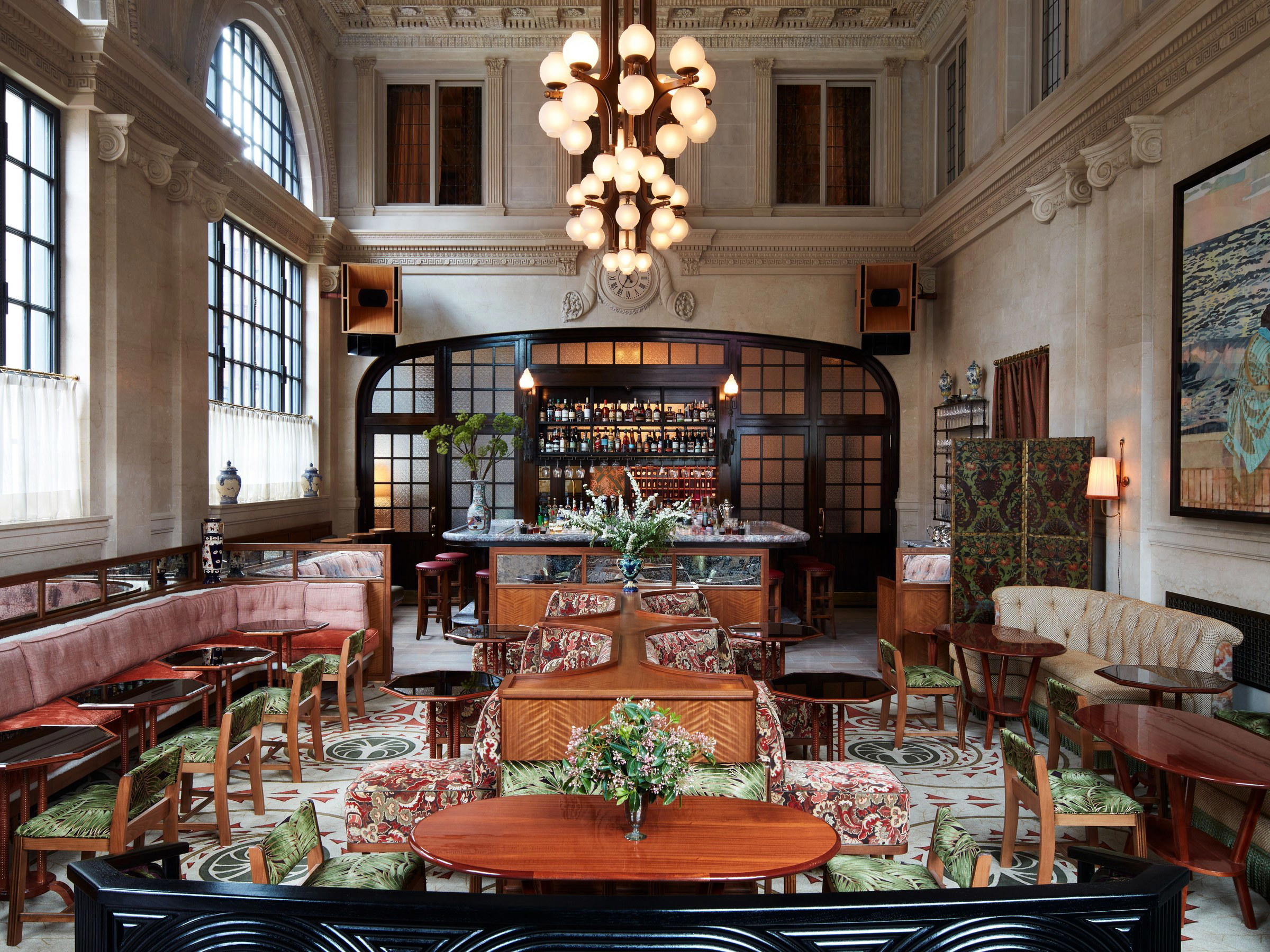
Dark, transportive atmosphere evoking Pee-wee Herman’s nightmare with psychobilly tiki lounge vibes, immersive design, and good music.