

Nine Orchard


Occupying the restored Jarmulowsky Bank building on Orchard Street, Nine Orchard sits at the convergence of the Lower East Side and Chinatown in one of Downtown Manhattan's most charged neighbourhoods. The 116-room hotel earned Michelin 2 Keys recognition in 2024 and membership in Leading Hotels of the World in 2025, with rates from $829 per night. Corner Bar and the Swan Room give the property a distinct social life beyond its rooms.

Where the Lower East Side Earns Its Architecture Back
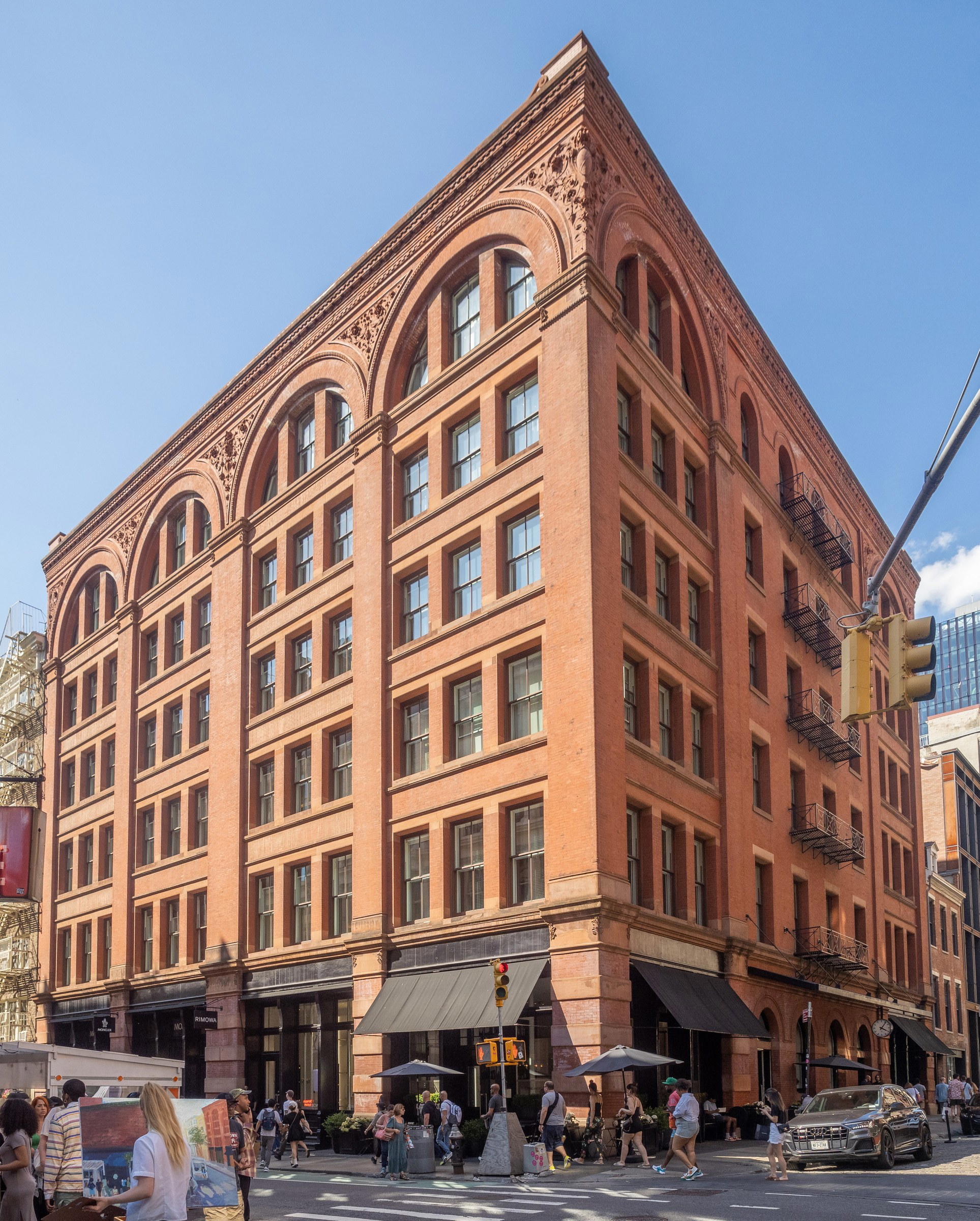
Approach Nine Orchard from Canal Street and the building announces itself before any signage does. The Jarmulowsky Bank building, completed in 1912 for a savings institution that served the neighbourhood's immigrant community, carries the full vocabulary of Beaux-Arts ambition: arched windows, ornamental stonework, a corner tower that reads as civic monument rather than commercial address. For most of the twentieth century, the building cycled through uses that eroded its original grandeur. Its conversion into a hotel restored that presence, and the result is one of the few properties in New York where the exterior genuinely prepares you for what's inside.
The intersection it occupies — east end of Canal Street, where the Lower East Side folds into Chinatown — belongs to the loosely defined micro-zone that has been called Dimes Square, a label that carries enough cultural freight to be useful and enough irony to be contested. What matters practically is the neighbourhood's texture: small-batch coffee roasters, natural wine bars, galleries occupying former garment industry spaces, dim sum counters operating on schedules their own, and a sidewalk energy that owes more to the area's layered immigrant history than to any single wave of gentrification. Hotels that land in this kind of neighbourhood face a particular test. The ones that pass it become part of the fabric. The ones that don't become expensive anomalies. Nine Orchard, by the evidence of its Michelin 2 Keys recognition in 2024 and its 4.7 Google rating across 154 reviews, appears to be passing.
116 Rooms and a Century-Old Shell
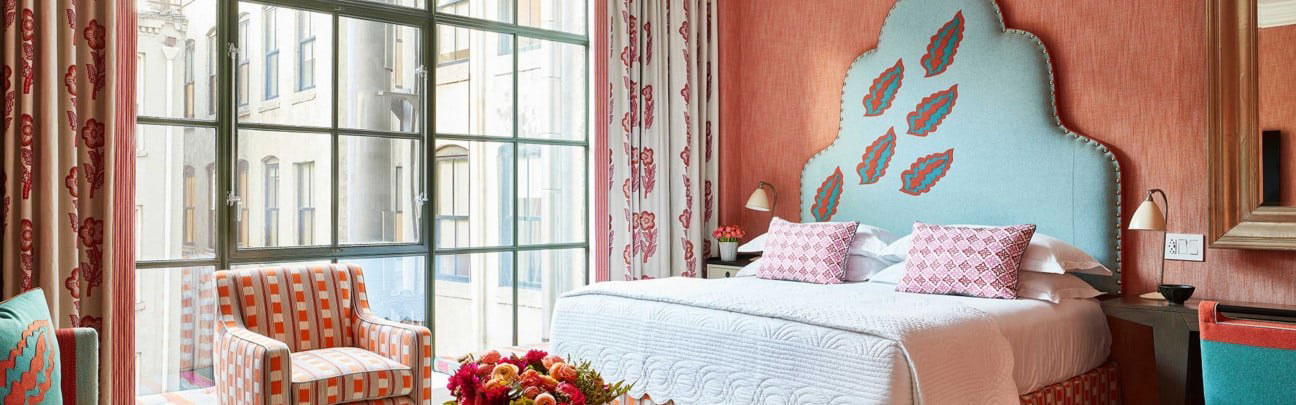
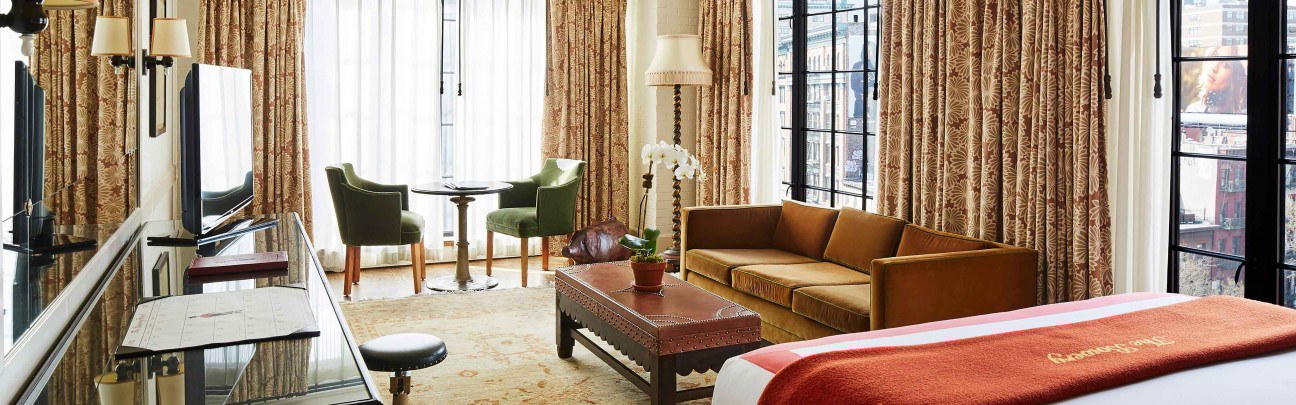
New York's premium hotel market has split along a familiar axis. On one side: large-footprint properties with international brand parentage, where the room is a module inside a system. On the other: smaller, architecturally specific hotels where the building itself is the primary design argument. Nine Orchard sits firmly in the second category, with 116 rooms inside a structure that imposes its own logic on every interior decision. The public spaces work with the original proportions and ornament rather than against them. The rooms take a different route: muted palettes, furnishings that read as minimalist without being cold, and a set of modern conveniences that include custom-designed sound systems and minibars stocked with local products. The contrast between the ornate shell and the restrained interiors is deliberate, and it works because neither register apologises for the other.
At $829 per night, Nine Orchard prices into a bracket that puts it alongside properties with more conventional luxury credentials. What it offers in exchange is a building with a century of accumulated character, a neighbourhood with active street life at most hours, and a scale that keeps the experience from feeling anonymous. For context, the Michelin 2 Keys designation it shares with The Carlyle, A Rosewood Hotel and Pendry Manhattan West represents the guide's middle tier of hotel recognition, sitting below the 3 Keys awarded to Aman New York and above the 1 Key given to properties like The Ludlow Hotel. The 2026 La Liste Leading Hotels score of 90 points adds a second validation from a different critical framework. Membership in Leading Hotels of the World, formalised in 2025, places it in a curated global peer set that includes independents and small groups rather than mass-market chains.
Corner Bar and the Swan Room: Two Formats, One Social Programme
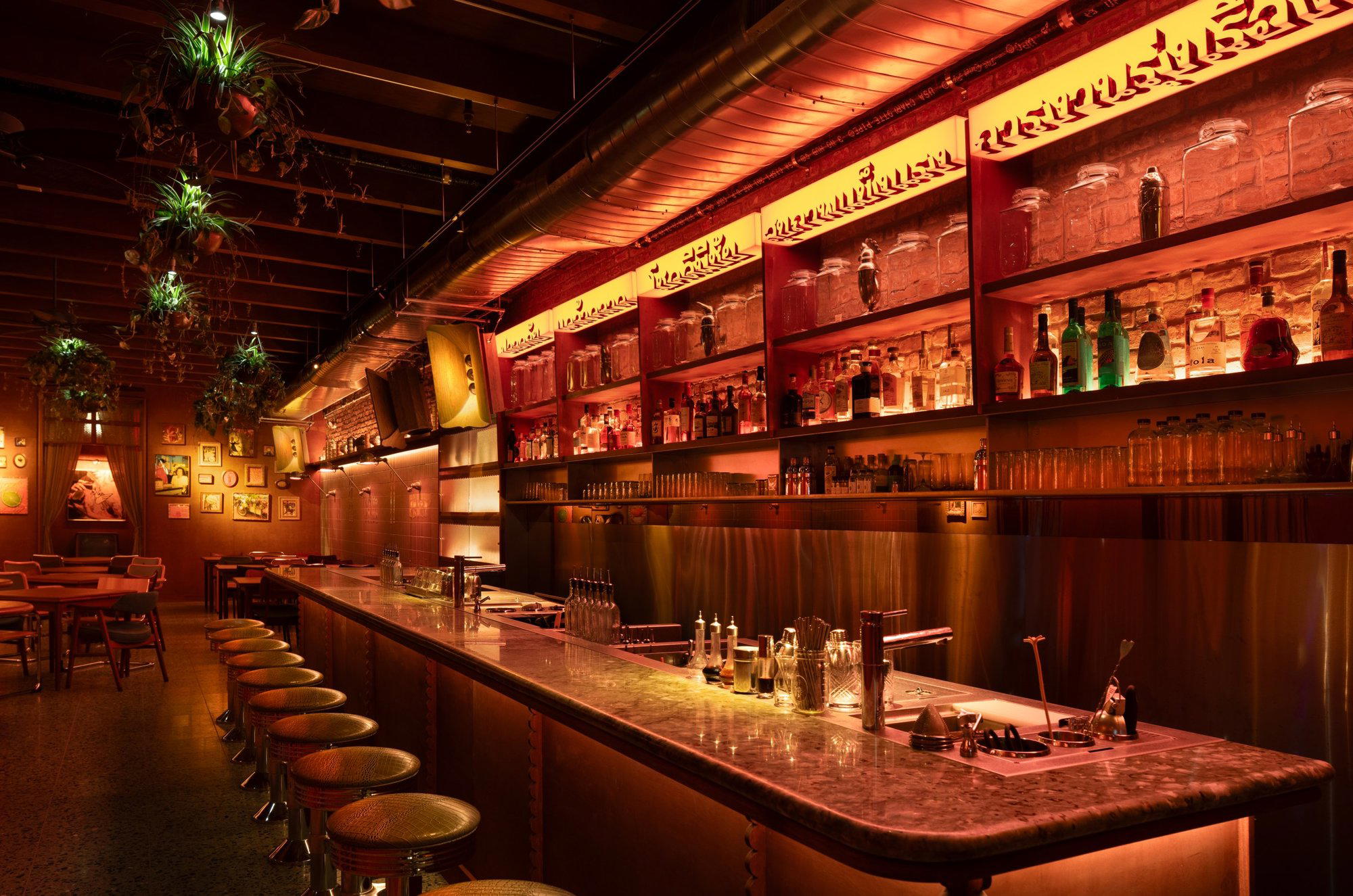
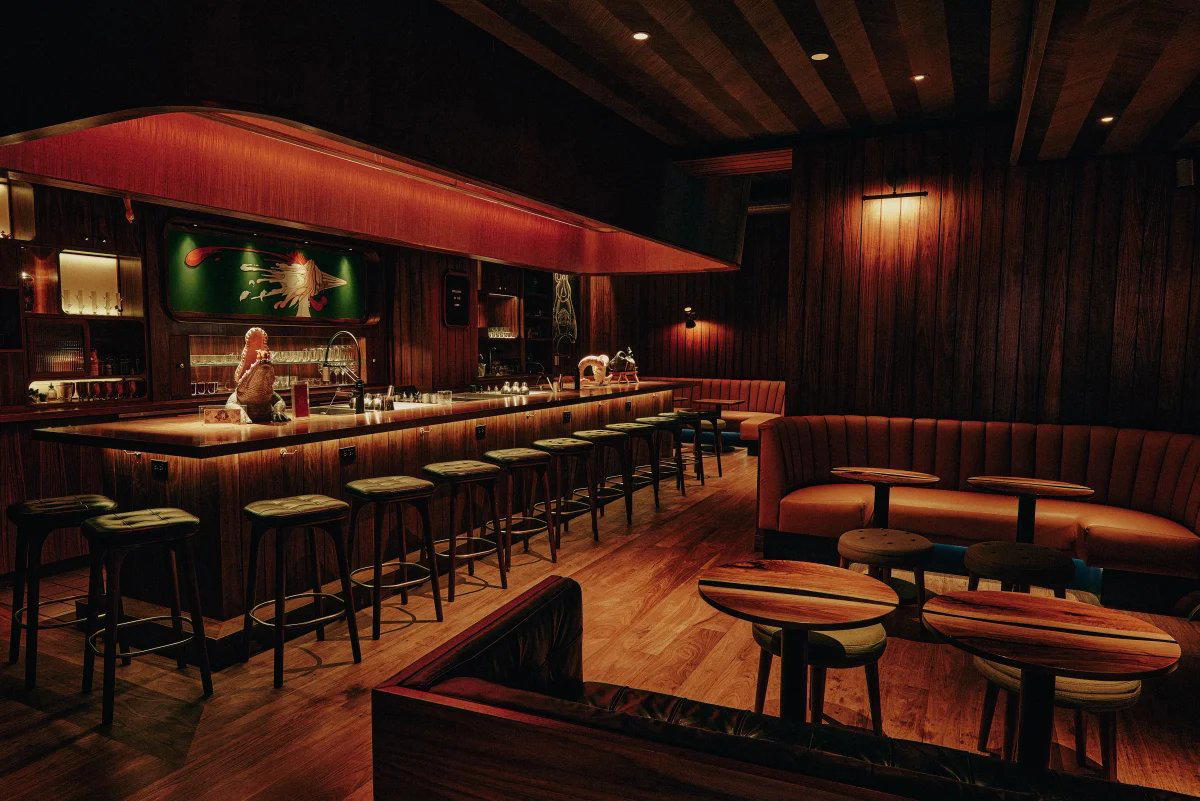
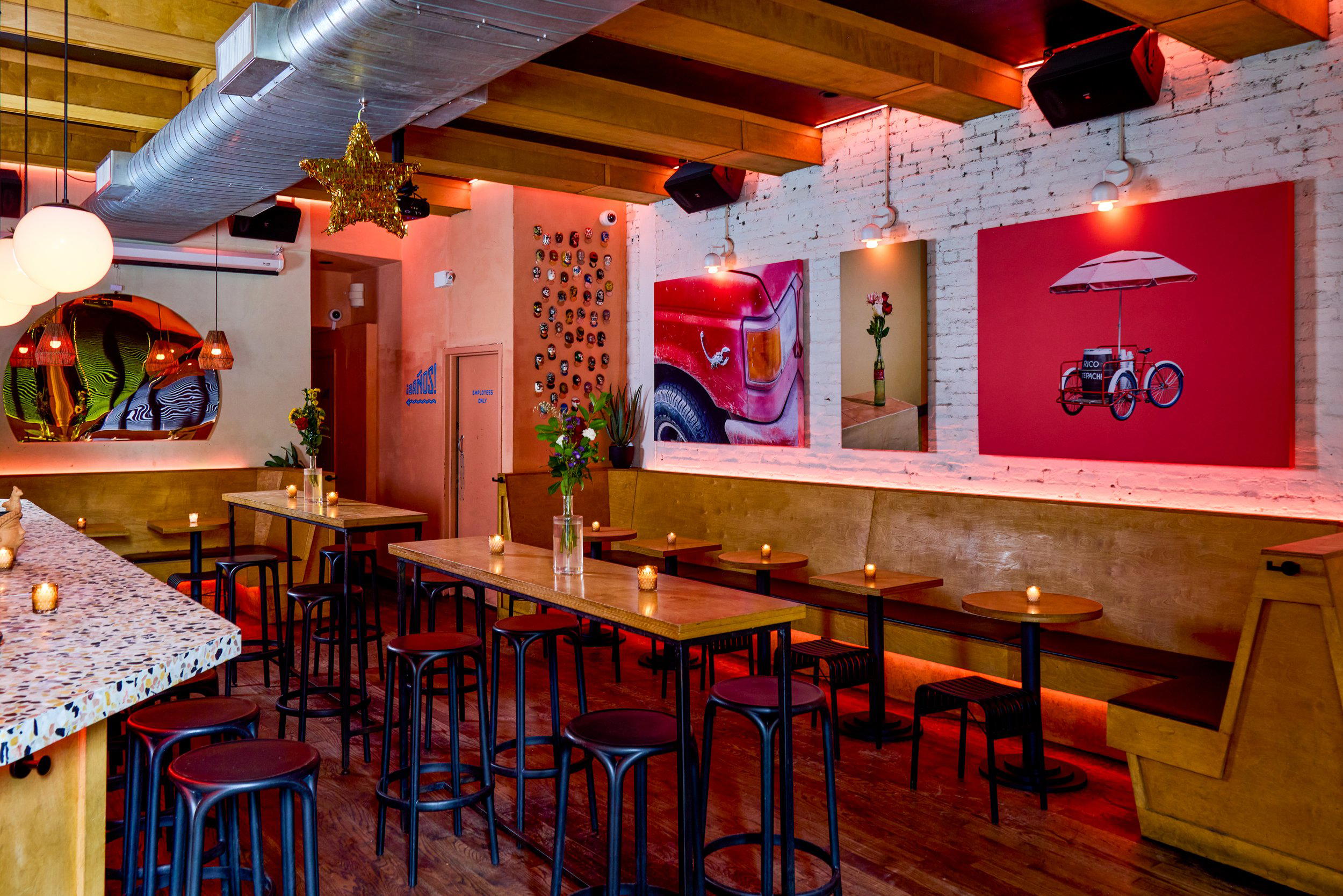
Downtown Manhattan's most interesting hotel food-and-beverage programmes have tended to resist the obvious. The destination-restaurant model, where a hotel's dining operation functions as a semi-independent venue that happens to share a postcode with guest rooms, suits some addresses. For a building and neighbourhood with Nine Orchard's particular character, something more embedded makes more sense. The two venues here , Corner Bar and the Swan Room , cover different registers without duplicating each other.
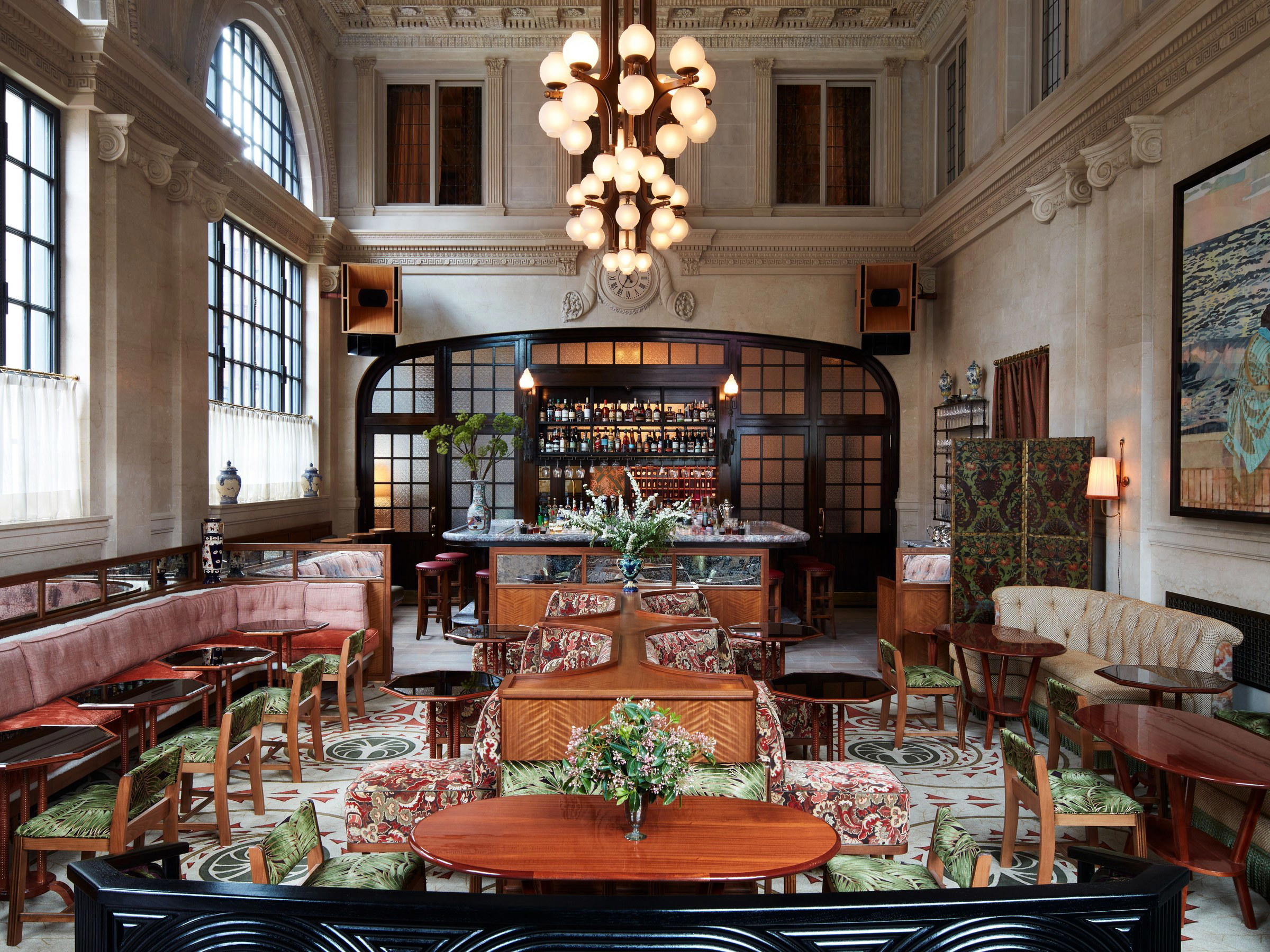
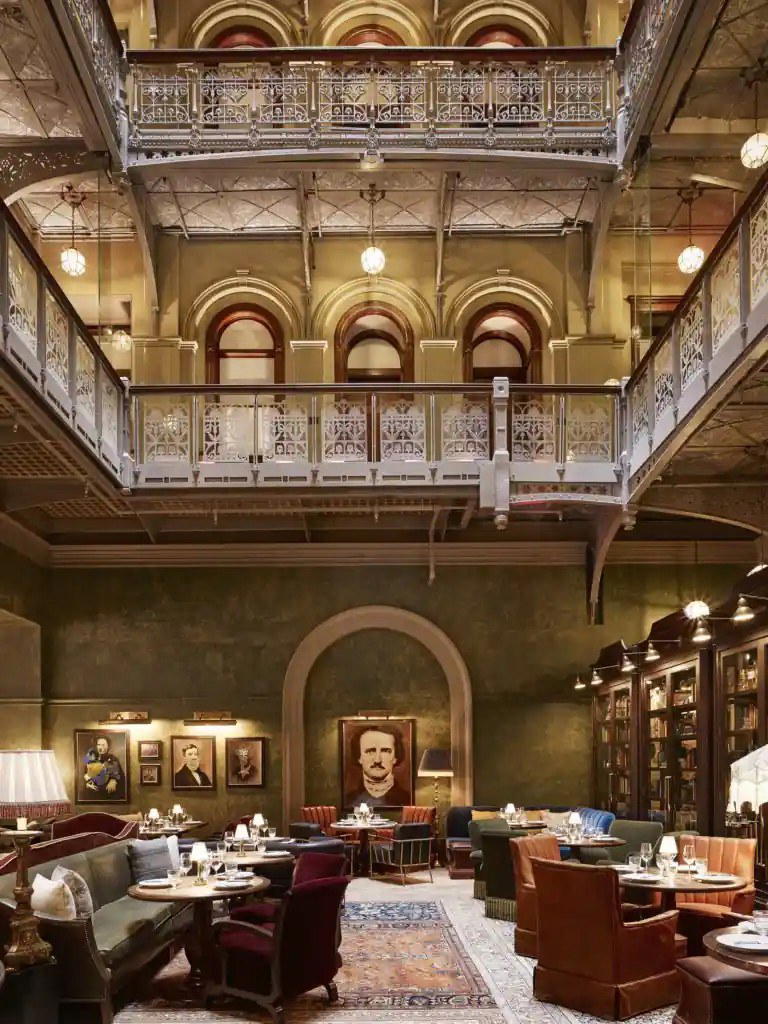
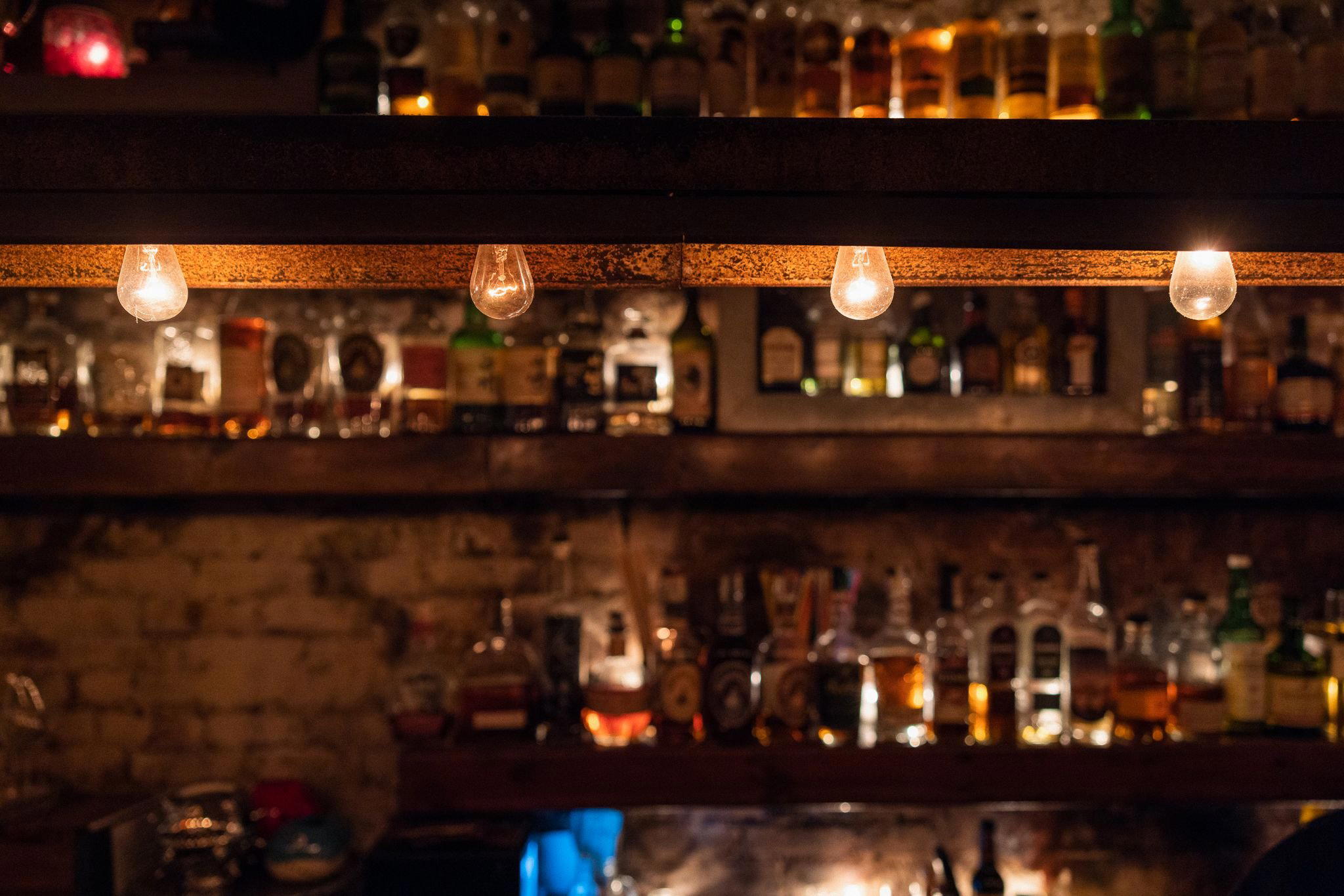
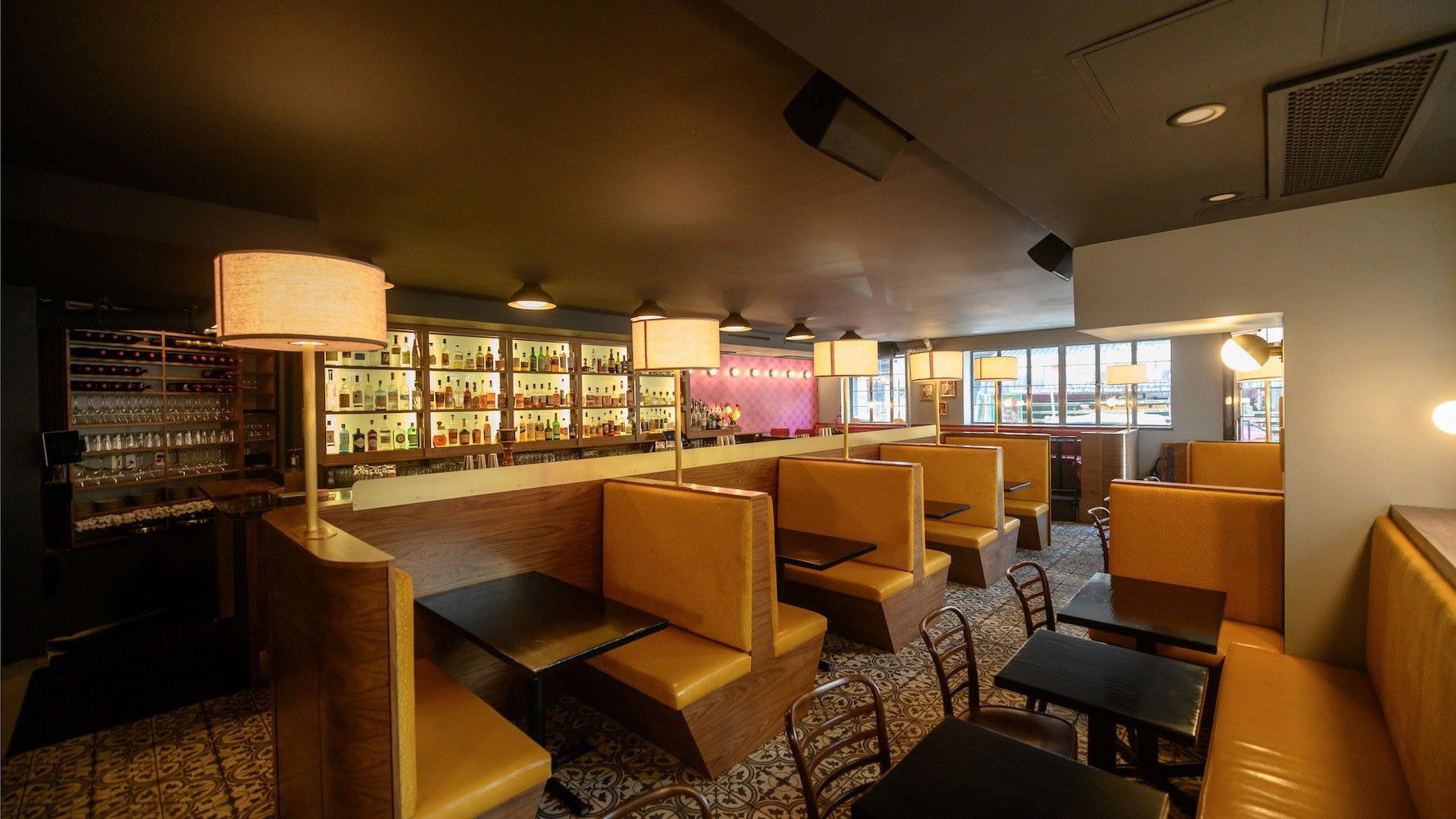
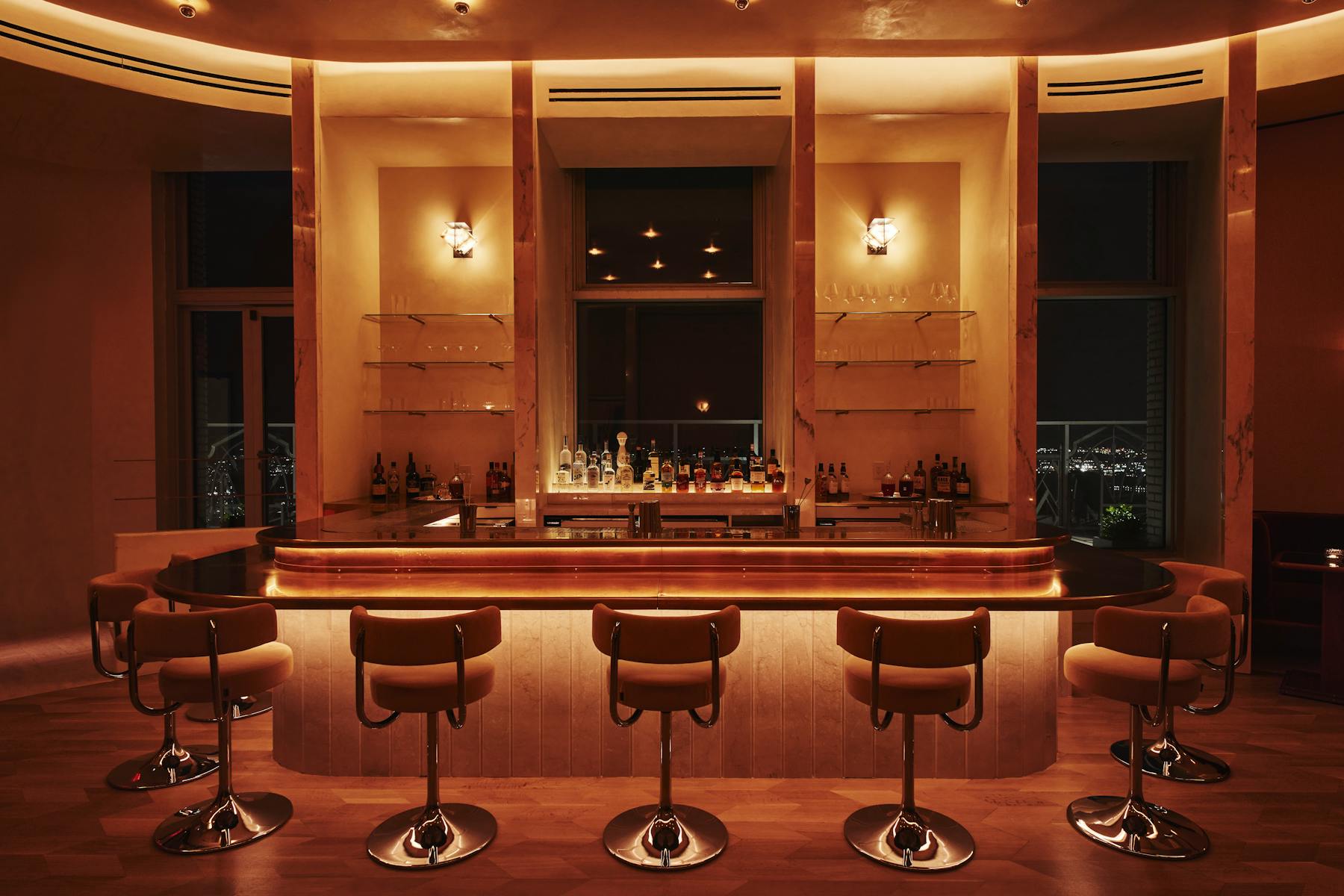
Corner Bar operates as a bistro-style concept, serving breakfast and dinner rather than positioning itself purely as a late-night destination. The bistro format carries specific implications in a neighbourhood where the surrounding blocks offer serious competition across most meal occasions. It signals all-day utility over occasion-driven exclusivity, which fits the Lower East Side's cadence better than a tasting-menu operation would. The Swan Room reads differently: an all-day lounge in the old-world mode that shifts into a cocktail bar after dark. The physical space is described as elegantly old-world, which in context of the building's original architecture means the room has material weight that newer hotel lounges tend to lack. New York's cocktail bar scene has moved substantially over the past decade toward technical programmes and transparent craft narratives; a lounge that leans into its own historicism occupies a distinct position in that conversation.
The minibars stocked with local products carry a small but specific signal. In hotels that treat the minibar as a commodity category, local sourcing is often a marketing gesture. In a building that sits at the intersection of two of New York's most food-dense neighbourhoods, the sourcing has a different weight. The Lower East Side and Chinatown between them supply some of the city's most specific food products, and a hotel that acknowledges that geography through its room amenities is making an argument about place rather than just service tier.
The Neighbourhood as Context
The hotel market in lower Manhattan has thickened considerably over the past decade, but the Lower East Side end of that market remains less crowded than SoHo or Tribeca. Crosby Street Hotel and The Whitby Hotel operate in SoHo with a design-led format that shares some DNA with Nine Orchard's approach. The Greenwich Hotel in Tribeca has long occupied a similar position: architecturally specific, neighbourhood-embedded, priced at a premium that the building and location justify. Nine Orchard's position at the Canal Street end of Orchard Street gives it a different neighbourhood energy than any of those addresses, and a different competitive story. The proximity to Chinatown is not incidental. It is one of the densest concentrations of food activity in the five boroughs, operating largely on its own schedule and logic, and it sits within walking distance of the hotel's front door.
For guests planning around food and drink, the surrounding blocks reward exploration. Our full New York City restaurants guide maps the broader scene, while our full New York City bars guide covers the cocktail programme in the surrounding neighbourhoods in detail. For visitors whose itinerary extends beyond Lower Manhattan, our full New York City experiences guide and our full New York City wineries guide provide category-specific coverage.
Where Nine Orchard Sits in the Broader New York Hotel Picture
The hotels that tend to define New York's premium tier in most coverage are concentrated uptown: The Mark, The Fifth Avenue Hotel, and Casa Cipriani New York each operate with formats shaped by their Midtown or Financial District addresses. Nine Orchard's position in the Lower East Side gives it a different relationship to the city, one that suits guests whose New York is less about the Upper East Side and more about what happens below Houston. For those whose travel patterns range further, the editorial comparison set extends across the country and internationally: Amangiri in Canyon Point, Hotel Bel-Air in Los Angeles, Raffles Boston, Auberge du Soleil in Napa, Post Ranch Inn in Big Sur, and Four Seasons at The Surf Club in Surfside each occupy similarly specific positions within their own regional markets. Further out, Aman Venice, Badrutt's Palace Hotel in St. Moritz, and Bvlgari Hotel Tokyo represent the international tier of the same design-led, historically anchored hotel category that Nine Orchard joins at the New York end. For resort-focused travel, Canyon Ranch Tucson, Kona Village in Kailua-Kona, and Little Palm Island Resort and Spa in Little Torch Key represent a different axis entirely. Our full New York City hotels guide covers the complete range of options across the five boroughs.
Practical Notes
Nine Orchard is located at 9 Orchard Street, New York, NY 10002, at the east end of Canal Street where the Lower East Side meets Chinatown. Rates begin at $829 per night across 116 rooms. The hotel holds Michelin 2 Keys recognition (2024) and Leading Hotels of the World membership (2025), with a 2026 La Liste score of 90 points. Corner Bar serves breakfast and dinner; the Swan Room operates as an all-day lounge and evening cocktail bar. The J, Z, N, Q, R, W, 4, 5, and 6 subway lines all stop within a short walk, making the location practical for movement across the city despite its downtown address.
Frequently Asked Questions
Category Peers
A short peer set to help you calibrate price, style, and recognition.
| Venue | Cuisine | Awards | Notes |
|---|---|---|---|
| Nine Orchard | Michelin 2 Keys, La Liste Top Hotels: 90pts | This venue | |
| Aman New York | Michelin 3 Key | Michelin 3 Keys | |
| The Carlyle, A Rosewood Hotel | Michelin 2 Key | Michelin 2 Keys | |
| Pendry Manhattan West | Michelin 2 Key | Michelin 2 Keys | |
| Ace Hotel Brooklyn | Michelin 1 Key | Michelin 1 Key | |
| The Ludlow Hotel | Michelin 1 Key | Michelin 1 Key |
Preferential Rates?
Our members enjoy concierge-led booking support and priority upgrades at the world's finest hotels.
Get Exclusive Access