Kabawa















Michelin Plate · World's 50 Best #14 · James Beard Award Semi Finalist
Our verdict
Kabawa brings Caribbean cooking into New York City's tasting-menu conversation without sanding away its heat, generosity, or regional range. The counter-format restaurant from Paul Carmichael and Momofuku opened in March 2025 in the former Ko space, serving a three-course prix fixe with choices, extra side dishes, and recognition from the James Beard Foundation as a 2026 Best New Restaurant semifinalist.

Pearl is the En Primeur Club membership app — saves, bookings, and concierge access live there. Same editors, same standards.
- Address
- 8 Extra Pl, New York, NY 10003
- Phone
- (646) 790-8747
- Hours
- Mon ClosedTue–Sat 5:30–10 PMSun Closed
- Website
- momofuku.com
- Directions
- Get directions
- Booking
- Book on OpenTable
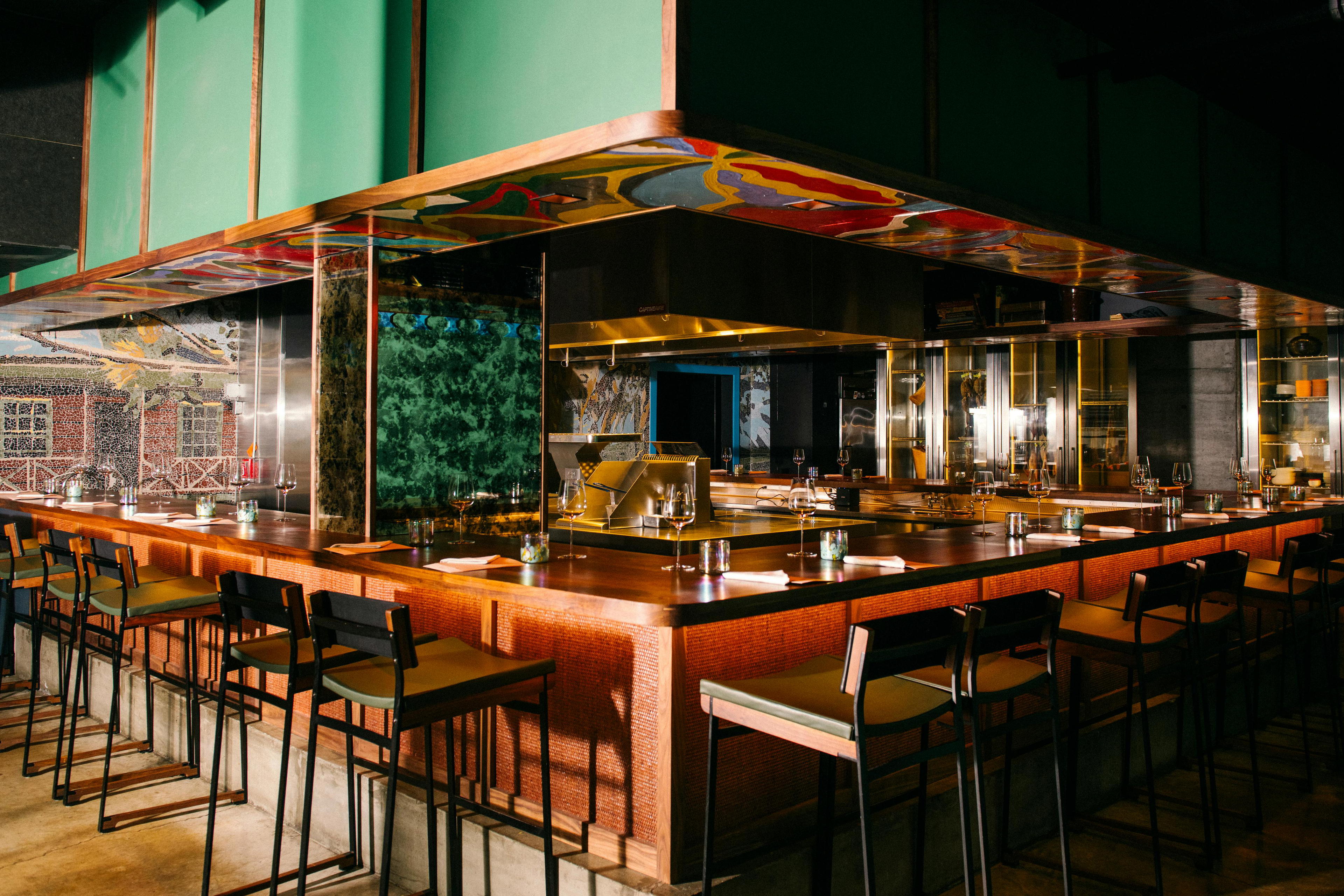
The room is arranged around an open kitchen, so the first impression is motion, not hush: counter seats facing the pass, cooks in view, and tasting-counter focus without stiffness. In a city full of expensive restraint, Kabawa argues for discipline rooted in Caribbean abundance, diasporic memory, and the confidence to center Scotch bonnet, tamarind, allspice, sorrel, cassava, roti, and goat in a serious dining room.
That matters in New York, where Caribbean cooking has long shaped everyday eating, from patties and jerk shops to family-run neighborhood kitchens, while higher-priced tasting menus have usually rewarded French, Japanese, Nordic, or modern American grammar. Kabawa enters that gap with a structured but generous three-course prix fixe: each course offers choices, and the meal expands through extra dishes and sides rather than a fixed procession. The result is correction, not novelty. Caribbean food does not need translation into fine dining; it needs the budget, cellar, staffing, and attention other cuisines have received for decades.
Caribbean cooking takes the counter format without losing its appetite
The strongest idea is format. The former Momofuku Ko room was built for close-range cooking, and Kabawa uses that proximity to make Caribbean cuisine feel neither folkloric nor softened for luxury dining. The menu has been described through pepper shrimp with sorrel and Scotch bonnet, jerk duck sausage, cassava dumplings in Creole sauce, black bass with curry, braised goat, bammy, roti, and pork chop preparations drawing from across the region. Barbados, Jamaica, Puerto Rico, and broader Caribbean references function as working vocabulary rather than museum labels.
Paul Carmichael's Barbadian background belongs in the story, but it is not the whole story. His return to New York after years cooking in Australia gives the restaurant a clear credential, and Momofuku's involvement supplies infrastructure, including the inherited wine-cellar seriousness of the Ko address. More consequential is what that infrastructure supports. In New York's dining hierarchy, Caribbean cuisine has often been treated as casual, festive, or peripheral. Kabawa places it in a high-attention room and keeps its force intact: spice, smoke, starch, acid, sweetness, and generosity are not edited into neutral tasting-menu minimalism.
The James Beard Foundation named Kabawa a 2026 Restaurant and Chef Award semifinalist in the Best New Restaurant category, early recognition that puts Caribbean fine dining inside a national awards conversation. Opinionated About Dining included Kabawa in its 2026 North America Top Restaurants Recommended list. New York Magazine listed it among The 43 Best Restaurants in New York in 2025, and Eater named it a new-restaurant pick in 2025. Awards and lists are imperfect, but here they show a pattern: Kabawa is being read not as a side project from a major group, but as part of the city's debate over which cuisines get high-end formats.
The meal is built for range, not reverence
The three-course structure sounds modest, but reported experience is larger than the count. Multiple accounts describe a prix fixe with choices in each course and additional dishes from the kitchen, shifting the rhythm from linear tasting menu to table-filling spread. That matters because Caribbean dining traditions often prize plurality: starches, sauces, relishes, meats, seafood, heat, and cooling elements sharing space. Kabawa adapts that logic to a counter room without turning the meal into isolated technical exercises.
Goat has become a reference point, described in published criticism as slow-cooked, precisely shaped, and served with dried scallop and habanero intensity. Pepper shrimp, jerk duck sausage, bammy, roti, cassava preparations, pork chop, black bass with curry, and coconut or cream-cheese desserts have also appeared in coverage. These are not a static checklist, but they show the kitchen's range: seafood heat, braised richness, fried and griddled starches, curry, smoke, fruit, and dairy all have roles. For diners used to New York tasting menus that prize delicacy above appetite, Kabawa's argument is direct: refinement can arrive with a full plate and a serious chile burn.
Neighboring Bar Kabawa adds a second register, with patties and daiquiris repeatedly noted in coverage, but the main dining room carries the larger cultural proposition. New York has specialist sushi counters, steakhouse traditions represented by places such as Bowery Meat Company, fried-chicken addresses such as Blue Ribbon Fried Chicken, and genre-specific rooms from Kissaki Sushi to Rosie's. Kabawa sits outside those lanes. It is not the Caribbean version of a French tasting menu or a tropical downtown counter; it treats the region's foodways as already complex enough to carry the format.
Where it fits in New York now
New York's current restaurant conversation is split between comfort-driven openings and high-concept tasting rooms. Kabawa cuts across that divide. It has the reservation-era signals of a serious new restaurant: counter seating, prix fixe structure, a major restaurant group, critical attention, and awards recognition. But its emotional register is warmer than the prestige script. Menu language quoted in coverage, including “Love yuh self,” frames abundance and care as part of the meal, not decoration around it.
That warmth is not looseness. The early reputation rests on control: a compact format, a three-course frame, visible cooking, and a kitchen using Caribbean references precisely enough for national scrutiny. It also changes the comparison set. A diner looking through Our full New York City restaurants guide will find Japanese counters such as 1 or 8 (Sushi - Japanese) and 15 East (Sushi - Japanese), Mediterranean and Middle Eastern-leaning rooms such as 12 Chairs (Israeli), and downtown Italian memories attached to 'inoteca. Kabawa belongs because it expands what a premium New York meal can sound and taste like, not because it mimics a template.
The broader American context helps. Restaurants such as 'āina in San Francisco, 'Ai Love Nalo in Waimanalo Beach, and 'Ama 'Ama in Kapolei show how island cuisines can be misread when mainland luxury standards become the only lens. Kabawa does not flatten Caribbean food into resort cues. It keeps the diaspora, heat, starches, and party in the room while operating with the concentration expected from a New York counter. For other city comparisons across categories, Our full New York City hotels guide, Our full New York City bars guide, Our full New York City wineries guide, and Our full New York City experiences guide map the wider EP Club city edit.
For cross-city dining context, EP Club's restaurant archive ranges from sake-focused Los Angeles dining at Jōdo Saké Bar in Los Angeles and compact Japanese formats such as Onigiri Time in Pasadena to regional Mexican cooking at ¿Por Qué No? in Portland and ¡Salud! in Los Angeles. Even distant references, from -Grilled beef Sukiyaki- KAMAKURA TANUKIAN 鎌倉 たぬき庵 in Kamakura to New York cured-meat specialist & Sons Ham Bar, underline the same editorial point: format matters only when it clarifies a cuisine rather than domesticating it. Kabawa's early importance is giving Caribbean cooking that kind of room in New York City.
Frequently asked questions
What cuisine category does Kabawa fall under?
Kabawa serves Caribbean, Tasting Menu cuisine.
What time does Kabawa open and close?
Hours at Kabawa: Mon: Closed; Tue: 5:30–10 PM; Wed: 5:30–10 PM; Thu: 5:30–10 PM; Fri: 5:30–10 PM; Sat: 5:30–10 PM; Sun: Closed.
What part of town is Kabawa in?
Kabawa is located at 8 Extra Pl, New York, NY 10003, New York City.
What's Kabawa best at?
Kabawa is strongest as a three-course Caribbean tasting menu in New York City's East Village, built around counter seating and an open kitchen. Its James Beard Foundation 2026 Restaurant and Chef Award semifinalist nod and Paul Carmichael's Barbados background give the format real context, not just polish.
Booking and Cost Snapshot
Side-by-side context: comparable cuisine and price.
| Venue | Cuisine | Price | Awards |
|---|---|---|---|
| KabawaThis venue — the venue you are viewing | Modern Caribbean Prix Fixe | $100–150 | Michelin Plate · World's 50 Best #14 |
| Bowery Meat Company | Modern Steakhouse | $100–150 | Wine Spectator Best of Award of Excellence |
| Blue Ribbon Fried Chicken | Fried Chicken | $10–20 | Not listed |
| Blue Ribbon Fried Chicken | Fried Chicken | $10–20 | Not listed |
| Kissaki Sushi | Traditional Japanese Omakase | Not listed | Not listed |
| Rosie's | Modern Mexican | $30–50 | Not listed |
Recognition history
Dated appearances from independent guides and award organizations, with the underlying list record or original source where available.
Michelin Plate
Michelin
World's 50 Best North America's Best Restaurants #14
World's 50 Best
James Beard Award Semi Finalist
James Beard Award
Bon Appétit Best New Restaurant
Bon Appétit
Conde Nast Hot List Restaurants
Conde Nast
Full recognition history (19 entries)
Eater 38 #21
Eater
Food & Wine Top 10 US Restaurants #1
Food & Wine
New York Times Best Restaurants in New York City #1
New York Times
Opinionated About Dining Top Restaurants in North America Recommended
Opinionated About Dining
Opinionated About Dining Casual in North America Recommended
Opinionated About Dining
Robb Report The 10 Best New Restaurants in America #8
Robb Report
Wine Spectator Best of Award of Excellence
Wine Spectator
Eater Best New Restaurants
Eater
Esquire Best New Restaurants
Esquire
New York Magazine The 43 Best Restaurants in New York
New York Magazine
New York Times America's Best Restaurants
New York Times
New York Times Best Restaurants in New York City #4
New York Times
OpenTable Top 100 Restaurants
OpenTable
The New Yorker The Best Things I Ate
The New Yorker
Continue exploring
More in New York City
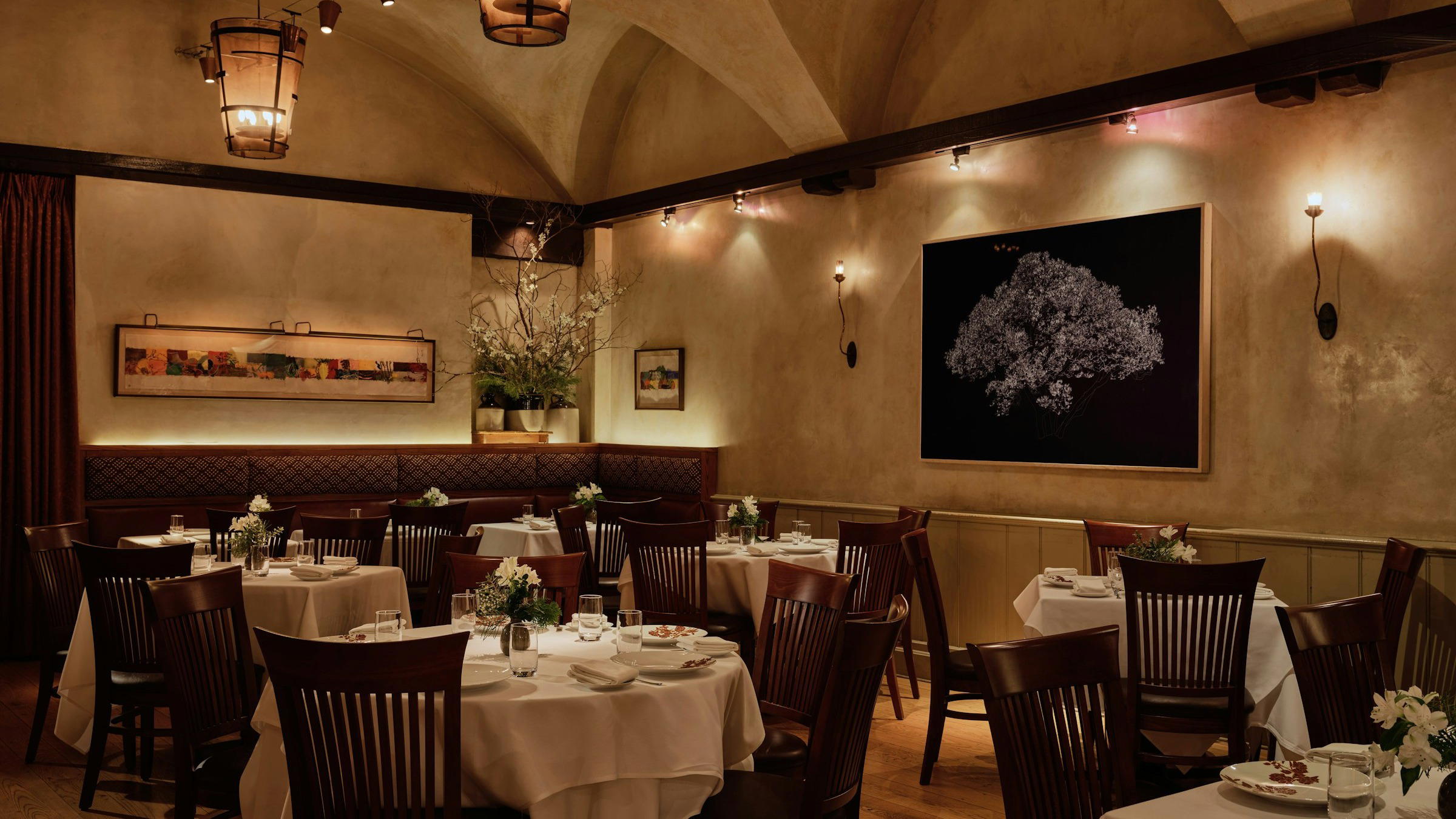
Restaurants in New York City
Browse all →
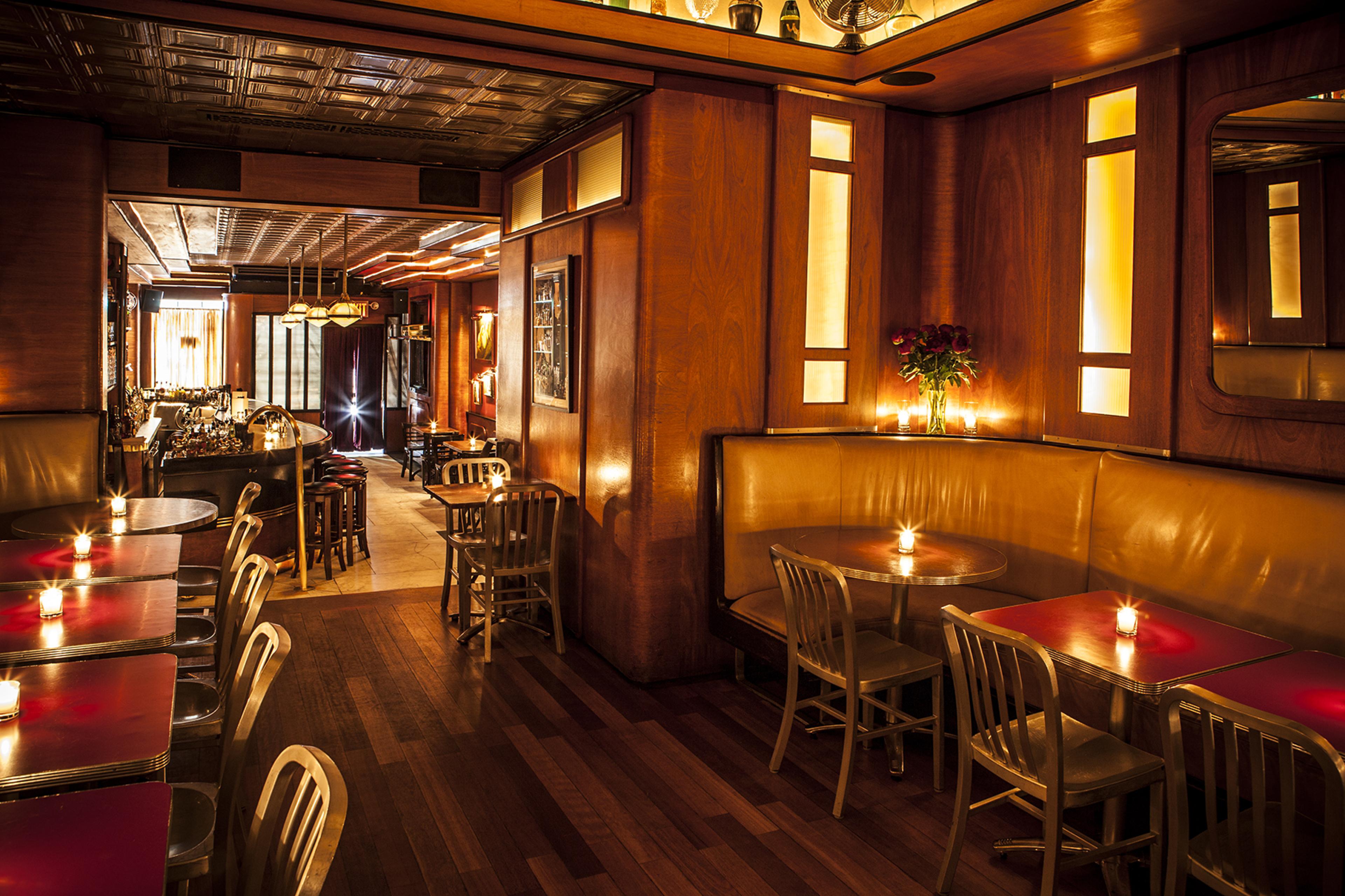
Bars in New York City
Browse all →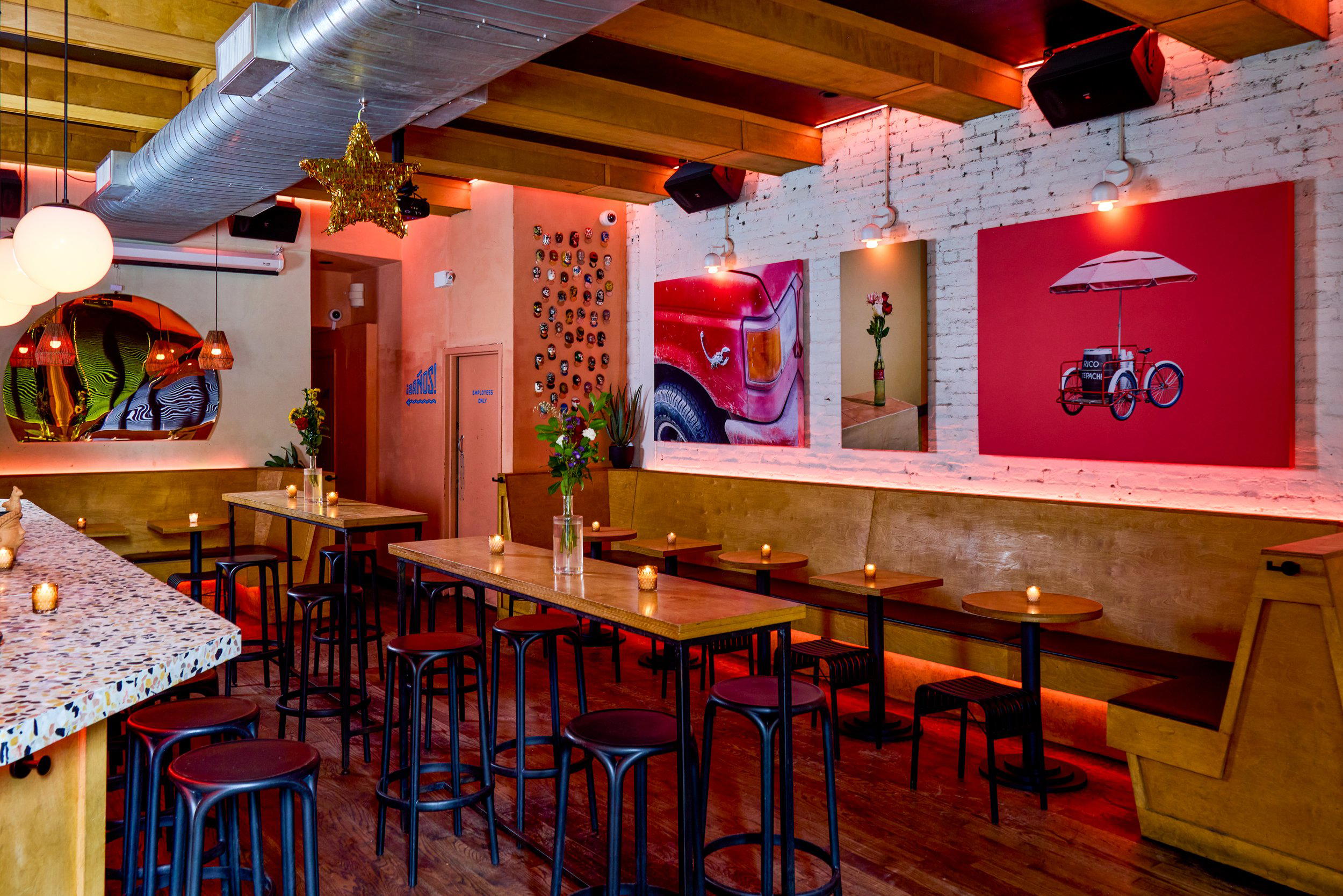
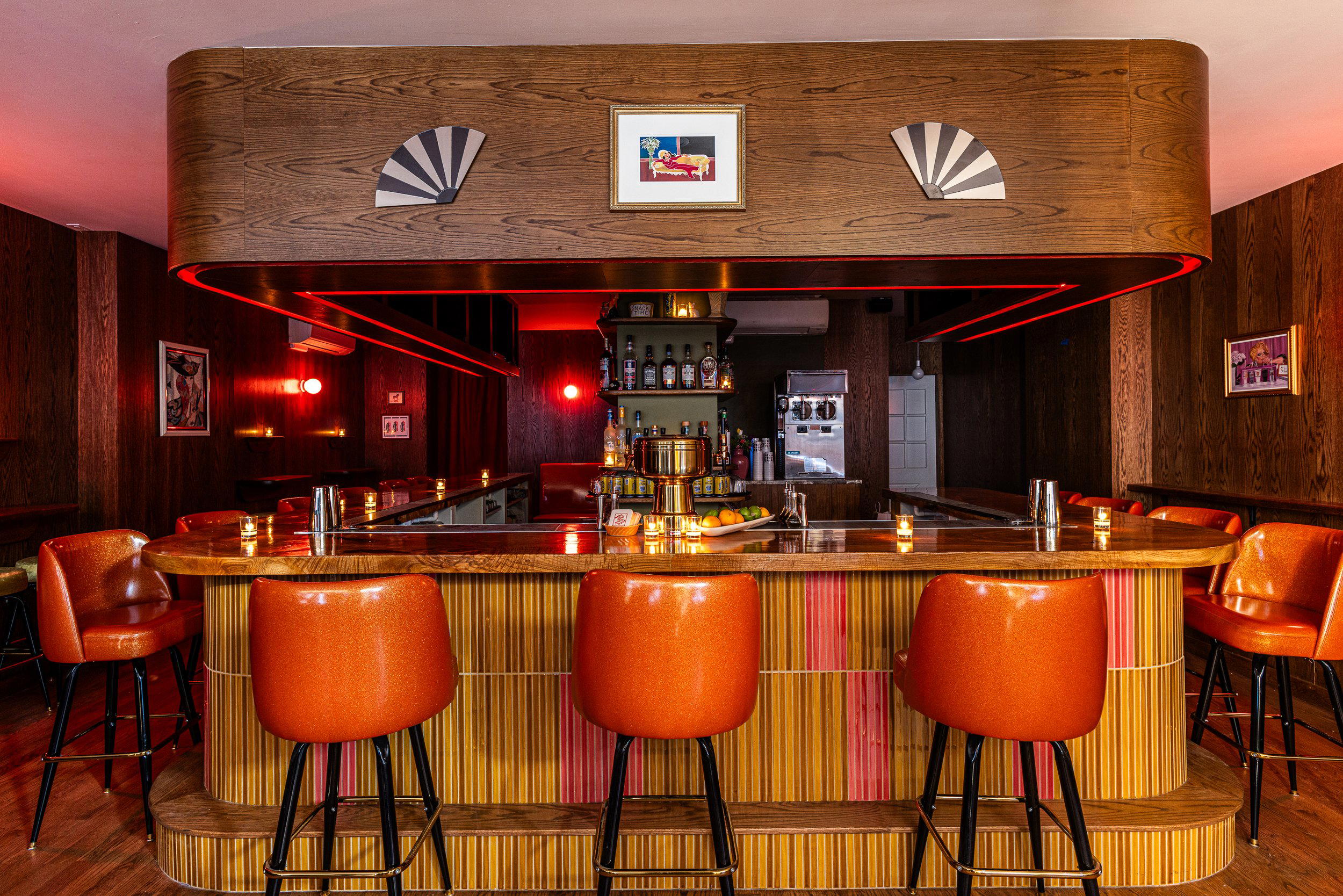
Hotels in New York City
Browse all →





Details
- Lively
- Cozy
- Elegant
- Date Night
- Special Occasion
- Celebration
- Open Kitchen
- Craft Cocktails
- Prix Fixe
Current opening hours
- Monday
- Closed
- Tuesday
- 5:30–10 PM
- Wednesday
- 5:30–10 PM
- Thursday
- 5:30–10 PM
- Friday
- 5:30–10 PM
- Saturday
- 5:30–10 PM
- Sunday
- Closed
Hours can change for holidays and private events. Last verified .
Energetic, warm, and distinctly Caribbean with colorful design, custom mosaics, open kitchen, lively but comfortable music, and a festive homey feel.