Crosby Street Hotel




3 Michelin Keys · La Liste Top Hotels · Mr & Mrs Smith Seal of Approval
A Firmdale property on SoHo's cobblestone namesake street, Crosby Street Hotel brings Kit Kemp's colour-saturated design sensibility to lower Manhattan's 86 rooms, a 107-seat cinema, and the all-day Crosby Bar. Awarded Michelin 3 Keys in 2024 and 94.5 points on La Liste's 2026 Top Hotels ranking, it occupies a distinct position in downtown New York's boutique hotel market. Rates from $1,525 per night.

Pearl is the En Primeur Club membership app, where members save venues, book tables and use the concierge.

Where SoHo's Industrial Past Meets a British Design Vocabulary
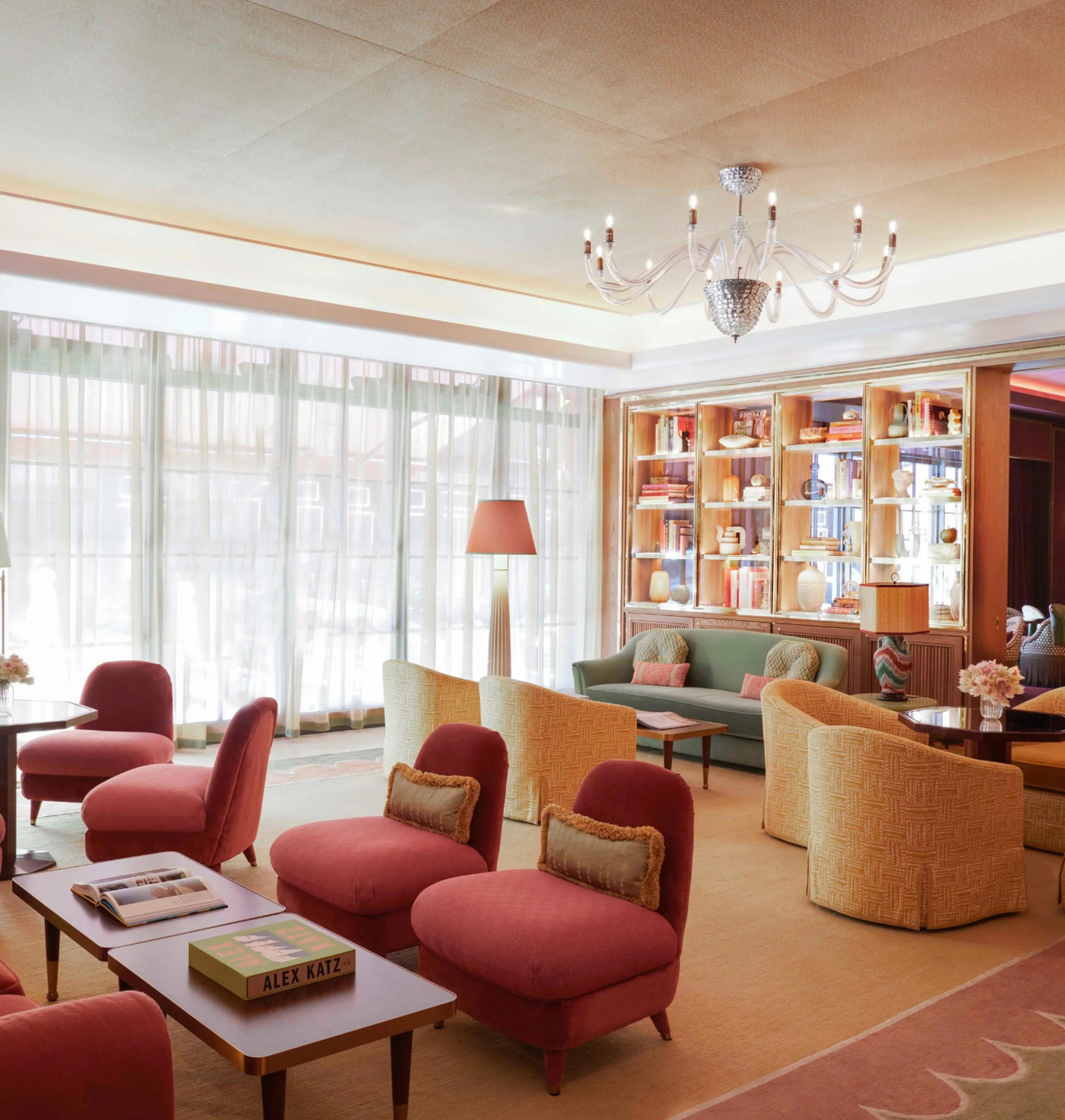
The cobblestone stretch of Crosby Street sits one block west of Broadway, which is just enough distance to filter out the retail noise while keeping everything downtown within reach. The building reads, from the outside, like many of the cast-iron warehouse structures that define SoHo's architectural character, floor-to-ceiling metal-framed windows, a façade that still carries the geometry of its manufacturing past. Step inside and the reference point shifts abruptly. Firmdale Hotels, the London-based group behind properties including The Whitby Hotel further uptown, built its New York foothold here in SoHo, and the interior signals that fact at every turn: vivid printed textiles, dense layering of art, and a chromatic confidence that runs counter to the monochrome minimalism that dominated downtown Manhattan hotel design for much of the 2000s.
The argument for that design approach is now well-established. Crosby Street Hotel holds Michelin 3 Keys (2024) and scored 94.5 points on La Liste's 2026 Leading Hotels ranking, recognitions that position it inside a small tier of New York boutique hotels where the physical environment is itself a credential. Among its downtown peers, the comparison set includes The Greenwich Hotel and The Beekman, both of which take different bets on how downtown luxury should look and feel. Firmdale's answer is colour, pattern, and personality, a British town-house sensibility transplanted to a New York industrial shell.
The Room Experience: What the Overnight Stay Actually Delivers
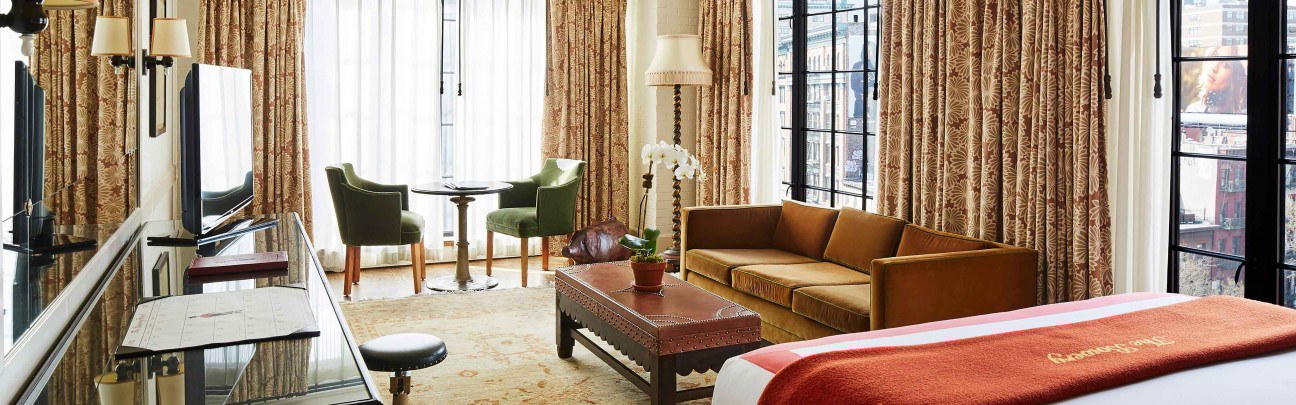
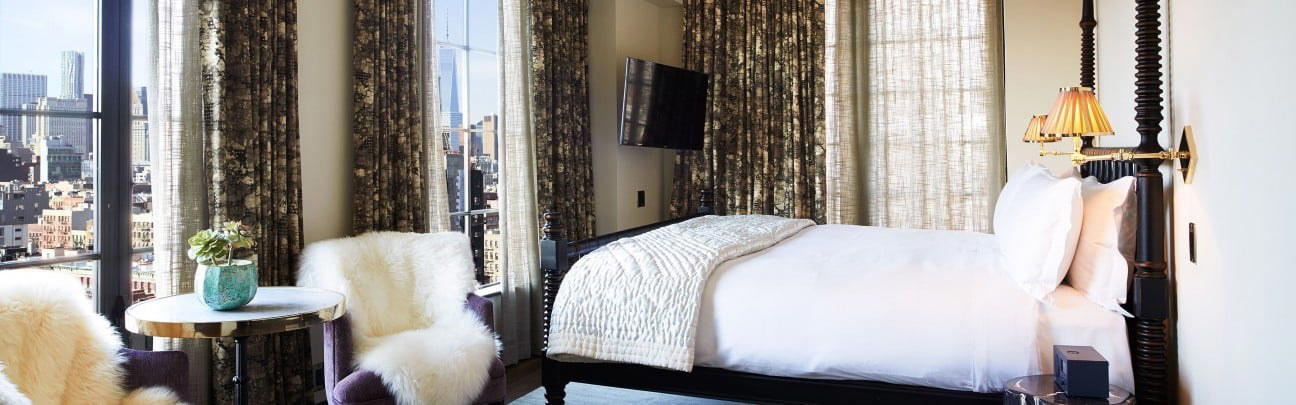
86 guestrooms are individually designed by Kit Kemp, which in practice means no two rooms present quite the same palette or arrangement of objects. The structural constants across the floor plan are high ceilings and the warehouse-style windows, both of which admit a quality of light that makes the rooms feel larger than their square footage might suggest. Views face the surrounding SoHo roofscape, not a conventional skyline panorama, but something more granular: water towers, rooftop gardens, and the everyday visual texture of lower Manhattan's working streets. The eighth floor delivers this framing effectively; the top-floor suites offer more elevation and the widest sight lines of the property.
Within the rooms, the bedding positions itself at the practical end of luxury: high, pillow-topped beds, plush robes and slippers, a spacious closet. The writing desk is wide enough to function as a workspace without compromise, and the in-room technology, Tivoli radio, complimentary Wi-Fi, skews toward analogue warmth rather than screen proliferation. The minibar is stocked with selections that move beyond standard hotel convention, though the specific contents vary by room and are not fixed across the property.
The bathrooms take a deliberately different tonal register from the bedrooms. Where the sleeping areas run to floral patterns and saturated colour, the bathrooms are finished in grey and white mottled granite, a quieter, more architectural palette. The glass-enclosed shower has multi-function pressure that reads as a considered amenity rather than a standard fitting. A heated towel rack, Miller Harris bath products with a herbal character, and a clear separation of wet and dry zones round out a bathroom that functions at the level the room rate implies.
The advice to book a different room on repeat stays is not merely marketing: because each room carries Kemp's individual design attention, the variation across the 86 keys is substantial enough to make a second visit feel genuinely distinct from the first.
Public Spaces and the Social Infrastructure
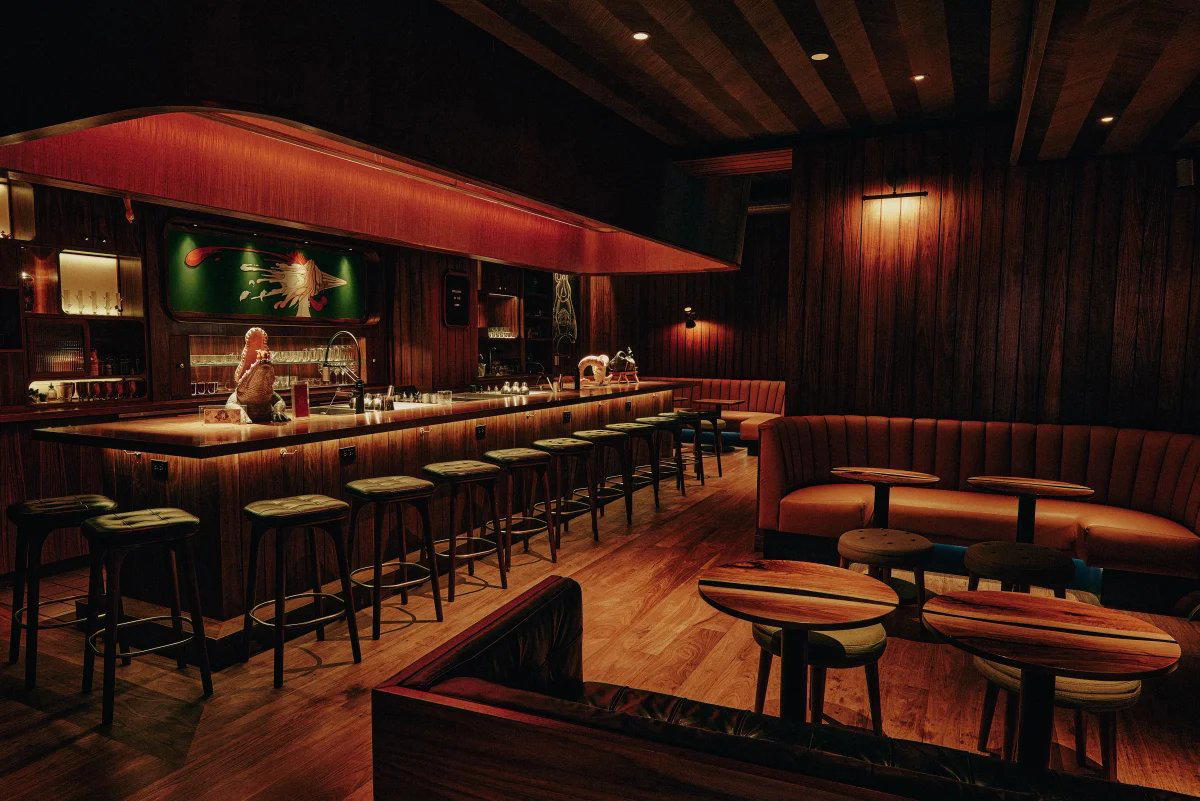
Crosby Bar operates as the hotel's social anchor, open all day and drawing both hotel guests and SoHo locals. The food program runs through fresh American cuisine with a British reference point maintained through daily English Afternoon Tea, a format that distinguishes the Crosby Bar from the neighbourhood's more standard all-day dining operations. The bar's Moroccan-inflected design creates a visual register that sits somewhere between restaurant, lounge, and art installation, which partly explains why it functions credibly across the full arc from morning to late evening. Balthazar, the SoHo institution that has defined French brasserie service in New York for decades, operates a short walk away, providing a useful external reference point for guests whose dining ambitions extend beyond the hotel's own kitchen.
Drawing Room, a 24-hour guest-only lounge, offers the inverse of the Crosby Bar's energy, quieter, more curated service, accessible only to hotel guests. This tier separation between the publicly accessible bar and the private lounge is a design choice that lets the hotel serve both a neighbourhood-facing social function and an inward-facing retreat function without one compromising the other.
Below the lobby, a 107-seat cinema screens recently released films on Sunday evenings as part of the hotel's Sunday Night Film Club. The format is technically open to the public but positions the in-house guest advantageously, the cinema sits directly below the rooms, which removes any friction between the screening and the rest of the evening. The sub-cellar setting gives the space an intimacy that larger hotel screening rooms typically sacrifice to capacity. For guests arriving during the film industry's awards-season calendar, the cinema has established the hotel as a regular venue for film-world events.
The outdoor component of the hotel's public offer includes a secluded sculpture garden accessible to guests. A rooftop kitchen garden, part of the hotel's LEED Gold certification infrastructure, adds a functional dimension to what might otherwise be purely decorative green space.
The SoHo Address and What It Actually Means
SoHo's position in lower Manhattan has shifted considerably since the neighbourhood's manufacturing-district origins. What was once a concentration of affordable artist lofts is now one of New York's primary retail corridors, with both independent boutiques and flagship stores operating within the same cast-iron building stock. The hotel's location on Crosby Street places it in the middle of this activity while the one-block remove from Broadway provides a degree of street-level calm that the more trafficked avenues cannot offer. Union Square, the Financial District, and Tribeca's restaurant cluster are all within practical reach without requiring significant transit planning. For guests arriving from outside Manhattan, our full New York City restaurants guide maps the downtown dining context in detail.
Among Firmdale's New York properties, Crosby Street was the group's first American hotel, a point of entry that shaped the neighbourhood's expectation of what a design-led boutique hotel could deliver. Properties like Aman New York or The Fifth Avenue Hotel operate in a different register entirely, larger footprints, a more midtown orientation, and a different set of trade-offs around scale versus intimacy.
For readers whose travel extends beyond New York, the design-led boutique category that Crosby Street occupies has strong analogues elsewhere: Troutbeck in Amenia and SingleThread Farm Inn in Healdsburg approach the same tension between personality-driven interiors and serious hospitality craft from different regional starting points. At the further end of the spectrum, properties like Amangiri in Canyon Point or Post Ranch Inn in Big Sur represent what happens when the design intention is subordinated entirely to landscape. Crosby Street's particular wager is that a strong interior design language can hold its own against an urban context that offers no dramatic natural backdrop, and the hotel's sustained recognition suggests that bet has paid off.
The hotel welcomes most pets, a policy consistent with the dog featured in the property's logo. LEED Gold certification places it among a relatively small cohort of New York luxury hotels that have formalised environmental operating standards. Rates begin at $1,525 per night; bookings are leading made directly through the hotel to ensure room-type preference and access to the property's guest-only amenities. For comparable Firmdale product, The Whitby Hotel uptown offers the same group's midtown expression for guests whose itinerary centres further north.
Planning Your Stay
At 86 keys, room availability during peak periods, September through November, and the awards-season months of January and February, compresses quickly, particularly for top-floor suites. The Sunday Night Film Club runs weekly and is open to the public, but hotel guests have the clear logistical advantage of proximity. Afternoon Tea at the Crosby Bar runs daily and requires separate booking. The hotel sits at 79 Crosby Street, New York, NY 10012, a short walk from the Spring Street and Prince Street subway stations. Pet policy accommodates most animals; confirm specifics at time of booking.
Category Peers
Comparable venues nearby, for context on price, style, and recognition.
| Venue | Cuisine | Price | Awards | Notes |
|---|---|---|---|---|
| Crosby Street HotelThis venue (the venue you are viewing) | Contemporary English luxury boutique hotel with playful design elements and artistic flair in a historic SoHo location. | $1,000–1,500 | 3 Michelin Keys · La Liste Top Hotels | Not listed |
| Casa Cipriani New York | Historic waterfront members' club transformed into luxury hotel | Not listed | 3 Michelin Keys · Virtuoso Luxury Hotel Partner | Financial District-Battery Park City |
| The Whitby Hotel | Contemporary tower with Kit Kemp’s signature colorful-modern English design | $1,000–1,500 | 3 Michelin Keys · Mr & Mrs Smith Seal of Approval | Midtown-Times Square |
| The Greenwich Hotel | luxury boutique in historic brick building | $750–1,000 | 1 Michelin Key · World's 50 Best #92 | Tribeca-Civic Center |
| The Fifth Avenue Hotel | luxury boutique in historic NoMad building | Not listed | 2 Michelin Keys · World's 50 Best #78 | Midtown South-Flatiron-Union Square |
| The Ritz-Carlton New York, NoMad | Contemporary luxury with refined elegance; designed as a gathering place for locals and guests in one of NYC's most lively neighborhoods. | Not listed | 2 Michelin Keys · La Liste Top Hotels | Midtown South-Flatiron-Union Square |
Recognition history
Dated appearances from independent guides and award organizations, with the underlying list record or original source where available.
Michelin 3 Keys
Michelin
La Liste Top Hotels
La Liste
Mr & Mrs Smith Seal of Approval
Mr & Mrs Smith
Forbes 4-Star
Forbes
Full recognition history (6 entries)
Michelin 3 Keys
Michelin
Michelin 3 Keys
Michelin
Continue exploring
More in New York City
Hotels in New York City
All hotels in New York City →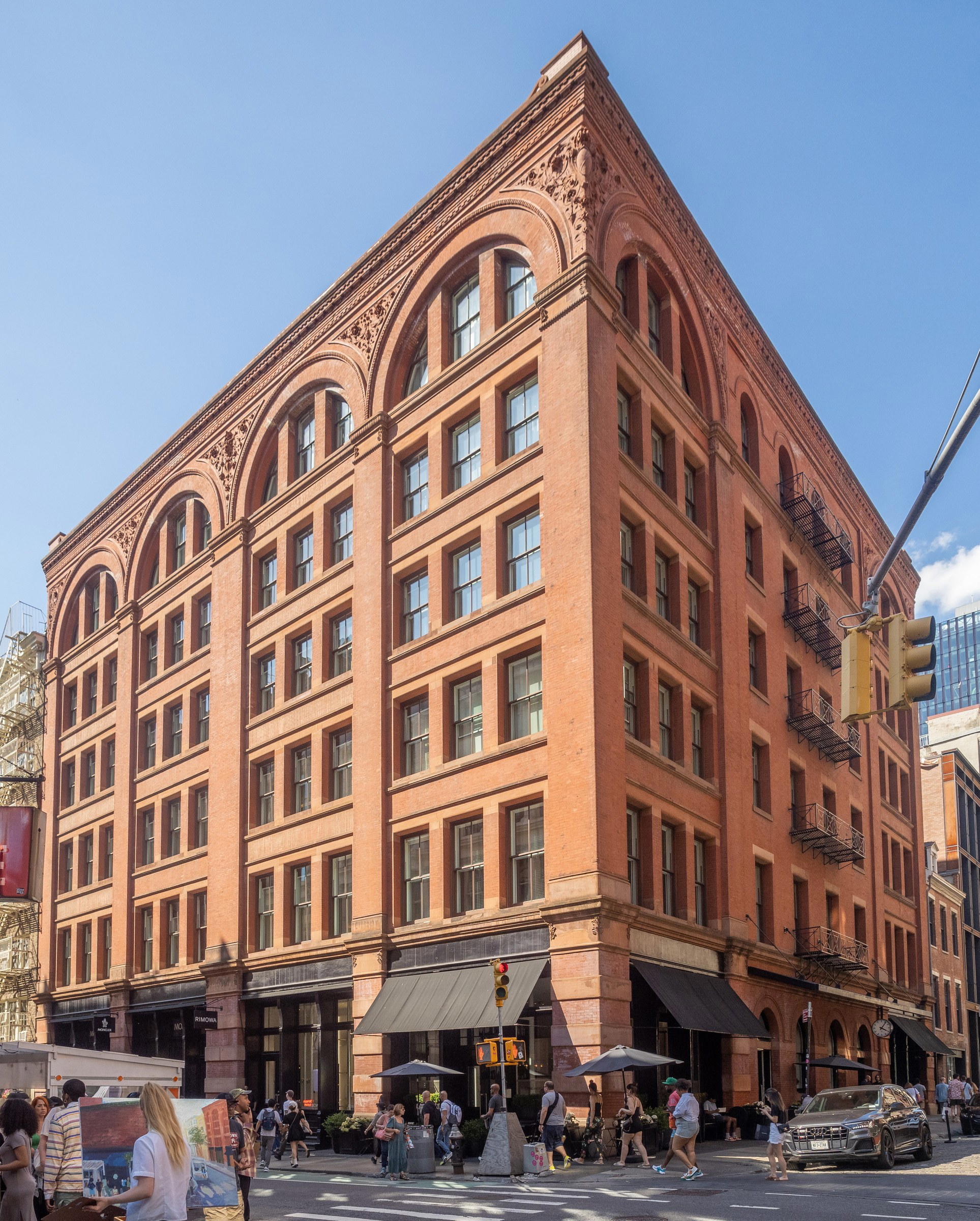
Bars in New York City
All bars in New York City →




Details
- Elegant
- Romantic
- Sophisticated
- Whimsical
- Modern
- Romantic Getaway
- Business Trip
- Weekend Escape
- Celebration
- Garden
- Terrace
- Design Destination
- Private Dining
- Panoramic View
- Wi Fi
- Fitness Center
- Room Service
- Concierge
- Valet Parking
- Restaurant
- Bar
- Garden
- Skyline
- Garden
- Street Scene
- Wheelchair Accessible
- Elevator
- Accessible Restroom
Light-filled spaces with art-filled common areas, floor-to-ceiling windows, and a playful English aesthetic that feels like a private artist's loft rather than a traditional luxury hotel.