Osteria Liz
On Berkelselaan in Rotterdam's north, Osteria Liz occupies a corner address that reads as a neighbourhood fixture rather than a destination play. The cooking follows the osteria tradition — Italian in register, locally grounded in execution — and the room reflects that same lack of performance. For Rotterdam diners who find the city's €€€€ fine-dining tier too theatrical, Liz offers a considered alternative.
Pearl is the En Primeur Club membership app — saves, bookings, and concierge access live there. Same editors, same standards.
- Address
- Berkelselaan 2-A, 3037 PE Rotterdam, Netherlands
- Phone
- +31102035620
- Website
- lizrotterdam.nl
- Directions
- Get directions
 Saves & bookings on Pearl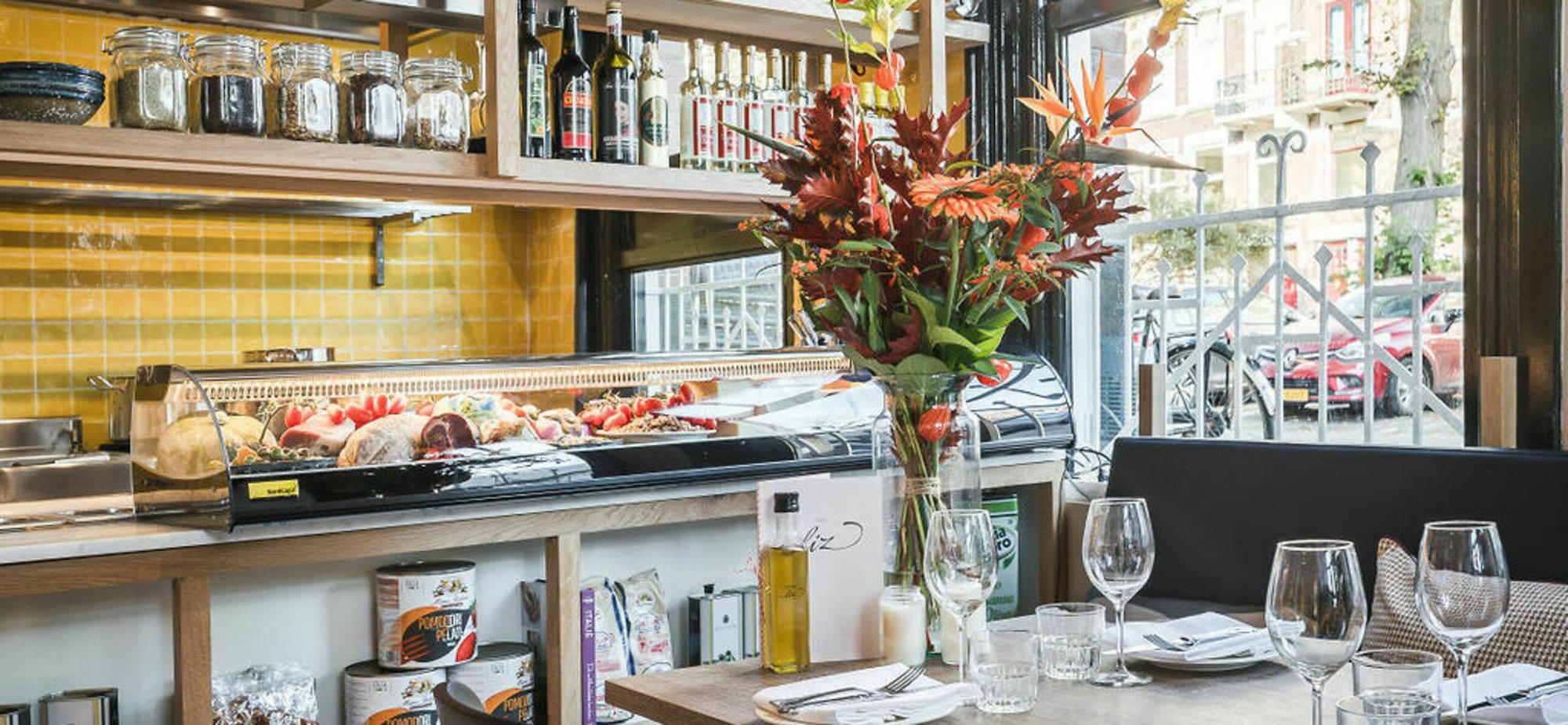
A Corner in Rotterdam's North
Rotterdam's restaurant geography has long been weighted toward the centre and the riverbank: the €€€€ tier represented by Parkheuvel, FG - François Geurds, and Fred clusters close to the water and the city's architectural set pieces. Berkelselaan sits further north, in a residential district where the dining offer is denser and less curated, and where a restaurant earns its regulars through repetition rather than spectacle. Osteria Liz is at number 2-A on that street — a corner position, which in Dutch neighbourhood dining typically signals either a former café or a room with enough foot traffic to survive without a reservation-only model. The physical address tells you something about the format before you open the door.
The osteria category itself carries a specific set of expectations in Italian culinary tradition: shorter menus than a ristorante, cooking that leans on daily availability rather than fixed architecture, a wine list that functions as a working tool rather than a display case. Whether Liz interprets that tradition closely or treats the name loosely is part of what defines the experience. In Rotterdam's context, the framing matters because it places the restaurant in a different competitive conversation than the creative French and modern cuisine houses that dominate the city's formal dining tier.
How a Meal Moves Through the Room
The osteria format, when followed with discipline, structures a meal through accumulation rather than ceremony. You do not arrive at the conclusion through a sequence of announced courses with rests between them; you move through the meal as the kitchen's rhythm dictates, with the progression feeling conversational rather than choreographed. That is the tradition's particular strength against more theatrical tasting-menu formats.
Contrast this with the approach at venues like Fitzgerald or Amarone, where the Modern French or modern cuisine framework implies a declared structure: amuse, opener, fish, meat, pre-dessert, dessert. The osteria counter-argument is that a meal can make its arc felt through the accumulation of dishes — antipasti giving way to something more substantial, then to pasta or risotto, then to a secondi, without the service team needing to announce the transition. Internationally, restaurants operating at the technical extreme of Italian-inflected cooking, such as Le Bernardin in New York City, have shown that a clear tasting arc does not require the formal scaffolding of classical French service. Closer to home, the progression work done at De Nieuwe Winkel in Nijmegen, a very different register, but similarly arc-conscious, demonstrates that Dutch diners have developed appetite for meals with a felt narrative shape.
At Osteria Liz, the Berkelselaan address and the osteria format together suggest a meal that earns its arc quietly. The room is not set up for ceremony. The progression, if the kitchen is executing the tradition faithfully, should feel like a conversation that builds, early dishes lighter, more acidic, setting appetite rather than satisfying it; middle courses more substantial; the final stage a gentle resolution rather than a dramatic finish.
Rotterdam's Italian Dining Register
Rotterdam has not historically had the density of serious Italian restaurants that Amsterdam accumulates, partly because the city's food culture has oriented toward its port heritage and a more eclectic international mix. The osteria format, which in Italy would be unremarkable, simply the middle register of a functional dining culture, carries a different weight in a Dutch city where Italian cooking at this level of seriousness is less common than French-influenced or creative formats.
The €€€€ venues in Rotterdam, Parkheuvel, FG, Fred, are all operating in European creative or modern French traditions. Osteria Liz, if it is holding the Italian register consistently, is not competing directly with that tier; it is occupying a different conversation. Dutch diners looking for reference points in the broader Netherlands scene might compare the experience to what mid-tier Italian-influenced cooking achieves at places like Aan de Poel in Amstelveen or, at the more technically serious end, Ciel Bleu in Amsterdam, though the register and ambition differ considerably across those comparisons.
For diners who travel for serious Italian cooking beyond the Netherlands, the reference points expand: the kind of progression discipline shown at Atomix in New York City, a Korean tasting counter, but one that has done as much as any restaurant in recent years to demonstrate that cultural specificity and tasting-arc rigour can coexist, illustrates that the osteria tradition's informal arc need not mean loose cooking. Italian restaurants across the Netherlands, from De Librije in Zwolle's region to Brut172 in Reijmerstok's more experimental corner of Limburg, have shown that Dutch dining culture can absorb serious versions of European traditions.
Planning a Visit
Osteria Liz is at Berkelselaan 2-A, Rotterdam 3037 PE. The neighbourhood is accessible by public transport from Rotterdam Centraal, the address is north of the centre in a residential area, so the visit has the character of going to a local rather than a destination. For context on Rotterdam's broader restaurant scene, including confirmed booking details for the city's formal tier, see our full Rotterdam restaurants guide.
Diners planning a wider Dutch trip might also consider 't Nonnetje in Harderwijk, De Bokkedoorns in Overveen, De Groene Lantaarn in Staphorst, or De Lindehof in Nuenen and De Lindenhof in Giethoorn, each operating in its own regional register and providing useful contrast to what Rotterdam's urban dining scene offers.
Continue exploring
More in Rotterdam
Restaurants in Rotterdam
Browse all →
Bars in Rotterdam
Browse all →
Hotels in Rotterdam
Browse all →
Wineries in Rotterdam
Browse all →
At a Glance
- Cozy
- Intimate
- Date Night
- Casual Hangout
- Open Kitchen
- Extensive Wine List
Current opening hours
- Monday
- Closed
- Tuesday
- 5–10 PM
- Wednesday
- 5–10 PM
- Thursday
- 5–10 PM
- Friday
- 5–10 PM
- Saturday
- 5–10 PM
- Sunday
- Closed
Hours can change for holidays and private events. Last verified .
Cozy and bright atmosphere with friendly service, though acoustics can make it noisy when full.
Know Before You Go
- Getting there
- Berkelselaan 2-A, 3037 PE Rotterdam, Netherlands