In the Cannaregio sestiere, Osteria Da Alberto occupies the kind of address that Venetian neighbourhood dining has long depended on: a calle-side room where the relationship between kitchen, wine, and floor service shapes the experience more than any single element. It sits in the mid-range tier below the city's formal dining rooms, offering a case study in how collaborative front-of-house culture survives in a city that can make that kind of consistency difficult to sustain.
Pearl is the En Primeur Club membership app — saves, bookings, and concierge access live there. Same editors, same standards.
- Address
- Calle Larga Giacinto Gallina, 5401, 30121 Venezia VE, Italy
- Phone
- +39415238153
- Website
- osteriadaalberto.it
- Directions
- Get directions
 Saves & bookings on Pearl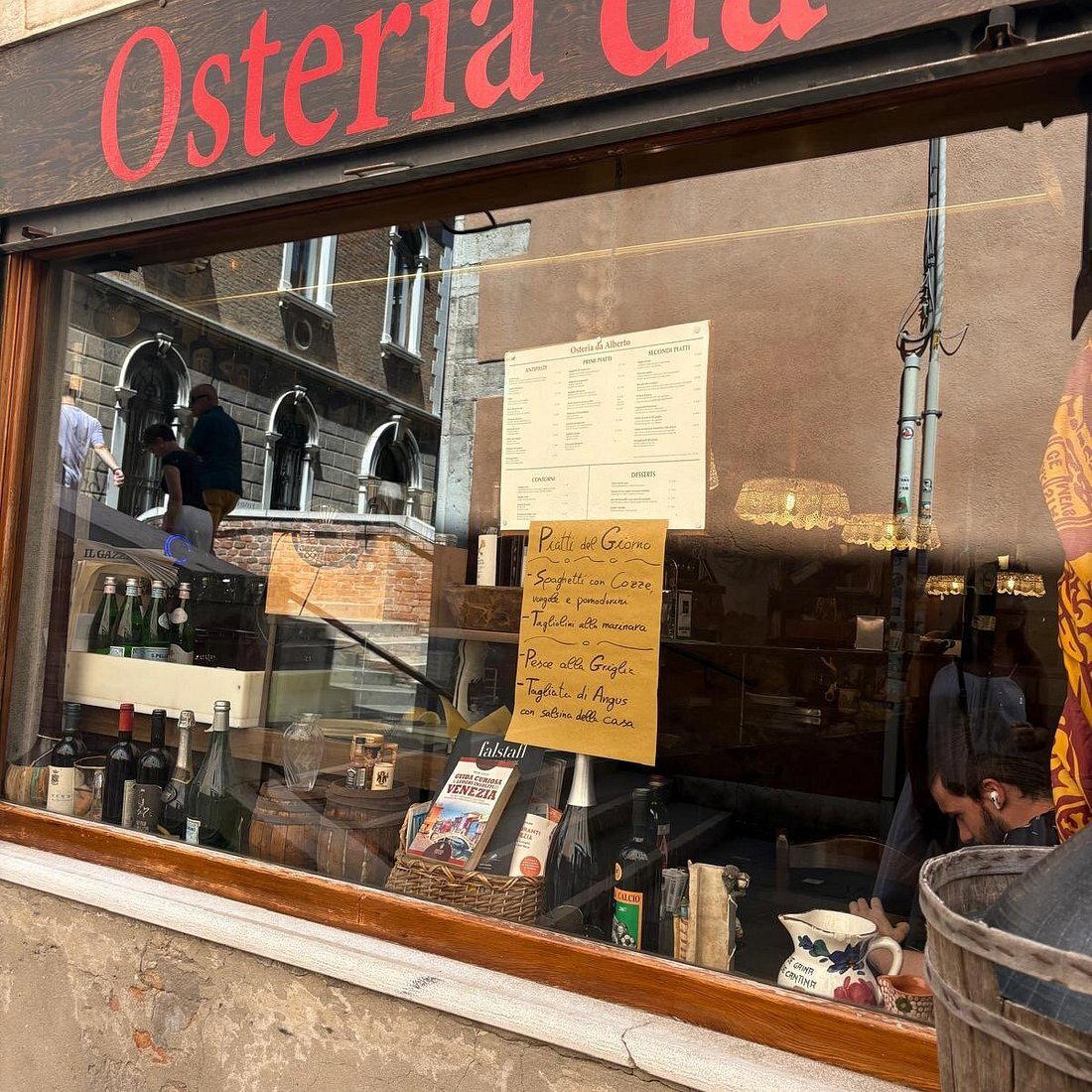
A Cannaregio Address in Context
Venice sorts its dining into fairly distinct tiers. At the upper end, rooms like Glam Restaurant by Enrico Bartolini and Ristorante Quadri operate as full creative-cuisine propositions with tasting menus, wine programs calibrated to international cellars, and the kind of floor coordination that takes years to build. Below that sits the neighbourhood osteria, where the metrics are different and the pressures are, in some ways, more demanding. Consistency without the scaffold of a fine-dining budget, hospitality without the formality of a maître d' structure, and a wine list that earns its place on the table rather than leaning on prestige labels.
Osteria Da Alberto is a traditional Venetian seafood osteria on Calle Larga Giacinto Gallina in Cannaregio. The address puts it away from the tourist-dense routes around the Rialto and San Marco, in a sestiere that still functions as a working residential neighbourhood for much of the year. That geography is not incidental. The clientele that sustains a place like this is a mix of returning locals and visitors who have done enough research to arrive with intention, and the experience reflects that. The room is not performing for a first-time audience; it is doing what it does, at its own pace.
The Logic of the Room
Venetian osterie occupy a format that has barely changed in outline over several decades. The physical scale tends to be modest, the interior layered with the kind of accumulated detail that only arrives with time rather than design intent. Approaching from the calle, the transition from the city's foot-traffic noise to the interior quiet is part of the experience in itself. This is the atmospheric register that distinguishes Cannaregio from the more performative dining zones closer to the waterfront.
In a room at this scale and positioning, the dynamic between kitchen, wine service, and floor staff carries more weight than it might in a larger operation. At a restaurant like Local or Oro Restaurant, those roles are formally separated and resourced accordingly. In a neighbourhood osteria, the boundaries are more porous. The person pouring your wine may well be the same person explaining what the kitchen is doing with the day's catch, and that compression of roles is where the experience either coheres or falls apart. At Osteria Da Alberto, the sense that kitchen and floor are operating in genuine coordination, rather than in parallel, is part of what gives the place its character.
Venetian Seafood Tradition and the Osteria Format
The Venetian seafood tradition runs deep, shaped by proximity to the Adriatic and the historic role of the Rialto fish market as among the more consequential ingredient sources in Italian cooking. The range of what arrives at that market, from cuttlefish and scallops to the local schie (small grey shrimp), gives kitchens working in this register a consistent argument for seasonality that does not require creative-cuisine framing to land. Italy's most decorated seafood-focused restaurants, places like Uliassi in Senigallia and Quattro Passi in Marina del Cantone, operate in a different price tier and with different ambitions, but the underlying principle, that the quality of what comes off the boat is the first and most important editorial decision, holds across formats.
In an osteria context, that principle translates into menus that shift with market availability rather than being designed around a fixed set of signature dishes. What the kitchen is doing on a given day is informed by what was worth buying that morning, and the floor team's ability to communicate that in a way that helps guests make decisions is a non-trivial skill. It is the kind of coordination that does not show up in any award citation but is exactly what separates a functioning neighbourhood restaurant from one that is merely adequate.
Italy's broader osteria tradition has produced some of its most significant dining institutions. Osteria Francescana in Modena operates at the far end of what the format can become when ambition scales up. Dal Pescatore in Runate represents a different kind of longevity, built on family continuity across generations. Osteria Da Alberto sits neither at those heights nor in their competitive set, but the tradition it draws from is the same one: a room where food, wine, and service are understood as a single argument rather than three separate departments.
Wine and the Supporting Cast
The Veneto wine scene gives osterie in this part of the city a ready argument for regional coherence. Soave, Valpolicella, and the prosecco-producing zones to the north all sit within plausible distance, and a wine list that works that geography intelligently can do something that an internationally curated cellar often cannot: make the food and the glass feel like they came from the same place. This is not always the case in Venice, where the tourist market creates pressure toward internationally recognisable labels regardless of fit. The osterie that resist that pressure and build their lists around regional logic tend to be the ones where the floor team knows the wine well enough to make a case for it. For particularly ambitious expressions of northern Italian wine culture, institutions like Enoteca Pinchiorri in Florence set the standard. For rooms operating at Osteria Da Alberto's scale, the measure is simpler: does the list make sense with the food, and does the person pouring it know why?
How It Compares and Where It Sits
Within Venice's mid-range tier, the restaurant's Cannaregio position gives it a different ambient character from the seafood trattatorie closer to the San Marco basin. Corte Sconta, operating in the Castello sestiere at a comparable price point, has a longer track record of press attention. Wistèria represents another contemporary take on the format. The comparison that matters most for a visitor deciding between options is not prestige but operational character: how much of the experience depends on what the room does well every day, rather than on a reputation built in a different era.
For travellers whose reference points include places like Le Calandre in Rubano, Piazza Duomo in Alba, or Atelier Moessmer Norbert Niederkofler in Brunico, the restaurant operates in a fundamentally different register. The same applies if your frame of reference is Le Bernardin in New York City or Atomix. The value proposition here is not ambition at scale. It is the quieter, harder-to-sustain quality of a neighbourhood room that has worked out how kitchen, wine, and floor service function as a single organism rather than three separate operations. For a fuller orientation to where this fits within the city's dining options, the EP Club Venice restaurants guide maps the full range. A comparable northern Italian standard is also represented by Enrico Bartolini in Milan and Reale in Castel di Sangro, both operating at the creative end of what Italian cooking produces today.
Planning a Visit
Calle Larga Giacinto Gallina, 5401 places the osteria in the northern part of Cannaregio, reachable on foot from the Fondamente Nove vaporetto stop or via the pedestrian routes through the sestiere from the train station. The area is quieter than the central tourist corridors, which means the walk itself is part of the calibration: this is a Venetian neighbourhood visit, not a landmark stop. Reservations are recommended, and the osteria is open daily from 10:30 AM to 3 PM and 6:30 PM to 11 PM. Venice's peak visitor months, roughly April through October, compress availability across all dining categories, including the mid-range tier where the restaurant operates.
Fast Comparison
Comparable venues nearby, for context on price, style, and recognition.
| Venue | Cuisine | Price | Notes |
|---|---|---|---|
| Osteria Da AlbertoThis venue — the venue you are viewing | Traditional Venetian Seafood Osteria | $$ | Not listed |
| Antico Calice | Traditional Venetian Seafood | $$ | San Marco |
| Hosteria Al Vecio Bragosso | Venetian Seafood Osteria | $$ | Santa Croce |
| pizzeria ai sportivi | Italian Pizza and Pasta | $$ | Dorsoduro |
| Osteria Alla Frasca | Traditional Venetian Seafood Trattoria | $$ | Cannaregio |
| Rossopomodoro | Neapolitan Pizza | $$ | San Marco |
Continue exploring
More in Venice
Restaurants in Venice
Browse all →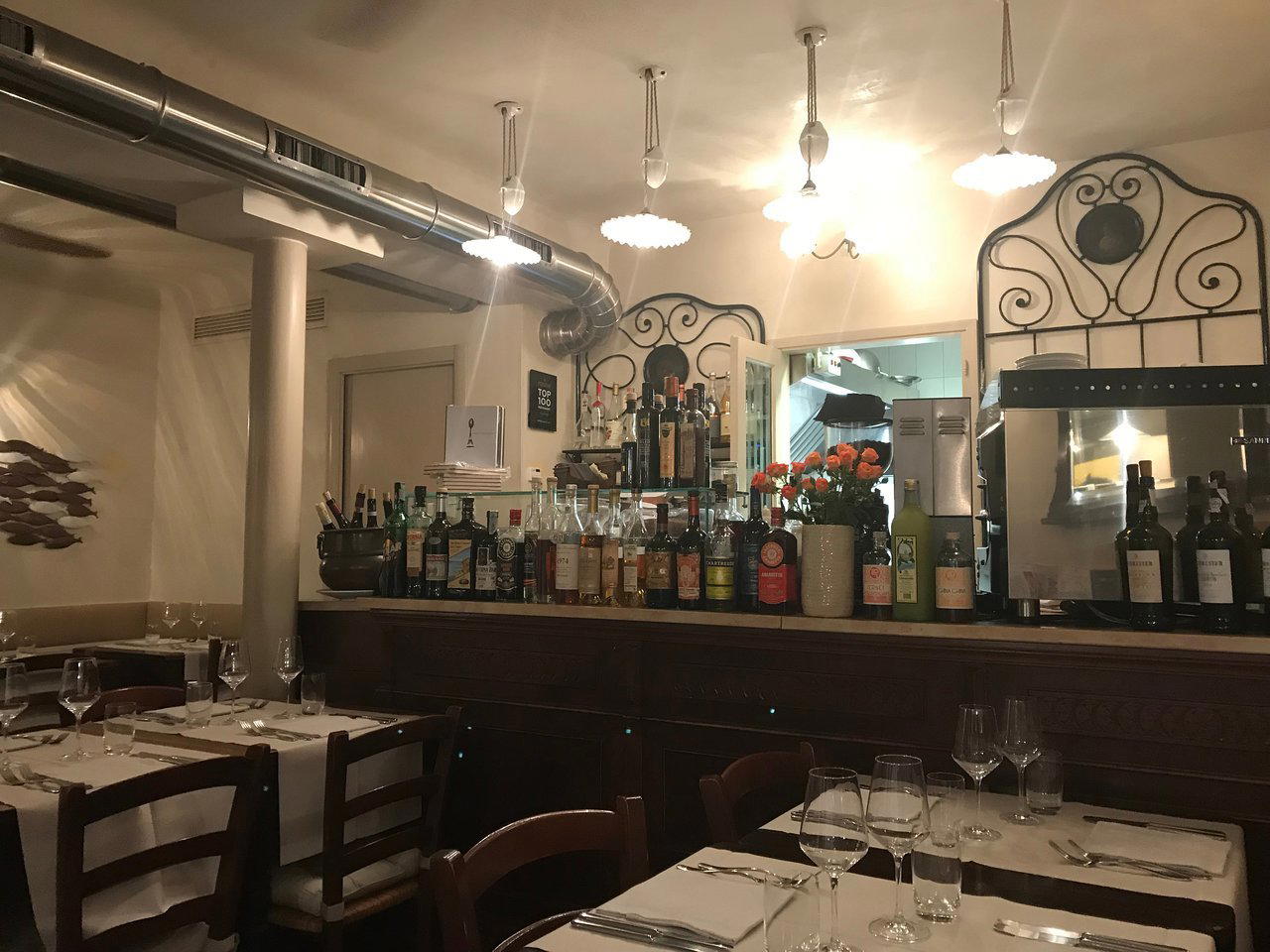
Bars in Venice
Browse all →

Hotels in Venice
Browse all →


At a Glance
- Cozy
- Rustic
- Intimate
- Classic
- Date Night
- Casual Hangout
- Family
- Historic Building
- Street Scene
Current opening hours
- Monday
- 10:30 AM–3 PM, 6:30–11 PM
- Tuesday
- 10:30 AM–3 PM, 6:30–11 PM
- Wednesday
- 10:30 AM–3 PM, 6:30–11 PM
- Thursday
- 10:30 AM–3 PM, 6:30–11 PM
- Friday
- 10:30 AM–3 PM, 6:30–11 PM
- Saturday
- 10:30 AM–3 PM, 6:30–11 PM
- Sunday
- 10:30 AM–3 PM, 6:30–11 PM
Hours can change for holidays and private events. Last verified .
Rustic interior with wooden beams, low ceilings, dim lighting, and an intimate, homely atmosphere.