
Oshokuji Maruyama belongs to Tokyo’s serious tonkatsu tier without adopting luxury-restaurant theatre. Its Tabelog 100 Tonkatsu 2026 selection, counter-only format, and Omori setting place it closer to a neighbourhood shokudo with specialist discipline than to a destination tasting-menu room. The appeal is the collision of everyday pricing culture, pork-cutlet craft, and Tokyo’s exacting lunch-and-dinner rhythm.
Pearl is the En Primeur Club membership app — saves, bookings, and concierge access live there. Same editors, same standards.
- Address
- 1 Chome-34-14 Omorikita, Ota City, Tokyo 143-0016, Japan
- Website
- tabelog.com
 Saves & bookings on Pearl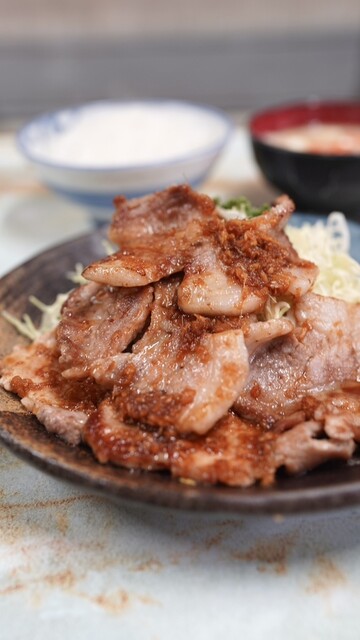
Omori has none of central Tokyo’s choreographed dining glamour. The approach is railway-town practical: commuters, local shopping streets, compact storefronts, and restaurants that earn loyalty through repetition, not spectacle. That setting matters for tonkatsu. Pork cutlet in Tokyo has long sat between two identities: everyday teishoku staple and technical craft built on breading, oil management, meat thickness, resting time, cabbage, rice, and sauce. Oshokuji Maruyama sits on that line, not as a luxury room, but as a tightly focused counter operation inside a working neighbourhood.
The wider Tokyo dining conversation often favours sushi counters, kaiseki rooms, and chef-led tasting menus, yet the city’s fried-food culture is just as exacting. Tonkatsu is a Japanese adaptation of Western cutlet technique, filtered through local rice, miso soup, pickles, shredded cabbage, and the set-meal logic of the shokudo. The dish looks simple until details fail: greasy crust, dry pork, cold rice, or limp cabbage expose shortcuts immediately. Recognition in the Tabelog 100 Tonkatsu 2026 list places this address within a specialist category where consistency matters more than décor.
Tokyo tonkatsu without the luxury disguise
Read Oshokuji Maruyama not as a hidden address to collect, but as a reminder that Tokyo’s serious dining culture is not confined to high-budget rooms. In the same city where sushi can sit in the ¥¥¥ bracket, pork cutlet can remain tied to shokudo tradition and still attract category recognition. That split is part of Tokyo’s strength: technical cooking does not always announce itself through tasting-menu choreography.
The venue’s listed categories, tonkatsu and cafeteria, are more revealing than a longer description. “Cafeteria” here points to everyday structure: meals built around a main dish and rice, not multi-course performance. Tonkatsu supplies the imported breaded-cutlet frying method; the Japanese frame supplies balance. Rice absorbs fat, cabbage resets the palate, and soup anchors the meal to domestic routine. The global technique becomes local through repetition and proportion, not novelty.
That is why the Tabelog 100 Tonkatsu 2026 selection matters. Tabelog’s category lists reward narrow specialisation, and tonkatsu is a field where Tokyo diners compare fine margins: crust texture, pork juiciness, oil freshness, and whether the set satisfies without excess. Oshokuji Maruyama’s 3.73 score gives another signal of standing inside a category where casual formats can be judged with the seriousness usually reserved for formal restaurants.
Comparison sharpens the point. Tonkatsu Kurogane operates in a similar Tokyo pork-cutlet bracket, while Tenfuku shows how a restaurant can span a wider budget range across meals. Sushidokoro Shishi belongs to a different economy, where sushi pricing and reservation culture shape expectations before the first piece appears. The restaurant is more useful for travellers who want to understand Tokyo’s everyday specialist dining: places where a single format, not luxury signalling, does the work.
The counter is the format, not a decorative flourish
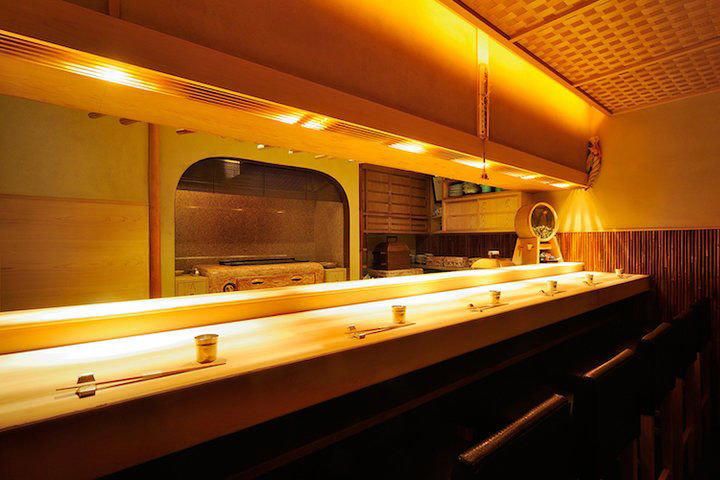
Counter seating changes the rhythm of a fried-food meal. It reduces distance between kitchen timing and diner timing, and in tonkatsu that matters: the dish depends on the short interval between frying, resting, cutting, and serving. A 13-counter-seat room also limits the social temperature. This is not a long-table group venue or a room for lingering through several bottles. It suits solo dining and focused meals, two habits Tokyo has refined better than almost any city.
The lack of private-room structure reinforces the category. Tonkatsu houses are rarely about insulation from the room; they are about the shared tempo of order, fry, serve, leave. That tempo can feel blunt to travellers used to longer Western pacing, but it is part of the attraction. A good cutlet meal has a built-in arc: arrival, anticipation from the fryer, a plate that lands complete, and a finish without ceremony.
Alcohol is not the centre of gravity here, though shochu appears in the drink listing. That fits the format. Shochu’s place in casual Japanese dining is pragmatic rather than performative, and tonkatsu needs no elaborate pairing program. The meal already balances fat, grain, crunch, heat, and acidity.
For a broader Tokyo itinerary, this stop pairs better with neighbourhood exploration than trophy scheduling. Readers mapping the city’s range can place it alongside casual-format addresses such as 3 Chome no Curry Ya San, visual café culture at 2D Cafe, yakitori specialisation at 124. KAGURAZAKA (Yakitori), seafood-and-grill formats at . 鮪と炭火焼き うお炭 秋葉原店, and contemporary Shinjuku dining at 12/10 Shinjuku ten. The wider directory at Our full Tokyo restaurants guide helps separate specialist everyday rooms from higher-ceremony dining, while Our full Tokyo hotels guide, Our full Tokyo bars guide, Our full Tokyo wineries guide, and Our full Tokyo experiences guide round out the planning map.
Where it fits in a Japan-first eating plan
The restaurant makes the strongest case for travellers who know Japan’s compelling meals are not always expensive or ceremonious. The address belongs to a national pattern: specialist cooking embedded in ordinary urban life. That pattern appears beyond Tokyo, from beef-focused formats such as -Grilled beef Sukiyaki- KAMAKURA TANUKIAN 鎌倉 たぬき庵 in Kamakura to casual city rooms like.cafe in Osaka.know in Kumamoto, (Shoku) Vietnam in Kawasaki, [Curry Senmon Ten] Maruyama Kyoju. in Sapporo, and [ki:] in Kyoto. Even outside Japan, tight-format Japanese eating appears at Jōdo Saké Bar in Los Angeles and Onigiri Time in Pasadena, though Omori has the advantage of native context.
The editorial value here is not breadth, but precision within a narrow lane. Tonkatsu, handled seriously, is restraint disguised as comfort food: imported frying technique, Japanese meal architecture, local expectations around speed and value, and a room format that gives the dish nowhere to hide. The restaurant belongs in an itinerary when the goal is to understand Tokyo through disciplined everyday specialists, not ceremony alone.
At a Glance
Comparable venues by cuisine and category.
| Venue | Cuisine | Price | Notes |
|---|---|---|---|
| Oshokuji MaruyamaThis venue — the venue you are viewing | Not listed | $ | Not listed |
| Kitchen Nankai (キッチン南海) | Jimbocho, Classic Yoshoku Katsu Curry | $ | Not listed |
| Ayu Ramen Plus (鮎ラーメンプラス) | Toranomon, Traditional Ayu Ramen | $ | Not listed |
| Rebanira ya Kintaro Toukyou shucchoujo | Shinagawa, Japanese Cafeteria | $ | Not listed |
| Matsushimaya | Not listed | $ | Minato, Traditional Japanese wagashi and daifuku shop |
| Chimoto | Not listed | $ | Meguro, Traditional Japanese Wagashi & Cafe |
Recognition history
Dated appearances from independent guides and award organizations, with the underlying list record or original source where available.
Tabelog 100 #22 · No. 22
Tabelog · Tabelog 100 - Tonkatsu - 2026









At a Glance
- Cozy
- Intimate
- Classic
- Solo
- Casual Hangout
- After Work
- Standalone
- Chefs Counter
Current opening hours
- Monday
- 11 AM–2 PM, 5–8 PM
- Tuesday
- 11 AM–2 PM, 5–8 PM
- Wednesday
- 11 AM–2 PM, 5–8 PM
- Thursday
- 11 AM–2 PM, 5–8 PM
- Friday
- 11 AM–2 PM, 5–8 PM
- Saturday
- 11 AM–2 PM, 5–8 PM
- Sunday
- Closed
Hours can change for holidays and private events. Last verified .