
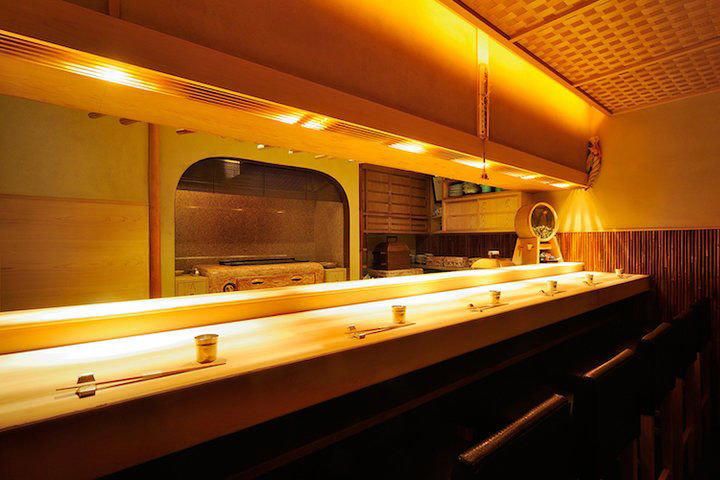
A six-seat counter in Kitashinagawa puts Tokyo’s everyday cafeteria tradition under a tighter lens: liver and garlic chives, no-frills service, and a format built around patience rather than luxury signals. Rebanira ya Kintaro Toukyou shucchoujo was selected for Tabelog 100 Diner 2026, an unusually strong credential for a low-priced, highly focused shokudō-style address.
Pearl is the En Primeur Club membership app — saves, bookings, and concierge access live there. Same editors, same standards.
- Address
- 東京都品川区北品川2-24-9
- Website
- tabelog.com
 Saves & bookings on Pearl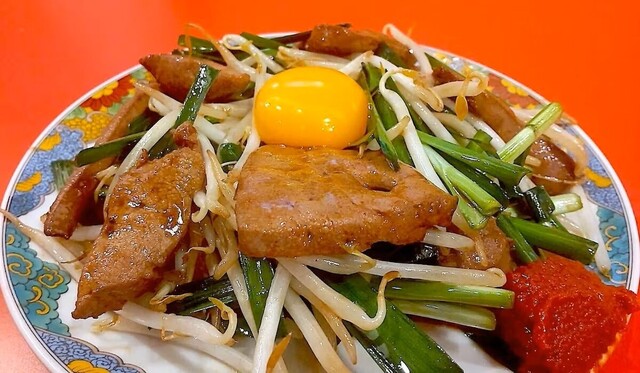
A six-seat counter changes the tempo before the first plate arrives. Tokyo has many small restaurants, but this category has a different charge: the room is compressed, the cooking close, and the diner reads the operation through rhythm rather than décor. Rebanira ya Kintaro Toukyou shucchoujo sits at the narrow end of the city’s shokudō culture, where appeal comes from concentration rather than breadth. The stated specialty is liver and garlic chives, a working-class combination with enough aroma, heat, and sauce to define the room by the pan.
Read this address not as a miniature destination restaurant, but as proof of how Tokyo rewards extreme focus at modest scale. In the same city, a meal can move from the charcoal-and-fish lane represented by . 鮪と炭火焼き うお炭 秋葉原店 to the controlled skewer culture of 124. KAGURAZAKA (Yakitori), then to a cafeteria counter built around one muscular dish family. That range is why Our full Tokyo restaurants guide matters: Tokyo’s serious eating is not confined to tasting menus, hotel dining rooms, or polished sushi counters.
A counter-format shokudō where focus matters more than polish
Tokyo’s diner category has become one of its sharper measures of taste. It is easy to over-romanticise small restaurants in Japan, but the test is whether the format creates discipline. Here, the small counter does. A compact room limits drift: the cooking category is clear, service is direct, and attention lands on a familiar Japanese comfort-food register rather than a multi-course narrative.
The Tabelog 100 Diner 2026 selection gives the address a meaningful public credential within a field spanning everyday restaurants and specialist counters. That distinction matters. A diner list is not judging luxury-guide qualities; it rewards repeatable satisfaction, local demand, and confidence in a narrow promise. Within the comparison set, Ichou no Ki and Chuka Soba Waka TOKYO occupy a similar low-price band, Oniyanma Higashishinagawa ten sits even lower, and Unagi Marutomi moves into a higher spend bracket. Kappo MAKINO operates in another tier entirely. The point is not superiority, but Tokyo’s unusually granular value spectrum, where a six-seat cafeteria can draw attention for reasons unrelated to ceremony.
That explains the pull of liver and garlic chives as a house focus. Rebanira, Japanese shorthand for stir-fried liver and nira, is direct, assertive, and tied to postwar Chinese-Japanese diner culture rather than formal washoku. It suits a tight room: fast heat, bold seasoning, and little need for ornamental plating. The experience is less about a chef’s biography than a city that takes everyday dishes seriously enough to rank, queue for, and argue over them.
Kitashinagawa puts the meal outside Tokyo's obvious dining circuit
Kitashinagawa and the Shin-Baba area lack the instant dining shorthand of Ginza, Ebisu, or Kagurazaka. That helps. The neighbourhood is older, lower-rise in stretches, and more residential-commercial than spectacle-driven. For travellers who eat only around major hotel districts, this part of Shinagawa reframes the city: the reward is not glamour, but local scale, where a counter can become the whole room and the room the whole evening.
That context sharpens the contrast with Tokyo’s broader itinerary logic. A visitor might spend one night comparing cocktail programs through Our full Tokyo bars guide, another considering ryokan-inflected stays or city luxury through Our full Tokyo hotels guide, and still miss the Tokyo where a diner counter carries as much cultural information as a formal reservation. The same applies beyond food: Our full Tokyo experiences guide and Our full Tokyo wineries guide map other parts of the city’s appetite for specialisation, but the small shokudō remains one of Tokyo’s clearest formats for seeing daily taste up close.
For a wider Japan route, the comparison is useful. A low-key Tokyo cafeteria sits in a different register from -Grilled beef Sukiyaki- KAMAKURA TANUKIAN 鎌倉 たぬき庵 in Kamakura, the graphic café culture of.cafe in Osaka, or the regional pull of.know in Kumamoto. It also differs from migration-led and genre-specific addresses such as (Shoku) Vietnam in Kawasaki, [Curry Senmon Ten] Maruyama Kyoju. in Sapporo, and [ki:] in Kyoto. Nationally, Rebanira ya Kintaro Toukyou shucchoujo reads as practical Tokyo minimalism: few seats, a narrow dish identity, and demand that turns logistics into part of the experience.
How to place it in a Tokyo eating day
This is not for a leisurely group meal or a soft landing after a long-haul flight. The six-seat counter and ticket-led access suit solo diners or small parties willing to treat the meal as a timed errand with a serious payoff. That is not a flaw. Tokyo has whole eating categories built on this compact social contract: arrive prepared, accept the format, eat with attention, and move on.
Within a day of eating, it pairs more naturally with casual specialist stops than with a grand evening sequence. Nearby or not, the editorial logic is closer to focused Tokyo addresses such as 3 Chome no Curry Ya San, 12/10 Shinjuku ten, and even the visual novelty of 2D Cafe than to a long-form dégustation. For overseas readers, it parallels how focused Japanese casual formats travel abroad, from Jōdo Saké Bar in Los Angeles to Onigiri Time in Pasadena: specificity is the attraction, not scale.
The editorial verdict is simple. In a city where luxury dining often dominates international attention, this counter argues for another kind of seriousness. The recognition is credible, the format tight, and the dish identity clear enough to justify the effort for diners who want Tokyo at working temperature rather than polished distance.
Style and Standing
Comparable venues for cuisine and category context.
| Venue | Cuisine | Price | Notes |
|---|---|---|---|
| Rebanira ya Kintaro Toukyou shucchoujoThis venue — the venue you are viewing | Japanese Cafeteria | $ | Not listed |
| Uogashi Nihon-ichi (魚がし日本一) | Standing Sushi Bar | $ | Shibuya |
| Oniyanma Higashishinagawa ten | Sanuki-style udon noodle shop | $ | Shinagawa |
| Torimeshi Torito Toyosu shijou | Chicken-focused Japanese casual dining | $ | Kōtō |
| Toranomon Okanoeisen | Traditional Japanese Wagashi & Daifuku | $ | Minato |
| Heckeln | Classic Japanese kissaten & pudding café | $ | Minato |
Recognition history
Dated appearances from independent guides and award organizations, with the underlying list record or original source where available.
Tabelog 100 #55 · No. 55
Tabelog · Tabelog 100 - Diner - 2026








At a Glance
- Cozy
- Classic
- Solo
- Family
- Casual Hangout
- Standalone
- Local Sourcing
Compact counter-style cafeteria atmosphere with a hidden-gem feel and a strong sense of scarcity due to the limited weekly operating schedule.