
Matsushimaya belongs to Tokyo’s old-school wagashi register, where the menu is narrow, takeaway-led, and judged on execution rather than theatre. Its Takanawa shop is associated with Japanese traditional sweets and daifuku, with repeated Tabelog 100 selections placing it inside the city’s serious sweets conversation.
Pearl is the En Primeur Club membership app — saves, bookings, and concierge access live there. Same editors, same standards.
- Address
- 1 Chome-5-25 Takanawa, Minato City, Tokyo 108-0074, Japan
- Phone
- +81 3-3441-0539
- Website
- instagram.com
 Saves & bookings on Pearl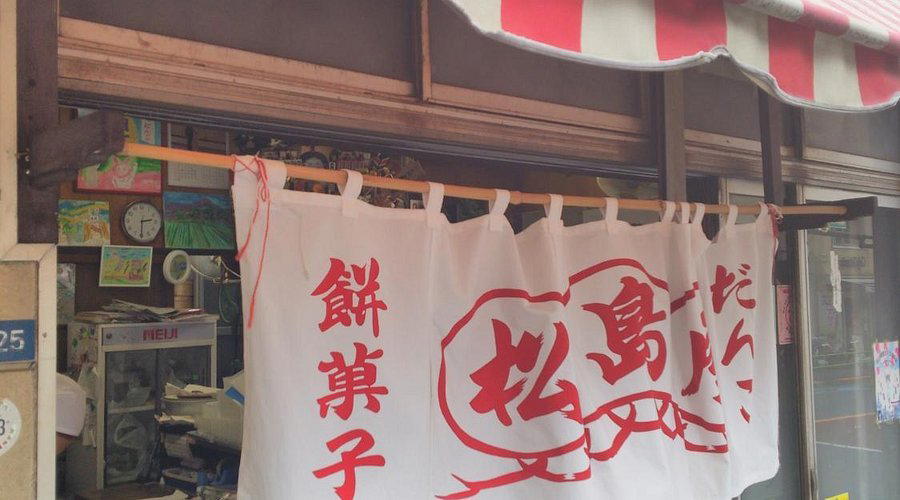
The approach to Takanawa changes the dining register before any order: fewer neon cues, more residential gradients, and the small-shop rhythm Tokyo preserves unusually well. In this part of Minato, wagashi is not staged as dessert after a tasting menu. It is an errand, a gift, a seasonal habit, and a measure of craft compressed into a brief counter exchange.
Matsushimaya belongs to that tradition rather than the café-driven sweets culture dominating much contemporary Tokyo. The takeaway format matters: no room design can compensate for weak product, no plated composition can distract from texture, and no beverage pairing can stretch the experience. Japanese traditional sweets live or fail on proportion, timing, and restraint, especially daifuku, where rice cake and red bean paste leave little margin for error.
Daifuku as menu architecture, not a dessert afterthought
Tokyo’s serious wagashi shops often build authority through narrowness. The point is repetition, not range: a compact set of sweets made often enough that minor shifts in rice, bean paste, humidity, and handling become craft. Matsushimaya is listed in the categories of Japanese traditional sweets and daifuku, which says more than a broad “sweets” label. This is not a pastry case built to cover every craving. It is a shop organized around a specific Japanese confectionery grammar.
Daifuku is deceptively simple: mochi around anko, sometimes with fruit or other additions depending on shop and season. The discipline is balance rather than ornament. Too much chew and the wrapper dominates; too much sweetness and the bean paste loses clarity; too much novelty and the sweet becomes a souvenir rather than wagashi. In Tokyo, daifuku is a useful test of seriousness. A shop known for it asks to be judged on fundamentals.
The Tabelog 100 selection for Japanese traditional sweets and Japanese sweets cafés in Tokyo in 2023 places Matsushimaya inside a curated field where small format and repeat local use carry weight. Earlier Tabelog 100 sweets selections in 2018, 2019, 2020, and 2022 add continuity, not sudden attention. For travellers, that matters because wagashi reputation in Tokyo rarely behaves like restaurant hype. It accumulates through regular customers, gift-giving patterns, and the credibility of a shop selling a limited repertoire without needing a full-service room.
The comparison helps. A high-spend counter such as Watanabe belongs to Tokyo’s reservation-led restaurant economy, while Shimazu, Imafuku, Chugokusai KAKYU-BOU, and Kakyubou sit in different dining registers. Matsushimaya operates in a lower-cost, higher-frequency sweets lane, closer to daily-life luxury than destination dining. That does not make standards casual. It makes the purchase smaller, the judgment faster, and the craft more exposed.
Takanawa gives wagashi a quieter frame
Takanawa is not the Tokyo that performs hardest for visitors. Its strength is layered civility: temples, slopes, embassy-adjacent quiet, older residential streets, and transit logic linking Minato to Shinagawa without turning every block into spectacle. Wagashi fits that geography. Traditional sweets shops often read better where buying a box for home or a host feels ordinary, not ceremonial.
That setting also separates this style of eating from Tokyo’s increasingly visual dessert culture. Cafés such as 2D Cafe trade partly on image and room concept; curry rooms such as 3 Chome no Curry Ya San serve another kind of single-purpose comfort; yakitori addresses such as 124. KAGURAZAKA (Yakitori) and charcoal-led venues such as . 鮪と炭火焼き うお炭 秋葉原店 belong to evening appetite. Wagashi runs on another clock: bought early, carried carefully, and often eaten away from the shop.
That difference is central to the reader decision. This is not a venue for a long lunch plan or bar crawl. It belongs before hotel check-in, between neighborhood stops, or as a food purchase explaining a part of Tokyo many tasting menus only reference. Pair it with broader city research: Our full Tokyo restaurants guide maps the dining side, while Our full Tokyo hotels guide, Our full Tokyo bars guide, Our full Tokyo wineries guide, and Our full Tokyo experiences guide place it in a wider itinerary.
Where it fits in a wider Japan sweets map
Matsushimaya shows that Tokyo’s sweets culture is not one category. It runs from department-store counters to specialist wagashi, from visual cafés to tea-linked confectionery, from local errands to serious gifting. The value here is precision: takeaway format, daifuku identity, and recognition within Tabelog’s Tokyo sweets lists. That combination suits travellers wanting a Japanese sweets stop with editorial substance rather than a generic dessert break.
It also sits beside other compact-format eating across Japan and abroad. The single-focus appeal of -Grilled beef Sukiyaki- KAMAKURA TANUKIAN 鎌倉 たぬき庵 in Kamakura, the café language of.cafe in Osaka, the regional pull of.know in Kumamoto, the everyday specificity of (Shoku) Vietnam in Kawasaki, and the curry focus at [Curry Senmon Ten] Maruyama Kyoju. in Sapporo all show how narrow formats can carry more cultural information than sprawling menus. Kyoto’s [ki:] in Kyoto, Jōdo Saké Bar in Los Angeles, and Onigiri Time in Pasadena extend the point: small formats work when the product has a clear grammar.
The editorial read is simple. Matsushimaya is a strong Takanawa sweets stop for readers who care about wagashi as living Tokyo practice, not museum object. Its signature anchor is daifuku, and repeated Tabelog 100 recognition gives that claim public weight. Plan around takeaway, then let the sweet do what good wagashi does: compress season, texture, and restraint into a few bites without asking for applause.
For a different Tokyo rhythm nearby in spirit rather than cuisine, 12/10 Shinjuku ten shows how the city can swing from compact sweets purchase to restaurant-format dining without leaving the logic of specialization.
Peers in This Market
Comparable venues at a glance for context.
| Venue | Cuisine | Price | Notes |
|---|---|---|---|
| MatsushimayaThis venue — the venue you are viewing | Traditional Japanese wagashi and daifuku shop | $ | Not listed |
| Oniyanma Shimbashi ten | Stand-up Sanuki Udon | $ | Minato |
| Kitchen Pan Chi | Japanese yoshoku (Western-style comfort food) | $ | Meguro |
| Chuka Soba Tagano | Traditional Japanese Ramen | $ | Shinagawa |
| American | Classic Ginza kissaten & sandwich café | $ | Chūō |
| Toranomon Okanoeisen Shinjuku takashimaya ten | Japanese traditional sweets (wagashi) | $ | Shibuya |
Recognition history
Dated appearances from independent guides and award organizations, with the underlying list record or original source where available.
Tabelog 100 #35 · No. 35
Tabelog · Tabelog 100 - Japanese traditional sweets / Japanese sweets cafe - TOKYO - 2023











At a Glance
- Classic
- Cozy
- Solo
- Family
- Casual Hangout
- Standalone
- Historic Building
Current opening hours
- Monday
- 9:30 AM–3 PM
- Tuesday
- 9:30 AM–3 PM
- Wednesday
- 9:30 AM–3 PM
- Thursday
- 9:30 AM–3 PM
- Friday
- 9:30 AM–3 PM
- Saturday
- 9:30 AM–3 PM
- Sunday
- Closed
Hours can change for holidays and private events. Last verified .
A small, old-fashioned neighborhood wagashi shop with a humble storefront, simple interior, and a calm, nostalgic atmosphere focused on takeaway sweets rather than dine‑in lingering.