Osaka Chuo Oroshi-uri Ichiba is a wholesale market facility in Fukushima Ward, operating as part of Osaka's structured network of municipal food distribution infrastructure. Markets of this type anchor the city's ingredient supply chain, connecting professional buyers with the seasonal produce, seafood, and processed goods that define Osaka's kitchen culture. For those interested in how the city feeds itself at scale, the wholesale market circuit offers a different lens on the region's food identity.
Pearl is the En Primeur Club membership app — saves, bookings, and concierge access live there. Same editors, same standards.
- Address
- 1 Chome-1-86 Noda, Fukushima Ward, Osaka, 553-0005, Japan
- Website
- honjo-osaka.or.jp
- Directions
- Get directions
 Saves & bookings on Pearl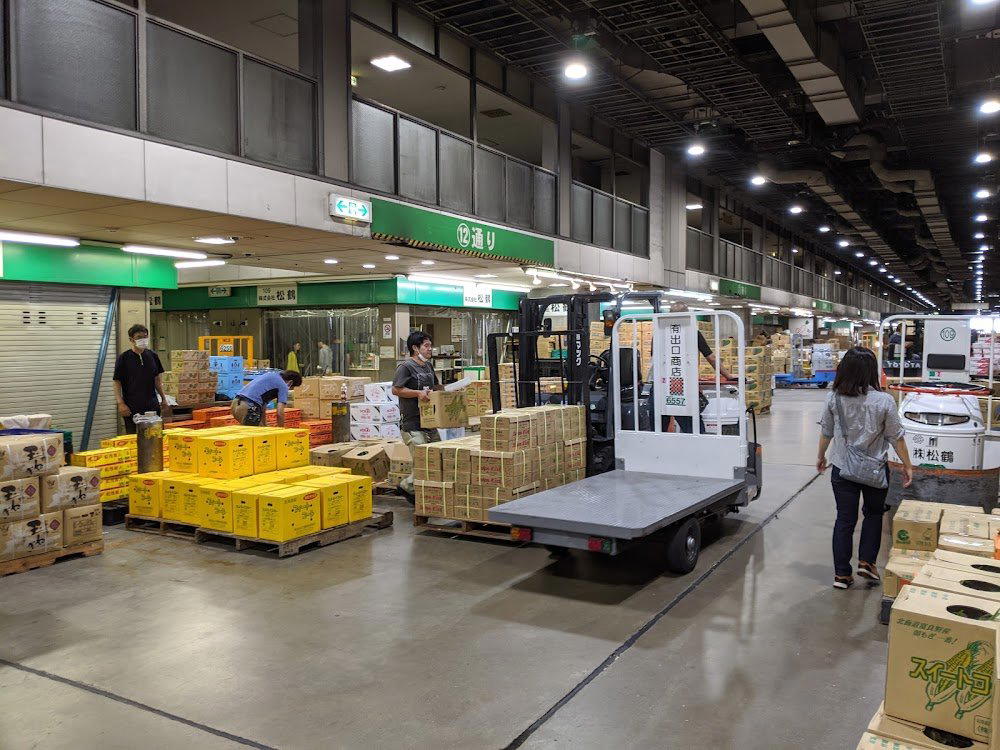
Where Osaka's Ingredient Economy Begins
Long before a bowl of dashi reaches the counter at a kaiseki restaurant, before the morning tuna auction concludes at a coastal fishery, and before a chef at any of Osaka's serious kitchens makes a single decision about the evening's menu, the city's wholesale market infrastructure has already done most of the work. Osaka Chuo Oroshi-uri Ichiba, located in Fukushima Ward at 1 Chome-1-86 Noda, sits inside that supply-side architecture, a municipal wholesale facility that functions as connective tissue between producers, distributors, and the professional kitchens that have made Osaka one of Japan's most consequential food cities.
The address itself is instructive. Fukushima Ward occupies the northwestern fringe of central Osaka, close to the Yodo River delta and historically tied to food distribution since the city's merchant era. Markets of this type are not designed for retail foot traffic or culinary tourism; they operate on commercial schedules, at commercial volumes, and within a professional ecosystem where relationships between buyer and supplier are long-standing and often generational. That specificity, the sense that a place exists entirely outside the visitor economy, gives wholesale markets a character that no designed dining experience can replicate.
The Sound and Scale of a Working Market
Japan's wholesale market system operates under the Act on Wholesale Markets, which structures how agricultural and marine products move from primary producers to secondary buyers. Within that framework, facilities like the Osaka Chuo Oroshi-uri Ichiba function as regulated intermediaries, with licensed wholesalers (oroshi-uri gyosha) and intermediate wholesalers (nakaoroshi gyosha) occupying distinct tiers. The result is an environment where commerce happens with a kind of procedural intensity: forklifts moving through refrigerated loading bays, crated vegetables stacked under fluorescent light, fish laid on crushed ice in rows that read almost like an audit of the season's catch.
Sensory experience in a working wholesale market is nothing like the curated atmosphere of a dining room. The smell arrives first, cold air, brine, the particular sweetness of fresh produce held at low temperature. Sound follows: the staccato of hand trucks on concrete, voices calling quantities across open floor space, the background hum of refrigeration units running continuously. These are not spaces designed to be pleasant in any conventional hospitality sense, but they carry an authenticity of function that more polished venues cannot manufacture. For context, major wholesale market facilities in Japan typically operate from the early morning hours through mid-morning, serving professional buyers on fixed commercial schedules. Visitors without trade credentials or prior arrangements should not assume open access.
Osaka's Food Identity, Upstream
Osaka's culinary reputation, the shorthand phrase kuidaore, meaning roughly "eat until you drop", is rooted in the city's historical role as a commercial and distribution hub. The same mercantile infrastructure that made Osaka a trading center for centuries also shaped its ingredient culture: access to diverse produce, competitive pricing driven by volume, and a professional cook class with direct relationships to suppliers. Wholesale markets are where that history remains most legible. The restaurants that define Osaka's serious dining tier, from kappo counters to the French-inflected kitchens that have drawn international attention, depend on a supply chain that runs through facilities operating exactly like this one.
That connection between market infrastructure and finished plate is what makes the wholesale market circuit worth understanding, even for readers whose primary interest is the dining room end of the equation. Venues like Ajikitcho Bunbuan and Calendrier draw from Osaka's ingredient supply network, as do the more experimental kitchens such as Aka to Shiro and Az. Further up the recognition scale, HAJIME in Osaka operates at a tier where ingredient provenance is a deliberate part of the culinary conversation. The wholesale market sits upstream of all of them.
The same dynamic plays out across Japan's serious dining cities. Harutaka in Tokyo and Gion Sasaki in Kyoto both operate within regional supply chains that parallel Osaka's in structure if not in specific product mix. Kansai's proximity to both mountain and coastal producers gives the region a particular range, fresh mountain vegetables alongside Pacific and Inland Sea seafood, that shapes what Osaka's kitchens can credibly put on a menu.
Seasonal Cadence and What It Means at the Source
Japan's ingredient seasons are not metaphorical. At the wholesale market level, the transition between seasons is a commercial event: new products arrive in volume, prices shift, and the range available to buyers changes week by week. Early spring brings bamboo shoots and brassicas; summer pushes towards eggplant, shiso, and the freshwater fish that feature in Osaka's traditional summer menus. Autumn's arrival means matsutake mushrooms and Pacific saury command premium position; winter consolidates around root vegetables, citrus from Wakayama Prefecture, and the cold-water fish that provide much of the region's winter table. A wholesale market at any of those seasonal inflection points reflects the calendar with a fidelity that a fixed restaurant menu cannot always match.
For travelers with an interest in how Japan's food system operates at ground level, the broader Osaka wholesale market network connects to comparable facilities in neighboring prefectures. akordu in Nara and Abon in Ashiya both draw from Kansai's agricultural hinterland, as do the more geographically distant references in Japan's serious dining circuit: Goh in Fukuoka, affetto akita in Akita, and Aji Arai in Oita each operate within regional supply chains that share structural similarities with Osaka's wholesale model, even as their specific ingredient profiles differ considerably.
Planning and Practical Orientation
The Osaka Chuo Oroshi-uri Ichiba is a commercial wholesale facility, not a public market or dining destination. Access is structured around trade relationships and professional credentials rather than general visitor interest. No retail operation, restaurant, booking mechanism, or published visitor hours are associated with this facility. Travelers seeking the texture of Osaka's food culture at street or restaurant level will find more navigable entry points through the city's neighborhood markets and dining districts; the wholesale infrastructure operates at a remove from that layer.
Those interested in the international parallels for wholesale market influence on fine dining supply chains might note that the dynamic is not uniquely Japanese. Le Bernardin in New York City and Lazy Bear in San Francisco both operate within supplier networks that share the same upstream logic, even if the specific market infrastructure differs. For further Osaka dining reference, Ajihei Sonezaki and Ajidocoro in Yubari District represent different points on the spectrum of how Japanese kitchens engage with their supply chains. Akakichi in Imabari offers a regional comparison for how Setouchi ingredient culture differs from Osaka's distribution-heavy model.
Peers Worth Knowing
Comparable venues nearby, for context on price, style, and recognition.
| Venue | Cuisine | Price | Notes |
|---|---|---|---|
| Osaka chuo oroshi-uri IchibaThis venue — the venue you are viewing | Japanese Seafood Market Dining | $$ | Not listed |
| ぷーれ | Charcoal-Grilled Yakitori | $$ | Fukushima |
| お好み・鉄板焼 堀川 | Okonomiyaki & Teppanyaki | $$ | Kita |
| 鮨 Shizuku | Casual Japanese with Seasonal Osaka Flavors | $$ | Chūō |
| 鮨 三心 | Kushikatsu | Not listed | Chūō |
| 月泉 | Japanese Izakaya | Not listed | Kita |
Continue exploring
More in Osaka
Restaurants in Osaka
Browse all →




Bars in Osaka
Browse all →

Hotels in Osaka
Browse all →




Wineries in Osaka
Browse all →
At a Glance
- Lively
- Casual Hangout
- Open Kitchen
- Local Sourcing
Current opening hours
- Monday
- 4 AM–12 PM
- Tuesday
- 4 AM–12 PM
- Wednesday
- Closed
- Thursday
- 4 AM–12 PM
- Friday
- 4 AM–12 PM
- Saturday
- 4 AM–12 PM
- Sunday
- Closed
Hours can change for holidays and private events. Last verified .
Lively atmosphere typical of a bustling wholesale market.