Naniwa kappo Kigawa sits in Dotonbori, one of Osaka's most concentrated dining corridors, representing the kappo tradition at a remove from the neighbourhood's louder casual registers. Kappo as a format positions the cook in full view, the meal unfolding course by course at the counter. For visitors working through Osaka's serious dining tier, Kigawa belongs on the shortlist alongside the city's other established counter restaurants.
Pearl is the En Primeur Club membership app — saves, bookings, and concierge access live there. Same editors, same standards.
- Address
- 1 Chome-7-7 Dotonbori, Chuo Ward, Osaka, 542-0071, Japan
- Phone
- +81 6 6211 3030
- Website
- site.locaop.jp
- Directions
- Get directions
 Saves & bookings on Pearl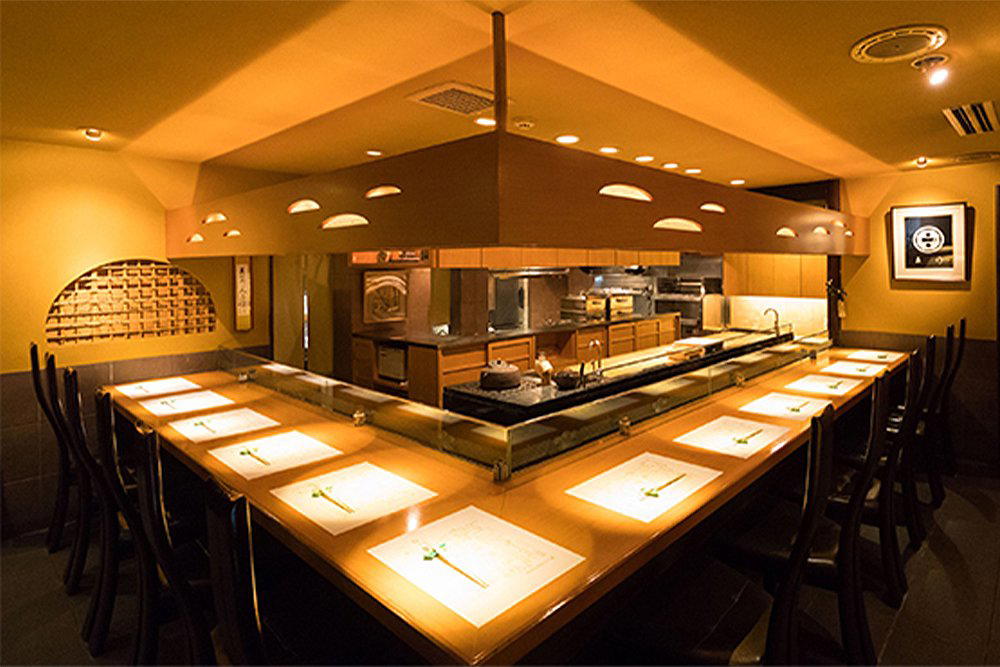
Dotonbori's Counter Beneath the Noise
Dotonbori is Osaka's most photographed kilometre: neon signage, mechanical crabs rotating above doorways, queues for takoyaki stands spilling onto the canal walkways. It is also the address of Naniwa kappo Kigawa, a restaurant operating in the kappo tradition. That contrast is not incidental. Osaka's kappo houses have historically embedded themselves in commercial neighbourhoods rather than retreating to quieter residential streets, and Kigawa's position in Chuo Ward at 1 Chome-7-7 Dotonbori follows that pattern. The format imposes its own rhythm.
What Kappo Actually Means in Osaka
Kappo, as a dining category, is worth locating precisely before you arrive. The word derives from the Japanese verbs for cutting and cooking, and the format is defined by an open counter where the cook works in direct sight of the guest, calibrating the meal's pace and composition in real time. It sits above kaiseki in informality, less ceremonially rigid in sequence, more responsive to the counter's mood on a given evening, but demands equal technical precision. Osaka has a particular claim on the format: the city's merchant-class culture historically favoured directness and craft over ceremony, and kappo as it developed here reflected those priorities.
Within Osaka's dining tier, kappo counters occupy a distinct position. HAJIME in Osaka represents the kaiseki end of Osaka's formal dining spectrum; kappo houses like Kigawa operate in a middle register that many visitors find more accessible without being any less serious about sourcing and technique. Comparable counter-format thinking appears across the Kansai region.
The Dotonbori Address and What It Implies
Chuo Ward contains most of central Osaka's serious restaurant density. The ward runs from Shinsaibashi through Namba and into the Dotonbori canal zone, and it holds everything from the city's oldest standing sushi counters to newer tasting-menu formats that have arrived in the past decade. For a kappo restaurant to hold its address in Dotonbori specifically rather than a quieter lane in Kitahama or the Higashi-Shinsaibashi corridor suggests either a long establishment predating the district's current tourist saturation, or a deliberate positioning that treats the neighbourhood's foot traffic as irrelevant to the experience inside.
Either reading points to the same practical conclusion: Kigawa does not depend on the street to do its work. The Dotonbori surroundings bring logistical convenience, the address sits within walking distance of Namba Station and Shinsaibashi, making it an easy anchor for a longer evening in central Osaka, but the restaurant's proposition is interior and counter-focused. Visitors who arrive expecting the district's usual energy will find a different tone inside. Kigawa sits apart from nearby grill formats and ramen counters by format and audience.
For context on where Kigawa fits within Osaka's broader serious-dining map, Ajihei Sonezaki, Ajikitcho Bunbuan, and Aka to Shiro each represent different points on the city's counter and tasting-menu spectrum. Az and Calendrier extend that picture further.
Planning a Visit
Kappo counters in Osaka's established tier typically require advance booking, and the more condensed the seating, the further ahead reservations are necessary. Visitors planning a Kansai trip that takes in both Osaka and Kyoto would do well to confirm Kigawa's availability before booking surrounding travel, rather than treating the restaurant as a walk-in option after a day of sightseeing. The Dotonbori address is practical for an evening that continues further into Namba or Shinsaibashi afterward, but the meal itself warrants the kind of unhurried time allocation that kappo's course-by-course pacing demands.
The Essentials
Comparable venues nearby, for context on price, style, and recognition.
| Venue | Cuisine | Price |
|---|---|---|
| Naniwa kappo KigawaThis venue — the venue you are viewing | Not listed | $$$$ |
| Kobe Beef WANOMIYA Dotonbori Main Store | Chūō, Teppanyaki Kobe Beef | $$$$ |
| 靱本町がく | Nishi, Michelin-Starred Seasonal Kaiseki | $$$$ |
| Koryu Keishin | Kita, Naniwa Kappo | $$$$ |
| ç©ºå¿ ä¼½èå | Kita, Seasonal Kaiseki Omakase | $$$$ |
| Noguchi | Kita, Modern Japanese Omakase | $$$$ |
Continue exploring
More in Osaka
Restaurants in Osaka
Browse all →




Bars in Osaka
Browse all →


Hotels in Osaka
Browse all →




Wineries in Osaka
Browse all →
At a Glance
- Classic
- Elegant
- Intimate
- Sophisticated
- Special Occasion
- Date Night
- Business Dinner
- Chefs Counter
- Open Kitchen
- Historic Building
- Sake Program
Current opening hours
- Monday
- Closed
- Tuesday
- 12–2 PM, 5–10 PM
- Wednesday
- 5–10 PM
- Thursday
- 5–10 PM
- Friday
- 12–2 PM, 5–10 PM
- Saturday
- 12–2 PM, 5–10 PM
- Sunday
- 12–2 PM, 5–10 PM
Hours can change for holidays and private events. Last verified .
Warm and inviting with counter seating where chefs prepare dishes in front of guests, reflecting Japanese cultural heritage.