Old Ebbitt Grill


One of Washington D.C.'s most enduring dining institutions, Old Ebbitt Grill has occupied the block west of the White House since the nineteenth century, serving a rotating crowd of lobbyists, journalists, and tourists across its mahogany-panelled dining rooms. Its oyster program and American brasserie format have made it a reference point for understanding how the capital eats when it isn't performing for a Michelin inspector.
Pearl is the En Primeur Club membership app — saves, bookings, and concierge access live there. Same editors, same standards.
- Address
- 675 15th St NW, Washington, DC 20005
- Phone
- +1 202 347 4800
- Website
- ebbitt.com
- Directions
- Get directions
 Saves & bookings on Pearl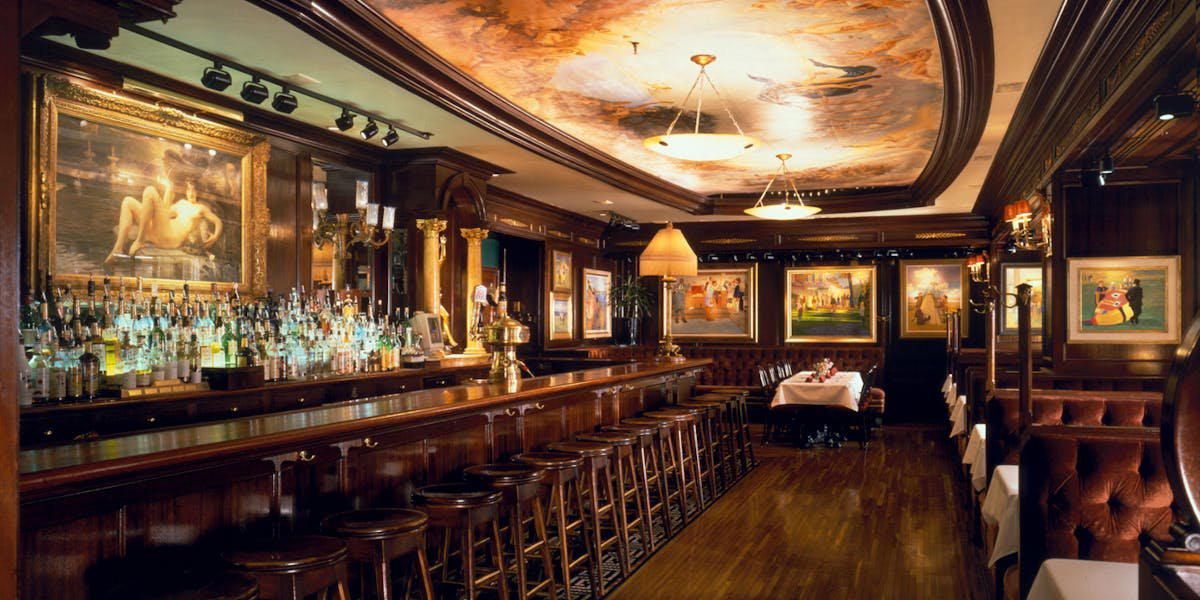
Where the Capital Goes to Eat Without an Agenda
There is a category of American restaurant that precedes the modern dining industry's obsession with tasting menus and sourcing narratives. These are the places that were already old when the food media arrived, that operate at a scale and pace that makes the word 'concept' feel irrelevant. Old Ebbitt Grill is a classic American steakhouse and raw bar in Washington, D.C. at 675 15th Street NW. A block from the White House, the room has been absorbing political Washington for generations, and it does so without the performative neutrality of a hotel bar or the aspirational energy of a newer flagship. This is a working restaurant in a city where working restaurants have historically been undervalued in favour of power dining rooms.
The physical environment signals its own argument before a menu arrives. Dark wood, brass fittings, Victorian taxidermy, tile floors worn to a particular kind of patina, the interior grammar is that of the American saloon-turned-brasserie, a format that New Orleans has long maintained with places like Emeril's in New Orleans and that has found fewer durable practitioners in the Northeast corridor. Old Ebbitt is one of the more sustained examples of the type in a city where the dining scene has lurched repeatedly between power-lunch formalism and tasting-menu modernism.
The Oyster Program as a Lens on American Technique
The editorial angle that makes Old Ebbitt worth reading seriously is the intersection of place-specific product and direct classical execution. The raw bar and oyster program represent this most clearly. American oyster culture, particularly on the East Coast, has undergone a significant refinement over the past two decades: aquaculture operations in the Chesapeake Bay, the Virginia coast, and the mid-Atlantic have produced a range of well-differentiated regional varieties, each shaped by the salinity, temperature, and mineral composition of its growing waters. A restaurant positioned geographically and historically the way Old Ebbitt is should, in theory, be a natural showcase for that regional product.
Oyster bar format itself is worth contextualizing. Across American fine dining, raw shellfish programs have split into two schools: the technically exacting, terroir-forward approach that places like Providence in Los Angeles or Le Bernardin in New York City apply to seafood at every level of the menu, and the volume-driven brasserie model where throughput and consistency matter more than provenance storytelling. Old Ebbitt operates at the latter end of that spectrum, but the volume itself is a kind of credential: maintaining quality across hundreds of covers a day demands procurement discipline that slower, smaller operations never have to develop.
This is a useful contrast to draw against Washington's newer generation of technically ambitious restaurants. Jônt applies modern French structure at the tasting-menu level; minibar works in the register of molecular invention; Causa frames Peruvian technique through a high-concept D.C. lens; and Oyster Oyster has built a sustainable, plant-forward identity. Albi has pushed Middle Eastern cooking into serious critical conversation. None of these operate at Old Ebbitt's scale, and none of them need to. They occupy different positions in the city's dining ecosystem, and understanding Old Ebbitt requires accepting that mass-market institutional cooking is its own discipline.
Context Within the American Brasserie Tradition
The brasserie as a format has had an uneven life in American cities. New York's version evolved through French-influenced rooms that traded on European formalism. Chicago developed its own civic dining culture, with places like Alinea in Chicago eventually pulling the city toward avant-garde territory. California's version, represented now by operations as different as Lazy Bear in San Francisco, The French Laundry in Napa, Single Thread Farm in Healdsburg, and Addison in San Diego, tends toward product-obsessed precision. Blue Hill at Stone Barns in Tarrytown has defined the American farm-to-table high-end. What these all share is a legibility of concept: you understand the argument the kitchen is making.
Old Ebbitt's argument is older and less legible by modern standards. It predates the concept era, which is precisely why it has lasted. Washington's other long-running culinary institution at the serious end of the market, The Inn at Little Washington, took a different route: singular culinary vision accumulated over decades, recognition accumulating to match. Old Ebbitt went wide rather than deep. That is a strategic choice with real consequences for what a visit delivers.
Who This Restaurant Is Actually For
The honest answer, which few restaurant profiles admit, is that Old Ebbitt Grill serves several different functions simultaneously. For out-of-town visitors, it offers a readable, non-intimidating entry point into D.C. dining with proximity to the National Mall corridor. For working Washingtonians, particularly those in the government and media industries that define the neighbourhood's character, it functions as a reliable, unthreatening backdrop for conversations that don't benefit from a 22-course omakase format. For serious eaters exploring the city's dining range, it sits at one pole of a spectrum that extends through the middle tier, represented by places like Oyster Oyster, up to the technically ambitious rooms concentrated in Shaw, Navy Yard, and around 14th Street.
What it is not is a destination for international dining tourism of the kind that brings visitors to Atomix in New York City or 8½ Otto e Mezzo Bombana in Hong Kong. That framing would be a misread. Old Ebbitt is Washington as a civic institution rather than Washington as a fine dining destination. Understanding that distinction makes it easier to visit on its own terms, which are the terms worth visiting on.
Know Before You Go
- Address: 675 15th St NW, Washington, DC 20005
- Location: One block west of the White House; a short walk from Metro Center and McPherson Square stations
- Format: Full-service American brasserie with a dedicated raw bar and oyster program
- Reservations: Accepted and advisable, particularly for evenings and weekend brunch service; walk-ins at the bar are typically available
- Crowd profile: Mixed: government workers, tourists, journalists, lobbyists; broad age range and dress code flexibility
- Leading entry point: The raw bar for oysters and a direct American seafood meal; or the main dining room for a fuller brasserie experience
Cuisine and Awards Snapshot
Comparable venues nearby, for context on price, style, and recognition.
| Venue | Cuisine | Price | Notes |
|---|---|---|---|
| Old Ebbitt GrillThis venue — the venue you are viewing | Classic American Steakhouse & Raw Bar | $$ | Not listed |
| Art and Soul | Modern Southern American | $$ | East End |
| Station 4 | Modern American Bistro with Mediterranean Influences | $$ | Southwest Waterfront |
| GATSBY | Upscale American Diner | $$ | Near Southeast |
| Kramers | Modern American with French influences | $$ | Dupont Circle |
| Chef Geoff's West End | Contemporary American | $$ | West End |
Recognition history
Dated appearances from independent guides and award organizations, with the underlying list record or original source where available.
RAMMYS Favorite Gathering Place of the Year*
RAMMYS · RAMMYS 2026 Winners - Favorite Gathering Place of the Year*
Wine Spectator Award of Excellence
Wine Spectator
Continue exploring
More in Washington DC
Restaurants in Washington DC
Browse all →
Bars in Washington DC
Browse all →
Hotels in Washington DC
Browse all →
At a Glance
- Classic
- Well Known
- Historic
- Elegant
- Business Dinner
- Special Occasion
- Brunch
- Historic Building
- Extensive Wine List
- Craft Cocktails
Current opening hours
- Monday
- 8 AM–2 AM
- Tuesday
- 8 AM–2 AM
- Wednesday
- 8 AM–2 AM
- Thursday
- 8 AM–2 AM
- Friday
- 8 AM–2 AM
- Saturday
- 9 AM–2 AM
- Sunday
- 9 AM–2 AM
Hours can change for holidays and private events. Last verified .
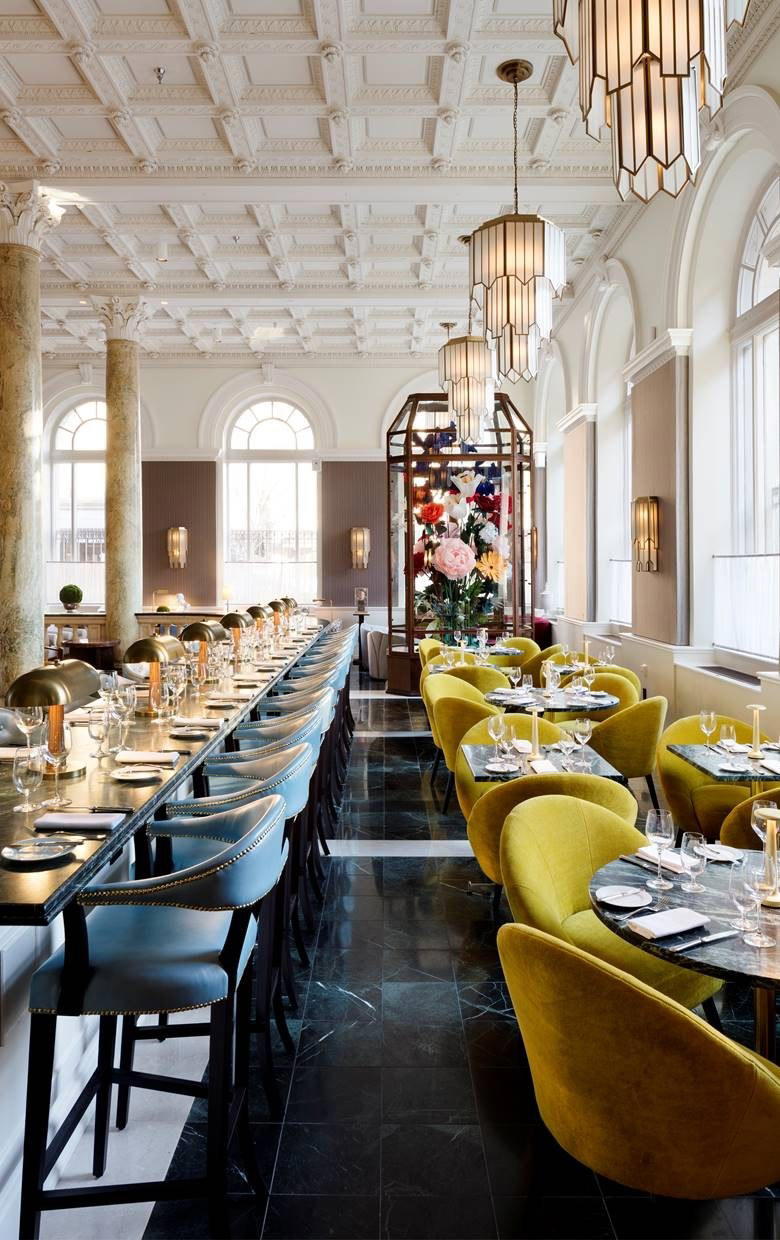
Victorian-era atmosphere with antique chandeliers, patriotic murals, and tasteful historic Washington paintings creating a timeless, elegant dining experience.