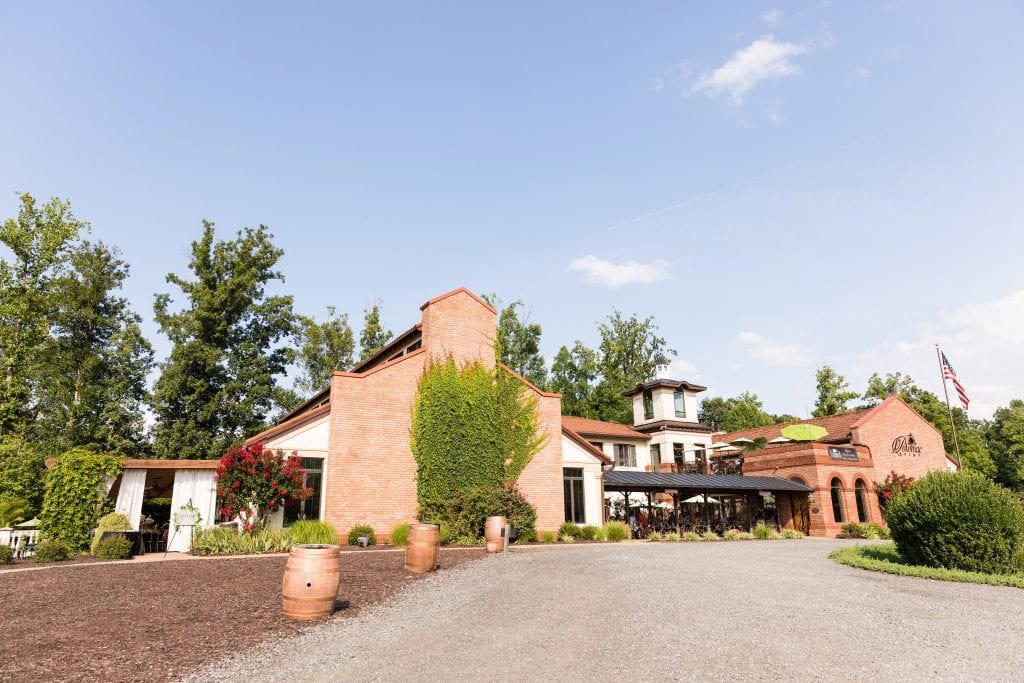
Kramers
Our verdict
Kramers has anchored the Dupont Circle dining scene for decades, operating as one of Washington D.C.'s most recognizable all-day neighborhood institutions. Located at 1517 Connecticut Ave NW, the address sits at the intersection of political Washington and everyday city life, drawing a cross-section of residents, staffers, and visitors who treat it as a reliable constant rather than an occasion.

Pearl is the En Primeur Club membership app, where members save venues, book tables and use the concierge.

The menu
What to order
- Crispy Brussels Sprouts
- Kramers Goober Pie
- SoHo Omelet
Dupont Circle and the Politics of the Neighborhood Table
Connecticut Avenue through Dupont Circle has long functioned as one of Washington D.C.'s more democratic dining corridors, where think-tank staffers, foreign service workers, and longtime neighborhood residents share the same sidewalk tables. The stretch between Q Street and S Street supports a range of dining registers, from counter-service lunch spots to white-tablecloth dinners, but the addresses that endure tend to be the ones that resist being categorized too narrowly. Kramers, at 1517 Connecticut Ave NW, belongs to that category of institution: a place that has outlasted trends by not being entirely captured by any of them.
Dupont Circle's restaurant culture is distinct from the newer, more programmatic dining clusters that have emerged in Shaw, Navy Yard, and the West End over the past decade. Where those neighborhoods attract concepts, tightly edited, brand-forward, built for opening-night press, Dupont operates on a slower cycle. The addresses that hold here tend to hold for a long time. That context matters when assessing Kramers, because longevity in this neighborhood is not automatic. It is earned against a backdrop of significant churn.
What the Address Tells You
1517 Connecticut Ave NW places Kramers inside the denser, pedestrian-oriented section of Dupont, within walking distance of the Circle itself and the Red Line station that feeds the neighborhood from both directions. The location is not a destination address in the way that a standalone dining room in a more removed part of the city might be. It is an address you pass, return to, and rely on. That distinction shapes how the room functions and who fills it.
Washington D.C.'s dining scene has developed considerably over the past fifteen years, with serious investment in tasting-menu formats, ingredient-forward American cooking, and internationally rooted concepts. Venues like Jônt and minibar represent the city's ambition at the higher tasting-menu tier, while places like Oyster Oyster, Albi, and Causa have helped establish a mid-to-upper tier of concept-driven cooking with clear culinary identities. Kramers sits outside that conversation, operating in a register that prioritizes accessibility and frequency of visit over singular occasion dining.
The All-Day Format as Cultural Artifact
Washington D.C. has historically supported a category of dining room that functions across multiple parts of the day without compartmentalizing itself into breakfast venue, lunch destination, and dinner concept. That format, the true all-day establishment, is harder to sustain than it looks. The economics require consistent foot traffic at times when most restaurant kitchens are dark, and the physical space has to tolerate a morning newspaper reader, a midday working lunch, and an evening table in the same seats without feeling wrong for any of them.
Across American cities, this format has largely been absorbed either by hotel dining rooms, which have the captive audience to make it viable, or by coffee-shop hybrids that cap their ambition at avocado toast. The stand-alone neighborhood all-day restaurant that extends into a full dinner program is rarer than it once was. Kramers has historically operated within that format, which situates it in an interesting position relative to the city's current dining map. For comparison, consider how the all-day tradition has shaped landmark addresses in other cities: Emeril's in New Orleans built an enduring address through consistent accessibility, while Lazy Bear in San Francisco went the opposite direction toward fixed-format exclusivity. Both approaches work; they just attract fundamentally different relationships with a guest.
Kramers in Washington's Competitive Context
The D.C. restaurant ecosystem currently rewards specificity. The addresses drawing the most sustained critical attention tend to have tight concepts, clear sourcing philosophies, and defined price points that signal intent. Oyster Oyster works from a sustainable-vegetable framework. Causa commits to Peruvian structure. Albi draws on Eastern Mediterranean traditions. These are restaurants with legible identities that can be communicated in a sentence.
Kramers operates differently, as a generalist address in a specialist era. That is neither a criticism nor a simple compliment; it is a description of a particular function within a city's dining ecosystem. Every city needs some addresses that do not require a reason to visit beyond proximity and habit. The institutions that survive as generalists tend to do so through execution quality and room culture rather than through menu innovation. Where D.C.'s higher-end addresses compete with peers nationally, and places like The Inn at Little Washington operate in a nationally recognized tier alongside The French Laundry, Providence, Smyth, Blue Hill at Stone Barns, Addison, Single Thread Farm, Atomix, and Atelier Moessmer Norbert Niederkofler, Kramers competes on a different axis entirely: repeat visits, neighborhood utility, and the social function of a room that feels neither precious nor disposable.
Planning a Visit
Kramers sits on Connecticut Avenue in Dupont Circle, walkable from the Dupont Circle Metro station on the Red Line. The address is accessible without a car and well-positioned for visits before or after evening events in the neighborhood. For a broader orientation to the city's dining scene, the EP Club Washington D.C. restaurants guide maps the full range of the current market, from the neighborhood generalist tier through to the city's most formally structured tasting-menu programs.
Frequently asked questions
What's the address for Kramers?
Kramers is located at 1517 Connecticut Ave NW, Washington, DC 20036, Washington, D.C.
Does Kramers in Washington D.C. combine a bookstore and restaurant?
Kramers has historically operated as one of Washington D.C.'s better-known bookstore-café hybrids on Connecticut Avenue NW, a format that made it a Dupont Circle fixture long before the current wave of experiential retail. The combination of browsable shelves and sit-down dining gives the address a function that differs from a conventional restaurant.
What dish is Kramers famous for?
What the address at 1517 Connecticut Ave NW is known for is an all-day format that spans breakfast through late-night eating, which shapes the menu's range rather than centering it on one item. Visiting with an open brief works better than arriving chasing a particular plate.
What's the best way to book Kramers?
Given Kramers' position on a pedestrian-heavy stretch of Connecticut Avenue near the Dupont Circle Metro, off-peak timing on weekday visits tends to be the practical approach for those without advance arrangements.
What's the standout thing about Kramers?
The all-day format at 1517 Connecticut Ave NW is what separates Kramers from much of D.C.'s current restaurant scene, which increasingly rewards tight, single-occasion concepts. Kramers has operated across multiple dayparts in a neighbourhood, Dupont Circle, that attracts a genuinely mixed crowd of residents, policy workers, and visitors. That consistency of use across the day is harder to sustain than it looks.
How does Kramers handle allergies?
Standard practice for any Washington D.C. dining room is to flag dietary requirements at the time of booking or arrival; for specific concerns, contacting Kramers directly before visiting is the most reliable course.
Fast Comparison
| Venue | Cuisine | Price | Awards | Notes |
|---|---|---|---|---|
| KramersThis venue (the venue you are viewing) | Modern American with French influences | $20–30 | Not listed | Not listed |
| Oyster Oyster | Modern Vegetable-Focused Tasting Menu | Not listed | 1 Michelin Star · James Beard Award Outstanding Chef #1 | New American, Vegetarian, Vegetarian (Sustainable) |
| Albi | Modern Levantine Fine Dining | $300–500 | 1 Michelin Star · World's 50 Best #6 | United States, Middle Eastern |
| Causa | Modern Peruvian Fine Dining | $150–200 | 1 Michelin Star · James Beard Award Best Chef: Mid-Atlantic | Peruvian |
| Rooster & Owl | Modern Global Fusion Fine Dining | $50–100 | 1 Michelin Star · Washingtonian 100 Very Best Restaurants #65 | Contemporary |
| Rose’s Luxury | Modern American Fine Dining | $200–300 | 1 Michelin Star · James Beard Award Best Chefs | New American, Contemporary |