Nishimuramen

Michelin Bib Gourmand
Our verdict
Nishimuramen sits on the fourth floor of a Donggyo-ro building in Mapo-gu, serving ramen that has earned consecutive Michelin Bib Gourmand recognition in 2024 and 2025. Chef Terence Zubieta runs one of the few ramen counters in Seoul operating at this recognition tier, positioning the restaurant squarely within the city's growing appetite for Japanese noodle formats executed with serious technique. The price point remains low relative to the award level.

Pearl is the En Primeur Club membership app, where members save venues, book tables and use the concierge.
Donggyo-ro and the Ramen Counter Above the Street
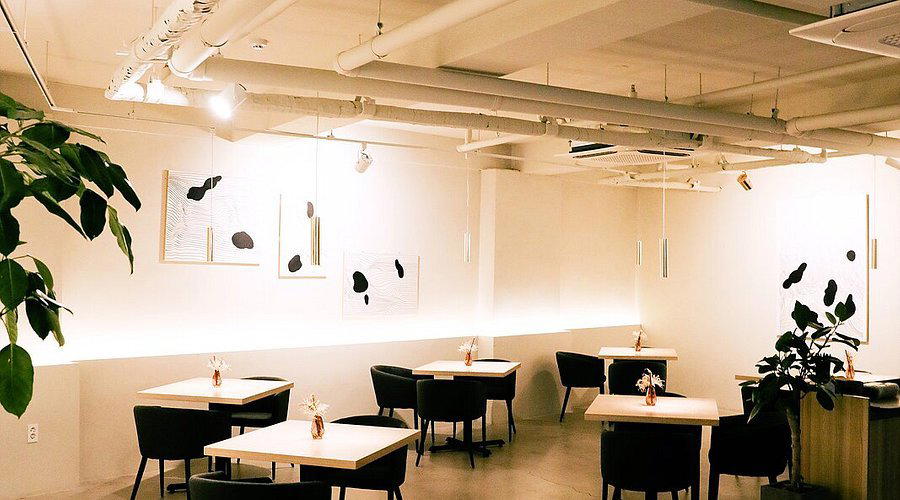
Mapo-gu's Donggyo-ro corridor moves differently from the high-concept restaurant clusters of Gangnam or the tasting-menu density of central Seoul. This stretch near Hongdae functions as a neighbourhood eating district first, a destination second, the kind of block where the fourth floor of a mixed-use building can quietly house something worth seeking. Nishimuramen occupies that fourth-floor position on Donggyo-ro 265, and the climb up to it is itself a small act of local knowledge. There is no ground-level façade working to pull you in, which means the room mostly fills with people who came specifically for it.
That spatial logic matters. Ramen in Seoul exists across a wide range of formats, from fast-casual Japanese chain outposts to Korean-inflected versions built around domestic broths and local toppings. The counters that have earned sustained critical attention tend to operate with a similar low-profile intensity: small rooms, focused menus, prices that stay accessible even after recognition arrives. Nishimuramen fits that pattern, and the Donggyo-ro address reinforces it. This is not a restaurant designed around being found by visitors. It is a neighbourhood table that visitors have since found.
Consecutive Recognition at a Single Price Tier
Michelin's Bib Gourmand designation is awarded to restaurants offering food of sufficient quality to merit attention at a price point the guide considers accessible, currently framed as a meal under a threshold that sits well below the starred restaurant bracket. For a ramen counter in Seoul to receive that designation in both 2024 and 2025 signals consistency rather than a single strong year. The repeat listing is the more meaningful of the two: it confirms that whatever the kitchen was doing during the first assessment has not slipped.
Ramen recognition at this level in Seoul is relatively concentrated. Across the city, the dominant Michelin attention flows toward Korean-rooted formats: places like Gaon and Kwon Sook Soo in the higher tiers, or technique-led Korean dining like Mingles. Nishimuramen sits in a different lane: the international-format counter operating at the accessible end of the recognition spectrum, where value relative to quality is the primary editorial frame.
Ramen has spread far beyond Japan, with serious practitioners around the world. That shift is well-documented in cities from Chicago, where Akahoshi Ramen has built a serious following, to Portland, where Afuri Ramen operates as an extension of the Tokyo original. In Seoul, the format has absorbed Korean culinary instincts in some kitchens while remaining closer to Japanese templates in others. Nishimuramen's place on that spectrum remains open to interpretation.
The ₩ Price Tier and What It Implies
Across Seoul's restaurant spectrum, the distance between a ₩ ramen counter and a ₩₩₩₩ tasting menu is significant, not just in spend, but in format, duration, and expectation. The Bib Gourmand exists precisely to flag the former when it reaches the quality threshold usually associated with the latter. Spending at Nishimuramen likely lands well under what a comparable evening at, say, alla prima or Damtaek would cost, which is part of why the designation carries weight.
For the practical traveller in Seoul, this matters in terms of planning. The city's dining economy at the ₩ tier moves at a different pace: quicker turns, less ceremony, no obligation to book weeks in advance for every meal. Check current booking options before visiting.
Where Nishimuramen Sits in the Broader Seoul Ramen Conversation
Ramen's position in Seoul is different from its position in Tokyo, where the format has centuries of local adaptation behind it. In Seoul, ramen arrived via a different route, absorbed into Korean food culture through instant noodle formats before specialty ramen counters began to appear in earnest. The last decade has seen a steady expansion of the serious ramen counter category in the city, with kitchens importing Japanese technique and adapting it at varying degrees. Internationally, the format's reach is visible in Tokyo originals with overseas branches like Afuri in Tokyo, which demonstrate how transferable the category has become.
Within South Korea more broadly, the dining conversation reaches beyond Seoul: Mori in Busan and temple food experiences like Baegyangsa Temple in Jangseong-gun point to the range of formats the Korean food scene encompasses. Against that wider backdrop, Nishimuramen represents the city's capacity to support and recognise a focused, single-format counter without requiring it to expand, diversify, or perform. The fourth-floor Donggyo-ro room doing ramen well, twice over in Michelin's accounting, is a specific kind of Seoul story.
For a fuller view of what else the city offers, the EP Club guides to Seoul restaurants, bars, hotels, wineries, and experiences map the full range. Elsewhere in Mapo-gu and the surrounding Hongdae area, the neighbourhood's eating character extends well beyond ramen, though few counters in the district carry the same consecutive recognition this one does. You might also consider The Flying Hog in Seogwipo if your Korea itinerary extends to Jeju.
Know Before You Go
- Address: Donggyo-ro 265, 4F, Mapo-gu, Seoul, South Korea
- Cuisine: Ramen
- Price tier: ₩ (accessible; Michelin Bib Gourmand threshold)
- Awards: Michelin Bib Gourmand 2024 and 2025
- Chef: Terence Zubieta
- Booking: Check current booking options before visiting
- Hours: Check current hours before visiting
Frequently asked questions
How do I find Nishimuramen?
Nishimuramen is located at South Korea, Seoul, Mapo-gu, Donggyo-ro, 265 4층.
What's Nishimuramen known for in terms of accolades?
Nishimuramen has received recognition including: Michelin Bib Gourmand (2025); Michelin Bib Gourmand (2024).
How would you describe the cuisine at Nishimuramen?
Nishimuramen is a ramen restaurant.
What's the price range at Nishimuramen?
Pricing at Nishimuramen is listed as ₩.
Who is the chef connected to Nishimuramen?
The chef associated with Nishimuramen is Terence Zubieta.
The Minimal Set
A small comparison set for context.
| Venue | Cuisine | Price | Awards | Notes |
|---|---|---|---|---|
| NishimuramenThis venue (the venue you are viewing) | Japanese-French Fusion Ramen | $10–20 | Michelin Bib Gourmand | Not listed |
| 7th Door | Modern Korean Fermentation Fine Dining | $100–150 | 1 Michelin Star · World's 50 Best #49 | Korean, Contemporary |
| Solbam | Contemporary Neo-Classical Korean | $200–300 | 1 Michelin Star · World's 50 Best #55 | Contemporary |
| Onjium | Modern Korean Royal Court Cuisine | Not listed | 1 Michelin Star · World's 50 Best #14 | Korean |
| L'Amitié | Classic French Fine Dining | $100–150 | 1 Michelin Star · La Liste Top Restaurants | French |
| Zero Complex | Modern French Neo-Bistro | $100–150 | 1 Michelin Star · La Liste Top Restaurants | Korean-French, Innovative |
Recognition history
Dated appearances from independent guides and award organizations, with the underlying list record or original source where available.
Michelin Bib Gourmand
Michelin
Full recognition history (2 entries)
Michelin Bib Gourmand
Michelin