Our verdict
On a quiet residential street in Đống Đa, Bún chả Nem rán B2 Vĩnh Hồ draws Hanoians back repeatedly for the city's signature pairing: charcoal-grilled pork bún chả served alongside crisp nem rán. This is the kind of address that locals choose for low-key milestone lunches and family gatherings rather than formal occasions, where the food does the celebrating and the bill stays modest.

Pearl is the En Primeur Club membership app — saves, bookings, and concierge access live there. Same editors, same standards.
- Address
- B2 P. Vĩnh Hồ, Thịnh Quang, Đống Đa, Hà Nội, Vietnam
- Phone
- +84 24 3563 4576
- Hours
- Daily 9 AM–3 PM
- Directions
- Get directions
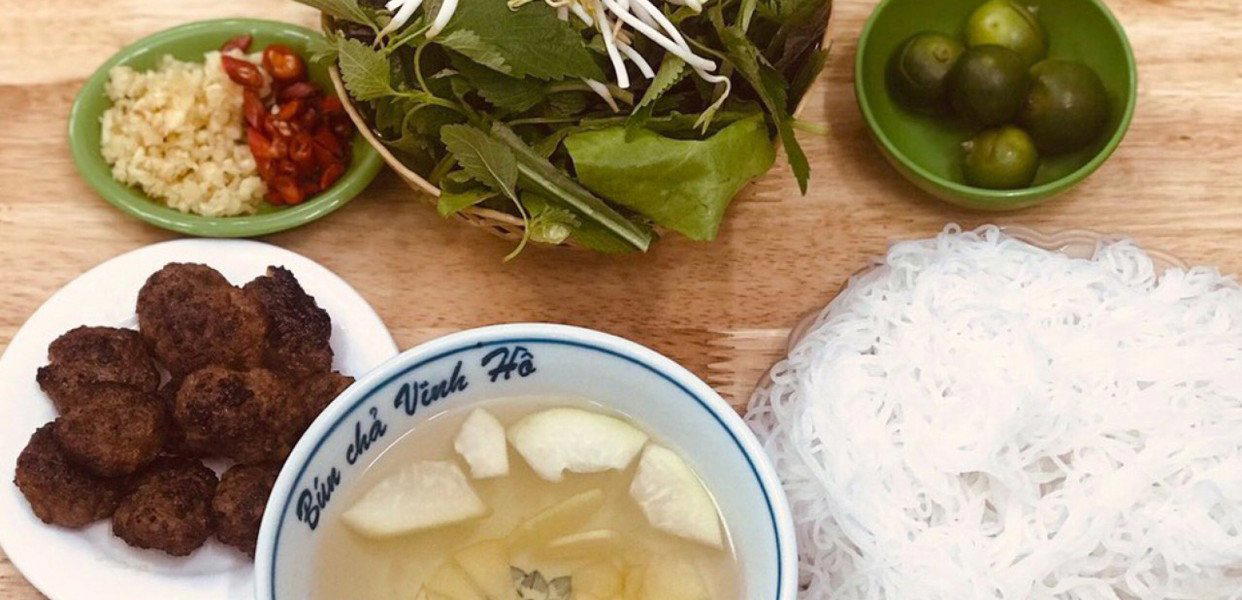
The menu
What to order
- Bún chả
- Nem rán
Where Hanoi Marks the Everyday Occasion
There is a particular kind of celebration that Hanoi does better than almost any other city in Southeast Asia: the lunch that marks something without requiring a reservation weeks in advance or a dress code. Birthdays with colleagues, a child's exam result, a grandmother's visit from the provinces. These meals happen in places like the Vĩnh Hồ neighbourhood of Đống Đa, at addresses that the city's residents have been returning to across generations. Bún chả Nem rán B2 Vĩnh Hồ sits inside that tradition, on a residential stretch of P. Vĩnh Hồ where the streetside rhythm of motorbikes, plastic stools, and coal smoke signals that you are in the practical, lived-in part of Hanoi rather than the tourist corridor around Hoàn Kiếm.
The format here is one of the most codified in Vietnamese cooking. Bún chả, Hanoi's own dish, requires charcoal-grilled pork patties and sliced belly served in a shallow bowl of lightly sweetened dipping broth alongside a mound of cool rice vermicelli and a generous plate of fresh herbs. Nem rán, the fried spring rolls that complete the pairing, add crunch and fat to what is already a carefully balanced meal. The combination is not an accident of menu engineering but a long-established local convention. In a city where food pairings carry the weight of tradition, ordering bún chả without nem rán at an address like this would read as mildly eccentric. For visitors more accustomed to the formal tasting structures of places like Gia (Vietnamese Contemporary) or the theatre of Hibana by Koki (Teppanyaki), the directness of this format is itself part of the experience.
Đống Đa and the Residential Dining Tradition
Đống Đa is one of Hanoi's most densely populated districts, historically residential and commercially active in ways that the Old Quarter has since outgrown. The food culture here is shaped by working families and local office workers rather than tourism infrastructure, which means the premium placed on a dish is its accuracy to tradition rather than its presentation for outside eyes. Addresses like this one on P. Vĩnh Hồ operate within a competitive local market where returning customers are the only metric that matters. The contrast with the more polished Vietnamese addresses in Hanoi's hospitality tier, such as 1946 Cua Bac (Vietnamese) or Tầm Vị (Vietnamese), is not one of quality but of register. Đống Đa's street-level specialists and 19 P. Ngũ Xã represent a different layer of Hanoi's food culture, one operating entirely on local trust rather than critical recognition.
The Thịnh Quang ward, where Vĩnh Hồ sits, has retained much of this character even as surrounding areas of Hanoi have shifted toward the commercial mid-market. Walking to the address from Đống Đa's main arteries takes you through the kind of street-level urban texture that remains genuinely residential: schools, morning markets, and the particular noise profile of a neighbourhood that is not managing itself for visitors. If you are coming from the Old Quarter or West Lake, allow time for the transit; this is not a district where rideshare apps always deliver precise drop-off locations on the first attempt.
Occasion Dining at the Local Register
The concept of occasion dining in Vietnam operates on a spectrum considerably wider than it does in most Western food cultures. At the formal end, milestone celebrations move to private rooms in hotel restaurants or to addresses like La Maison 1888 in Da Nang. At the other end, the everyday occasion, the meal that marks rather than stages, belongs to addresses that carry neighbourhood authority. The kind of trust that comes from a family returning to the same bún chả counter for a decade is a different category of endorsement than a Michelin star or a placement on a ranked list. It is, arguably, harder to sustain, because it relies entirely on consistency rather than novelty.
Bún chả as a dish has its own occasion history in Hanoi. The combination of grilled pork and vermicelli is eaten across the week but carries particular weight as a lunch choice for family gatherings and informal celebrations. The nem rán alongside, with their rice paper casing and pork and glass noodle filling, function as the meal's more festive element, the part that children and grandparents both reach for first. At modest price points common to this tier of Hanoi dining, a full table order for a group remains well within reach of any budget, which is part of why these occasions so often end up here rather than at the higher-tariff addresses. For context on Vietnam's wider dining range, the gap between this kind of address and, say, Akuna in Ho Chi Minh City or Saffron in Hue City represents not just price but an entirely different set of expectations about what a meal is for.
For travellers building a broader picture of Vietnamese regional cooking, the central Vietnamese tradition covered by places like Cargo Club Cafe & Restaurant in Hoi An or the coastal-focused cooking at Bau Troi Do in Son Tra provides useful counterpoints to the northern street-food register that Vĩnh Hồ represents. Hanoi's bún chả tradition is specifically northern, tied to the city's climate and its historical cooking fuel of charcoal rather than gas, and it does not translate cleanly to the south.
Planning Your Visit
The practical approach to an address like this is self-directed. No website or central booking system is recorded for B2 Vĩnh Hồ, and the format is walk-in, as is standard for this category of Hanoi street dining. Lunch hours in Hanoi's residential districts tend to concentrate sharply around midday, with the busiest window running from approximately 11:30 to 13:30. Arriving at the edges of that window typically means shorter waits and more consistent service. This is not an address where the timing of your visit around a reservation shapes the experience; the meal itself moves quickly, and tables turn at the pace of the dish rather than a set dining format. For visitors who want formal booking structures or multi-course pacing, the full Hanoi restaurants guide covers the range of options across price tiers and formats, including the high-end tasting addresses and the mid-market Vietnamese dining rooms that sit between the two poles.
Further afield in the region, those extending trips beyond Hanoi will find useful reference points at Le Pont Club in Hai Phong, Phuong Nhung Restaurant in Cat Hai, Duyên Anh Restaurant in Phu Vang, and Nhà hàng Madame Lân in Hai Chau. The contrast between those regional addresses and a neighbourhood counter in Đống Đa maps the full breadth of Vietnamese dining, from the community-rooted to the formally curated. For an international frame of reference, the distance from this kind of address to a commission-driven fine dining room such as Le Bernardin in New York City or Lazy Bear in San Francisco is not simply one of price. It is a difference in what food is being asked to do, and for whom.
Questions Visitors Ask
- What should I eat at Bún chả Nem rán B2 Vĩnh Hồ?
- The address is built around two dishes: bún chả, the Hanoi standard of grilled pork served in broth with rice vermicelli and fresh herbs, and nem rán, the crisp fried spring rolls that conventionally accompany it. In the northern Vietnamese tradition, these two are treated as a set rather than separate choices. Order both, and expect the herbs on the side to be eaten actively throughout the meal rather than treated as garnish.
- Should I book Bún chả Nem rán B2 Vĩnh Hồ in advance?
- No advance booking system is recorded for this address. Like most of Hanoi's street-level specialists, the format is walk-in. If you are visiting during the peak midday window common to residential Đống Đa, arriving slightly before or after the 12:00 to 13:00 rush will generally mean a smoother experience. Hanoi's higher-tariff addresses, for which booking windows do matter, are covered in the full Hanoi restaurants guide.
- What is the standout thing about Bún chả Nem rán B2 Vĩnh Hồ?
- The address operates in a category defined by consistency and neighbourhood trust rather than critical awards or media recognition. Its position in the Vĩnh Hồ area of Đống Đa places it squarely within Hanoi's residential dining tradition, where returning local customers over years are the primary indicator of a kitchen holding its standard. The cuisine is specifically northern Vietnamese, tied to the charcoal-grilled pork tradition that belongs to Hanoi rather than to Vietnamese cooking more broadly.
- Can Bún chả Nem rán B2 Vĩnh Hồ accommodate dietary restrictions?
- Given the format, which centres on pork as the primary protein in both the bún chả and nem rán, the menu is not structured around substitutions. Visitors with specific dietary requirements should confirm directly at the counter. For Hanoi addresses with documented flexibility on dietary needs, the full Hanoi restaurants guide provides options across a range of cuisines and formats.
- Is Bún chả Nem rán B2 Vĩnh Hồ a good choice for a group meal celebrating a local occasion?
- In Hanoi's residential districts, bún chả counters in the Đống Đa and Thịnh Quang area are a conventional choice for informal family celebrations and group lunches precisely because the format scales easily. Multiple bowls of bún chả and shared plates of nem rán accommodate groups without requiring advance coordination, and the modest price point at this tier of Hanoi dining means a table of six to eight eats well within a practical budget. The trade-off is that the setting is functional rather than formal, which suits the everyday occasion rather than a milestone that requires a dedicated dining room.
Frequently asked questions
Where do I go for Bún chả Nem rán B2 Vĩnh Hồ?
Bún chả Nem rán B2 Vĩnh Hồ is located at B2 P. Vĩnh Hồ, Thịnh Quang, Đống Đa, Hà Nội, Vietnam, Hanoi.
Is Bún chả Nem rán B2 Vĩnh Hồ suitable for a solo lunch visit in Hanoi?
Counter-style bún chả spots in Hanoi's residential districts are among the city's most practical formats for solo eating: single-serve portions, fast turnover, and no expectation of group ordering. The Vĩnh Hồ street location in Đống Đa sits away from the Old Quarter crowds, making it a reasonable option for visitors who want a local lunch without a tourist-district premium.
What should I eat at Bún chả Nem rán B2 Vĩnh Hồ?
The name tells you what to order: bún chả, the Hanoi standard of grilled pork patties served with rice vermicelli and dipping broth, alongside nem rán, the northern Vietnamese fried spring roll. These two dishes are the entire point of the address on Vĩnh Hồ street. Order both.
Should I book Bún chả Nem rán B2 Vĩnh Hồ in advance?
No booking system is recorded for this address in Đống Đa, and the format follows the walk-in convention standard to Hanoi's residential lunch counters. Arriving at peak midday hours carries the usual risk of a wait at busy neighbourhood spots of this kind.
What's the standout thing about Bún chả Nem rán B2 Vĩnh Hồ?
The address sits in Đống Đa, one of Hanoi's most densely populated districts, where the dining culture runs on neighbourhood regulars rather than tourist footfall. That residential context shapes the format: a focused menu, a local clientele, and pricing calibrated to daily use rather than occasion spend.
Can Bún chả Nem rán B2 Vĩnh Hồ accommodate dietary restrictions?
The menu at this address centres on pork-based dishes, both the grilled meat in bún chả and the filling in nem rán. Visitors with pork or gluten restrictions will find limited options given the menu's tight focus. No contact details are publicly recorded to verify alternatives in advance.
Cost and Credentials
Comparable venues nearby, for context on price, style, and recognition.
| Venue | Cuisine | Price | Notes |
|---|---|---|---|
| Bún chả Nem rán B2 Vĩnh HồThis venue — the venue you are viewing | Hanoi Bún Chả & Nem Rán | $1–10 | Not listed |
| Phở 10 Lý Quốc Sư | Hoan Kiem, Authentic Hanoi Beef Phở | Not listed | Not listed |
| Bun Cha Dac Kim | Traditional Hanoi Bun Cha | $1–10 | Hoan Kiem, Traditional Hanoi Bun Cha |
| New Day Restaurant | Authentic Northern Vietnamese Home Cooking | $1–10 | Hoan Kiem, Authentic Northern Vietnamese Home Cooking |
| Madame Hien - Vietnamese Restaurant Hanoi | Authentic Vietnamese Fine Dining | $20–30 | Hoan Kiem, Authentic Vietnamese Fine Dining |
| Hanoi Cooking Centre | Traditional Vietnamese Cooking School | Not listed | Ba Dinh, Traditional Vietnamese Cooking School |

Details
- Rustic
- Cozy
- Casual Hangout
- Standalone
- A La Carte
Current opening hours
- Monday
- 9 AM–3 PM
- Tuesday
- 9 AM–3 PM
- Wednesday
- 9 AM–3 PM
- Thursday
- 9 AM–3 PM
- Friday
- 9 AM–3 PM
- Saturday
- 9 AM–3 PM
- Sunday
- 9 AM–3 PM
Hours can change for holidays and private events. Last verified .
Casual, no-frills local eatery atmosphere popular with neighborhood residents