
Shimokitazawa’s okonomiyaki scene rewards planning less through formality than through timing: compact rooms, table-led cooking, and late-evening demand around the station. Nanban Tei Shimokitazawa ten belongs to that casual but selective tier, with Tabelog Okonomiyaki 100 selections across multiple years and a format that sits between teppanyaki, izakaya drinking, and Osaka-style comfort food.
Pearl is the En Primeur Club membership app — saves, bookings, and concierge access live there. Same editors, same standards.
- Address
- Japan, 〒155-0031 Tokyo, Setagaya City, Kitazawa, 2 Chome−12−3 イシカワビル 2F
- Phone
- +81 3-3419-6938
- Website
- noa-corporation.co.jp
 Saves & bookings on Pearl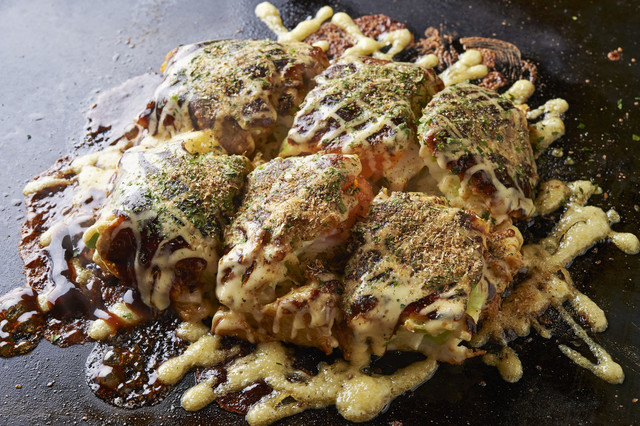
After dark, Shimokitazawa changes register quickly: record shops shutter, theatre crowds thin, and second-floor dining rooms around the station matter more than street frontage. Here, okonomiyaki is timing, table decision-making, and group negotiation over batter, grill, drinks, and how long the evening should run.
Nanban Tei Shimokitazawa ten fits that rhythm better than a destination tasting room. Its category is okonomiyaki, teppanyaki, and izakaya: shared plates rather than a linear chef-led sequence. The useful comparison is not Ginza counter dining, but a casual Tokyo room with enough technical credibility for repeat locals and a loose social structure.
Okonomiyaki in Shimokitazawa is a planning problem, not a luxury ritual
Tokyo okonomiyaki sits apart from sushi, tempura, or kaiseki. The meal is about heat, pacing, and appetite, not silence and progression. For travellers, a strong okonomiyaki booking can solve an evening when the party wants Japanese specificity without formal-counter constraints. In Shimokitazawa, that role sharpens because the neighbourhood pulls mixed groups, theatregoers, students, families, and late diners into the same narrow orbit.
The trust signal is concrete. Nanban Tei Shimokitazawa ten was selected for Tabelog Okonomiyaki 100 in 2025, with prior selections in 2024, 2023, 2022, and 2019. Tabelog’s genre lists are not Michelin-style ceremony, but in Japan they carry practical weight because they sort deeply local categories where international awards often have thinner coverage. For okonomiyaki, that matters more than a generic fine-dining halo.
Its Tabelog score is 3.59, which reads differently in Japan than on many global review platforms. Scores above the mid-threes can signal meaningful traction, especially in crowded casual categories where review volume, local expectations, and repeat use are unforgiving. The number does not explain the meal; it places the room inside a vetted bracket rather than the long tail of station-adjacent okonomiyaki counters.
That bracket affects reservations. Okonomiyaki is casual, but recognized Tokyo rooms are not endlessly elastic. A 35-seat table format turns according to group pace, and grill-led meals rarely compress neatly. Plan it into a Shimokitazawa evening rather than treating it as an afterthought once the first choice fills.
The format rewards groups who want control over pace
Okonomiyaki’s Tokyo appeal is partly democratic. It can anchor dinner without demanding omakase-level concentration and gives visitors a clearer sense of everyday Japanese dining than another imported small-plates template. At Nanban Tei Shimokitazawa ten, the categories say it: okonomiyaki as frame, teppanyaki for heat and shared cooking, izakaya for drinks and lingering.
That combination gives it a useful middle-tier role in Tokyo itineraries. A curry specialist such as Curry Spice Gelateria KALPASI or spice kitchen moona makes the night revolve around spice and a narrower plate language. Katsuyoshi, listed around tonkatsu, is more single-dish comfort food. Café Trois Chambres and Flippers serve different Shimokitazawa needs. Okonomiyaki is broader: dinner, pre-drinks, or the main social event, depending on the group.
The drinks list matters because the meal is not only batter. Sake, shochu, and wine are listed, with particular attention to sake and shochu, putting the room closer to izakaya culture than a quick pancake stop. In practice, the category works when the table wants grill texture and heat, then drinks to stretch the evening without tasting-menu budgets.
Families also count. Children are welcomed, including babies, preschoolers, and school-age children, and strollers are accepted. In Tokyo, this is not throwaway detail: many compact restaurants are socially or physically awkward for families even without formal exclusion. Here, the room can absorb a wider range of diners than a hushed counter or drinking-only izakaya.
Private use is listed for groups, another reason to plan. Okonomiyaki rooms with table seating suit casual gatherings because the format gives everyone something to do without a banquet script. The trade-off is capacity: when part of a small room is committed to groups, walk-in flexibility narrows.
How to place it in a Tokyo food itinerary
Shimokitazawa is often treated as a cultural side trip from central Tokyo, but its dining value is strongest as a full evening: vintage stores, small theatres, music venues, coffee, then a meal that does not feel imported from a hotel district. Okonomiyaki suits that sequence because it is informal enough for the area and specific enough to justify the detour.
For a broader Tokyo plan, pair this dinner with more tightly defined meals elsewhere. A yakitori night such as 124. KAGURAZAKA (Yakitori) offers different counter-driven grammar; 12/10 Shinjuku ten moves the night toward Shinjuku density; . 鮪と炭火焼き うお炭 秋葉原店 points toward tuna and charcoal in another part of the city. They are not interchangeable with okonomiyaki; they show how Tokyo rewards category planning more than generic restaurant hunting.
Visitors building a casual-food route can map appetite across the day with lighter or more specialized stops: 2D Cafe for a visual café format, 3 Chome no Curry Ya San for curry, then Shimokitazawa for a shared grill-led dinner. Better Tokyo itineraries avoid stacking too many formal meals and leave space for local categories travellers often under-schedule.
Across Japan and beyond, the same logic applies: choose the venue by its role in the day. -Grilled beef Sukiyaki- KAMAKURA TANUKIAN 鎌倉 たぬき庵 in Kamakura.cafe in Osaka.know in Kumamoto, (Shoku) Vietnam in Kawasaki, [Curry Senmon Ten] Maruyama Kyoju. in Sapporo, and [ki:] in Kyoto each answer a different dining question. Outside Japan, Jōdo Saké Bar in Los Angeles and Onigiri Time in Pasadena show how Japanese formats travel, adapt, and narrow in focus.
The verdict is practical: this best fits diners who want Tokyo specificity without ceremony, and groups who know casual does not mean careless planning. Use it when Shimokitazawa is already part of the night, or when okonomiyaki is the missing texture in a trip dominated by sushi, ramen, and cocktail bars. For wider planning, keep Our full Tokyo restaurants guide, Our full Tokyo hotels guide, Our full Tokyo bars guide, Our full Tokyo wineries guide, and Our full Tokyo experiences guide in view; Tokyo works better when dining, drinking, sleep, and neighbourhood movement are planned together.
A Minimal
Comparable venues for cuisine and category context.
| Venue | Cuisine | Price | Notes |
|---|---|---|---|
| Nanban Tei Shimokitazawa tenThis venue — the venue you are viewing | Setagaya, Japanese Okonomiyaki | $$ | Not listed |
| Muromachi Sunaba (室町砂場) | Not listed | $$ | Nihonbashi Muromachi, Traditional Edo-style Soba |
| Wa kitchen Kanna | Not listed | $$ | Setagaya, Japanese set meals & creative kakigori café |
| Gandhi | Not listed | $$ | Shinjuku, Japanese-style European curry house |
| Toyoda | Not listed | $$ | Meguro, Japanese chicken & kara-age specialist |
| TAIZEN | Not listed | $$ | Shinjuku, Hinai Jidori chicken and oyakodon–focused Japanese restaurant |
Recognition history
Dated appearances from independent guides and award organizations, with the underlying list record or original source where available.
Tabelog 100 #96 · No. 96
Tabelog · Tabelog 100 - Okonomiyaki - 2025















At a Glance
- Cozy
- Classic
- Lively
- Casual Hangout
- Group Dining
- After Work
- Solo
- Standalone
- Street Scene
Current opening hours
- Monday
- 5–11 PM
- Tuesday
- 5–11 PM
- Wednesday
- 5–11 PM
- Thursday
- 5–11 PM
- Friday
- 5–11 PM
- Saturday
- 11:30 AM–3 PM, 5–11 PM
- Sunday
- 11:30 AM–3 PM, 5–11 PM
Hours can change for holidays and private events. Last verified .
Casual and energetic with a neighborhood okonomiyaki-grill feel centered around tabletop cooking.