Located on Via Amatore Sciesa in Milan's Porta Romana district, My Heart sits in a neighbourhood that has quietly accumulated some of the city's more considered dining addresses. The venue operates in a part of Milan where residents eat rather than tourists browse, which shapes both the atmosphere and the expectations of the room. Planning ahead is advised.
Pearl is the En Primeur Club membership app — saves, bookings, and concierge access live there. Same editors, same standards.
- Address
- Via Amatore Sciesa, 1, 20135 Milano MI, Italy
- Phone
- +393280139167
- Website
- yumgo.it
- Directions
- Get directions
 Saves & bookings on Pearl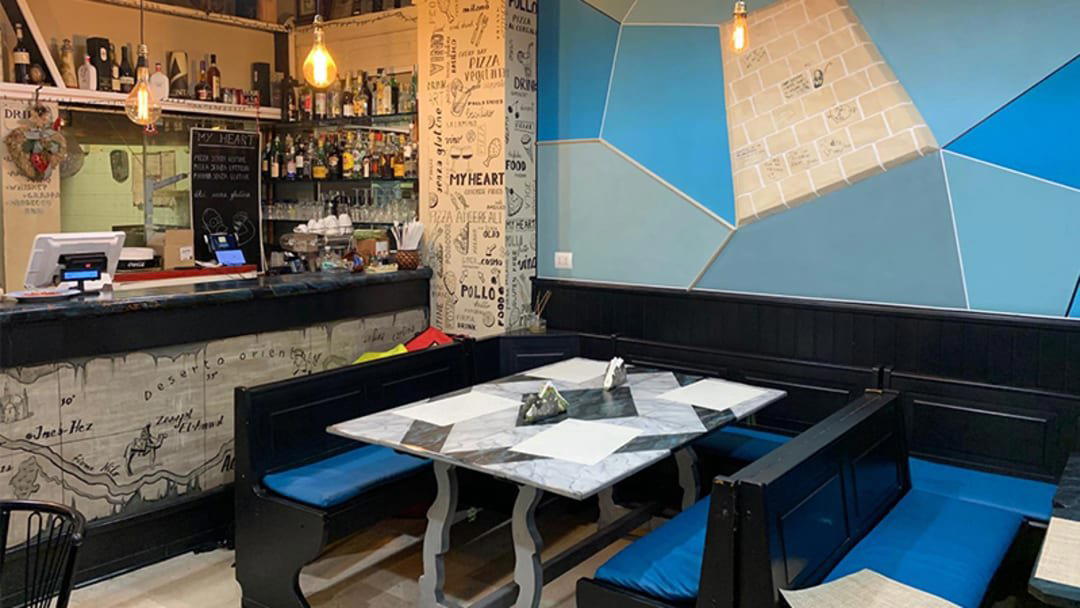
A Corner of Milan Where the City Eats for Itself
The stretch of Via Amatore Sciesa in the Porta Romana district is not the Milan that appears on airport billboards or fashion week itineraries. It is a residential seam between the design corridors of the Navigli and the quieter bourgeois streets approaching Parco Ravizza, where the dining proposition tends to be built around locals returning rather than visitors discovering. My Heart sits at number one on that street, which places it at a particular kind of threshold: the kind of address you either know or you don't, and where the room reflects that self-selection. In a city where the high-end restaurant tier has consolidated around a handful of destination names, Enrico Bartolini, Cracco in Galleria, Andrea Aprea, and Seta, the neighbourhood-anchored restaurant occupies a different register entirely.
What the Booking Process Tells You
Milan's restaurant scene in the mid-2020s has developed a clear bifurcation in how tables are secured. At the summit tier, booking windows stretch to two or three months for counter seats, and online reservation platforms have displaced phone calls almost entirely. Further down the hierarchy, the picture varies by neighbourhood. Porta Romana operates more on the rhythm of a residential quarter than a tourist circuit, which means the booking dynamic at addresses like My Heart is shaped less by international demand than by the cadence of the local week. Thursday through Saturday evenings in any Milanese neighbourhood restaurant of standing fill faster than Tuesday, and September through November, when the city returns from summer and the design and fashion calendars activate, compresses availability across the board. If you are planning around Salone del Mobile in April or the September fashion weeks, treat any restaurant booking in this city as a planning task rather than a same-day decision.
The Neighbourhood as Context
Porta Romana as a dining district does not carry the same signal density as Brera or the Navigli, which is precisely what makes it worth attention for a certain kind of traveller. That dynamic tends to produce kitchens that cook toward a regular clientele's preferences rather than a rotating audience's assumptions about Italian food. Italy's broader fine dining conversation, anchored by institutions like Osteria Francescana in Modena, Le Calandre in Rubano, and Piazza Duomo in Alba, operates at a different scale and visibility. What Porta Romana offers is something closer to the Italian dining tradition that predates the global recognition economy: a restaurant that exists primarily for the people who live nearby.
That said, Milan is not a city where neighbourhood insulation guarantees a particular quality level. The city's dining range runs from the coastal-inflected precision of addresses like Uliassi in Senigallia or the mountain-sourced rigour of Atelier Moessmer Norbert Niederkofler in Brunico to the long-standing regional anchors like Dal Pescatore in Runate. Within Milan itself, the creative register at Verso Capitaneo and the Florentine cellar depth of Enoteca Pinchiorri map the range of what Italian fine dining can look like. My Heart's position within that picture remains one to assess on arrival rather than at distance.
Timing, Seasonality, and When to Go
Autumn is the sharpest season for eating in Milan. October and November bring the city's appetite for slower, more deliberate meals: game, truffle, aged cheeses, and the cellar-heavy wine lists that northern Italian restaurants maintain with particular seriousness. The Porta Romana neighbourhood, residential as it is, reflects that seasonal shift as clearly as any part of the city. Spring is the second peak, though the concentration of design and trade events in April pulls the entire city's hospitality infrastructure toward capacity. Summer sees a thinning of the local population as Milanese leave for the lakes or the coast, and many neighbourhood restaurants adjust their hours or close for portions of August. Late September through December and March through May are reliable windows for a considered visit.
Placing My Heart in the Broader Italian Context
For the traveller building an Italian itinerary around serious eating, Milan functions as both a destination and a transit point. The city's own restaurant culture has grown considerably in ambition over the past decade, but it still plays second string in global recognition to Modena, Florence, and the Adriatic coast when it comes to destination dining. Addresses that draw international attention, the kind of rooms that feature alongside Reale in Castel di Sangro, Quattro Passi in Marina del Cantone, or Casa Perbellini 12 Apostoli in Verona, operate at a different visibility level than a neighbourhood address on Via Amatore Sciesa. The comparison is not pejorative. A restaurant that answers to its immediate community rather than to a global audience can offer something that destination dining, with its associated pressure and performance, sometimes cannot. The question for any visitor is which of those two registers they are seeking on a given evening. Internationally, the comparison might be drawn to how certain New York rooms like Atomix or Le Bernardin operate in a completely different register from a neighbourhood bistro in the West Village: proximity to the same city does not imply proximity in purpose or audience.
Our full Milan restaurants guide maps the city's dining tiers in more detail, including how to approach bookings across different neighbourhood and price contexts.
Planning Your Visit
The restaurant is located at Via Amatore Sciesa 1, in Milan's Porta Romana district, accessible from the city centre by a short taxi or tram ride south from the Duomo. The neighbourhood is well-served by public transport connections to the M3 metro line at Porta Romana station, making it a practical evening destination without requiring a car. Given the residential character of the area, arriving by foot from adjacent quarters like the Navigli or Città Studi is also feasible. Hours, reservation options, and pricing are available from the venue. As with most Milanese neighbourhood restaurants of any standing, booking in advance for weekend evenings is advisable regardless of season.
Nearby-ish Comparables
Comparable venues nearby, for context on price, style, and recognition.
| Venue | Cuisine | Price | Notes |
|---|---|---|---|
| My HeartThis venue — the venue you are viewing | Gluten-Free Italian Pizzeria | $$ | Not listed |
| Fradiavolo Milano Premuda | Contemporary Neapolitan Pizza | $$ | Xxii Marzo |
| Montesoprano Street | Sicilian Street Food | $$ | Duomo |
| Pizzacoteca di Brera | Gourmet Neapolitan Pizza | $$ | Brera |
| Killer | Italian Casual | $$ | Xxii Marzo |
| Cantina della Vetra | Traditional Milanese Trattoria | $$ | Duomo |
Continue exploring
More in Milan
Restaurants in Milan
Browse all →
Bars in Milan
Browse all →
Hotels in Milan
Browse all →
At a Glance
- Cozy
- Casual Hangout
- Family
Current opening hours
- Monday
- 12–5 AM, 11 AM–12 AM
- Tuesday
- 12–5 AM, 11 AM–12 AM
- Wednesday
- 12–5 AM, 11 AM–12 AM
- Thursday
- 12–5 AM, 11 AM–12 AM
- Friday
- 12–5 AM, 11 AM–12 AM
- Saturday
- 12–6 AM, 11 AM–12 AM
- Sunday
- 12–6 AM, 11 AM–12 AM
Hours can change for holidays and private events. Last verified .
Cozy casual atmosphere with friendly service and focus on inclusive gluten-free dining.