
Tabelog Bronze #292
Our verdict
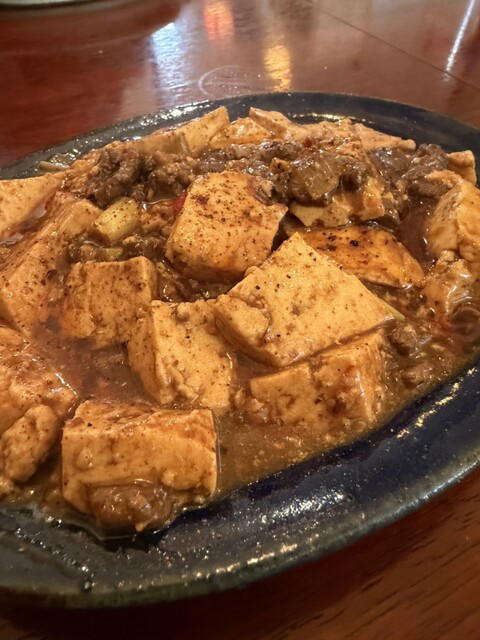
A 2026 Tabelog Bronze Award winner in Ina, Nagano's southern alpine corridor, Chinese Sai Muen works through a Sichuan and dim sum framework reinterpreted with local Ina Valley produce. The 12-seat room books ahead and operates on a reservation-only lunch model mid-week. Dinner runs to around JPY 4,000–4,999 per head — modest pricing for a recognised kitchen in a rural prefecture.

Pearl is the En Primeur Club membership app — saves, bookings, and concierge access live there. Same editors, same standards.
- Address
- 3447-3 Arai, Ina, Nagano 396-0025, Japan
- Phone
- +81 265-97-1401
- Hours
- Mon–Wed 5:30–9:30 PMThu–Sat 11:30 AM–1:30 PM, 5:30–9:30 PMSun Closed
- Website
- sites.google.com
- Directions
- Get directions
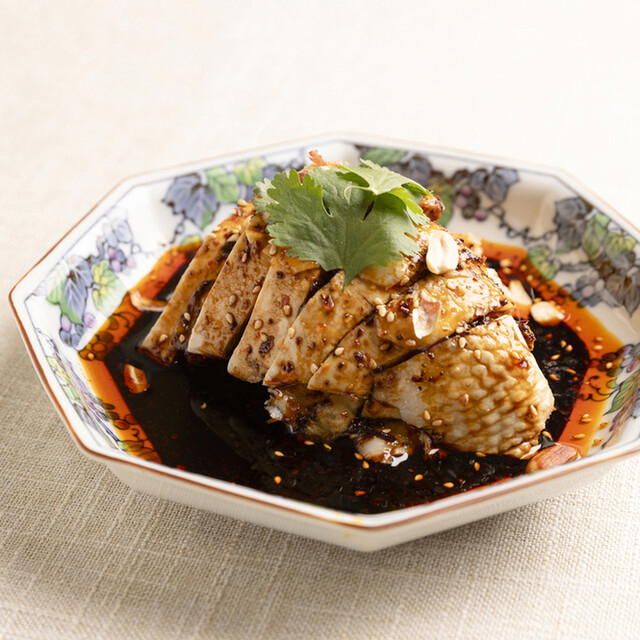
Sichuan in the Southern Alps: What Chinese Sai Muen Says About Regional Chinese Cooking in Rural Japan
The Ina Valley sits in Nagano Prefecture's southern reach, flanked by the Central and Southern Alps, a long drive or a local train ride from the prefecture's better-known ski resort towns. It is not a place you arrive at by accident, which makes the concentration of serious, award-recognised kitchens in and around Ina city a genuinely instructive signal about where Japanese regional dining is heading. Among them, Chinese Sai Muen occupies a position that would raise eyebrows in any city context: a Sichuan and dim sum kitchen in a 12-seat room, carrying a 2026 Tabelog Bronze Award with a reviewer score of 3.86, located just off a provincial streetscape roughly 119 metres from Inashi station.
Regional Chinese cooking in Japan has long operated at two poles. One is the Cantonese-leaning, banquet-format Chinese restaurant that anchors major city hotel dining rooms — elaborate, ceremony-forward, scaled for groups. The other is the ramen shop, the gyoza chain, the casual neighbourhood Chuka-ryori that treats Chinese cuisine as a comfort-food substrate rather than a culinary category in its own right. What has been less common outside of Tokyo, Osaka, and a handful of Yokohama enclaves is a small, reservation-led space making a considered argument for Sichuan as a kitchen tradition worth engaging with on its own terms. That is the territory Chinese Sai Muen occupies.
The Sichuan Framework and Its Ina Valley Interpretation
Sichuan cooking is among the most technically demanding of China's major regional traditions. It is built on the interaction of málà — the numbing heat of Sichuan pepper and the sharp heat of dried chillies, and a deep pantry of fermented condiments: doubanjiang, black bean paste, pickled chillies, fermented broad beans. The register is not simply spicy; it is layered, with aromatic depth from techniques like dry-roasting spices and slow-rendering chilli oils that require patience and material knowledge. In the hands of a kitchen that is also running dim sum and yum cha formats, the scope widens further, since dim sum demands a different kind of discipline, precision in wrapping, timing, and steam control.
Chinese Sai Muen's described position, a new image of Chinese cuisine reflecting the essence of the Ina Valley, points to the specific adaptation that makes small-city regional Chinese cooking in Japan interesting rather than merely derivative. Nagano Prefecture has a documented emphasis on fish from mountain rivers, local vegetables, and a regional food culture shaped by altitude and agricultural seasonality. The venue's food notes flag a particular commitment to fish, alongside a health and wellness menu direction. That combination, Sichuan technique meeting Ina Valley produce logic, is not a novelty positioning exercise. It is the kind of translation that happens when a kitchen is genuinely embedded in its geography rather than importing a metropolitan template wholesale.
Where This Fits in Nagano's Award-Recognised Dining Field
Nagano's restaurant scene is, by national standards, thinly spread across a large and geographically varied prefecture. The concentration of recognised kitchens skews toward Karuizawa and the northern resort corridor, where properties like Bleston Court Yukawatan anchor the premium end, and toward Italian-influenced tables such as Fogliolina della Porta Fortuna and ca'enne, which reflect the region's long entanglement with French and Italian cooking traditions. Sushi is well-represented too, with counters like Kikuzushi demonstrating that alpine Japan takes its seafood sourcing seriously despite the distance from the coast. The Italian category extends further south with LA CASA DI Tetsuo Ota.
Chinese cooking, by comparison, is almost absent from the Tabelog Award tier in Nagano. Chinese Sai Muen's 2026 Bronze placing, ranked 292nd nationally in its award group, makes it a clear outlier in its geography and category simultaneously. For context on what Bronze-tier Tabelog recognition means in a Japanese restaurant market: the award is a peer-reviewed, crowd-sourced system with high volume and some of the most category-literate reviewers in the world. A 3.86 score in a provincial setting, for a cuisine that is not native to the region, represents a different kind of achievement than the same score in a Ginza block saturated with Chinese fine dining.
The broader national Chinese fine dining conversation in Japan runs through venues like HAJIME in Osaka, though that kitchen operates at a different register entirely. The more instructive comparison may be with how other small, award-recognised Japanese restaurants across different cities have established credibility through rigorous sourcing and format discipline rather than scale, a pattern visible at places like Gion Sasaki in Kyoto or Goh in Fukuoka, where intimate rooms and strong regional identities have proven more durable than metropolitan ambition.
The Room and What to Expect
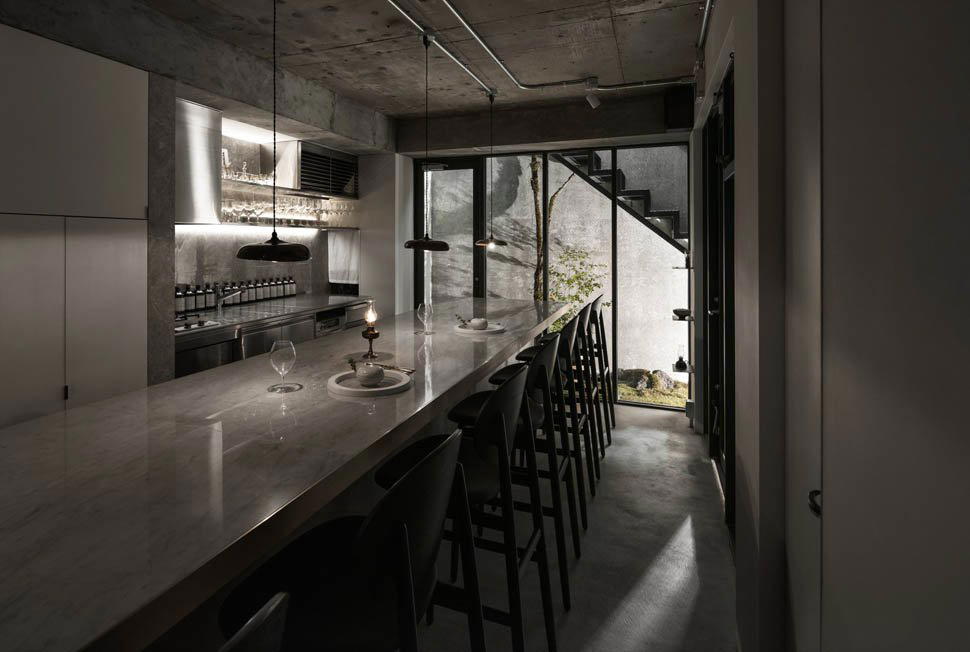
Twelve seats defines the format more precisely than any description of atmosphere could. At that scale, there is no ambient crowd noise to fill the room, no bustling dim sum cart service, no sense of a large production behind a kitchen wall. The experience is closer to a specialist counter, the same attention economy that governs a sushi counter or a small tasting-menu kitchen applies here. The venue is described as a relaxing space, and its Tabelog-tagged occasion profile aligns it firmly with family dining rather than business entertaining or romantic occasion categories.
Lunches run from 11:30 to 14:00; dinners from 17:30 to 21:30, Monday through Saturday, with Sunday closed. The lunch reservation structure is worth noting: Monday, Tuesday, and Wednesday lunches require advance booking, while the kitchen can also accommodate reservations on its stated closed days with sufficient notice. This flexibility is characteristic of small owner-operated rooms where the schedule bends to demand rather than operating on a fixed grid. Hours and closed days are subject to change without announcement, so confirming directly before travel is advisable.
Dinner pricing averages JPY 4,000–4,999 per person; lunch runs JPY 3,000–3,999. At those levels, Chinese Sai Muen sits in a mid-tier price band for a Tabelog Award winner, considerably below what a Bronze-ranked kitchen in Tokyo or Kyoto would typically charge. Payment covers major credit cards (VISA, Mastercard, JCB, AMEX, Diners), IC transport cards including Suica, and QR code systems including PayPay. There is no on-site parking, but coin parking is available nearby.
The space is non-smoking throughout and welcomes children, which aligns with its family-occasion profile. Private room hire is unavailable, but the full venue can be reserved for private events accommodating up to 20 people, a notable option for a group wanting an exclusive Chinese kitchen experience in an unusual setting.
Getting There and Planning Your Visit
Ina city is reachable via the JR Iida Line, with Inashi station the nearest stop, approximately 119 metres from the restaurant. From Nagano city, the connection involves a transfer at Okaya or Tatsuno; from Tokyo, the Chuo Limited Express to Okaya followed by the Iida Line is the most direct train route, though the journey runs to several hours. Visitors combining the Ina Valley with broader Nagano itineraries should factor in the south-to-north spread of the prefecture. For a fuller picture of the regional dining and hospitality offer, see our full Nagano restaurants guide, our full Nagano hotels guide, our full Nagano bars guide, our full Nagano wineries guide, and our full Nagano experiences guide.
Reservations are available via phone at +81-265-97-1401 or through the venue website. Given the 12-seat capacity and the mid-week reservation-only lunch policy, advance contact is the reliable approach for any visit, particularly for dinner on a Friday or Saturday.
Frequently asked questions
What kind of recognition has Chinese Sai Muen received?
Chinese Sai Muen has received recognition including: {"Year":"2026","Award Source":"Tabelog","Award Type":"The Tabelog Award","Award Group":"bronze","Award Group Rank":"292","Restaurant Name":"Chinese Sai Muen","Score":"3.86","Budget":"Dinner: JPY 4,000 - JPY 4,999; Lunch: JPY 3,000 - JPY 3,9….
What do people recommend at Chinese Sai Muen?
Tabelog reviewers have awarded Chinese Sai Muen a score of 3.86 and a 2026 Bronze Award, placing it among the most consistently recognised Chinese kitchens in Nagano Prefecture. The venue describes its approach as a reinterpretation of Chinese cuisine through the lens of the Ina Valley, with a noted focus on fish and a health-oriented menu alongside Sichuan and dim sum formats. With only 12 seats, the food receives close attention from the kitchen on every cover.
Is Chinese Sai Muen more mid-range or high-end?
Pricing at Chinese Sai Muen is listed as JPY 4,000 - JPY 4,999 JPY 3,000 - JPY 3,999.
Where is Chinese Sai Muen in Nagano?
Chinese Sai Muen is located at 3447-3 Arai, Ina, Nagano 396-0025, Japan, Nagano.
What's the best way to book Chinese Sai Muen?
Reservations are available and advised, particularly for lunch on Mondays, Tuesdays, and Wednesdays, which are reservation-only. The restaurant can be reached by phone at 0265-97-1401 or through its website at sites.google.com/view/inadani-muyan. Hours can shift without fixed notice, so confirming directly before visiting is recommended.
Cuisine and Awards Snapshot
Comparable venues nearby, for context on price, style, and recognition.
| Venue | Cuisine | Price | Awards | Notes |
|---|---|---|---|---|
| Chinese Sai MuenThis venue — the venue you are viewing | Sichuan Chinese Dim Sum | $30–50 | Tabelog Bronze #292 | Not listed |
| Sobanomi | Togakushi Soba | $20–30 | Tabelog 100 #53 | Togakushi |
| Grill The Butcher Nagano (グリル ザ ブッチャー 長野) | Shinshu Beef Steakhouse | $20–30 | Not listed | Nagano Station |
| Nagano Meijitei (明治亭) | Nagano Sauce Katsudon | $10–20 | Not listed | Nagano Station |
| Kagaribi | Wood-Fired Italian | $50–100 | Star Wine List | Minami Karuizawa |
| Obusedo | Traditional Japanese Chestnut Cuisine | $20–30 | Not listed | Obuse-machi |
Recognition history
Dated appearances from independent guides and award organizations, with the underlying list record or original source where available.
Tabelog Bronze #292
Tabelog
Full recognition history (2 entries)
Tabelog 100 #37 · No. 37
Tabelog · Tabelog 100 - Chinese cuisine - EAST - 2026
Continue exploring
More in Nagano
Restaurants in Nagano
Browse all →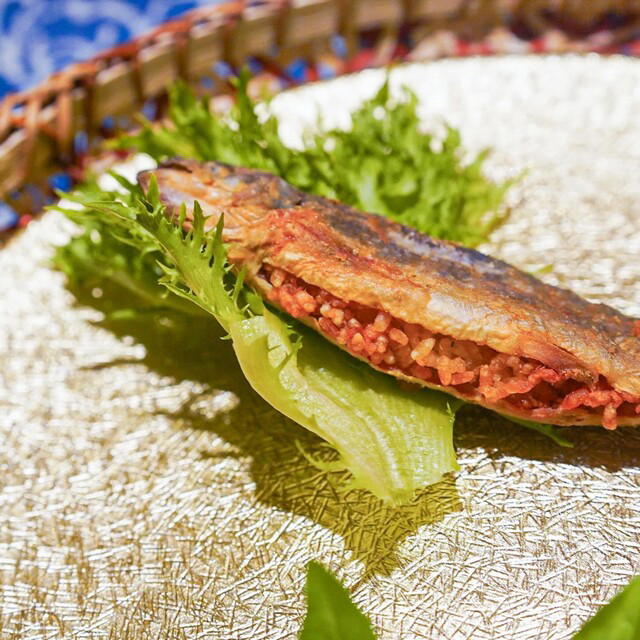
Bars in Nagano
Browse all →
Hotels in Nagano
Browse all →

Wineries in Nagano
Browse all →
Details
- Cozy
- Casual Hangout
- Sake Program
- Local Sourcing
- A La Carte
Current opening hours
- Monday
- 5:30–9:30 PM
- Tuesday
- 5:30–9:30 PM
- Wednesday
- 5:30–9:30 PM
- Thursday
- 11:30 AM–1:30 PM, 5:30–9:30 PM
- Friday
- 11:30 AM–1:30 PM, 5:30–9:30 PM
- Saturday
- 11:30 AM–1:30 PM, 5:30–9:30 PM
- Sunday
- Closed
Hours can change for holidays and private events. Last verified .