
Set inside a century-old courtyard residence in Beipu Township, Mud Brick House has served Hakka home cooking since 1999. The owner-chef draws on family recipes passed down from his grandmother, anchoring each meal in the agricultural traditions that shaped this part of Hsinchu County. Poached free-range chicken and sweet potato rice are the kitchen's most requested preparations.
Pearl is the En Primeur Club membership app — saves, bookings, and concierge access live there. Same editors, same standards.
- Address
- 113 Changchun Street, Beipu Township
- Phone
- +886 3 580 2299
- Directions
- Get directions
 Saves & bookings on Pearl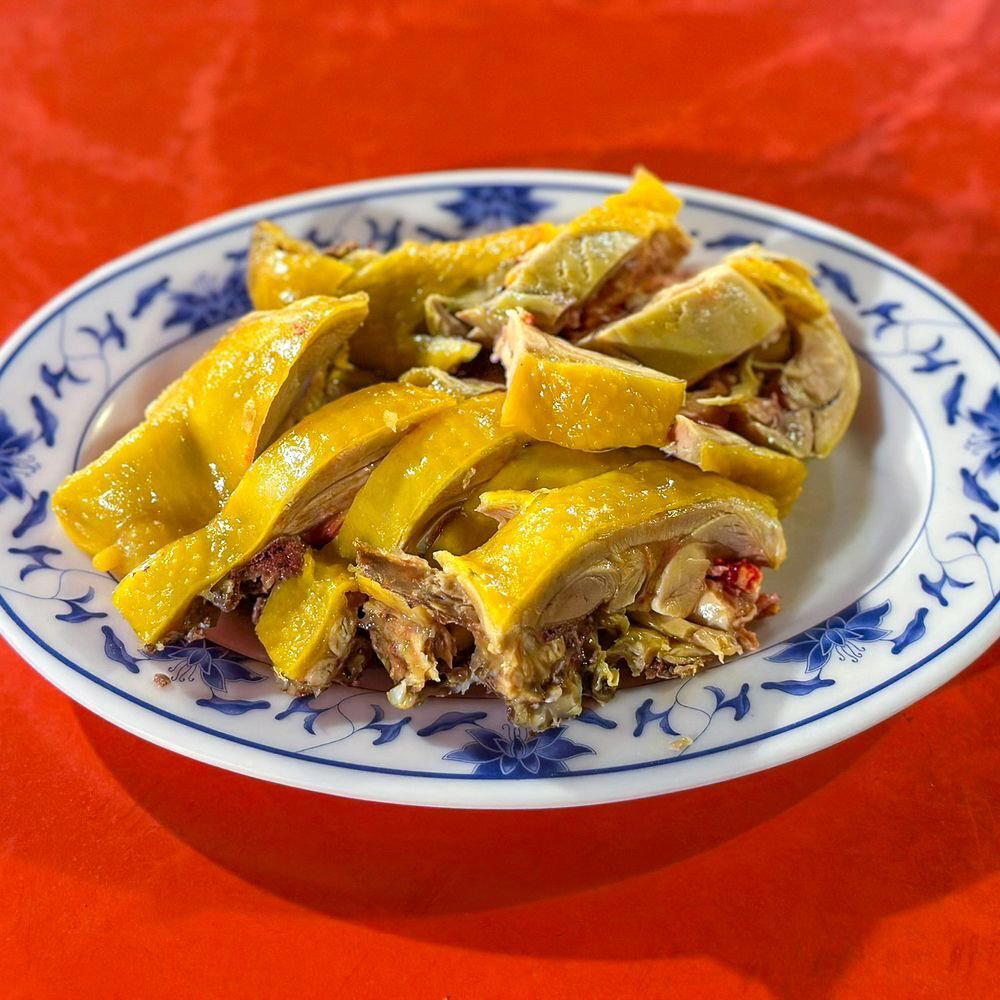
A Courtyard That Predates Modern Taiwan
Approaching Mud Brick House on Changchun Street in Beipu Township, the architecture does much of the orienting. The building is a converted century-old courtyard residence, the kind of structure that once defined rural Hakka settlements across northern Taiwan: thick earthen walls, a courtyard open to the sky, rooms arranged around a central axis that governed both air circulation and family hierarchy. In a county where new construction has steadily replaced older building stock, finding a dining room still housed inside this type of structure is increasingly rare. The space functions as a frame for the food, not merely a backdrop to it.
Beipu itself has long been one of Hsinchu County's most intact examples of Hakka settlement history. Tea cultivation, preserved tofu, and a network of ancestral halls have kept the township on a slower development trajectory than the science park corridor to the north. Eating here positions a meal within that continuity. For readers building a broader picture of the county's food culture, our full Hsinchu County restaurants guide maps the range of options across the region.
The Hakka Table and What It Demands
Hakka cuisine developed under conditions of scarcity and migration. The cooking tradition prioritised preservation, complete use of ingredients, and dishes that could sustain agricultural labour. That historical formation still shows in the canon: fermented vegetables, braised pork, preserved mustard greens, and rice preparations that stretch staple grains with additions from the kitchen garden. The flavours tend toward salt, sour, and depth rather than brightness or delicacy.
Within that tradition, home cooking occupies a distinct register from restaurant Hakka food. The grandmother's kitchen, not the banquet hall, is the reference point at Mud Brick House. The owner-chef has been cooking from his grandmother's recipes since 1999. That kind of continuity is worth reading carefully: it signals not renovation but repetition, the kind of repetition that refines rather than stagnates. Taiwan's broader fine-dining circuit, represented by restaurants like JL Studio in Taichung and logy in Taipei, moves in a different direction entirely, toward tasting menus and international technique. Mud Brick House sits apart from that trajectory, and deliberately so.
How a Meal Here Unfolds
The sequencing at a Hakka family table follows a logic different from tasting-menu formats. Dishes arrive in parallel rather than in succession, and the meal is assembled from shared plates whose relationships matter as much as any individual preparation. At Mud Brick House, that structure is preserved. Understanding it helps calibrate expectations before you sit down.
The meal tends to open with rice as a constant: here, local rice cooked with golden sweet potato, which adds fragrance and a slight natural sweetness that lightens what can otherwise be a dense grain base. The sweet potato also changes the texture, making each serving marginally more yielding. This is not a restaurant flourish but an agricultural habit, the kind of thing households in this part of Taiwan did when sweet potatoes were abundant and rice needed stretching.
Centrepiece preparation, and one discussed dish in the kitchen's output, is the poached free-range chicken. Free-range birds produce meat with a different fibre structure than conventionally raised poultry: firmer, with more developed musculature and a cleaner fat distribution. The poaching method suits this material, allowing the protein to set gradually rather than contract under high heat. The skin, left intact through the cooking process, takes on a golden colour and a texture described as bouncy, which in Hakka and Cantonese cooking traditions is a quality marker, not an accident. A kumquat dip accompanies the chicken, providing acidity that counterbalances the richness of the skin and fat.
Portion sizes at the restaurant can be adjusted to match your party size, which is a practical detail worth noting for smaller groups who want to cover more of the menu without waste. This flexibility reflects a home-kitchen ethos rather than a fixed tasting format.
For comparison within Taiwan's tradition-anchored dining spaces, the approach at the restaurant shares certain qualities with places like Akame in Wutai Township, where indigenous ingredients and inherited technique anchor a contemporary table, and Zhu Xin Ju in Tainan, where regional Taiwanese food is taken seriously on its own terms rather than reframed for a metropolitan audience.
Beipu in Context
A visit to the restaurant works most naturally as part of a wider Beipu itinerary. The township's old street, ancestral hall, and tea culture provide an afternoon that contextualises the meal. Seasonal timing matters here: Beipu's Oriental Beauty tea peaks in summer, when leafhoppers damage the leaves and trigger the oxidation that produces the cultivar's characteristic honey and fruit notes. Visiting in that window connects two of the area's defining agricultural products in a single trip.
For those building a multi-day stay in the county, our full Hsinchu County hotels guide covers accommodation options, and our full Hsinchu County experiences guide provides broader programming across the region. The county's bar scene is documented in our full Hsinchu County bars guide.
Within Beipu's own dining options, the restaurant sits alongside a small cluster of restaurants working in related registers. Ang Gu, Bebu, Chuan Fu, Firoo, and Geng Ye Yue Mei round out the local picture, each taking a different angle on the county's food traditions. The county's winery scene, documented in our full Hsinchu County wineries guide, adds another dimension for those interested in local production.
Planning Your Visit
The restaurant is located at 113 Changchun Street in Beipu Township, Hsinchu County. The restaurant has operated continuously since 1999, and its address is fixed within the preserved courtyard structure that defines the space. Reservation is recommended. Given the flexibility on portion sizes, groups of two to six can approach the menu without needing to commit to a fixed format in advance. Arriving in the late morning or early afternoon tends to align better with the rhythms of Hakka family-style dining, where the meal is unhurried and the kitchen's output is best appreciated without pressure from a tight schedule.
For reference, the broader category of tradition-led restaurants in Taiwan that operate without online booking infrastructure is not small. GEN in Kaohsiung and Volando Urai Spring Spa and Resort in Wulai District represent different points on the spectrum from heritage-anchored to resort-positioned dining. At the other end of the international register, destinations like Le Bernardin in New York City and Emeril's in New Orleans illustrate how differently a cooking legacy can be institutionalised when resources and market context differ. The restaurant operates without those institutional layers, which is precisely what makes it a specific and non-transferable experience within Taiwan's food geography.
Comparable Options
Comparable venues nearby, for context on price, style, and recognition.
| Venue | Cuisine | Price | Notes |
|---|---|---|---|
| Mud Brick HouseThis venue — the venue you are viewing | Hakka | $$$ | Not listed |
| Tsou Chi Cai Bao (Zhongzheng Road) | Hakkanese Small Eats | $ | Beipu Township |
| Lao Tou Pai | Traditional Hakkanese | $$ | Beipu Township |
| Ko Chia Pen Se | Hakkanese | $$ | Beipu District |
| Bebu | Hakka | $$ | Beipu Township |
| JUNTO | Modern Cantonese | $$$ | Guangfu |
Recognition history
Dated appearances from independent guides and award organizations, with the underlying list record or original source where available.
Michelin Plate
Michelin

At a Glance
- Rustic
- Classic
- Group Dining
- Historic Building
Current opening hours
- Monday
- 11 AM–2 PM, 4:30–8 PM
- Tuesday
- 11 AM–2 PM, 4:30–8 PM
- Wednesday
- Closed
- Thursday
- 11 AM–2 PM, 4:30–8 PM
- Friday
- 11 AM–2 PM, 4:30–8 PM
- Saturday
- 11 AM–3 PM, 4:30–8 PM
- Sunday
- 11 AM–3 PM, 4:30–8 PM
Hours can change for holidays and private events. Last verified .
Rustic Hakka ambiance with traditional architecture.