At Vorgartenmarkt in Vienna's 2nd district, Mochi Ramen Bar occupies a market-stall format that has become a reference point for Japanese-influenced ramen in a city otherwise dominated by Viennese and Central European dining traditions. The contrast between its modest stand setting and the precision of its ramen program tells you something about where Vienna's casual dining scene has been heading.
 Discover on Pearl
Pearl is the En Primeur Club membership app — saves, bookings, and concierge access live there. Same editors, same standards.
- Address
- Vorgartenmarkt Stand 12-29, 1020 Wien, Austria
- Phone
- +43 1 212257545
- Website
- mochi.at
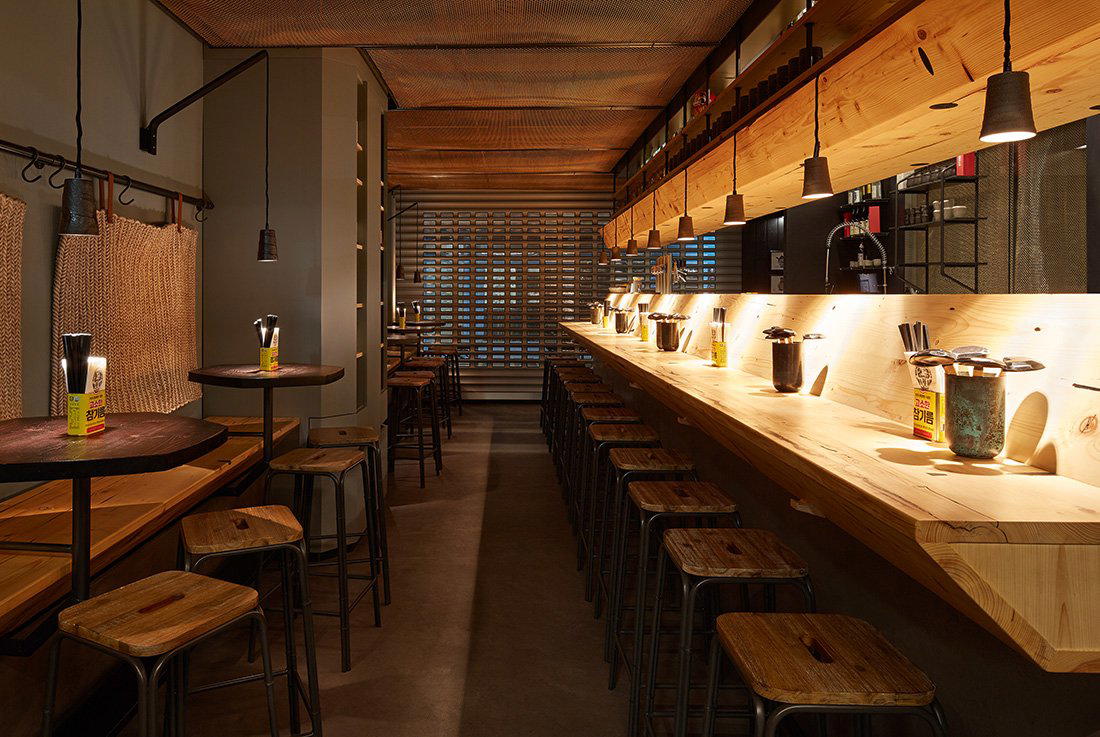
A Market Counter in a Fine-Dining City
Vienna's restaurant identity is anchored in formality. Mochi Ramen Bar is a Japanese Ramen Bar at Vorgartenmarkt Stand 12-29 in Vienna's 2nd district, with a casual dress code, reservations recommended, and an average price of about $20 per person. The city's most-discussed tables, from Steirereck im Stadtpark to Konstantin Filippou and Mraz & Sohn, operate in the €€€€ bracket with tasting menus, sommelier-led wine programs, and white-tablecloth expectations. Against that backdrop, Mochi Ramen Bar at Vorgartenmarkt Stand 12-29 in the 2nd district represents a different kind of editorial subject: a focused, market-format operation in a city that has historically under-indexed on Japanese street food.
The Vorgartenmarkt itself sets the tone. Vienna's market culture runs from the tourist-dense Naschmarkt to the quieter neighborhood markets scattered across the Gürtel and the Donaukanal. The 2nd district, historically Leopoldstadt and now one of the city's most demographically mixed arrondissements, hosts a working market with a character distinct from the polished food halls that have emerged elsewhere in Europe. Eating at a market stand here is not a heritage performance; it is closer to an ordinary weekday transaction, which gives Mochi Ramen Bar a different register from the more self-conscious ramen concepts that have appeared in other European capitals.
Where Ramen Sits in Vienna's Dining Order
Japanese cuisine in Vienna occupies a narrower institutional space than in cities like London, Amsterdam, or Berlin, where large immigrant communities and decades of restaurant evolution have produced layered dining ecosystems running from conveyor-belt sushi to omakase counters. Vienna's Japanese food scene, by comparison, is younger and thinner. Ramen specifically has arrived later here than in Western European capitals, meaning the category has not yet split into the sub-tiers visible elsewhere: no clear separation yet between tonkotsu specialists, regional Hokkaido-style shops, and fusion-led modern ramen bars operating with sommelier-curated sake lists.
Mochi Ramen Bar occupies that still-forming market as a market-counter format, which positions it differently from the destination-dining logic of, say, Amador or the Austrian fine-dining circuit at Doubek. Its comparable set is not the Michelin table; it is the growing number of European cities where ramen has moved from novelty to neighborhood staple, and where the question is no longer whether ramen belongs but which format serves it with the most consistency.
The Drink Question at a Ramen Counter
The editorial angle here, the wine list, the drinks program, the curation philosophy, is where a market-format ramen counter becomes most interesting to examine. European ramen concepts have navigated the drinks pairing question in different ways. Some lean into Japanese beer and highballs, treating the drink as an afterthought. Others, particularly in cities with strong sommelier culture, have experimented with natural wine pairings alongside Japanese spirits, building short but deliberate lists that treat the bowl as a food-pairing challenge rather than a palate-filler.
Vienna is, by any fair measure, one of Europe's serious wine cities. Austrian wine culture is deep: Grüner Veltliner and Riesling from the Wachau and Kamptal, indigenous red varieties from Burgenland, and a domestic sommelier community that has produced internationally recognized talent. That culture permeates even casual dining in a way that it does not in comparable cities. A ramen counter operating in Vienna's 2nd-district market context is therefore in a specific position: it exists inside a city where the expectation of a thoughtful drinks list travels further down the price spectrum than it does in most European markets.
Whether Mochi Ramen Bar addresses that expectation with a curated sake selection, a short Austrian wine list, or a more minimal approach is not something the available data confirms. What can be said is that the drinks question at a venue like this is not trivial in Vienna's context, and any ramen counter in this city that engages seriously with beverage pairing is doing something the category does not uniformly deliver. The contrast with high-investment wine programs at Austrian destination restaurants, including properties like Landhaus Bacher or Obauer outside the city, illustrates how far the drinks conversation stretches across the Austrian dining spectrum, even into informal formats.
The Market Format as a Positioning Statement
Globally, ramen has moved up and down the format spectrum simultaneously. At one end, counters like the high-pressure omakase-adjacent ramen bars of Tokyo have influenced European operators to apply tasting-menu logic to bowl construction. At the other, the market-stall and food-hall format has remained the dominant vehicle in cities where ramen is still establishing its footing. Mochi Ramen Bar's location at a Vienna market stand places it in the second tradition, which is not a lesser position, but a different one with its own set of quality signals.
At market-format ramen operations, the discipline shows in consistency and throughput rather than in the kind of controlled, low-volume theater you see at a destination counter. The comparison is useful: Lazy Bear in San Francisco or Le Bernardin in New York City operate under entirely different quality frameworks, where the dining room controls every variable. A market counter cannot offer that. What it can offer is speed, directness, and the particular pleasure of eating something technically accomplished in an environment that makes no claims to ceremony.
That trade-off is not unique to Vienna. It is the structural logic of the market-format dining category across Europe. But in a city where the serious dining culture runs so visibly toward the formal end, the presence of a ramen counter at Vorgartenmarkt is a small indicator of how the city's casual eating landscape is diversifying, even if slowly.
Planning a Visit
Mochi Ramen Bar sits at Vorgartenmarkt Stand 12-29, 1020 Wien, in the 2nd district of Vienna, accessible from the Vorgartenstraße U-Bahn station on the U1 line. As a market-stall format, the venue operates within market hours rather than the restaurant dinner-service logic that governs most of Vienna's dining addresses. Arriving during off-peak market hours, mid-morning or early afternoon on weekdays, will generally reduce waiting relative to Saturday mornings, when Viennese market culture concentrates its foot traffic. Reservations are recommended.
For those extending into Austria's wider restaurant circuit, the country's destination tables span an unusually broad geography. Döllerer in Golling an der Salzach, Schwarzer Adler in Hall in Tirol, Restaurant 141 by Joachim Jaud in Mieming, Gourmetrestaurant Tannenhof in Sankt Anton am Arlberg, Stüva in Ischgl, Kräuterreich by Vitus Winkler in Sankt Veit im Pongau, Ois in Neufelden, and Taubenkobel in Schützen am Gebirge each anchor a different regional cluster of Austrian fine dining, none of which competes directly with a market-stall ramen counter but all of which share the same national culinary conversation.
Side-by-Side Snapshot
Comparable venues nearby, for context on price, style, and recognition.
| Venue | Cuisine | Price | Awards | Notes |
|---|---|---|---|---|
| Mochi Ramen BarThis venue — the venue you are viewing | Japanese Ramen Bar | $$ | , | |
| Little Koya | Japanese Sushi & Noodles | $$ | , | Inner City |
| MAKA Ramen | Japanese Ramen & Tapas | $$ | , | Josefstadt |
| Matcha Komachi | Japanese Fusion Noodles & Donburi | $$ | , | Wieden |
| Shokudo Kuishimbo | Authentic Japanese Izakaya | $$ | , | Mariahilf |
| Shoyu Ramen | Authentic Japanese Ramen | $$ | , | Staatsoper |
Continue exploring
More in Vienna
Restaurants in Vienna
Browse all →
Bars in Vienna
Browse all →

Hotels in Vienna
Browse all →

At a Glance
- Cozy
- Lively
- Trendy
- Casual Hangout
- Open Kitchen
- Sake Program
Lively and informal atmosphere with an open kitchen where diners can watch chefs prepare ramen, cozy setup at the farmers market.