Stift Klosterneuburg Winery

One of Lower Austria's most historically grounded wine producers, Stift Klosterneuburg Winery operates from a working Augustinian monastery founded in 1114, with vineyard holdings that rank among the largest under single ecclesiastical ownership in the country.
Pearl is the En Primeur Club membership app — saves, bookings, and concierge access live there. Same editors, same standards.
- Address
- Stiftsplatz 1, 3400 Klosterneuburg, Austria
- Phone
- +432243411522
- Website
- stift-klosterneuburg.at
- Directions
- Get directions
 Saves & bookings on Pearl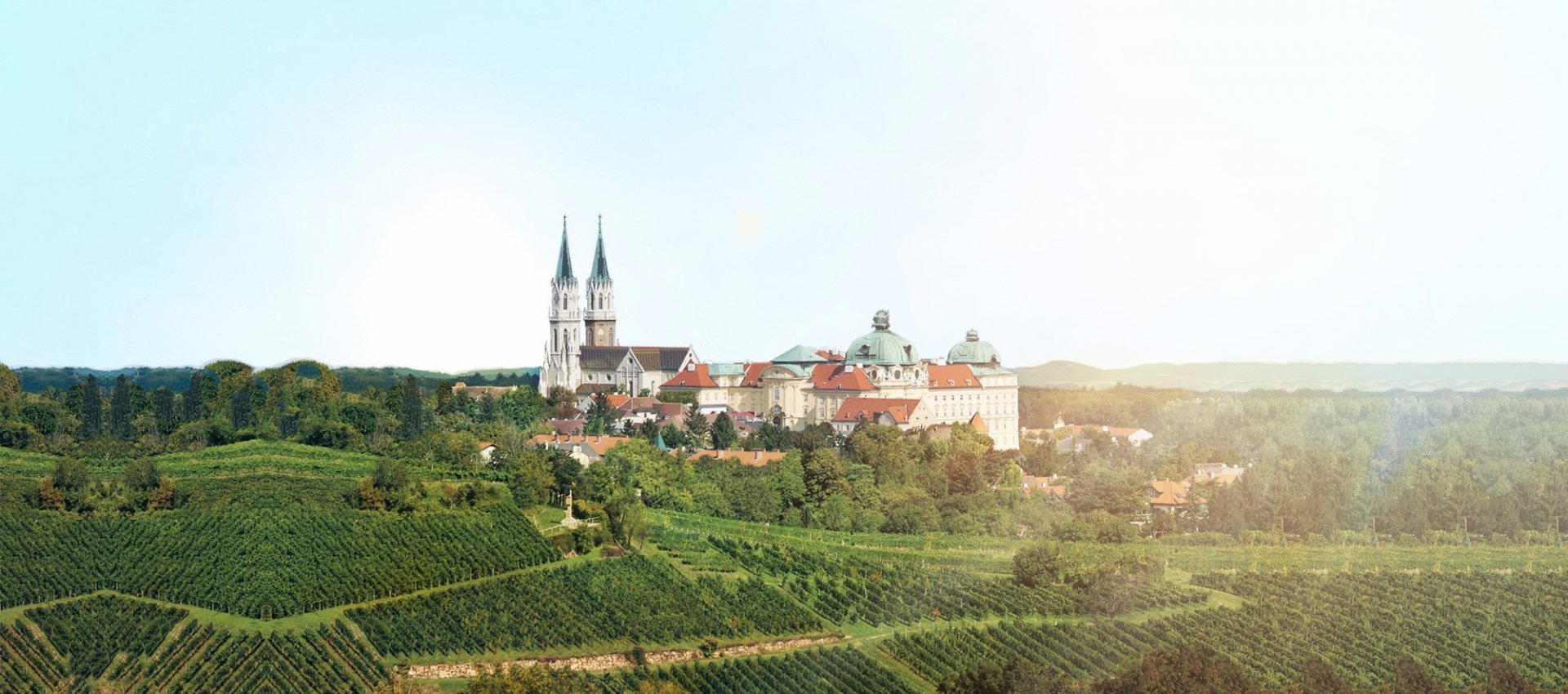
A Monastery That Has Always Made Wine
Arriving at Stiftsplatz 1 in Klosterneuburg, the scale of the Augustinian monastery is the first thing that reorients your expectations. This is not a boutique winery with a tasting room bolted on. The buildings predate the Hapsburg Empire's consolidation of Austria, and the vineyards attached to the institution have been cultivated in an unbroken line since the twelfth century.
That kind of longevity changes how you read a wine. Austrian ecclesiastical estates have long served as custodians of particular vineyard sites, accumulating observations across centuries rather than vintages. The estate's position on the Danube's western bank, just north of Vienna, places it within the Wagram and Klosterneuburg wine zones, where Grüner Veltliner and Riesling dominate but where site-specific expression has historically been less publicised than in the Wachau or Kamptal to the west.
This is not an entry-level commendation.
Ecclesiastical wineries in Austria occupy a specific position in the competitive hierarchy. They tend to have large land holdings, which can work against concentration, but the-run estates use that breadth to offer range across site and variety rather than relying on a single flagship.
For context on how the broader region's producers position themselves, see the work of Weingut Pittnauer in Gols and Weingut Heinrich Hartl in Oberwaltersdorf, both of which represent different expressions of Lower Austrian viticulture with their own recognition profiles.
The Klosterneuburg Zone and What It Means for the Wine
Klosterneuburg as a wine zone sits in a curious position: geographically close to Vienna, historically significant, but often overshadowed in international wine writing by the Wachau's dramatic terraced Rieslings and the Kamptal's benchmark Grüner Veltliners. That relative underattention is partly a function of scale, Klosterneuburg's vineyards are less photogenic, and partly a function of the zone's wine education role. The Höhere Bundeslehranstalt für Wein- und Obstbau, Austria's federal wine school, is based here and has shaped research standards for the country's wine production for over a century.
The soils around Klosterneuburg are dominated by loam, clay, and loess, which push wines toward fuller body and more textural weight than the steep schist terraces of the Wachau. Grüner Veltliner from this zone tends to be rounder and more immediately approachable than the mineral, high-acid versions from Dürnstein or Weissenkirchen. For those who have spent time with producers like Weingut Kracher in Illmitz or Weingut Wohlmuth in Kitzeck, the Klosterneuburg style sits in a different register: broader-shouldered, with fruit weight that suits the monastery's scale of production.
Visiting the Estate
The monastery itself is an architectural document of Austrian Baroque ambition, and visiting here involves more than a tasting room appointment. The complex contains a museum, imperial apartments, and the Stiftsweinkeller, the estate's wine cellar operation, which provides a vertical frame for understanding how production has evolved across the estate's modern era. Because Stift Klosterneuburg is a working religious institution, the visit experience differs from a private winery tour: the rhythm of the place is set by the monastery rather than by wine tourism logistics.
For visitors arriving from Vienna, Klosterneuburg is approximately 12 kilometres north of the city centre and accessible by suburban rail (S40 line) or by road along the Danube. This proximity makes it a practical half-day extension from Vienna. Those planning a broader Lower Austrian itinerary might pair this with a stop at Loysch Distillery, also based in Klosterneuburg, for a different category of craft production from the same town.
Current opening hours are Mon: 10 AM-6 PM; Tue: 10 AM-6 PM; Wed: 10 AM-6 PM; Thu: 10 AM-6 PM; Fri: 10 AM-6 PM; Sat: 10 AM-5 PM; Sun: Closed. Reservations are recommended. Visitors with a serious interest in the cellar and aged library wines should inquire in advance, as access to the deeper archive requires arrangement beyond the standard visit.
Where It Fits in the Austrian Wine Conversation
Austria's wine scene has spent the past three decades building a reputation anchored by a small number of high-profile producers and denominations. The country's DAC (Districtus Austriae Controllatus) framework has progressively tightened regional identities, rewarding producers who express site specificity over commercial consistency. Within that framework, ecclesiastical estates like Stift Klosterneuburg occupy an interesting position: they predate the modern classification system by centuries, and their historical claim to particular vineyard parcels gives them an authority that newer entrants cannot replicate through accumulated awards alone.
It places the winery in conversation with producers who have earned their position through the wine itself.
For those mapping Austrian wine across its different production styles and regions, the contrast between Klosterneuburg's loam-driven weight and the volcanic-influenced Burgenland work of Weingut Scheiblhofer Distillery in Andau illustrates how varied the country's output has become. The monastery's wines are not trying to compete with the Wachau's single-vineyard Riesling intensity or the Kamptal's mineral-driven prestige bottlings. They occupy a different part of the Austrian wine argument: the argument for continuity, breadth, and the specific authority of soil that has been worked by the same institution for nine centuries.
Those who follow the broader craft production scene in Austria might also note the proximity to 1516 Brewing Company Distillery in Vienna or, further afield, 1310 Spirit of the Country Distillery in Sierning and 1404 Manufacturing Distillery in Sankt Peter-Freienstein, each representing different facets of Austrian craft production culture that have emerged alongside the wine region's growth. The contrast in scale between these newer distillery operations and an institution that has been producing continuously since the twelfth century is, in itself, a useful frame for understanding where Austrian drinks culture sits in 2025.
Cost Snapshot
Comparable venues nearby, for context on price, style, and recognition.
| Venue | Cuisine | Price |
|---|---|---|
| Stift Klosterneuburg WineryThis venue — the venue you are viewing | Not listed | $$ |
| Loysch Distillery | Winery | Not listed |
| Brennerei Schwarzenberger | Winery | Not listed |
| Brennerei Kirchbichler | Winery | Not listed |
| Weingut R&A Pfaffl | Stetten, Grüner Veltliner, Riesling | $$ |
| Brennerei Durigon | Winery | Not listed |
Recognition history
Dated appearances from independent guides and award organizations, with the underlying list record or original source where available.
Falstaff Winery - 3 Stars
Falstaff
Continue exploring
More in Klosterneuburg
Wineries in Klosterneuburg
Browse all →
Bars in Klosterneuburg
Browse all →

Restaurants in Klosterneuburg
Browse all →


At a Glance
- Historic
- Elegant
- Scenic
- Rustic
- Wine Education
- Special Occasion
- Cave Tasting
- Historic Building
- Vineyard Tour
- Vineyard
- Waterfront
- Wachau
- Grüner Veltliner
- Riesling
- Pinot Blanc
- Weissburgunder
- Chardonnay
- St. Laurent
- Still White
- Still Red
- Guided Tasting
Current opening hours
- Monday
- 10 AM–6 PM
- Tuesday
- 10 AM–6 PM
- Wednesday
- 10 AM–6 PM
- Thursday
- 10 AM–6 PM
- Friday
- 10 AM–6 PM
- Saturday
- 10 AM–5 PM
- Sunday
- Closed
Hours can change for holidays and private events. Last verified .
Atmospheric underground Baroque cellars with cool, fresh air, vaulted stone architecture, and a spiritual historic monastery setting.