Our verdict
Matcha Komachi on Operngasse brings Japanese precision to Vienna's fourth district, offering a counterpoint to the city's dominant creative-Austrian dining scene. Positioned away from the first-district concentration of marquee tasting menus, it occupies a quieter register in a neighbourhood better known for its proximity to the Staatsoper than for culinary destination traffic.

Pearl is the En Primeur Club membership app, where members save venues, book tables and use the concierge.
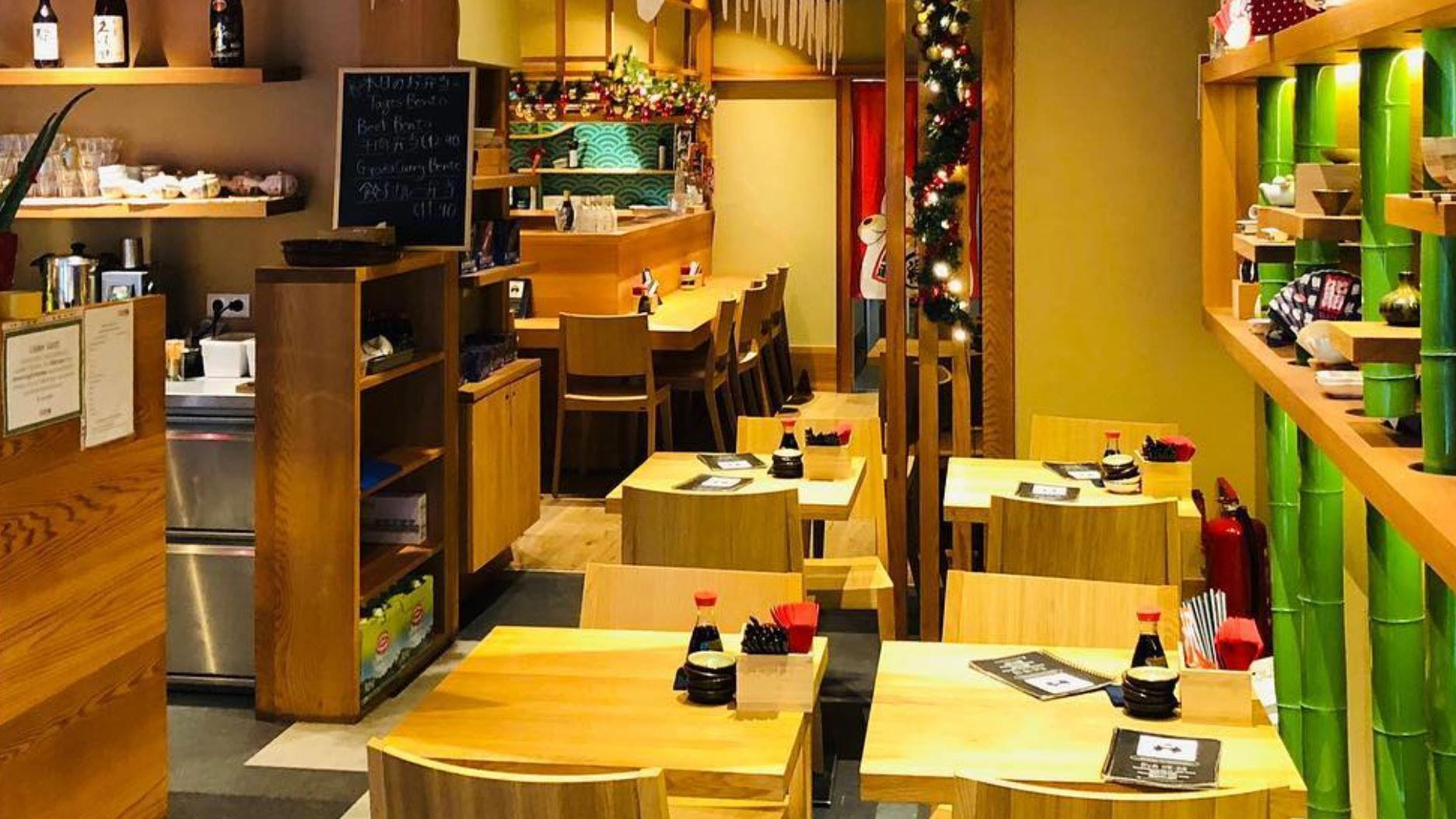
The menu
What to order
- Japanese curry don
- Unagi don
- Yakitori don
A Different Register on Operngasse
Vienna's serious dining conversation has long been shaped by a handful of addresses in and around the first district, the Stadtpark tables, the Palais kitchens, the modern-Austrian formats that now sit at the top of the city's Michelin count. Against that backdrop, the emergence of Japanese-leaning specialist cafes and tea-focused venues in the fourth district represents a quieter but meaningful shift. Matcha Komachi, at Operngasse 23, occupies that less-mapped tier: close enough to the Staatsoper to draw pre- and post-concert visitors, but positioned temperamentally apart from the theatrical tasting-menu circuit anchored by places like Steirereck im Stadtpark or Amador.
The broader pattern is worth naming. European cities with strong coffee-house traditions, Vienna most conspicuously, have shown consistent appetite for precision-oriented tea and matcha formats as an alternative to the Viennese Kaffeehaus. Where the Kaffeehaus runs on Melange and newspaper culture, matcha venues tend toward a more focused, quieter ritual. Matcha Komachi operates within that tension, translating Japanese ceremonial tea culture into a central-European urban context.
The Booking Question
Given the scarcity of specialist Japanese tea and matcha venues in Vienna's fourth district, the practical planning question matters more than it might at a conventional cafe. Vienna's mid-tier creative dining has become increasingly reservations-oriented since 2022, and the pattern extends downward into popular specialist formats. For venues on Operngasse serving an Opera-adjacent clientele, evening walk-in availability on performance nights, particularly when the Staatsoper schedule runs full, can be unreliable. The general principle for any small-format specialist venue in this neighbourhood: book ahead where the option exists, especially for Friday and Saturday evenings between October and June, when the Staatsoper season is at its most active and foot traffic in the fourth district peaks accordingly.
For those planning around Vienna's broader dining circuit, Matcha Komachi sits at a different price register than the city's Konstantin Filippou or Mraz & Sohn tasting-menu tier. The practical logistics, walk-in versus reservation, timing around cultural programming, proximity to public transport, align it with a daytime or early-evening visit pattern rather than a late-night destination. U4 and U1 interchange at Karlsplatz, a short walk away, make the address accessible from most central Vienna hotels without a taxi.
Matcha in a Viennese Context
The matcha format has expanded across European capitals over the past decade, but Vienna's iteration carries a specific cultural texture. The city's cafe traditions are codified to a degree unusual even by European standards, the UNESCO intangible cultural heritage designation of Viennese coffee-house culture in 2011 gives a sense of how seriously the city takes its hospitality rituals. A Japanese tea venue entering that context does so with an implicit comparison always in the room. The question is not whether matcha is good in isolation, but whether the format can hold its own against a deeply embedded local tradition.
Across European cities where this comparison has played out, London, Paris, Amsterdam, the matcha venues that have lasted tend to be those that commit fully to precision: ceremonial-grade sourcing, consistent preparation temperature, and a menu that doesn't hedge toward generic cafe formats. The same pattern applies in cities like New York, where venues such as Atomix have demonstrated that Japanese precision translates powerfully when the commitment to the source tradition is uncompromising.
Situating Matcha Komachi in Vienna's Wider Scene
Vienna's restaurant scene at the high end is well-documented: Doubek and the broader creative-Austrian cohort hold the Michelin attention, while newer addresses push into modern European territory. See our full Vienna restaurants guide for the complete picture across price tiers and cuisine categories. Within Austria more broadly, the serious dining circuit extends to properties like Döllerer in Golling an der Salzach, Ikarus in Salzburg, and Obauer in Werfen, all of which represent the country's creative-cuisine tradition at full expression.
Alpine and regional dining further afield includes Griggeler Stuba in Lech, Gourmetrestaurant Tannenhof in Sankt Anton am Arlberg, Schwarzer Adler in Hall in Tirol, and Restaurant 141 by Joachim Jaud in Mieming. For those combining a Vienna visit with regional exploration, Landhaus Bacher in Mautern an der Donau, Kräuterreich by Vitus Winkler in Sankt Veit im Pongau, and Ois in Neufelden extend the itinerary into Austria's less-trafficked dining corridors. For an international reference point in Japanese-influenced fine dining, Le Bernardin in New York City demonstrates how Asian precision applied to Western ingredients can reshape a city's dining expectations over time.
Planning Your Visit
Operngasse 23 places Matcha Komachi within a ten-minute walk of the Naschmarkt, Vienna's main open-air market, making a combined morning itinerary, market browsing followed by a matcha stop, a logical pairing. The fourth district (Wieden) is denser and more residential than the first, with lower tourist concentration outside the immediate Opera perimeter, which tends to mean shorter wait times at smaller venues during midweek daytime hours. For those visiting in the summer months, the Karlsplatz area empties of the concert-season crowd, and the neighbourhood takes on a more local, less event-driven character.
Frequently asked questions
What's Matcha Komachi's location?
Matcha Komachi is located at Operngasse 23, 1040 Wien, Austria, Vienna.
Is Matcha Komachi the only dedicated Japanese matcha café in Vienna's fourth district?
Among documented specialist venues, Matcha Komachi at Operngasse 23 holds a notably singular position in Vienna's fourth district, where Japanese tea culture has very limited dedicated representation. Vienna's café scene is dense with traditional Viennese coffeehouses and a growing wave of specialty coffee bars, but matcha-forward Japanese concepts remain few. That relative scarcity is what gives Matcha Komachi its particular standing in the city's wider café conversation.
What dish is Matcha Komachi famous for?
Matcha Komachi centres its offer on matcha-based preparations, the name itself signals the focus. Vienna has very few venues dedicated to the format at this level of specificity, which positions Matcha Komachi as one of the rare addresses in the fourth district where matcha is the organizing principle rather than a menu footnote. Specific current dishes are best confirmed directly with the venue at Operngasse 23.
Do I need a reservation for Matcha Komachi?
Specialist Japanese tea venues in Vienna tend to operate with limited seating, and Matcha Komachi at Operngasse 23 sits in a neighbourhood that draws both locals and visitors heading to or from the Naschmarkt. Walk-in availability varies by time of day; contacting the venue ahead of a planned visit is advisable, particularly on weekends.
What's Matcha Komachi best at?
The core strength is focus: Matcha Komachi occupies a specific niche in Vienna's café scene by treating matcha as a primary discipline rather than a trend garnish. In a city whose coffee culture has defined European café standards for over a century, that level of Japanese tea specificity at Operngasse 23 is genuinely scarce.
Should I splurge on Matcha Komachi?
The question is less about budget and more about purpose: Operngasse 23 is a deliberate destination for matcha specifically, not a general-purpose café stop.
The Short List
Comparable venues nearby, for context on price, style, and recognition.
| Venue | Cuisine | Price | Notes |
|---|---|---|---|
| Matcha KomachiThis venue (the venue you are viewing) | Japanese Fusion Noodles & Donburi | $10–20 | Not listed |
| KitchA Sticks & Rolls | Modern Asian Fusion Sushi | $20–30 | Stephansdom, Modern Asian Fusion Sushi |
| Little Koya | Japanese Sushi & Noodles | $20–30 | Inner City, Japanese Sushi & Noodles |
| Asahimoto | Authentic Japanese Sushi & Ramen | $10–20 | Kaiserebersdorf, Authentic Japanese Sushi & Ramen |
| Ebi Mini | Japanese Sushi & Ramen | $20–30 | Hofburg, Japanese Sushi & Ramen |
| Shokudo Kuishimbo | Authentic Japanese Izakaya | $20–30 | Mariahilf, Authentic Japanese Izakaya |
Continue exploring
More in Vienna
Restaurants in Vienna
All restaurants in Vienna →
Bars in Vienna
All bars in Vienna →
Details
- Trendy
- Cozy
- Modern
- Casual Hangout
- Open Kitchen
- Sake Program
- A La Carte
- Sake Program
- Vegetarian Friendly
- Vegan Options
Current opening hours
- Monday
- 11 AM–10 PM
- Tuesday
- 11 AM–10 PM
- Wednesday
- 11 AM–10 PM
- Thursday
- 11 AM–10 PM
- Friday
- 11 AM–10 PM
- Saturday
- 11 AM–10 PM
- Sunday
- 11 AM–10 PM
Hours can change for holidays and private events. Hours as of .