

Tabelog Bronze #284
Our verdict
Opened in March 2018 in Chiyoda's Ichibancho district, Sushi Mizukami holds a Tabelog score of 4.27 and has earned consecutive Tabelog Bronze Awards from 2023 through 2026, placing it among Tokyo's most consistently recognised omakase counters. The eight-seat counter runs two evening seatings and a weekend lunch service, with dinner averaging JPY 40,000–49,999. Reservations are accepted but competitive at this tier.

Pearl is the En Primeur Club membership app, where members save venues, book tables and use the concierge.
The menu
What to order
- Sashimi yuba and Bafun sea urchin
- Abalone with liver
- Bonito steak
- Kuruma ebi
A Chiyoda Counter in a City of Counters
When Sushi Mizukami opened on 26 March 2018 in Ichibancho, Chiyoda Ward, Tokyo's omakase market was already densely competitive. The years since have only sharpened the stratification: at the leading sit the Ginza flagships with multi-year waiting lists and five-figure covers; below them, a broad middle tier of technically accomplished counters priced in the JPY 20,000–30,000 range; and between the two, a smaller bracket of independently operated, small-format rooms that price at the upper threshold without the name recognition of the Ginza establishment. Sushi Mizukami occupies that intermediate-premium position.
The Ichibancho address is worth noting as a locational signal. Chiyoda is more commonly associated with government buildings and the Imperial Palace grounds than with fine dining destination traffic. The neighbourhood does not carry the social voltage of Ginza or the culinary density of Ebisu, which means a counter at this level in this area draws guests who are specifically seeking it out rather than wandering in from adjacent restaurant clusters. That selectivity shapes the room's dynamic in ways that are harder to engineer in higher-footfall districts. For broader context on the Tokyo dining scene at this tier, see our full Tokyo restaurants guide.
The Format and What It Demands
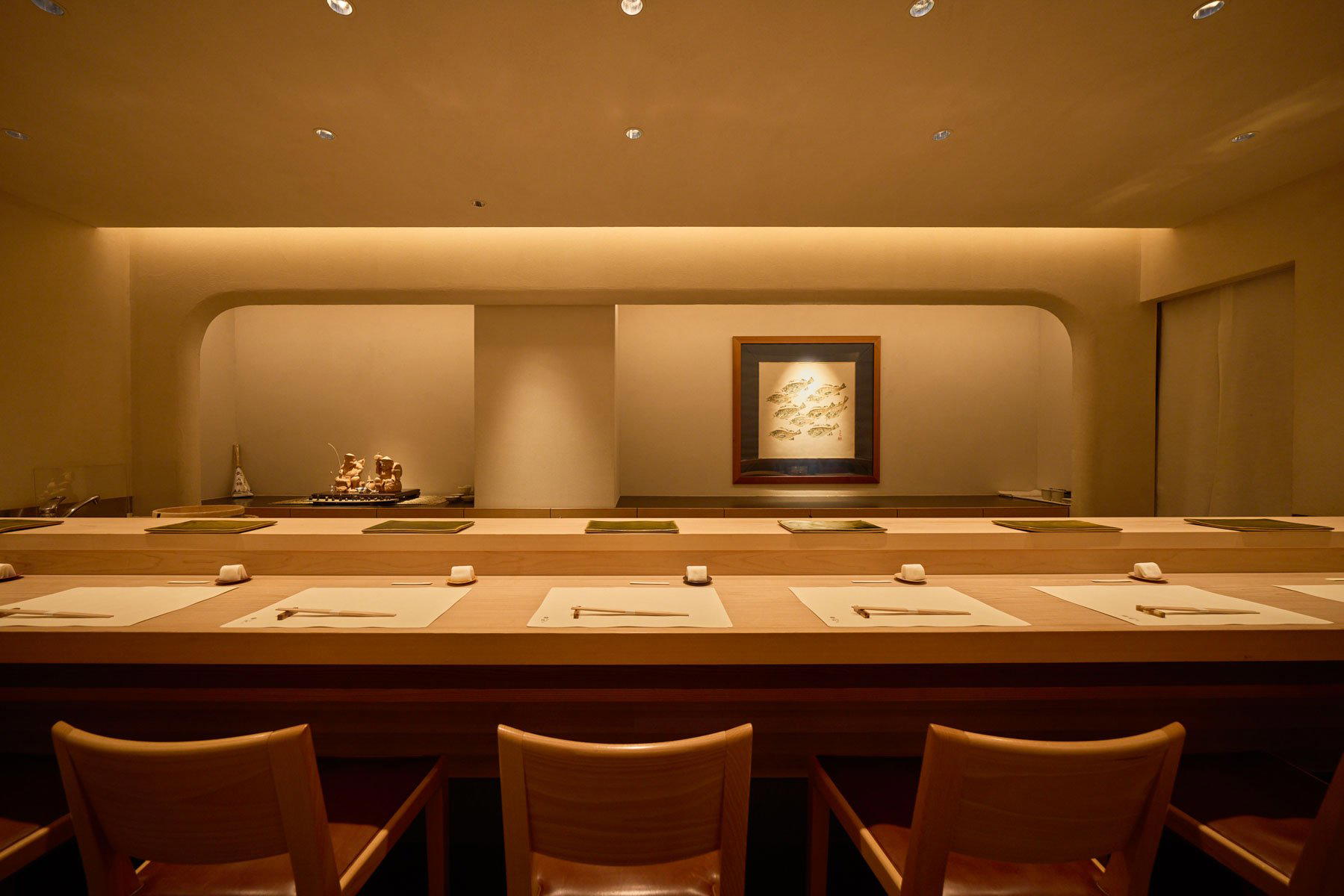
At eight seats, Mizukami operates at the scale where the format's logic is most exposed. Tokyo's omakase counter tradition is built on the premise that a single itamae working a small counter can deliver precision that scales poorly: the fish sourced that morning, the rice temperature calibrated to each piece, the pacing governed by the chef's reading of the room. Counters of this size are not a niche affectation; they are the format's original unit. The question for any eight-seat room priced at JPY 40,000–49,999 per cover is whether the technical execution justifies the premium over larger, similarly credentialled operations.
Mizukami's answer, as reflected in a Tabelog score that has remained above 4.2 for multiple consecutive years, is that it does. The score of 4.27 in 2026 is notable for a counter that has not accumulated the decade-long review base of older Ginza establishments.
Ingredient Logic at the JPY 40,000–49,000 Threshold
At this price tier, the sourcing question is not whether premium fish is being used, it is, but how the counter positions itself relative to the ingredient-first versus technique-first spectrum that increasingly divides Tokyo's serious omakase rooms. The global context matters here: the past decade has seen Japanese counter technique migrate outward, with alumni of Tokyo and Osaka training programmes opening in cities from New York to Copenhagen, and counter formats in those cities interpreting Japanese product discipline through local ingredient frameworks. At Atomix in New York City, for example, Korean culinary logic is applied to an omakase-adjacent structure; at Le Bernardin in New York City, French seafood technique achieves a comparable kind of ingredient transparency through entirely different means.
What that export moment clarifies about the domestic original is that the distinctiveness of Tokyo omakase at Mizukami's level is precisely its refusal to incorporate those outward influences. The Edomae tradition, vinegared rice, aged or cured fish, technique developed over generations in Tokyo Bay, is the frame, and the counter format is its delivery mechanism. The global spread of counter dining and omakase structure has, paradoxically, made the unmodified original more legible as a specific thing rather than a generic one. Elsewhere in Japan, the same dynamic plays out differently: Goh in Fukuoka and Gion Sasaki in Kyoto each represent regional traditions that run parallel to Tokyo omakase rather than beneath it.
Practical Context for This Counter
The service structure at Mizukami divides into two evening seatings, 17:30 and 19:30, plus a weekend and public-holiday lunch service running 12:00 to 14:00. The counter is closed Tuesday and Wednesday. This operating pattern is typical of high-throughput small counters that maximise covers-per-seat without compromising the pace of individual seatings; two 90-to-120-minute evening slots across five days generates a manageable weekly cover count for an eight-seat room.
The dress code is described as casual smart with one operationally significant requirement: guests wearing perfume will not be seated, and the no-show policy applies in that scenario. This is not an unusual restriction at serious sushi counters, fragrance directly interferes with the olfactory dimension of eating seafood, but the explicit policy and its enforcement signal a room that treats the sensory conditions of dining as non-negotiable. It is the kind of house rule that functions as a quality signal in itself.
Payment is accepted by major credit cards (Visa, JCB, Amex, Diners). Electronic money and QR code payments are not accepted. There are no private rooms, though the venue is available for exclusive hire as a whole. The nearest station is Hanzomon, approximately 310 metres from the restaurant. For accommodation options in the area, see our full Tokyo hotels guide; for bars to extend an evening, our full Tokyo bars guide covers the city by neighbourhood and format.
Where Mizukami Sits in the Wider Picture
Placing Mizukami within Tokyo's broader fine dining map requires acknowledging that sushi omakase is only one strand of the city's premium dining. At comparable price points, kaiseki rooms like RyuGin offer an entirely different structure, multi-course Japanese seasonal cooking with broader ingredient range and a longer service arc. French kitchens like L'Effervescence, Sézanne, and Crony occupy the same spending tier and compete for overlapping audiences who move between Japanese and Western-rooted fine dining without treating the distinction as categorical.
What sushi counters at Mizukami's level offer that none of those alternatives can replicate is compression: the format strips dining back to fish, rice, and the interval between pieces. The counter is the entire architecture. That compression, maintained across four consecutive award years and a score that Tabelog's review base has kept above 4.2, is the argument for this room over its alternatives in the same price bracket. For restaurants operating in comparable frameworks across Japan, the EP Club covers HAJIME in Osaka, akordu in Nara, and 1000 in Yokohama, each operating at the intersection of rigorous technique and strong regional identity. 6 in Okinawa extends the picture further into Japanese ingredient diversity. For experiences beyond the plate in Tokyo, our full Tokyo experiences guide and our full Tokyo wineries guide provide further context.
Quick reference: Sushi Mizukami, 3-8 Ichibancho, Chiyoda, Tokyo. Eight seats. Dinner JPY 40,000–49,999. Two evening seatings (17:30 and 19:30); weekend lunch 12:00–14:00. Closed Tuesday and Wednesday. Tabelog score 4.27; Bronze Award 2023–2026; Tabelog Sushi Tokyo 100 (2021, 2022, 2025). Hanzomon station, 310m.
Frequently asked questions
What should I expect atmosphere-wise at Mizukami?
What should I eat at Mizukami?
What's the signature at Mizukami?
Side-by-Side Snapshot
Comparable venues nearby, for context on price, style, and recognition.
| Venue | Cuisine | Price | Awards | Notes |
|---|---|---|---|---|
| MizukamiThis venue (the venue you are viewing) | Edomae Sushi Omakase | $200–300 | Tabelog Bronze #284 | Not listed |
| VERT | Japanese Tea-Paired Dessert Omakase | $200–300 | Michelin Plate | Shinjuku |
| Chiba Takaoka | Chiba Seafood Edomae Sushi | Not listed | Tabelog Bronze #46 | Chūō |
| Sushi Hatano Yoshiki | Modern Edomae Omakase | $200–300 | Tabelog Bronze #102 | Minato |
| Miyake Akira | Seasonal Japanese Kaiseki with Unagi | $30–50 | Michelin Plate | Minato |
| Shima | Japanese Wagyu Steakhouse | $150–200 | Tabelog 100 #16 | Chūō |
Recognition history
Dated appearances from independent guides and award organizations, with the underlying list record or original source where available.
Opinionated About Dining Top Restaurants in Japan Highly Recommended
Opinionated About Dining
Tabelog Bronze #284
Tabelog
Full recognition history (6 entries)
Opinionated About Dining Top Restaurants in Japan Ranked #302
Opinionated About Dining
Tabelog Bronze
Tabelog
Tabelog 100 #50 · No. 50
Tabelog · Tabelog 100 - Sushi - TOKYO - 2025
Opinionated About Dining Top Restaurants in Japan Ranked #348
Opinionated About Dining
Continue exploring
More in Tokyo
Restaurants in Tokyo
All restaurants in Tokyo →
Bars in Tokyo
All bars in Tokyo →


Details
- Elegant
- Intimate
- Sophisticated
- Quiet
- Minimalist
- Date Night
- Special Occasion
- Business Dinner
- Solo
- Chefs Counter
- Sake Program
- Omakase
- Counter Dining
- Sake Program
Current opening hours
- Monday
- 12–2 PM, 5:30–9:30 PM
- Tuesday
- Closed
- Wednesday
- Closed
- Thursday
- 12–2 PM, 5:30–9:30 PM
- Friday
- 12–2 PM, 5:30–9:30 PM
- Saturday
- 12–2 PM, 5:30–9:30 PM
- Sunday
- 12–2 PM, 5:30–9:30 PM
Hours can change for holidays and private events. Hours as of .
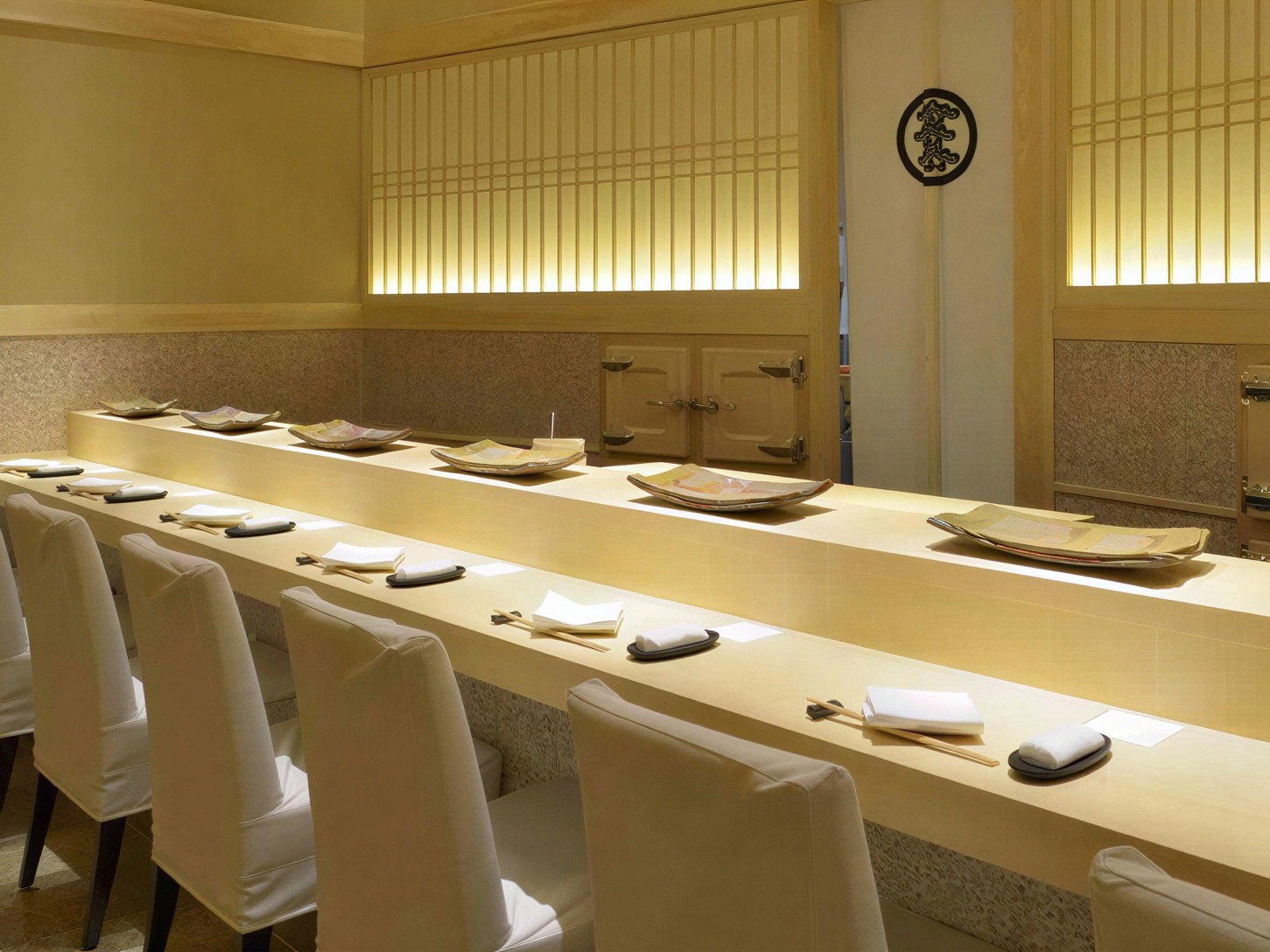
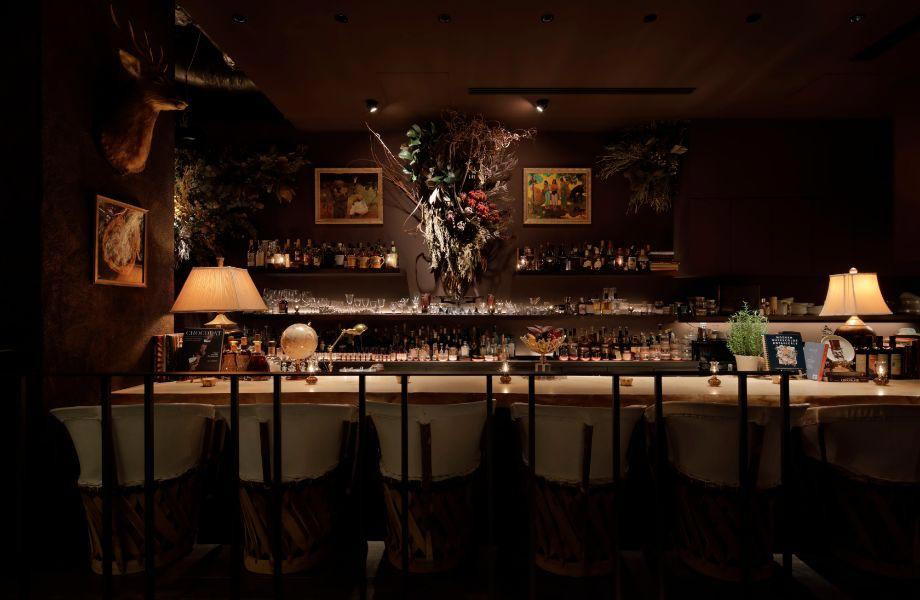
Neat and elegant space with a beautiful 300-year-old Kiso cypress counter, soft lighting, and a serene, Kyoto-like atmosphere of quiet precision and stillness.