Our verdict
mixology heritage is a classic cocktail bar in Hibiya OKUROJI, with craft cocktails, a quiet room, and leisurely pacing that suits smart-casual late-night plans.

Pearl is the En Primeur Club membership app, where members save venues, book tables and use the concierge.

Ethical Craft in the Brick Arches of Hibiya
Beneath the railway viaducts of Uchisaiwaicho, where Hibiya shades into the older commercial fabric of Chiyoda, a particular kind of bar has emerged in recent years. The OKUROJI development repurposed the brick arches under the Yamanote Line into a low-lit corridor of drinking spaces, and within that context Mixology Heritage occupies a position defined less by spectacle than by material discipline. The physical approach sets the tone: worn stone underfoot, the faint rumble of trains overhead, and interiors that lean on texture and restraint rather than theatrical lighting or maximalist design. It is a bar that communicates its values before you order anything.
That quality of restraint connects directly to a wider shift in Tokyo's bar culture. Over the past decade, the city's most serious cocktail programs have moved away from novelty-for-its-own-sake and toward programs that foreground sourcing, technique, and the provenance of raw materials. Where an earlier generation of Tokyo bars competed on obscure spirits and elaborate garnishes, the current cohort competes on the integrity of the base product and the coherence of the concept. Mixology Heritage sits inside that current, with a name that signals conscious engagement with both tradition and the materials that tradition depends on.
Sustainability as a Structural Commitment, Not a Marketing Overlay
In the Japanese bar world, sustainability rhetoric is relatively easy to attach to a cocktail menu. The harder task is making it structurally present in how a bar operates: what it sources, what it avoids wasting, how it treats ingredients that most programs discard. Tokyo's serious cocktail venues have begun treating this as a technical challenge rather than a communications exercise, and Mixology Heritage positions within that narrower, more demanding tier.
The location inside OKUROJI is itself part of the story. The Hibiya-OKUROJI development was conceived as an adaptive reuse project, converting infrastructure that had sat underutilized into a hospitality corridor without demolition or new-build construction. For a bar whose identity engages with heritage and material consciousness, operating inside a repurposed brick arch carries coherence that a conventional fit-out would not. It aligns form with content in a way that matters to a specific type of drinker: one who notices the difference between a sustainability claim and a sustainability practice.
Beyond the physical context, cocktail programs in this category tend to share certain operational signatures: locally foraged or seasonally restricted botanicals, citrus that is pressed whole and used across multiple preparations to reduce waste, spirits from Japanese distilleries whose production methods align with low-intervention or small-batch values. These are not decorative choices. They shape flavour in ways that distinguish this tier from bars working with standard commercial inputs, and they impose a discipline that keeps menus shorter and more focused than the category average.
Where This Fits in Tokyo's Cocktail Tier
Tokyo's bar scene stratifies clearly once you spend time inside it. The broadest tier covers hotel bars and high-volume izakaya cocktail programs. Above that sits a dense middle layer of craft-focused independent bars, many with genuine skill but limited conceptual coherence. The smallest tier, where Mixology Heritage operates, is defined by programs that have a legible philosophy running through sourcing, format, and service, and that hold to it consistently. This is the tier that draws international attention to Tokyo cocktails, and it is also the tier where finding a seat on short notice is rarely direct.
L'Effervescence (French) and Sézanne (French) have built similar reputations in the French fine dining register, and Crony (Innovative, French) has carved out a comparably focused niche in the innovative French bracket. In each case, the common thread is that the program's identity is built around what it values, not just what it produces. Mixology Heritage belongs to that conversation in the cocktail category.
Japan's broader dining culture rewards this kind of commitment. Across the country, from HAJIME in Osaka to Gion Sasaki in Kyoto to akordu in Nara to Goh in Fukuoka, the restaurants and bars that sustain long-term critical attention share an operating discipline that goes beyond menu engineering. Regional venues like 三本木 茂太郎制 in Nanao, 古代山乃 in Sapporo, 湖畔荘庵 in Takashima, and 羽羽屋 in Nishikawa Machi demonstrate that this ethic extends well beyond the capital. Mixology Heritage, in Chiyoda, operates in a market where that standard is assumed rather than aspirational.
Planning Your Visit
Mixology Heritage is located at 1 Chome-7-1 Uchisaiwaicho, Chiyoda City, Tokyo 100-0011, within the OKUROJI development accessible from Hibiya and Uchisaiwaicho stations. Booking details and current hours are best confirmed directly through the venue or via the OKUROJI directory, as operating schedules across the development vary by season. For broader context on where this bar fits in Tokyo's dining and drinking scene, see our full Tokyo restaurants guide.
Beyond Tokyo, the venues worth holding alongside this one for Japan trip planning include Birdland in Sakai, Bistro Ange in Toyohashi, and internationally, Le Bernardin in New York City and Atomix in New York City, which share a comparable commitment to sourcing coherence in their respective categories.
Logistics at a Glance
| Venue | Category | Price Tier | Location |
|---|---|---|---|
| Mixology Heritage | Cocktail Bar | Not published | OKUROJI, Chiyoda |
| Harutaka | Sushi | ¥¥¥¥ | Ginza |
| L'Effervescence | French | ¥¥¥¥ | Nishi-Azabu |
| RyuGin | Kaiseki | ¥¥¥¥ | Roppongi |
| Crony | Innovative French | ¥¥¥¥ | Shibuya |
Frequently asked questions
What do people recommend at Mixology Heritage?
Given the bar's positioning within Tokyo's heritage-and-sourcing-focused cocktail tier, guests most frequently highlight preparations that foreground Japanese spirits and seasonal botanicals. The program's identity is built around ingredient discipline rather than novelty, so the drinks that tend to draw the strongest responses are those where a small number of components are treated with precision.
Do they take walk-ins at Mixology Heritage?
In Tokyo's more focused cocktail bars, walk-in availability depends heavily on day and time. Programs at this level of Chiyoda's bar scene, particularly those operating within curated developments like OKUROJI, tend to fill quickly on evenings from Thursday through Saturday. Confirming availability in advance is advisable rather than arriving without notice. If the bar is fully committed, OKUROJI's format means alternative options within the same development are accessible on foot.
What is the signature at Mixology Heritage?
With venue-specific menu data not currently in the public record, the answer sits at the level of the program rather than a named drink. In bars of this type, the signature is more often a method or a sourcing commitment than a single cocktail: waste-reduction techniques, hyper-local botanical selection, or the use of Japanese base spirits across the full menu. That structural approach is what defines the bar's position relative to its peers, and it is what returning guests tend to reference when they recommend it. Verification of specific current drinks requires direct contact with the venue.
Can Mixology Heritage handle vegetarian requests?
Cocktail bars in this category rarely present dietary alignment as a complication, since the core program is already built around plant-based and fermented inputs. If the bar offers any food component alongside its drinks, specific requirements are worth confirming directly. The venue does not currently publish menu details or contact information through third-party platforms, so the most reliable route is via the OKUROJI development directory for Tokyo.
Is Mixology Heritage connected to Japanese whisky culture, or is it a broader spirits program?
The bar's name signals engagement with heritage technique rather than loyalty to a single spirit category. In Tokyo's serious cocktail bars, Japanese whisky occupies a central place, but the most coherent programs treat it as one input among several rather than the sole focus. Mixology Heritage, situated within a development that emphasises craft and provenance across multiple hospitality formats, is most accurately read as a spirits-broad program with heritage technique as its organising logic. For category-specific depth, direct engagement with the bar's current menu is the only reliable source.
Price and Recognition
Comparable venues nearby, for context on price, style, and recognition.
| Venue | Cuisine | Price | Awards | Notes |
|---|---|---|---|---|
| mixology heritageThis venue (the venue you are viewing) | Classic Cocktail Bar | $50–100 | Not listed | Not listed |
| Bar P.M.9 | Classic Japanese cocktail bar | $50–100 | Tabelog 100 #93 | Minato, Classic Japanese cocktail bar |
| ADI | Modern Nepalese Omakase | $100–150 | Tabelog 100 #72 | Meguro, Modern Nepalese Omakase |
| MORI BAR | Cocktail Bar | $30–50 | Tabelog 100 #46 | Chūō, Cocktail Bar |
| Patisserie Satsuki | Chiyoda, Hotel patisserie & bakery | $30–50 | Tabelog 100 #65 | Not listed |
| STARBUCKS RESERVE ROASTERY TOKYO | Not listed | Not listed | Not listed | Meguro, Starbucks Reserve Roastery café & bar with Italian bakery |
Continue exploring
More in Tokyo
Restaurants in Tokyo
All restaurants in Tokyo →
Bars in Tokyo
All bars in Tokyo →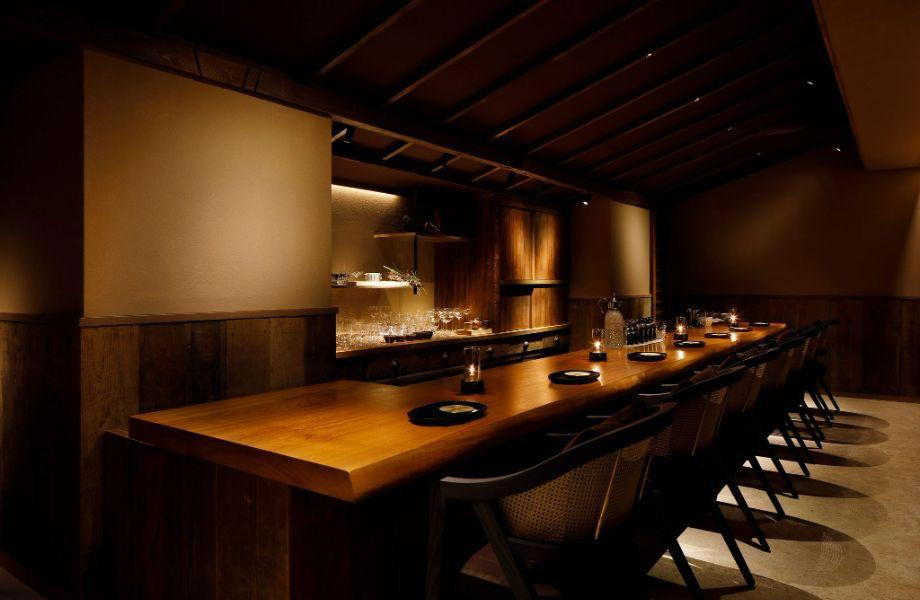

Details
- Sophisticated
- Elegant
- Intimate
- Classic
- Date Night
- Special Occasion
- Craft Cocktails
- Small Plates
- Craft Cocktails
Current opening hours
- Monday
- 4–11 PM
- Tuesday
- 4–11 PM
- Wednesday
- 4–11 PM
- Thursday
- 4–11 PM
- Friday
- 4–11 PM
- Saturday
- 3–11 PM
- Sunday
- 3–11 PM
Hours can change for holidays and private events. Hours as of .
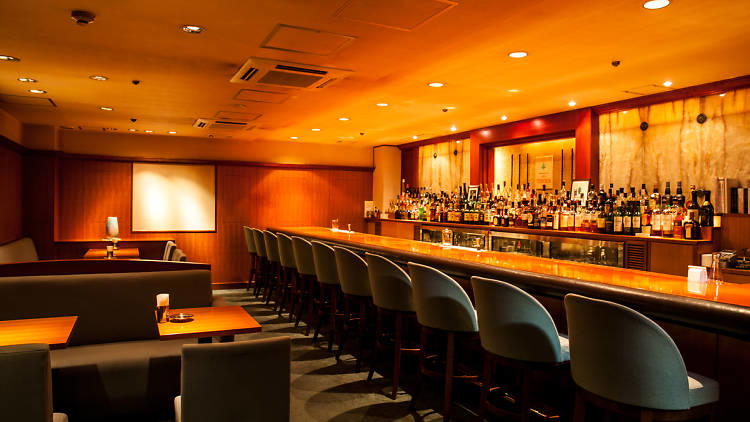
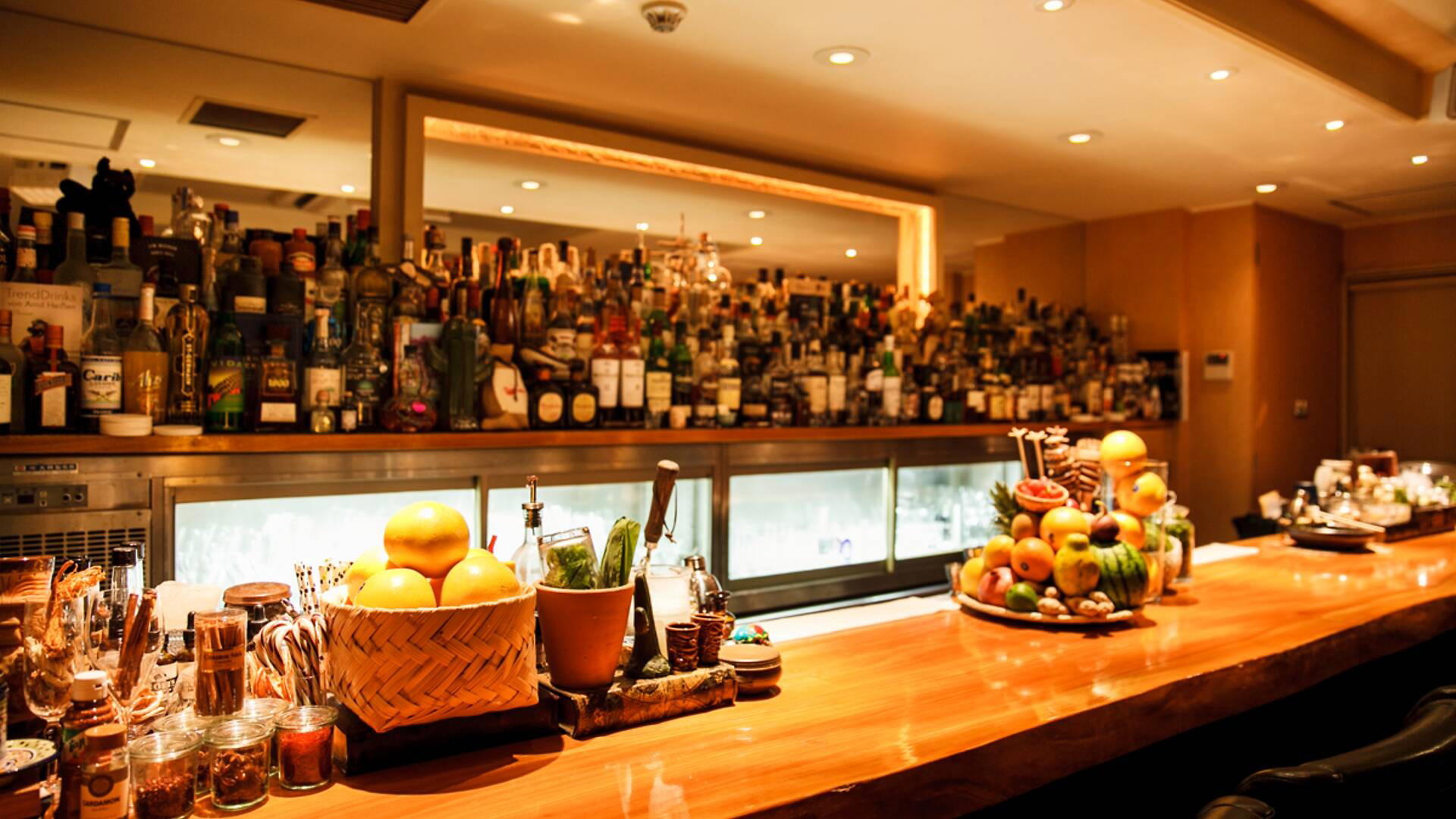
Calm and stylish old-time interior with pressed metal ceiling, rustic wooden bar top, and a sophisticated counter atmosphere.