


Michelin Plate · We're Smart World 1 Radish
Our verdict
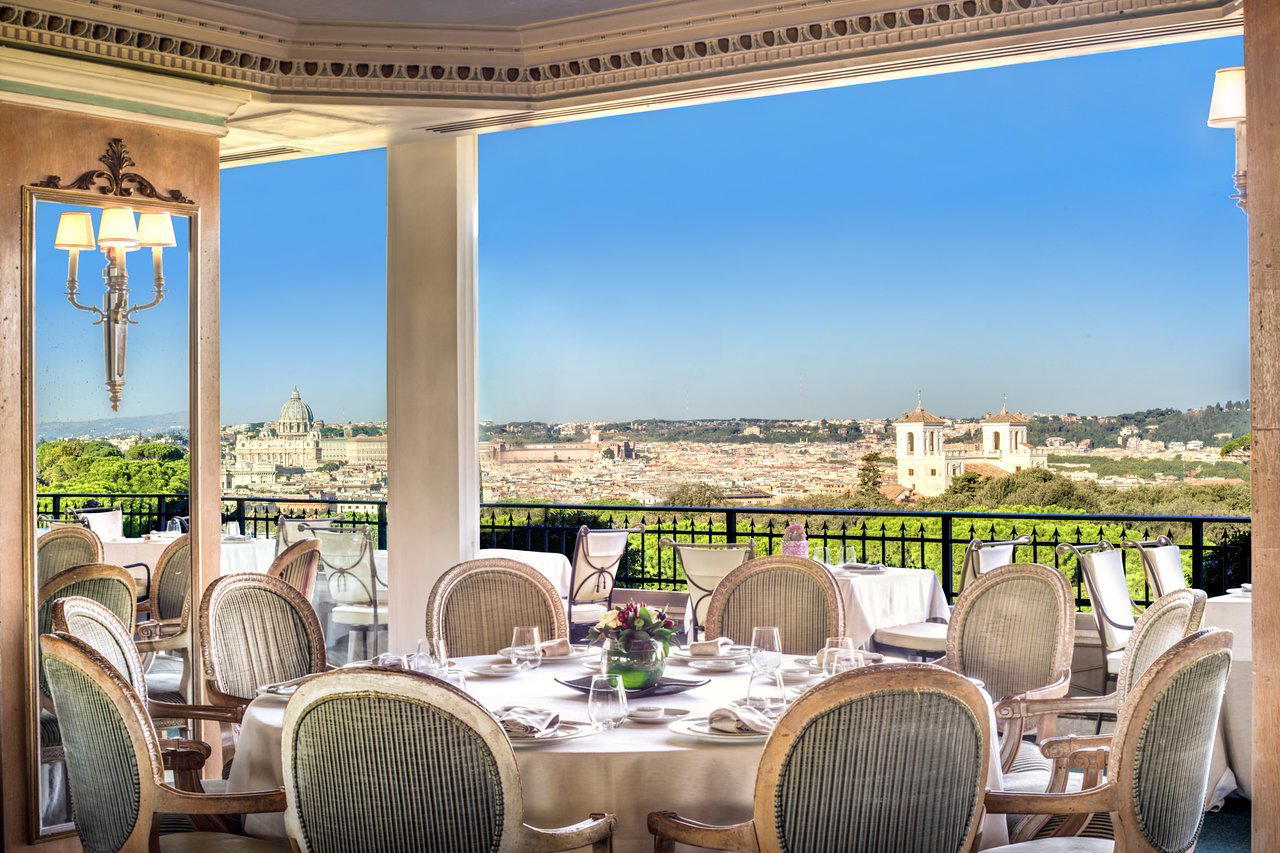
On the penultimate floor of Hotel Splendide Royal, just off the Pinciana gate on the Borghese side of the Aurelian Walls, Mirabelle commands a panorama that sweeps from Villa Medici to St Peter's. Chef Stefano Marzetti's menu works within a classically-grounded, modern Italian register, with consistent recognition from Michelin and Opinionated About Dining across multiple years. The view, the cooking, and the address together place it in Rome's upper tier of fine dining.

Pearl is the En Primeur Club membership app — saves, bookings, and concierge access live there. Same editors, same standards.
The menu
What to order
- Rack of lamb
- Seabass tartare
- Settimo Cielo dessert
Rome from the Rooftop: Elevation, Panorama, and the Fine-Dining Case for Views That Earn Their Place
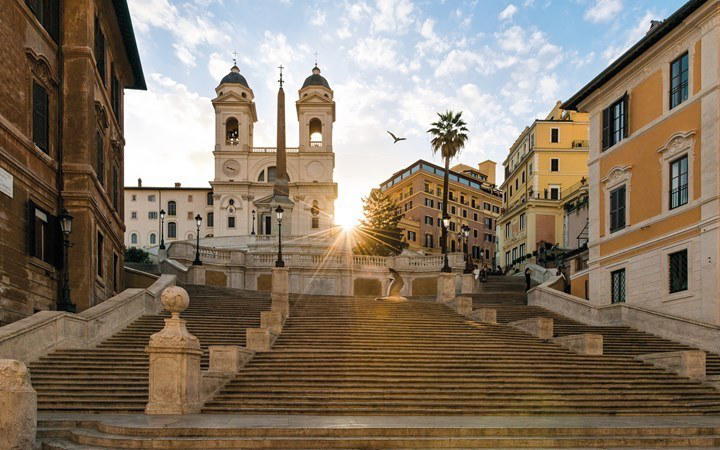
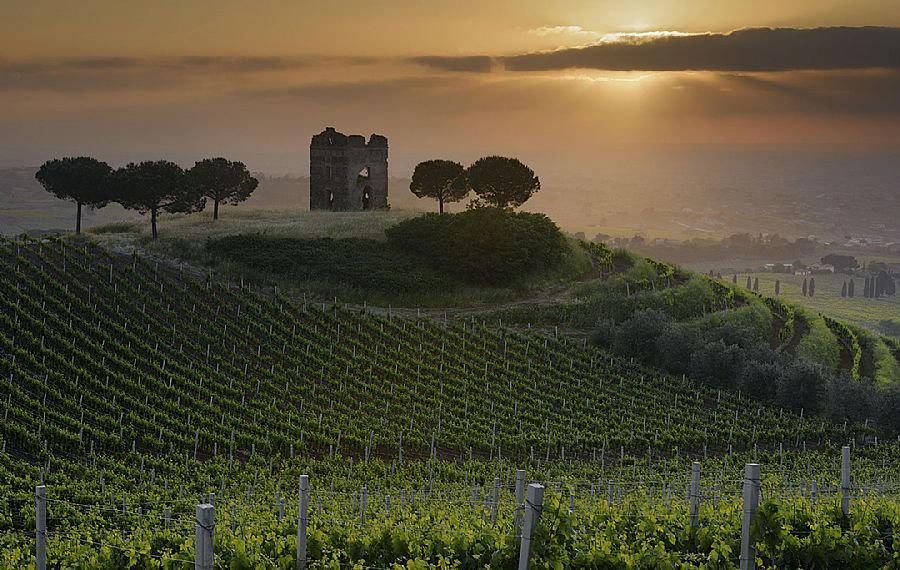
There is a particular argument in Roman fine dining that the view is a crutch — that restaurants commanding panoramas from the Pincian Hill or the Gianicolo trade on geography to excuse mediocre cooking. Mirabelle, on the penultimate floor of Hotel Splendide Royal at Via di Porta Pinciana, 14, sits squarely inside that debate. The panorama is genuine: from this height, the sightline runs from Villa Medici and Trinità dei Monti across to St Peter's and west toward the Gianicolo, and at sunset the sequence of domes and bell towers reads like a cartographic argument for why Rome's skyline was worth protecting.
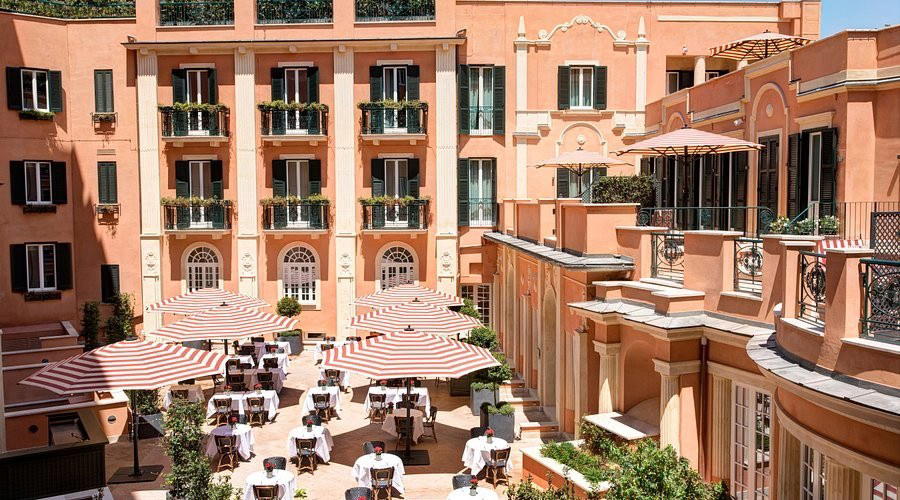
The address itself carries context. Via di Porta Pinciana marks the edge of the Borghese quarter, one of the quietest and most residential corners of central Rome, a short walk from the Borghese gallery and a long way in atmosphere from the tourist-dense streets around the Trevi Fountain. Arriving at the hotel, then ascending to the restaurant level, the transition from street to dining room is unhurried in a way that suits the price register. The Adèle lounge bar, one floor above, extends the evening vertically for those who want aperitivo or a digestivo with the same view from a slightly higher vantage.
Classical Discipline in a City That Has Redefined Itself
Rome's contemporary fine-dining scene has fractured meaningfully over the past decade. On one end, a cluster of technically ambitious restaurants has pushed toward creative tasting menus, places like Il Pagliaccio and Acquolina that operate with the kind of research-driven specificity more associated with northern Italy. On the other, a smaller cohort has held to the classically-grounded register: modern presentations, seasonal Italian ingredients, cooking that references tradition without being archaeologically faithful to it. Mirabelle occupies that second tier. Chef Stefano Marzetti's approach to meat and fish is described in consistent terms across multiple years of OAD recognition, solid, classically-inspired, tasteful, language that in critical circles signals reliable execution rather than theatrical reinvention.
La Pergola, with three Michelin stars and a wine program of international scope, sits at a different altitude entirely. Enoteca La Torre and Achilli al Parlamento compete in the creative-contemporary register. Mirabelle's repeated Michelin Plate recognition in 2024 and 2025, alongside consistent OAD Classical Europe rankings, reaching #298 in Europe by 2024 and #378 in 2025, places it within a narrow, defensible niche: classical fine dining in a hotel setting, where the room, the view, and the cooking form an integrated proposition rather than competing for the guest's attention.
The Sustainability Question in Classical Italian Kitchens
Classical Italian cooking carries an inherent structural argument for low-waste, ingredient-led practice. The traditions it draws from, whole-animal butchery, offal integration, vegetable preparation rooted in frugality rather than fashion, predate the contemporary sustainability discourse by centuries. The question for any modern kitchen working in that classical register is whether those instincts have been formalised into sourcing and operational practice, or whether they remain incidental. Mirabelle's menu emphasis on meat and fish within a modern-classical Italian frame suggests a kitchen that prioritises ingredient quality and preparation discipline. The OAD commentary notes that plant-based eating is possible but not a core part of the kitchen's identity, an honest signal, and one that positions the restaurant accurately for guests whose dietary priorities require more than a retrofit offering.
Across Italy's broader fine-dining context, the engagement with sustainability as a named programme varies considerably. At Atelier Moessmer Norbert Niederkofler in Brunico, it is the structural premise of the entire project. At Dal Pescatore in Runate or Enoteca Pinchiorri in Florence, classical lineage and estate-driven sourcing carry the weight without the framework of a formal sustainability narrative. Enrico Bartolini in Milan sits closer to the technical-modern end of the spectrum. Mirabelle's self-identification as classical, and its honest acknowledgement that plant-based thinking is not yet embedded in its kitchen DNA, places it in the Pinchiorri/Dal Pescatore cohort rather than the Niederkofler one, a credible position for a long-established hotel restaurant where consistency and refinement carry more weight than conceptual innovation. For comparison, restaurants at a similar price tier in other cities, Le Bernardin in New York City, for instance, have built formal sourcing frameworks around classical precision, while Atomix in New York City approaches sustainability through a different, ingredient-narrative lens entirely. The contrast illustrates that the classical-Italian model is neither behind nor ahead of these peers; it operates on different terms.
Italy's €€€€ classical tier does have a sourcing conversation worth tracking: the shift toward smaller regional producers, the gradual formalisation of field-to-kitchen relationships in hotel dining contexts, and the growing OAD recognition of classical restaurants that have made producer relationships central to their identity. Quattro Passi in Marina del Cantone illustrates how coastal Italian fine dining can anchor sourcing in geography and seasonality without abandoning classical ambition. Osteria Francescana in Modena demonstrates what happens when classical-Italian memory becomes a conceptual frame rather than a constraint. Mirabelle's position is more grounded, more hotel-anchored, and more consistently middle-of-the-OAD-Classical-Europe-ranking in its ambitions, which is not a criticism. Consistency at that level across five consecutive years of award recognition is its own form of discipline.
Planning Your Visit
Mirabelle operates a consistent lunch and dinner schedule across all seven days: lunch runs from 12:30 to 3 pm and dinner from 7 to 11 pm, making it one of the more dependable booking options among Rome's top-tier hotel restaurants, which sometimes close mid-week. Given the sunset sightline, a dinner reservation timed for the hour after 7 pm will catch the leading light over the Gianicolo and St Peter's; the Adèle lounge a floor above provides the natural pre- or post-dinner option. The hotel address at Via di Porta Pinciana, 14 places it a short walk from the Borghese gallery and accessible from Spagna metro, though the Pinciana approach on foot from Via Veneto is the more atmospheric route. For broader context on dining in the capital, see our full Rome restaurants guide, and for accommodation options at varying price tiers, our full Rome hotels guide. Those looking to extend an evening into bars or experiences will find relevant curation in our full Rome bars guide, our full Rome experiences guide, and our full Rome wineries guide.
Frequently asked questions
What should I order at Mirabelle?
The kitchen's documented strength is in classically-inspired meat and fish dishes, prepared in a modern but not inventive register. OAD reviewers across multiple years describe the cooking as solid and tasteful rather than experimental, which suggests the menu rewards those who order within its core proteins rather than seeking plant-forward or avant-garde options. The restaurant itself notes that plant-based eating is possible but not structurally embedded in the kitchen's approach, a candid disclosure worth taking seriously. For the full fine-dining picture in Rome, including creative menus from Il Pagliaccio and Acquolina, see our full Rome restaurants guide.
Reputation Context
| Venue | Cuisine | Price | Awards | Notes |
|---|---|---|---|---|
| MirabelleThis venue (the venue you are viewing) | Modern Italian Fine Dining | $150–200 | Michelin Plate · We're Smart World 1 Radish | Not listed |
| La Pergola | Modern Italian Fine Dining | $500+ | 3 Michelin Stars · La Liste Top Restaurants | Italian, Mediterranean Cuisine |
| Enoteca La Torre | Modern Italian Fine Dining | $200–300 | 2 Michelin Stars · La Liste Top Restaurants | Creative |
| Il Pagliaccio | Modern Italian-Japanese Fusion Fine Dining | $150–200 | 2 Michelin Stars · La Liste Top Restaurants | Contemporary Italian, Creative |
| Aroma | Modern Roman Fine Dining | $200–300 | 1 Michelin Star · Falstaff Restaurant - 93 Falstaff Points | Modern Cuisine |
| Idylio by Apreda | Modern Mediterranean-Asian Fusion | $150–200 | 1 Michelin Star · La Liste Top Restaurants | Modern Italian, Italian Contemporary |
Recognition history
Dated appearances from independent guides and award organizations, with the underlying list record or original source where available.
Michelin Plate
Michelin
Opinionated About Dining Classical in Europe Ranked #378
Opinionated About Dining
We're Smart World 1 Radish
We're Smart World
Full recognition history (9 entries)
Michelin Plate
Michelin
Michelin Plate
Michelin
Opinionated About Dining Classical in Europe Ranked #298
Opinionated About Dining
Opinionated About Dining Cheap Eats in Europe Ranked #66
Opinionated About Dining
Opinionated About Dining Cheap Eats in Europe Ranked #60
Opinionated About Dining
Opinionated About Dining Classical in Europe Recommended
Opinionated About Dining
Continue exploring
More in Rome
Restaurants in Rome
All restaurants in Rome →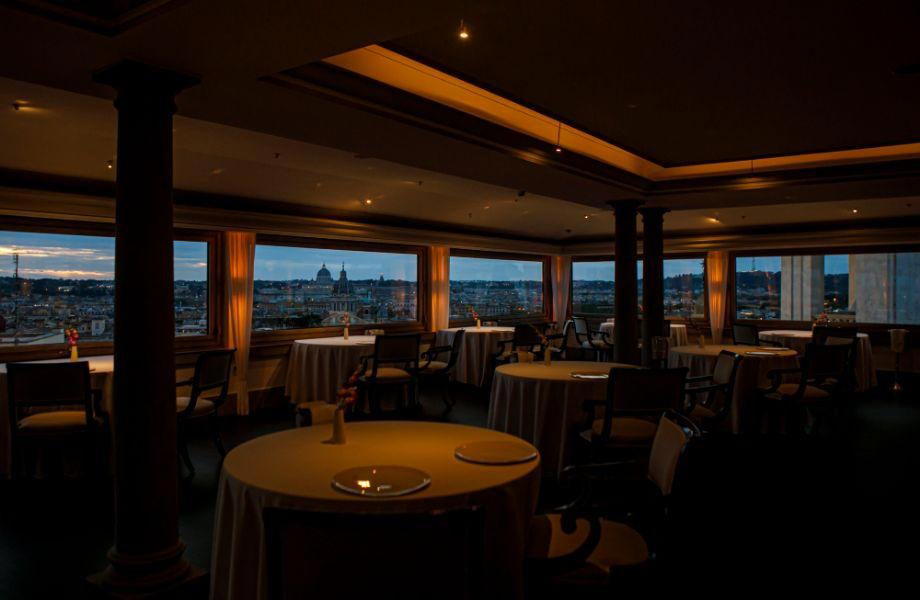
Bars in Rome
All bars in Rome →

Mirabelle
The wine
- Wine program
- Deep wine list
- Extensive wine list
- Sommelier-led
Details
- Romantic
- Elegant
- Sophisticated
- Scenic
- Intimate
- Date Night
- Special Occasion
- Celebration
- Rooftop
- Panoramic View
- Hotel Restaurant
- Extensive Wine List
- Sommelier Led
- Skyline
- A La Carte
- Tasting Menu
Current opening hours
- Monday
- 12:30–2:30 PM, 7–10:30 PM
- Tuesday
- 12:30–2:30 PM, 7–10:30 PM
- Wednesday
- 12:30–2:30 PM, 7–10:30 PM
- Thursday
- 12:30–2:30 PM, 7–10:30 PM
- Friday
- 12:30–2:30 PM, 7–10:30 PM
- Saturday
- 12:30–2:30 PM, 7–10:30 PM
- Sunday
- 12:30–2:30 PM, 7–10:30 PM
Hours can change for holidays and private events. Last verified .
Refined and elegant with soft lighting, spectacular panoramic views, and a formal yet warm atmosphere.