
Match Bo Mizonokuchi ten belongs to Kawasaki’s compact, station-side ramen culture: quick turnover, counter seating, and a meal built around ordering discipline rather than ceremony. Its selection for Tabelog Ramen KANAGAWA “Tabelog 100” in 2024 and 2025 gives it a clear signal within Kanagawa’s competitive ramen field, while the format remains casual, direct, and solo-diner friendly.
Pearl is the En Primeur Club membership app — saves, bookings, and concierge access live there. Same editors, same standards.
- Address
- Japan, 〒213-0001 Kanagawa, Kawasaki, Takatsu Ward, Mizonokuchi, 2 Chome−3−7 サウスウィング 1F
- Phone
- +81 44-888-5255
- Website
- match-bou.jp
 Saves & bookings on Pearl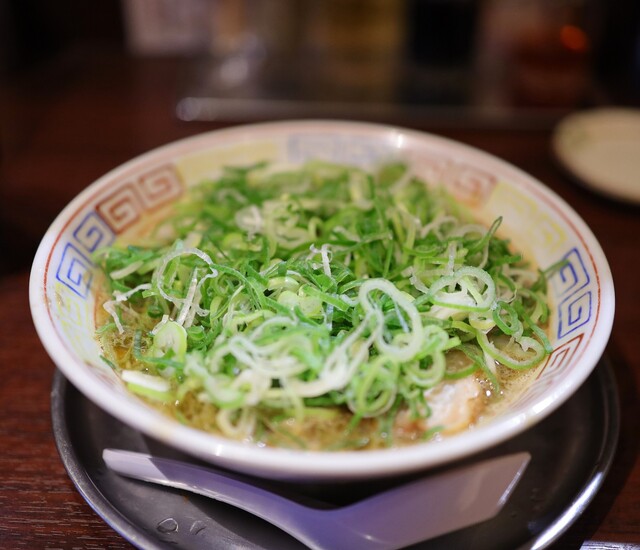
Approach a ramen counter near a major suburban rail junction in Japan and the rhythm starts before the bowl arrives: commuters moving fast, solo diners reading the room, and the quiet choreography of tickets, seats, condiments, and slurping pace. Mizonokuchi sits in Greater Tokyo’s practical dining band, where ramen is not staged as a long meal. It is compressed, efficient, and judged on repeatability.
That context matters for Match Bo Mizonokuchi ten. Kawasaki’s dining map runs from Musashi-Kosugi bakeries and neighborhood curry rooms to counter-led ramen shops, so a serious meal is not always expensive. A bowl here competes less with tasting menus than with habit: where locals return, how quickly seats turn, and whether the ramen holds attention in a crowded commuter district. For the wider frame, see Our full Kawasaki restaurants guide.
A counter ritual shaped by speed, customization, and restraint
Ramen in this part of Kanagawa rewards diners who know the small rules. Noodle firmness is specified when ordering, placing the guest inside the process. That detail is not decorative; it changes pacing. Firmer noodles suit deliberate eaters, while softer orders lean toward comfort and speed. Extras stay disciplined: free toppings are not part of the format, half a serving of rice is included, and table condiments include pickled ginger and grated garlic.
The room follows compact ramen grammar: counter seats only, reducing the meal to the exchange between bowl, cook, and diner. It is a strong solo-dining format because it removes the friction of waiting for a table and turns the meal into a clean sequence: sit, order, adjust, eat, pay after the meal. The ritual is ordinary in Japan and revealing for visitors, showing how much precision can sit inside an inexpensive, high-frequency meal.
Recognition sharpens the point. Selection for Tabelog Ramen KANAGAWA “Tabelog 100” in both 2024 and 2025 places Match Bo Mizonokuchi ten inside a curated Kanagawa ramen bracket rather than anonymous station food. Its Tabelog score of 3.70 is another useful signal in a market where incremental differences matter, especially among genre specialists. The listed source display order is not an official rank, but inclusion marks attention from diners who compare ramen with unusual seriousness.
Kawasaki's value tier is where ramen has to prove itself daily
Kawasaki’s restaurant scene spans price bands. Sushi Fukuhara sits in a far higher spend category, while Curry House Delhi and Niboshi Ramen Tanaka Niboru show how much everyday dining remains in the accessible lunch-and-dinner range. In that company, ramen is judged by clarity and turnover rather than luxury cues. The question is not whether the room flatters the guest; it is whether the format works at repeat-visit frequency.
That is why the counter matters more than atmosphere. A ten-seat ramen room has little margin for drift. Every choice, from noodle preference to payment flow, pushes diners through a familiar sequence. In premium travel writing, small restaurants are often over-romanticized; this shop is better understood as infrastructure. It feeds workers, late diners, solo regulars, and ramen chasers without asking them to make an occasion of the meal.
The comparison also explains why Kawasaki is useful for travelers who have already eaten through central Tokyo’s famous ramen districts. Kanagawa’s ramen culture has its own density, and Mizonokuchi adds the advantage of being a transport node rather than a dining-only destination. The meal feels local in the practical sense: it fits into the day instead of taking over the day.
EP Club’s Kawasaki coverage should be read laterally rather than as a ladder. Buta Boshi keeps the ramen conversation inside the city, while (Shoku) Vietnam, Belmatine, Boulangerie Metier Pa-ku shiti musashi kosugi za ga-den, and C'EST UNE BONNE IDEE! show how Kawasaki’s stronger eating is spread across formats rather than concentrated in one dining quarter.
How to read the meal before taking a seat
Treat Match Bo Mizonokuchi ten as a ramen specialist, not a general Japanese restaurant. The category has its own etiquette: arrive ready to order, avoid lingering once the bowl is finished, and use condiments as adjustments rather than as a separate course. Cash-only payment is part of the operating rhythm, and the absence of private rooms or private-use format reinforces the point. This is counter dining, not a lounge meal.
For visitors building a Kawasaki day, the appeal is logistical as much as culinary. A compact ramen counter near Mizonokuchi works between train movements, after shopping, or before shifting to another ward. Those planning beyond the meal can connect the restaurant map with Our full Kawasaki hotels guide, Our full Kawasaki bars guide, Our full Kawasaki wineries guide, and Our full Kawasaki experiences guide.
Japan’s casual dining canon is broad enough that ramen should not be treated as a minor stop between grander reservations. It shares a logic with other tightly focused formats: curry counters, onigiri shops, sake bars, bakeries, and small specialty rooms where repetition creates authority. For that wider pattern, compare the precision of [Curry Senmon Ten] Maruyama Kyoju. in Sapporo, the compact focus of Onigiri Time in Pasadena, or the drinking-food grammar around Jōdo Saké Bar in Los Angeles. The same reading applies across Japan-focused itineraries, from [ki:] in Kyoto to.cafe in Osaka.know in Kumamoto, -Grilled beef Sukiyaki- KAMAKURA TANUKIAN 鎌倉 たぬき庵 in Kamakura, and. 鮪と炭火焼き うお炭 秋葉原店 in Tokyo.
The verdict is simple: this is a low-friction ramen counter with enough recognition to justify attention, especially for travelers already moving through Kawasaki or Kanagawa. It is not a detour built on spectacle, but a lesson in how Japanese ramen dining works when the room is small, etiquette is clear, and value depends on execution rather than ceremony.
Cuisine Lens
Nearby venues at a similar price tier for orientation.
| Venue | Cuisine | Price | Notes |
|---|---|---|---|
| Match Bo Mizonokuchi tenThis venue — the venue you are viewing | Wakayama-style ramen | $ | Not listed |
| Niboshi Ramen Tanaka Niboru | Niboshi-focused ramen & tsukemen | $ | Takatsu Ward |
| Hikage | Ramen shop in Shin-Kawasaki | $ | Saiwai-ku |
| Ramen Jiro Keikyu kawasaki ten | Jiro-style Ramen Shop | $ | Kawasaki Ward, Kawasaki City |
| Ramen Jiro Ikuta ekimae ten | Jiro-style Ramen Shop | $ | Tama-ku |
| Pastry shop Tamagawa (Oiwake Bun) | Japanese Confectionery | $ | Kawasaki Ward |
Recognition history
Dated appearances from independent guides and award organizations, with the underlying list record or original source where available.
Tabelog 100 #60 · No. 60
Tabelog · Tabelog 100 - Ramen - KANAGAWA - 2025












At a Glance
- Lively
- Cozy
- Solo
- After Work
- Casual Hangout
- Late Night
- Chefs Counter
- Standalone
Current opening hours
- Monday
- 11:30 AM–1 AM
- Tuesday
- 11:30 AM–1 AM
- Wednesday
- 11:30 AM–1 AM
- Thursday
- 11:30 AM–1 AM
- Friday
- 11:30 AM–1 AM
- Saturday
- 11:30 AM–1 AM
- Sunday
- 11:30 AM–1 AM
Hours can change for holidays and private events. Last verified .
An intimate, slightly gritty neighborhood ramen counter near Mizonokuchi Station, with a simple no-frills interior focused on the steaming open kitchen and the aroma of rich tonkotsu-shoyu broth rather than décor or lighting.