
Pastry shop Tamagawa (Oiwake Bun) belongs to Kawasaki’s old-fashioned wagashi circuit rather than its restaurant-nightlife economy. The draw is disciplined Japanese traditional sweets at everyday pricing, backed by selection for Tabelog’s Japanese traditional sweets and sweets cafe EAST 100 in 2023 and a Tabelog score of 3.66.
Pearl is the En Primeur Club membership app — saves, bookings, and concierge access live there. Same editors, same standards.
- Address
- 2 Chome-1-2 Oshima, Kawasaki Ward, Kawasaki, Kanagawa 210-0834, Japan
- Phone
- +81 44-244-3484
- Website
- instagram.com
 Saves & bookings on Pearl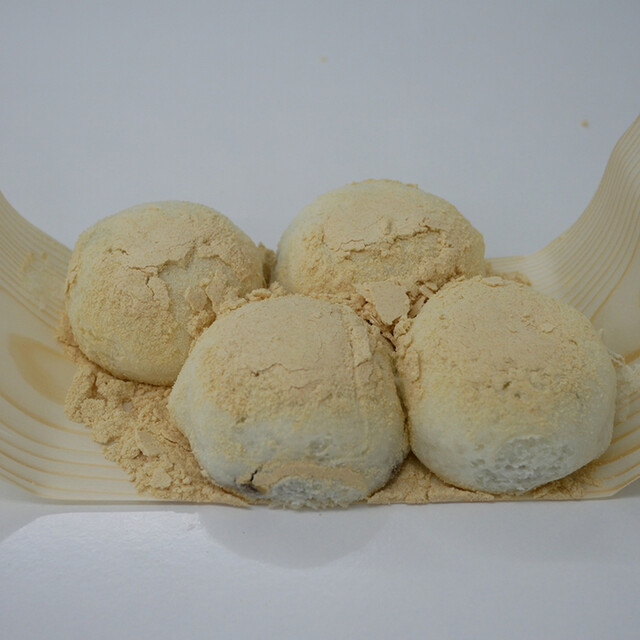
Oshima is not the Kawasaki that visitors usually imagine first. The city is often read through station malls, industrial edges, ramen counters, and quick commuter meals, but its Japanese sweets culture works on a quieter rhythm: small storefronts, repeat local customers, and confectionery made to leave the shop rather than anchor a long sit-down afternoon. Pastry shop Tamagawa (Oiwake Bun) belongs to that older urban pattern, where the point is not a plated dessert course but the everyday craft of wagashi as something bought, carried, shared, and timed around the day.
That distinction matters in Kawasaki. Much of the city’s casual dining is built around immediate appetite: ramen, grilled meat, Chinese set meals, Indian curries, and bakery counters positioned for station traffic. Traditional sweets occupy a different register. They depend on rice, beans, sugar, starch, and seasonal Japanese confectionery conventions, where sourcing and handling carry as much weight as decoration. In this category, restraint is not an aesthetic slogan; it is the operating logic. A shop wins loyalty by keeping familiar forms consistent, not by changing the script every month.
Wagashi in Kawasaki rewards restraint over spectacle
The 2023 selection for Tabelog’s Japanese traditional sweets and sweets cafe EAST 100 gives this small Kawasaki shop a credential that travels beyond the neighbourhood. Tabelog’s Hyakumeiten lists tend to surface places with deep category relevance rather than luxury positioning, and that is the useful lens here. This is not competing with a tasting-menu dessert room or a hotel patisserie. It sits in the everyday wagashi lane, where value, repeatability, and take-away discipline matter more than room design.
The price band reinforces that reading. In a Kawasaki comparison set where Matsu no Ki and Ramen Jiro Keikyu kawasaki ten sit around JPY 1,000 to JPY 1,999, and Kerala Kitchen La Cittadella Kawasaki ra chitta derra ten runs higher at dinner, this shop operates below the usual casual-meal threshold. That does not make it minor. It places wagashi in its proper social context: an accessible purchase with craft embedded inside it. Japanese sweets have long functioned as gifts, tea companions, seasonal markers, and family-table objects. The format makes sense because the category was never built only for restaurant seating.
Ingredient sourcing is the editorial hinge. Wagashi is unforgiving because its base materials are plain enough to expose shortcuts. Bean paste, rice dough, flour, sugar, and related staples do not hide behind heavy seasoning. Texture and balance come from method and freshness as much as from recipe. In a take-away shop, that means the counter has to carry the argument: production cadence, clean handling, and a narrow focus on items that survive the trip home without losing their purpose. The absence of table service is not a compromise; it is part of the tradition’s retail DNA.
A take-away sweet shop in a city of quick meals
Kawasaki’s dining map can feel broad but blunt at first glance. The city has strong commuter infrastructure and a wide appetite for affordable food, from ramen to family restaurants, but the smaller sweets shops reveal another side of local eating. Pastry shop Tamagawa (Oiwake Bun) is useful precisely because it resists the restaurant checklist. No elaborate seating narrative is needed. The format is a take-away specialty shop, non-smoking, family-friendly, and built for customers who already understand that wagashi is often eaten elsewhere.
Nearby editorial contrasts include (Shoku) Vietnam for Vietnamese cooking, Belmatine, Boulangerie Metier Pa-ku shiti musashi kosugi za ga-den for the bakery side of Kawasaki, Buta Boshi, and C'EST UNE BONNE IDEE!. Those comparisons show how differently the city feeds people across quick-service, bread, sweets, and full meals.
Travel planning around Kawasaki should also avoid treating food as a single category. The broader city pages, including Our full Kawasaki hotels guide, Our full Kawasaki bars guide, Our full Kawasaki wineries guide, and Our full Kawasaki experiences guide, help separate where to sleep, drink, and spend time from where to buy a precise local sweet. That separation is especially useful in Japan, where a serious food stop may be a counter, kiosk, basement hall, market stall, or no-seat shop.
Where this fits in a Japan sweets itinerary
For travellers building a Japan food itinerary, Kawasaki can act as a corrective to the over-concentration on Tokyo and Kyoto. The stronger move is to read it as part of the metropolitan fabric: close enough to major routes, yet local enough to preserve neighbourhood purchase patterns. A wagashi stop here pairs naturally with broader regional eating rather than a single destination meal. The point is not to rank it against restaurants; it is to understand how Japanese sweets function outside the hotel lounge and department-store gift floor.
Cross-city links sharpen that perspective. A refined meal in Kamakura, such as -Grilled beef Sukiyaki- KAMAKURA TANUKIAN 鎌倉 たぬき庵 in Kamakura, belongs to a different rhythm than a Kawasaki confectionery purchase. Tokyo’s urban dining pace appears in. 鮪と炭火焼き うお炭 秋葉原店 in Tokyo, while Kansai and western Japan widen the frame through.cafe in Osaka.know in Kumamoto, and [ki:] in Kyoto. Even overseas Japanese formats, from Jōdo Saké Bar in Los Angeles to Onigiri Time in Pasadena, show how portable Japanese food culture becomes once it leaves its domestic retail setting.
The useful editorial verdict is simple: treat this as a serious local wagashi stop, not as a restaurant substitute. The Tabelog EAST 100 selection and 3.66 score give it external validation, but the deeper appeal is category clarity. Kawasaki has plenty of places for a full meal, including curry specialist coverage such as [Curry Senmon Ten] Maruyama Kyoju. in Sapporo as a wider Japan reference point, but traditional sweets ask for a different plan. Go when the day can accommodate take-away, then let the purchase sit where wagashi has always worked: between errand, gift, tea, and home.
Comparable Spots, Quickly
Comparable venues by cuisine and price in the same metro.
| Venue | Cuisine | Price | Notes |
|---|---|---|---|
| Pastry shop Tamagawa (Oiwake Bun)This venue — the venue you are viewing | Japanese Confectionery | $ | Not listed |
| Ramen Jiro Keikyu kawasaki ten | Jiro-style Ramen Shop | $ | Kawasaki Ward, Kawasaki City |
| noodles kitchen GUNNERS | Ramen shop (clam-broth focus) | $ | Nakahara-ku (Musashi-Kosugi Area) |
| Teuchi Chuka Soba Sakata | Handmade Chuka Soba Ramen | $ | Kawasaki-ku |
| Mendokoro Futokoro Ya | Classic Kawasaki ramen counter | $ | Miyamae-ku, Saginuma |
| Hikage | Ramen shop in Shin-Kawasaki | $ | Saiwai-ku |
Recognition history
Dated appearances from independent guides and award organizations, with the underlying list record or original source where available.
Tabelog 100 #15 · No. 15
Tabelog · Tabelog 100 - Japanese traditional sweets / Japanese sweets cafe - EAST - 2023











At a Glance
- Classic
- Cozy
- Solo
- Family
- Casual Hangout
- Standalone
Current opening hours
- Monday
- Closed
- Tuesday
- 9 AM–5 PM
- Wednesday
- 9 AM–5 PM
- Thursday
- 9 AM–5 PM
- Friday
- 9 AM–5 PM
- Saturday
- 9 AM–5 PM
- Sunday
- 9 AM–5 PM
Hours can change for holidays and private events. Last verified .
A small, traditional sweets shop with a calm, cozy atmosphere focused on classic Japanese confections.