
Tabelog 100 #91
Our verdict
A 14-seat Vietnamese counter-and-table room in Kawasaki’s Kamikodanaka area, (Shoku) Vietnam belongs to the compact, serious end of Japan’s everyday ethnic dining scene. Tabelog selected it for the Asian cuisine / Ethnic cuisine EAST 100 in 2022, 2023 and 2024, with lunch and dinner budgets in the JPY 1,000–1,999 range.

Pearl is the En Primeur Club membership app, where members save venues, book tables and use the concierge.
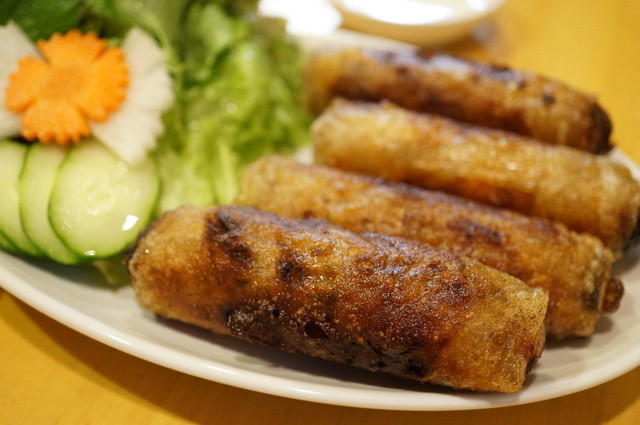
Approaching the room in Kamikodanaka, scale matters before cooking: a small local address, counter seating, a handful of tables, and none of the performance architecture around destination dining in central Tokyo. Kawasaki’s stronger food culture works in this register: railway-adjacent rooms, modest budgets and repeat local use. Here, Vietnamese cooking reads less as an international concept than as part of Japan’s appetite for precise, affordable, highly specialised casual restaurants.
(Shoku) Vietnam fits that pattern with unusual credibility. Tabelog selected it for the Asian cuisine / Ethnic cuisine EAST 100 in 2022, 2023 and 2024, a useful signal in a category where reputation is built through regulars more than media cycles. Its listed score of 3.60 places it in a serious neighbourhood tier without pushing it into luxury dining. That distinction is the point: compare it not with Ginza counters or hotel Vietnamese tasting menus, but with the small, repeatable places that make suburban and satellite-city dining in Japan more interesting than visitors often assume.
Vietnamese cooking in Kawasaki's everyday price tier
Vietnamese restaurants in Japan occupy a specific cultural lane, answering demand for brightness, herbs, rice-based staples and soups within a dining culture that values order, speed and tight execution. In Kawasaki, that lane sits beside ramen, curry, yakiniku, bakeries and Chinese neighborhood rooms rather than formal French or kappo counters. The result shows how international cuisines become local: not diluted, but adapted to station-area eating, family use and weekday budgets.
The JPY 1,000–1,999 price band for both lunch and dinner keeps the restaurant in conversation with Kawasaki’s practical specialists. Buta Boshi and Chinese Santuru speak to the same appetite for focused, low-friction meals, while Belmatine and Boulangerie Metier Pa-ku shiti musashi kosugi za ga-den show how broad Kawasaki’s casual dining map becomes when breakfast, bread and lunch receive the seriousness often reserved for dinner. For a broader sweep, our full Kawasaki restaurants guide is the better frame than any single cuisine list.
The Tabelog 100 selection also matters because Asian and ethnic cooking in eastern Japan is crowded. Recognition here does not imply theatrical luxury; it means the restaurant has been noticed in a competitive category where consistency, identity and local loyalty carry weight. In Kawasaki, that is more useful than a grand claim. The city rewards places that know exactly what they are.
A compact room, counter discipline and local rhythm
Room runs on 14 seats: six at the counter and four two-seat tables. That layout sets the tempo. Small restaurants in Japan create a close relationship between kitchen pacing and dining room energy, with little room for indecision, sprawling groups or long, unfocused evenings. Here, the format points to a concise meal rather than a drawn-out occasion.
That compactness also explains why the address suits solo diners and small parties. Counter seating gives single diners a natural place, while the tables suit pairs and families more than large groups. Children are welcome, private rooms are not part of the format, and the social contract is simple: come for a focused meal, not a sealed-off event. The restaurant is non-smoking, another practical marker for families and mixed-age groups.
The local context helps. Kamikodanaka and the Musashi-Shinjo side of Kawasaki are built less around spectacle dining than daily movement: commuters, families, students, regulars. A Vietnamese restaurant that wins attention here must work as a repeat address, not just a novelty. That is the cultural interest. Japan’s cities absorb foreign cuisines through small rooms first, and those rooms often outlast trend-led openings in major commercial districts.
For readers mapping the city by category, the contrast is instructive. C'EST UNE BONNE IDEE! sits in a different dining idiom, while Kawasaki’s ramen, curry and grilled-meat rooms show how price-conscious specialisation defines much of the area. Nearby-format planning also benefits from looking beyond restaurants: our full Kawasaki hotels guide, our full Kawasaki bars guide, our full Kawasaki wineries guide and our full Kawasaki experiences guide show how thin or deep each category runs for a short stay.
How to read it against the wider Japan dining map
The stronger way to understand this restaurant is not as a detour from Tokyo, but as evidence that Japan’s serious casual dining extends far beyond the capital’s obvious corridors. Kawasaki sits between Tokyo and Yokohama, and its food culture benefits from commuter density without always taking on big-city pricing. The reward is specificity: small counters, narrow menus, budget clarity and rooms sustained by repeat use.
That pattern appears across Japan. A focused curry shop such as [Curry Senmon Ten] Maruyama Kyoju. in Sapporo, a compact Kyoto address like [ki:] in Kyoto, or a casual Osaka listing such as.cafe in Osaka point to the same national habit: expertise does not always announce itself through price.know in Kumamoto and -Grilled beef Sukiyaki- KAMAKURA TANUKIAN 鎌倉 たぬき庵 in Kamakura widen that map further, from everyday formats to more ceremonial meals.
For international readers, the comparison also works outside Japan. Jōdo Saké Bar in Los Angeles and Onigiri Time in Pasadena show how Japanese and Asian casual formats travel abroad; Kawasaki shows the inverse movement, with Vietnamese cooking folded into Japanese local dining habits. 鮪と炭火焼き うお炭 秋葉原店 in Tokyo is another reminder that station-area practicality can carry serious food intent.
The editorial case is clear: choose (Shoku) Vietnam for a compact, affordable, award-noted Vietnamese meal in Kawasaki rather than a destination built around ceremony. Its value lies in small scale, repeated Tabelog 100 recognition, accessible pricing and neighbourhood fit. That combination says much about how Kawasaki eats: directly, locally and with more range than a quick pass through the city suggests.
Frequently asked questions
Is (Shoku) Vietnam suitable for children?
Yes. The restaurant is listed as children welcome and family friendly, with 14 seats in all, including a counter and four two-seat tables. Its JPY 1,000–JPY 1,999 price range also keeps it in an everyday bracket for family meals in Kawasaki.
Is (Shoku) Vietnam better for a quiet night or a lively one?
It suits a quieter meal better than a long, social night out. The room has just 14 seats, including a six-seat counter, and the small scale keeps the pace contained even when reservations are in play. The Tabelog 100 EAST 2024 selection adds credibility, but the setup reads as compact rather than raucous.
What's the pricing like at (Shoku) Vietnam?
Pricing at (Shoku) Vietnam is listed as JPY 1,000 - JPY 1,999 JPY 1,000 - JPY 1,999 View spending breakdown.
What is (Shoku) Vietnam known for?
(Shoku) Vietnam is primarily known for its core concept and execution in Kawasaki.
Cost Snapshot
Nearby venues at a similar price tier for orientation.
| Venue | Cuisine | Price | Awards | Notes |
|---|---|---|---|---|
| (Shoku) VietnamThis venue (the venue you are viewing) | Vietnamese | $10–20 | Tabelog 100 #91 | Not listed |
| Ramen Jiro Ikuta ekimae ten | Jiro-style Ramen Shop | $10–20 | Tabelog 100 #59 | Tama-ku, Jiro-style Ramen Shop |
| Pastry shop Tamagawa (Oiwake Bun) | Japanese Confectionery | Not listed | Tabelog 100 #15 | Kawasaki Ward, Japanese Confectionery |
| Belmatine | Artisanal Bakery & Bread Shop | $1–10 | Tabelog 100 #13 | Nakahara-ku (Musashi-Kosugi Area), Artisanal Bakery & Bread Shop |
| Men Goya Techi | Miso Ramen & Mazemen Shop | Not listed | Tabelog 100 #16 | Musashi-Shinjo, Miso Ramen & Mazemen Shop |
| San San Nana | Tsukemen & ramen shop | $10–20 | Tabelog 100 #19 | Kawasaki Station area, Tsukemen & ramen shop |
Recognition history
Dated appearances from independent guides and award organizations, with the underlying list record or original source where available.
Tabelog 100 #91 · No. 91
Tabelog · Tabelog 100 - Asian cuisine / Ethnic cuisine - EAST - 2024
Continue exploring
More in Kawasaki
Restaurants in Kawasaki
All restaurants in Kawasaki →

Bars in Kawasaki
Browse all →



Details
- Cozy
- Intimate
- Casual Hangout
- Family
- A La Carte
- Counter Dining
Current opening hours
- Monday
- Closed
- Tuesday
- 11:40 AM–2 PM, 5:30–10 PM
- Wednesday
- 11:40 AM–2 PM, 5:30–10 PM
- Thursday
- 11:40 AM–2 PM, 5:30–10 PM
- Friday
- 11:40 AM–2 PM, 5:30–10 PM
- Saturday
- 11:40 AM–2 PM, 5:30–10 PM
- Sunday
- 11:40 AM–2 PM, 5:30–10 PM
Hours can change for holidays and private events. Hours as of .
Cozy counter and table seating in a non-smoking, intimate space with a welcoming family-friendly atmosphere.